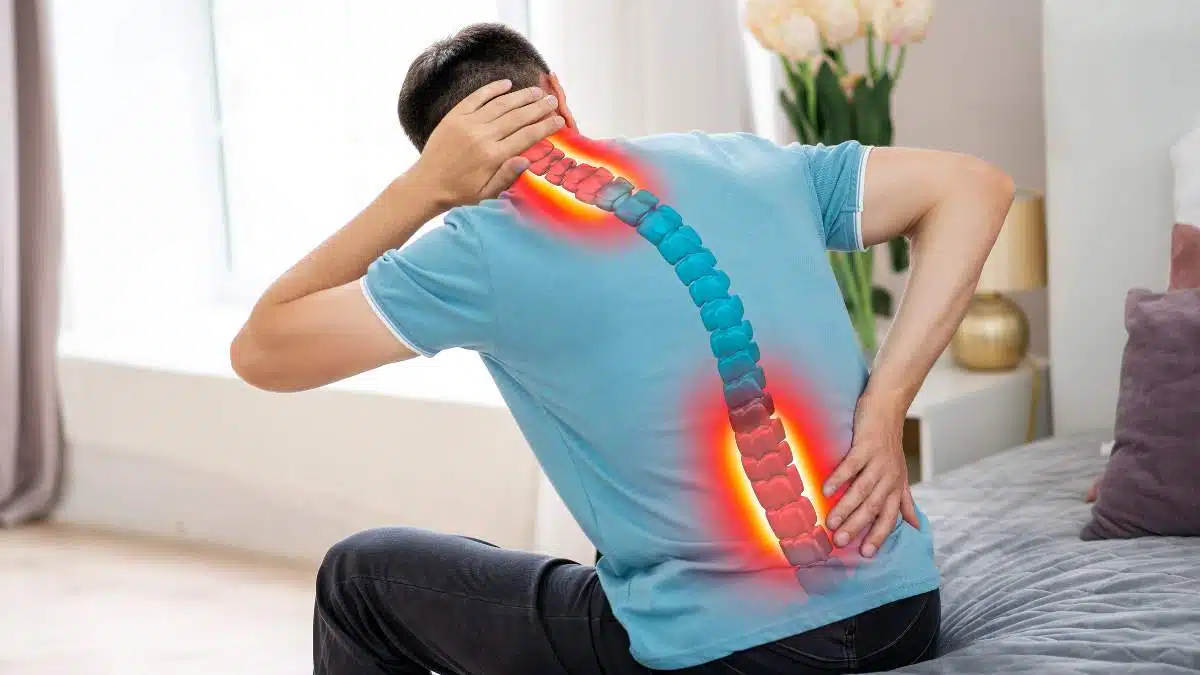
Discopathy, or degenerative disc disease, is a problem that affects more and more people. It is often accompanied by pain, numbness and limited mobility, which can make everyday functioning difficult. Many people with discopathy wonder if they can continue strength training or start their adventure with the gym at all. The answer is yes, but with the right precautions.
Table of contents
What is discopathy?
Discopathy is a degenerative process of the intervertebral disc, which is located between the vertebrae of the spine. This disc consists of a nucleus pulposus and a fibrous ring. As a result of the disease process, the nucleus pulposus can move and the fibrous ring can rupture. This can lead to pressure on the spinal nerves, which manifests itself in pain, numbness and muscle weakness.
Can people with discopathy work out at the gym?
Contrary to popular belief, people with discopathy do not have to give up strength training. On the contrary, properly selected training can bring many benefits:
- Muscle Strengthening: Strong muscles stabilize the spine and relieve the intervertebral discs, which reduces pain and prevents further development of the disease.
- Improved flexibility: Stretching exercises increase the flexibility of muscles and ligaments, which improves spinal mobility.
- Pain Reduction: Physical activity stimulates the production of endorphins, which have an analgesic effect.
- Improved well-being: Regular training has a positive effect on mood and reduces stress levels, which is especially important for people struggling with chronic pain.
How to train with discopathy?
Strength training with discopathy should be conducted with caution and under the supervision of an experienced trainer or physiotherapist. Here are some important rules:
- Avoid exercises that strain the spine: Exercises that generate a lot of pressure on the spine, such as:
- Barbell shoulder squats
- Deadlift
- Barbell bends
- Soldier Press
- Focus on exercises to strengthen your core muscles: The core muscles are a group of muscles that stabilize the spine. Strengthening them is crucial for people with discopathy. Possible exercises:
- Plank
- Bird dog
- Sideways board
- Russian twist
- Use the right technique: Correct exercise technique is crucial for the safety of the spine. Always make sure that the exercise is done correctly before increasing the load.
- Listen to your body: If you feel pain during training, stop the exercise immediately. Don’t ignore the signals your body is sending.
- Gradually increase the intensity: Start with light exercises and gradually increase the load and intensity of your workout.
- Stretch regularly: Stretching is just as important as strength training. It helps to maintain muscle flexibility and prevents injuries.
Examples of exercises for people with discopathy:
Yoga: It helps to strengthen the core muscles and improve flexibility.
Isometric exercises: Flexing muscles without moving, e.g. plank, wall sit.
Training with resistance bands: They allow for strength training without straining the spine.
Exercises in relief: e.g. push-ups on the knees, Australian pull-ups.
Swimming: An excellent form of activity for people with discopathy, because it relieves the spine.
When to consult a doctor?
It’s always a good idea to consult with a doctor or physiotherapist before starting strength training, especially if you have been diagnosed with discopathy. A specialist will help you choose the right training plan and avoid exercises that can harm your spine.
You should see a doctor immediately if you experience the following during training:
- Pain severity
- Numbness or tingling in the extremities
- Muscle weakness
Summary
Discopathy does not have to mean giving up physical activity. Properly selected strength training can bring many benefits and help fight pain. However, remember to train with caution and listen to your body. If in doubt, consult your doctor or physiotherapist.
Remark:
The above article is for informational purposes only and is not a substitute for a visit to a doctor. If you have any doubts about your health , you should consult a specialist.