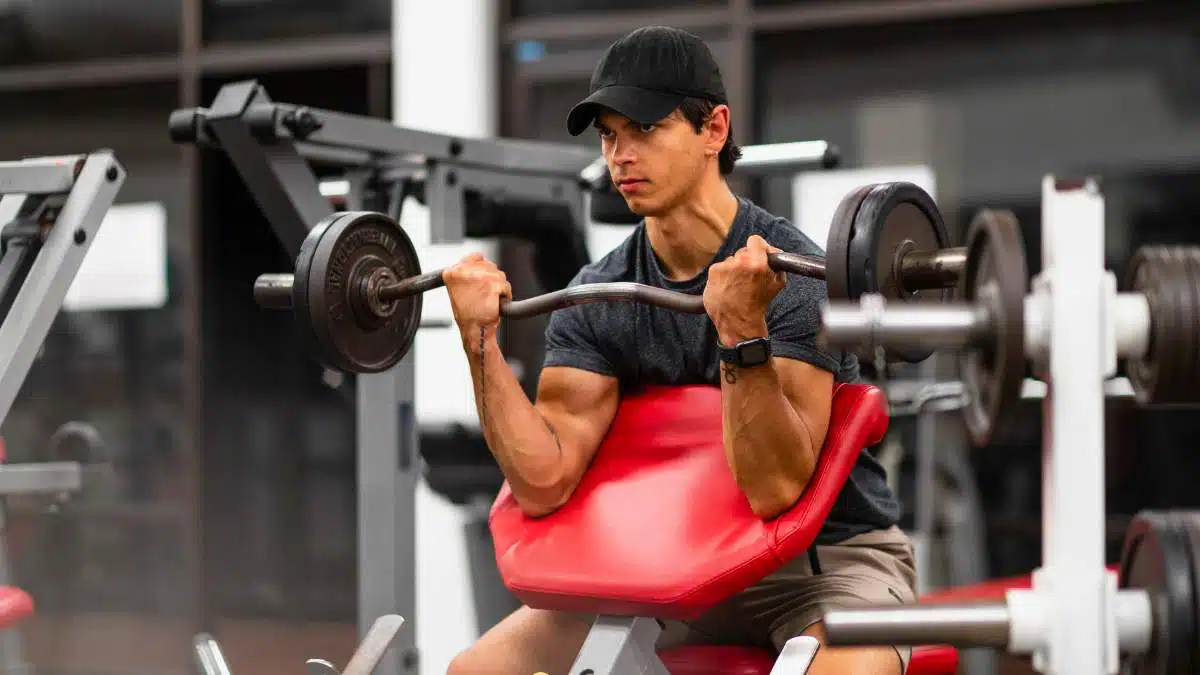
A broken bar is a popular training equipment that allows you to effectively exercise many muscle groups. Its distinctive shape provides natural movement of the wrists, which reduces the risk of injury and allows for a comfortable workout. In this article, you’ll learn everything you need to know about training with a broken bar: what its benefits are, what exercises you can do, and how to maximize the effects of your workouts.
What is a broken bar?
A broken bar is a barbell with a specific, bent shape. These bends are usually in two places, which allows for a more natural grip and relieves strain on the wrists during exercise. Broken bars come in various variants, differing in bending angle, length and diameter.
Advantages of training with a broken bar
- Reduced risk of injury: The shape of the broken bar forces the wrists to be positioned naturally, which minimizes the risk of injury, especially in the wrist and elbow joints.
- Versatility: The broken bar allows you to perform a variety of exercises that involve many muscle groups, such as biceps, triceps, shoulders, chest and forearms.
- Comfort: The ergonomic shape of the bar provides a comfortable grip and makes it easier to maintain the correct exercise technique.
- Variety of exercises: The ability to perform both isolated and complex exercises allows you to effectively build muscle mass and strength.
Exercises with a broken bar
Biceps exercises
- Arm curl with a broken barbell while standing. A basic biceps exercise, mainly involving the long head of the biceps
- Stand up straight, feet shoulder-width apart, grip the bar with the grip.
- Bend your arms as you lift the bar to your chest.
- Control the traffic in both directions.
2. Arm curl with a broken barbell on a prayer book: An exercise that isolates the biceps, allowing you to concentrate on the work of the muscle.
- Sit on the prayer book, resting your chest on the backrest.
- Grab the bar with the grip and bend your arms.
- Slowly lower the bar to the starting position.
3. Barbell Break Curl with Wrist Supination: An exercise that engages the biceps and forearm muscles.
- Stand up straight, feet shoulder-width apart, grip the bar with the grip.
- When bending your arms, perform an outward rotation of your wrists (supination).
- Slowly lower the bar, controlling the movement.
Triceps exercises
- French bench press of the lying barbell: An effective triceps exercise that engages all three heads of the muscle.
- Lie down on a horizontal bench, feet flat on the floor.
- Hold the broken bar with the grip, lifting it above the chest.
- Bend your shoulders at the elbows, lowering the bar towards your forehead.
- Straighten your arms as you return to the starting position.
- Push-ups on weighted parallel bars (broken bar at the waist): An advanced triceps exercise that requires a lot of strength.
- Put the breakbar on your belt.
- Do push-ups on parallel bars, taking care of the correct technique.
Shoulder exercises
- Barbell overhead press: An exercise that engages the deltoid muscles, especially the front of the shoulders.
- Stand up straight, feet shoulder-width apart, hold the bar with the grip at the level of the collarbones.
- Press the bar above your head as you straighten your arms.
- Slowly lower the bar to the starting position.
How to train with a broken bar?
- Technique: Always pay attention to the correct exercise technique. Incorrect exercise can lead to injury.
- Warm-up: Before each workout, do a warm-up to prepare your muscles for the effort.
- Training plan: Create a training plan that includes exercises with a broken bar for different muscle groups.
- Regeneration: Remember to regenerate properly after training. Muscles need time to rest and rebuild.
- Diet: A healthy diet rich in protein is essential for building muscle mass.
Broken bar vs. straight bar: differences
The straight bar is a classic barbell with a simple design. Both types of bars allow for effective training, but the broken bar has several advantages:
- Natural Wrist Movement: The shape of the broken bar provides a more natural position of the wrists, which reduces the risk of injury.
- Greater comfort: The curved neck is more ergonomic and provides a more comfortable grip.
- Activating more muscles: The shape of the broken bar forces more stabilizing muscles to work.
Summary
Training with a broken bar is an effective way to build muscle mass and strength. Thanks to the variety of exercises, you can train many muscle groups, and the ergonomic shape of the bar provides comfort and reduces the risk of injury. Remember about the correct exercise technique, warm-up and regeneration, and the effects of your workouts will be even better.