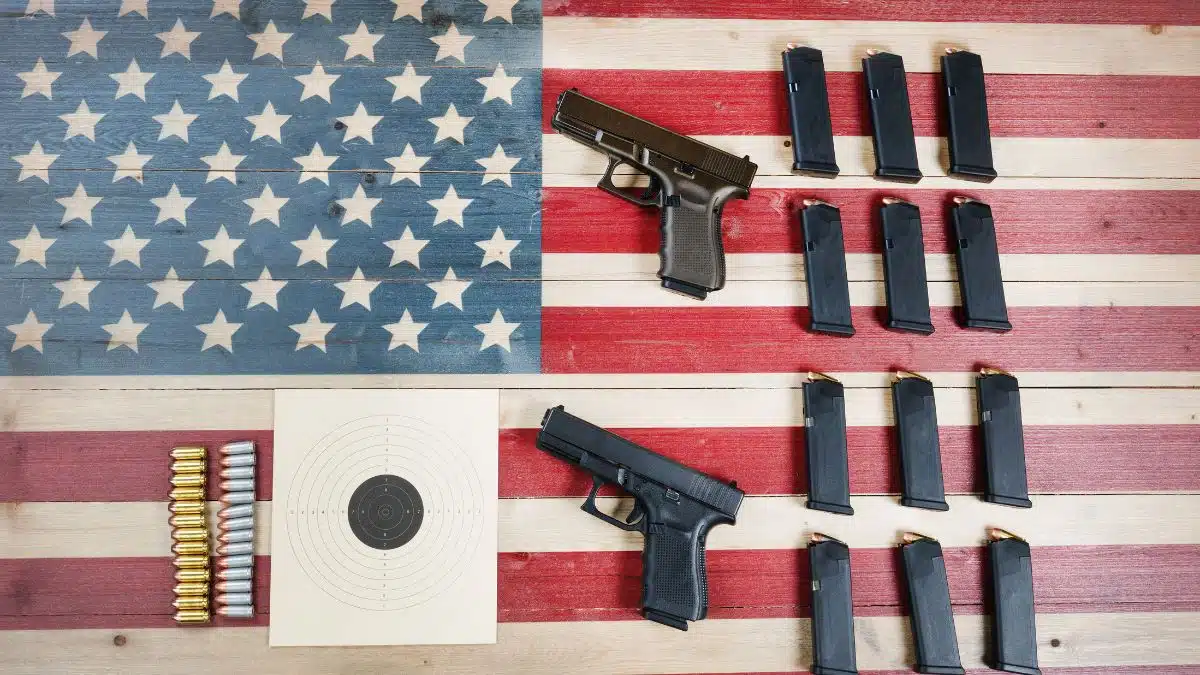
The United States is famous for its liberal approach to the right to own firearms, guaranteed by the Second Amendment to the Constitution. However, contrary to popular belief, gun laws vary greatly from state to state. Some have restrictive rules, while others make buying weapons almost as easy as buying a loaf of bread. Let’s take a closer look at the gun license laws in a few select states.
Spis treści
California: One of the most restrictive states
California is known for having some of the strictest firearms laws in the entire United States. To legally own a gun, California residents must meet a number of requirements, including:
- Obtaining a Firearm Safety Certificate (FSC): To obtain the FSC, you must pass a written gun safety test and also pass a criminal background check.
- Weapon registration: Any pistol or rifle purchased must be registered with the California Department of Justice.
- Restrictions on weapon types: California bans many types of weapons, including assault weapons and high-capacity magazines.
- 10-day waiting period: Once a weapon is purchased, there is a 10-day waiting period before the buyer can claim it.
Texas: Freedom of Gun Ownership
Texas is almost the opposite of California when it comes to gun laws. There is a very liberal approach to the Second Amendment in this state.
- No Purchase Authorization: A permit to purchase firearms is not required in Texas. People who can legally own a gun (e.g. have no criminal record) can purchase it without unnecessary formalities.
- No registration of weapons: There is no obligation to register firearms in Texas.
- Minimum restrictions on weapon types: Texas does not impose significant restrictions on the types of weapons that can be legally owned.
- Open Carry Weapons: In Texas, it is allowed to open-carry, both long and short.
New York: Handgun Permit and Restrictions in New York City
New York State has separate laws for long guns and handguns.
- Handgun permit: To legally own a gun, you must obtain a permit from your local authorities. The permit process is long and complicated, and applicants must meet a number of requirements, including safety training.
- Weapon registration: Each pistol purchased must be registered.
- No permit for long guns: Possession of long guns (rifles, shotguns) does not require a permit, but there are some restrictions on the types of weapons.
- New York City: New York City has even stricter gun laws than the rest of the state. Getting a gun permit in New York is extremely difficult.
Florida: “Shall-issue” and the Right to Self-Defense
Florida is another state known for its liberal approach to gun laws.
- “Shall-issue” for a permit to carry a weapon: Florida is a “shall-issue” state, which means that authorities must issue a concealed carry permit to any person who meets the statutory requirements (e.g., 21 years of age or older, has no criminal record, or has received training).
- No registration of weapons: There is no obligation to register firearms in Florida.
- The Law of “Stand Your Ground”: Florida has a “Stand Your Ground” law that permits the use of lethal force in self-defense if a person feels threatened with death or serious bodily harm.
Illinois: Gun Permit (FOID)
In Illinois, you must obtain a Firearm Owners Identification Card (FOID) to legally own a firearm.
- FOID: To obtain FOID, you must meet a number of requirements, including passing a criminal background check and not being under a gun ban.
- Weapon registration: There is no obligation to register firearms in Illinois.
- Restrictions on weapon types: Illinois is introducing some restrictions on the types of guns that can be legally owned.
- Concealed Carry Permit (CCL): Illinois is a state “shall-issue” for permits to carry concealed weapons.
Summary
As you can see, gun laws in the United States vary widely. Before you purchase a gun or transfer it to another state, be sure to research your local laws. Remember that ignorance of the law is harmful!