Creatine Monohydrate
In the world of sports supplementation, few substances enjoy such an established position and recognition as creatine. For years, it has been one of the most frequently chosen and most frequently researched means of supporting effort, especially in strength and body disciplines. Its popularity is not a coincidence – it is based on solid scientific evidence confirming its effectiveness and safety of use. The International Society of Sports Nutrition (ISSN) consistently recognizes creatine monohydrate as the most effective legally available ergogenic supplement in terms of increasing the ability to perform at high intensity and gaining lean body mass during training.
Spis treści
What is Creatine Monohydrate? Basics for Athletes
Before we delve into the mechanisms of action and benefits of supplementation, it is crucial to understand what creatine actually is. From a chemical point of view, creatine is an organic nitrogenous compound, α-methylguanidinoacetic acid. Although it is often associated with amino acids (and is formed from them), it is not a protein itself, but a non-protein nitrogen compound. It occurs naturally in the organisms of vertebrates, including humans.
Natural Production and Storage
Our body has the ability to synthesize creatine on its own. This process occurs mainly in the liver, kidneys and pancreas from three amino acids: arginine, glycine and methionine. It is estimated that the endogenous production is about 1-2 grams of creatine per day , which covers about half of the body’s daily requirement for this compound, in the case of regular supplementation.
The vast majority of creatine in the human body, as much as about 95%, is stored in skeletal muscles. The remaining 5% is found in other tissues, such as the brain, heart, kidneys, liver, and testicles. In muscle cells, creatine exists in two main forms: as free creatine (about 30-40% of the total muscle pool) and in a phosphorylated form, known as phosphocreatine (PCr), which makes up the remaining 60-70%. The total amount of creatine in the body of an average person weighing 70 kg is about 120-140 grams.
Sources in Food
Creatine is also supplied to the body through the diet, and creatine is a compound that plays a key role in energy production. Its main sources are animal products, primarily meat and fish. The richest in creatine are:
- Red meat, especially beef (approx. 4.5-5 g of creatine per kilogram of raw meat)
- Pork (approx. 5 g/kg)
- Fish such as herring (6.5-10 g/kg), salmon (4.5 g/kg), tuna (4 g/kg) or cod (3 g/kg)
- Smaller amounts are found in poultry and milk (e.g. a glass of milk is about 5 mg).
A standard mixed diet (including meat) provides an average of about 1-2 grams of creatine per day. However, it should be remembered that heat treatment of meat can lead to a partial degradation of creatine to inactive creatinine.
Why supplementation?
Every day, a certain amount of creatine (about 1-2% of muscle stores, equivalent to 1-3 grams) is naturally degraded to creatinine, which is then excreted in the urine. The sum of endogenous production (1-2 g/day) and average dietary intake (1-2 g/day) is usually only sufficient to compensate for these daily losses and maintain physiological creatine levels in the muscles. However, in order to achieve a significant increase in creatine and phosphocreatine stores in muscles, which is the goal of supplementation in sports, it is necessary to provide it in larger quantities. Trying to achieve supplementation doses (e.g. 5 g per day) through diet alone would be very difficult and impractical – it would require the consumption of more than a kilogram of beef or herring every day. Hence the widespread use of dietary supplements.
Creatine Monohydrate: The Gold Standard
There are many forms of creatine available on the market (e.g. hydrochloride, malate, ethyl ester, orotate, magnesium chelate, Kre-Alkalyn). However, it is creatine monohydrate that is the most commonly used, the best scientifically researched and considered the most effective in terms of muscle saturation and improved exercise capacity. It is simply a creatine molecule combined with one water molecule. It is characterized by very high bioavailability – it is estimated that about 95% of the ingested monohydrate is absorbed in the gastrointestinal tract. Despite marketing attempts to promote newer, often more expensive forms of creatine as supposedly better, scientific research to date has not provided convincing evidence of their superiority over proven monohydrate in terms of effectiveness. For the vast majority of users, creatine monohydrate remains the most rational and cost-effective choice.
Important distinctions: creatine, creatinine, keratin
Finally, it is worth explaining the terms that are sometimes confused:
- Creatine is a compound that can significantly affect physical performance. The compound described here, which stores energy in the muscles.
- Creatinine: Breakdown product (metabolite) of creatine and phosphocreatine, excreted by the kidneys in the urine. Its levels in the blood are a marker of kidney function, but they can be naturally elevated in people with a lot of muscle mass or those who are supplementing with creatine, which is worth remembering.
- Keratin: A structural protein that is the main building block of hair, nails and epidermis. It has nothing to do with creatine in terms of function.
How does creatine work? Mechanism of increasing muscle power
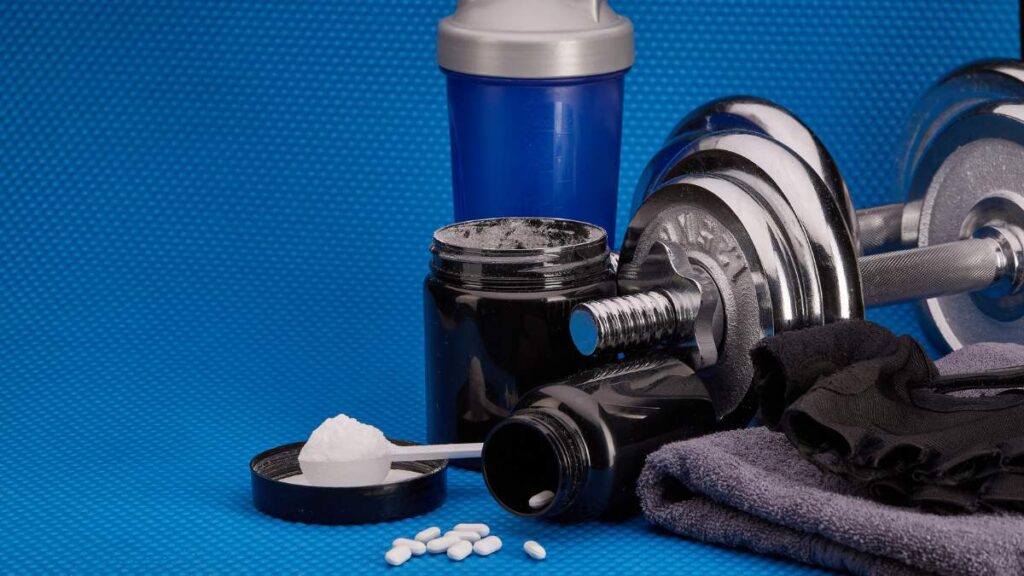
To understand why creatine is so effective in strength training, we need to look at its fundamental role in energy production at the cellular level, especially during high-intensity efforts.
ATP: Universal Energy Currency
The basic and direct source of energy for virtually all life processes in cells, including muscle contraction, is adenosine triphosphate (ATP). It can be compared to the universal “energy currency” of the cell. Energy is released when ATP breaks down into adenosine diphosphate (ADP) and inorganic phosphate (Pi).
The problem is that the muscles store only a small amount of ATP – enough for only a few seconds of maximum effort, e.g. for 1-2 very heavy repetitions in a series. To continue working intensively, the body must constantly resynthesize ATP from ADP and Pi.
Phosphagen System (ATP-PCr): Instant Energy Boost
During very intense, short-term efforts (lasting up to about 10-15 seconds), such as weightlifting, sprints or jumps, the main and fastest system responsible for ATP resynthesis is the phosphagen system (ATP-PCr). Phosphocreatine (PCr) plays a key role in it.
As mentioned earlier, PCr is stored in the muscles in much higher amounts than ATP (about 3-4 times more). It acts as a handy reservoir of high-energy phosphate groups. When ATP breaks down into ADP during intense muscle contraction, an enzyme called creatine kinase (CK) immediately comes into action. This kinase catalyzes the reaction of transferring the phosphate group from PCr to the ADP molecule, rapidly reproducing ATP:
PCr + ADP ←→ Cr + ATP (CK-catalyzed reaction)
This mechanism allows you to maintain a high level of muscle power output for the first few seconds of maximum effort. However, PCr stores are also limited and quickly depleted during intense training sets, leading to fatigue and a decrease in the ability to generate strength.
How does creatine supplementation strengthen this system?
Creatine supplementation leads to a significant increase in intramuscular stores of both free creatine and, crucially, phosphocreatine (PCr). With a larger PCr “storehouse” at their disposal, muscles gain a greater ability to quickly resynthesize ATP, which is crucial for the effective action of creatine in the human body during intense bursts of strength training.
In practice, this means that a person supplementing creatine is able to:
- Do more work before her ATP-PCr system is exhausted – i.e. in the context of physical performance, for example. Do 1-2 extra reps in a heavy set or use a slightly heavier weight.
- Maintain higher power and strength for a longer burst duration.
- Recover PCr faster during breaks between sets, allowing you to maintain a higher quality of work from set to set.
It is worth noting that creatine does not create new, magical energy pathways. It works by increasing the availability of creatine in the human body. optimization and strengthening of the performance of the already existing, key for strength training ATP-PCr system. It is this increased ability to regenerate energy at lightning speed that underlies most of the benefits seen in strength athletes.
Additional mechanisms
In addition to its primary role in muscle energy, it has been suggested that creatine may also act through other mechanisms that contribute to improved performance and training adaptations. These include potential buffering effects (helping to neutralize H+ hydrogen ions, the accumulation of which contributes to muscle fatigue) and antioxidant effects (reducing the production of reactive oxygen species during intense metabolism). While these effects are likely secondary to their role in the ATP-PCr system, they may provide additional support for working muscles, especially when micronized creatine monohydrate is used.
Benefits of Creatine Supplementation for Strength Training: What Does the Research Say?
Thanks to the described mechanism of action, creatine monohydrate supplementation translates into a number of measurable benefits for people who regularly strength train. These benefits have been confirmed in numerous scientific studies and are well documented.
1. Increase in Muscle Strength and Power
This is one of the most consistent and well-proven benefits of creatine. The increased availability of ATP due to higher PCr stores allows the muscles to generate more strength and power, especially during the short, explosive movements typical of strength training. This translates into:
- Increase in maximum strength: Ability to lift more weight in a single rep (1RM).
- Improved strength endurance: The ability to complete more reps with a given submaximal load.
- Power: The ability to generate force in the shortest possible time (important in Olympic weightlifting, jumping, throwing, for example).
Studies show that creatine supplementation can improve performance in high-intensity exercise by up to 5–15%. This increase in strength and power is fundamental for progress in strength training.
2. Promotes muscle growth (hypertrophy)
Creatine monohydrate is widely recognized as the most effective legal dietary supplement supporting the growth of lean body mass, i.e. muscle mass. Its action in this area is multidirectional and includes both indirect and direct mechanisms:
- Intermediate mechanism (increased training stimulus): As mentioned, creatine allows you to train harder and/or with more volume (more sets, repetitions, heavier loads). This increased mechanical and metabolic stress imposed on the muscles provides a stronger stimulus for adaptation, i.e. growth (hypertrophy). To put it simply: creatine helps you train harder, and harder training leads to bigger muscles.
- Direct mechanisms:
- Muscle cell volumization: Creatine is an osmotically active substance, which means that it “pulls” water to muscle cells, increasing their hydration. This effect, called cell volumization, not only causes a rapid, noticeable increase in muscle volume (“bulk”), but more importantly, is perceived by the cell as an anabolic signal. Increased cell hydration stimulates muscle protein synthesis (MPS) and at the same time inhibits their breakdown (MPB). It is this mechanism that is largely responsible for the initial, rapid weight gain observed at the beginning of creatine supplementation.
- Modulation of signaling paths: Research suggests that creatine may affect key molecular pathways that regulate muscle growth. It can, m.in, increase levels of IGF-1 (insulin-like growth factor-1), an important anabolic hormone, stimulate the activity of satellite cells (muscle stem cells necessary for the repair and growth of muscle fibers), and potentially reduce levels of myostatin , a protein that naturally inhibits excessive muscle growth.
- Anti-catabolic effect: Through various mechanisms, including the aforementioned volumization and potential effects on signaling pathways, creatine may contribute to a decrease in the rate of muscle protein breakdown (catabolism).
The combination of the ability to perform more effective workouts (stronger stimulus) with the creation of a more anabolic environment inside muscle cells (better response to stimulus) makes creatine extremely effective in supporting the building of muscle mass.
3. Improved Performance and Training Volume
A direct consequence of the increased ability to resynthesize ATP is an improvement in overall performance in strength training. This means:
- The ability to complete more repetitions in a given set before achieving muscle collapse.
- Ability to maintain a higher intensity (e.g. heavier weight) for the entire set or for more sets.
- Increase in total training volume (the sum of the work done in the training session, e.g. sets x reps x weight).
The ability to systematically increase the volume and intensity of training is a key factor in long-term progression in strength sports, and creatine significantly facilitates this.
4. Effects on Recovery
The benefits of creatine go beyond the training unit itself and also include regenerative processes:
- Regeneration between series: As already mentioned, faster PCr resynthesis during breaks between sets allows you to better prepare for the next effort, which translates into maintaining a higher quality of training.
- Post-workout recovery: There is evidence to suggest that creatine can speed up recovery after a hard workout. This may be due to faster replenishment of energy resources, potentially reducing exercise-induced muscle damage, and reducing inflammation. Some studies also indicate that creatine may support the process of muscle glycogen resynthesis after a workout, especially when consumed along with carbohydrates. It may also contribute to the reduction of the sensation of delayed muscle soreness (DOMS).
- Injury Prevention and Rehabilitation: Interestingly, research indicates that creatine supplementation may play a role in injury prevention and support the rehabilitation process. It can help reduce the loss of muscle mass and strength during periods of immobilization (e.g. after an injury) and accelerate the recovery of muscle mass and function during rehabilitation. It can also help athletes better tolerate heavy training loads. This aspect is especially valuable for strength athletes, who are at risk of injury.
To sum up, creatine monohydrate offers comprehensive support for people who train strength, positively affecting strength, power, hypertrophy, training performance and regeneration processes.
How to use creatine monohydrate? Optimal Dosage and Timing

To get the most out of creatine, it’s important to know effective dosing strategies, including creatine monohydrate dosing. The main purpose of supplementation is to increase and maintain elevated levels of creatine and phosphocreatine in skeletal muscle. There is a physiological upper limit for creatine storage in muscles, estimated at about 160 mmol/kg of lean muscle mass. Once this level is reached, further increasing the dose will not provide additional benefits.
There are two main strategies for creatine monohydrate supplementation that are equally effective in the long term:1. Loading Phase Protocol (Faster Saturation)
This is the fastest way to maximally saturate your muscles with creatine. It consists of:
- Charging phase: Taking a relatively high dose of creatine for a short period of time: typically 20-25 grams of monohydrate per day (or more precisely: 0.3 grams per kilogram of body weight per day) for 5-7 days. This daily dose is recommended to be divided into 4-5 smaller portions (e.g. 4-5 times 5 grams) taken throughout the day to improve tolerance and absorption.
- Sustain phase: After the loading phase is complete, the dose is reduced in order to maintain the achieved elevated levels of creatine in the muscles. The standard maintenance dose is 3-5 grams of monohydrate per day. Some suggest doses of 4-6 g during periods of fat reduction.
The advantage of this method is that you can quickly achieve full muscle saturation and feel the ergogenic effects of creatine faster (after about a week). The downside may be a potentially higher risk of mild gastrointestinal discomfort for some people in the loading phase.
2. Continuous dosing protocol (no loading phase)
An alternative and equally effective strategy is to skip the loading phase and start supplementation right away with a maintenance dose:
- Taking 3-5 grams of creatine monohydrate daily every day, from the start.
With this approach, the full saturation of the muscles with creatine will occur more slowly – it will take about 3-4 weeks. However, the long-term effects will be the same as with the charging protocol. This method is often preferred by people who want to avoid the potential side effects of the loading phase or simply prefer a simpler, consistent dosage. Even lower doses of 2-3 g per day will also lead to increased creatine stores, although this will take even longer.
The choice between these two strategies depends mainly on individual preferences – whether we want the fastest possible results or prefer a gentler, gradual approach.
Comparison of Creatine Monohydrate Dosage Strategy
| Feature | Strategy with Loading | No-load strategy (continuous) |
|---|---|---|
| Charging phase | 20-25 g/day (or 0.3 g/kg/day) | Lack |
| Charging time | 5-7 days | – |
| Sustain phase | 3-5 g/day | 3-5 g/day (from the beginning) |
| Time to Saturation | Ok. 5-7 days | Ok. 3-4 weeks |
| Advantages | Quick results | Lower risk of side effects (GI), simplicity |
| Cons/Considerations | Potential stomach discomfort | Slower appearance of effects |
Timing of creatine intake: when is the best time?
A key factor for the effectiveness of creatine supplementation is regular supplementation. regular, daily intake to maintain high levels in the muscles. The time of day at which we take creatine seems to matter less.
Nevertheless, some studies suggest that taking creatine around a workout (immediately before or, which seems to be slightly more beneficial, immediately after a workout) may be slightly more effective than taking it at other times of the day (e.g. in the morning on workout days, it is recommended to take a creatine capsule). Taking creatine after training, especially in combination with a source of carbohydrates and/or protein, may slightly improve its transport and uptake by muscle cells, possibly by stimulating insulin secretion. However, it is worth noting that this potentially better uptake does not necessarily translate into a greater improvement in performance itself compared to taking creatine alone at a different time.
On non-workout days , creatine can be taken at any time, e.g. with a meal, to maintain a constant level in the body. There is no scientific evidence showing any specific benefits of taking creatine at night.
To sum up the issue of timing: the most important thing is consistency in taking a daily maintenance dose (3-5g). Optimizing the timing of intake (e.g., after a carbohydrate/protein workout) is a secondary issue that may have marginal benefits, but is not essential to achieve results.
Cycles vs Continuous Use
In the past, it was popular to use creatine in cycles (e.g. 8 weeks of use, 4 weeks off). However, currently, in the light of numerous studies confirming the safety of long-term use, there is no scientific basis for taking breaks from creatine supplementation. Continuous intake of a maintenance dose (3-5g per day) is considered safe and effective in maintaining elevated muscle creatine stores and associated benefits.
Creatine Safety: Facts vs Myths
Despite the impressive number of studies confirming the effectiveness of creatine, many myths and unfounded safety concerns have arisen around its use. Fortunately, creatine monohydrate is one of the most well-studied dietary supplements for safety, and the available scientific evidence allows for a reliable risk assessment.
Overall Safety Profile: Very High, especially in the context of creatine monohydrate.
The scientific consensus is clear: supplementation with creatine monohydrate at recommended doses is safe for healthy individuals. This is confirmed by numerous studies, including long-term studies lasting up to 5 years, in which doses significantly exceeding standard maintenance doses (up to 30 g per day in some clinical populations) were used, without observing serious side effects. The International Society of Sports Nutrition (ISSN) has repeatedly emphasized the excellent safety profile of creatine in its positions.
Let’s take a look at the most common myths:
Myth 1: Creatine damages the kidneys
This is one of the most widespread, but also completely unfounded myths. Numerous scientific studies, including long-term studies, have found no evidence that creatine supplementation at recommended doses causes kidney damage in healthy individuals. The source of this myth is probably the fact that supplementing with creatine (and having more muscle mass) can lead to a slight increase in blood creatinine levels. Creatinine is a natural product of the breakdown of creatine and phosphocreatine, excreted by the kidneys. Its levels are often used as an indicator of kidney function. However, elevated creatinine levels resulting from creatine supplementation or greater muscle mass is expected and does not indicate impaired kidney function. Of course, people with pre-existing kidney disease should consult a doctor before starting any supplementation, including creatine.
Myth 2: Creatine Causes Dehydration and Muscle Cramps
Another popular myth that is not confirmed by scientific research. There is no evidence that creatine leads to dehydration, electrolyte imbalances or increases the risk of muscle cramps. On the contrary, creatine’s mechanism of action is to increase the water content inside muscle cells (volumization). What’s more, some studies suggest that creatine supplementation may improve exercise tolerance in high temperatures and support the body’s thermoregulation.
Myth 3: Creatine “Floods Water” and Worsens Muscle Definition
The fear of “flooding with water” is common, but it results from a misunderstanding of the mechanism of creatine’s action. As mentioned, creatine increases water content, but mainly intracellular water. This is a desirable effect that contributes to increased muscle volume and provides an anabolic signal. Creatine does not cause significant subcutaneous water retention , which could negatively affect the appearance of the figure and the “sharpness” of the muscles. The initial weight gain (usually 1-2 kg in the first days/weeks) is related to this intracellular water and, in the long term, to the actual increase in muscle tissue.
Myth 4: Creatine causes weight gain (fat gain)
This is also untrue. Creatine supports the growth of lean body mass, i.e. muscles. There is no evidence that it causes fat gain. On the contrary, some studies suggest that by increasing muscle mass and potentially affecting metabolism, creatine may indirectly aid in fat reduction.
Myth 5: Creatine Is Illegal or Considered Doping
Creatine is a legal dietary supplement widely available for sale. It is not on the list of prohibited substances by the World Anti-Doping Agency (WADA) or other major sports organizations. It is legally and widely used by athletes of all levels, from amateurs to Olympians.
Potential mild side effects
Although creatine is generally very well tolerated, a small percentage of people, especially during the loading phase (high doses), may experience mild gastrointestinal discomfort such as stomach discomfort, nausea or diarrhea. They can usually be prevented or minimized by:
- Divide the daily dose (especially during the loading phase) into several smaller portions.
- Taking creatine with a meal.
- Ensuring proper hydration of the body.
- Consider forgoing the loading phase and using a steady, lower dose (3-5g) from the beginning.
Safety in adolescents
The ISSN’s position indicates that creatine supplementation can also be acceptable and safe in young athletes (after puberty), provided that it is carried out under the supervision (of parents, coaches, doctors), the athlete follows a balanced diet, understands the principles of creatine supplementation and does not exceed the recommended doses, which increases its absorption. It is emphasized that creatine can be a safer alternative to potentially dangerous and illegal anabolic-androgenic steroids, which unfortunately are used by some young athletes.
In conclusion, a huge number of scientific studies confirm that creatine monohydrate is a supplement with an extremely high safety profile for healthy individuals. Established myths about its harmfulness are most often due to a lack of knowledge or misinterpretation of data and are not confirmed by reliable scientific literature.
Who Will Benefit Most from Creatine Supplementation?
Although creatine is most commonly associated with strength athletes, its potential benefits extend beyond this group. Several populations have been identified that may benefit particularly from its supplementation:
1. Strength and Power athletes often benefit from creatine monohydrate dosage to improve their physical performance.
This is, of course, the main target group. People who practice sports that require short, intense bursts of strength, power or speed, such as:
- Bodybuilders
- Powerlifters
- Weightlifters (Olympic)
- Sprinters
- Martial arts fighters
- Players in team sports (football, basketball, hockey, rugby – due to the numerous sprints, jumps, changes of direction) will benefit the most in terms of increased strength, power, muscle mass and overall training performance.
2. Vegetarians and Vegans
People who follow plant-based diets that eliminate the main dietary sources of creatine (meat and fish) tend to have lower baseline creatine stores in their muscles. As a result, creatine supplementation may lead to more pronounced and significant ergogenic effects (improved performance) and potentially cognitive benefits compared to meat eaters.
3. Older people can benefit from creatine supplementation to improve their physical performance.
The aging process is associated with a progressive loss of muscle mass and strength (sarcopenia) and deterioration of physical functions. Studies show that creatine supplementation, especially when combined with regular resistance training, can be an effective strategy to support the health and fitness of older adults. Benefits can include:
- Counteracting the loss of muscle mass.
- Increase muscle strength and endurance.
- Improving bone mineral density.
- Improving the ability to perform daily activities and overall quality of life.
4. People in Rehabilitation
As mentioned earlier, creatine can play a valuable role in aiding recovery from injuries or periods of immobilization. It can help minimize muscle atrophy during inactivity and speed up the recovery of muscle mass and strength during rehabilitation.
5. Potential Cognitive Benefits
The brain, like muscles, uses the creatine-phosphocreatine system to buffer energy. Research suggests that creatine supplementation may improve certain cognitive functions, such as memory, attention, and information processing speed. These effects appear to be more pronounced in situations of increased brain energy demand (e.g., during sleep deprivation, intense mental exertion) or in people with potentially lower baseline levels of creatine in the brain (e.g., vegetarians, older adults). However, it should be noted that research in this area is still ongoing, and the effects may depend on many factors, including age, gender and health status.
6. Other Potential Clinical Applications
Due to creatine’s fundamental role in cellular energy metabolism, research is being conducted into its potential therapeutic use in various disease states, such as neurodegenerative diseases (e.g., Parkinson’s disease, Huntington’s disease, amyotrophic lateral sclerosis, muscular dystrophies), type 2 diabetes, cardiovascular disease, fibromyalgia, depression, and even as an adjunct in pregnancy. However, many of these potential applications require further, extensive clinical research.
In conclusion, while strength athletes are the group that is most likely to use creatine and derive clear ergogenic benefits from it, its positive effects may affect a much wider range of people, including vegetarians, seniors, and those undergoing rehabilitation, and potentially support cognitive function and health in various clinical conditions.
Summary: Key Information on Creatine Monohydrate
Creatine monohydrate is undoubtedly one of the most valuable dietary supplements available for physically active people, especially those involved in strength training, because creatine increases physical performance. Its effectiveness and safety have been confirmed in hundreds of scientific studies, making it the gold standard in sports supplementation.
The most important points about creatine monohydrate are:
- Mechanism of action: The main role of creatine is to increase intramuscular phosphocreatine (PCr) stores. Higher stores of PCr allow for faster and more efficient resynthesis of ATP (the basic energy molecule) during short, intense efforts, such as bursts in strength training.
- Key Benefits in Strength Training: Supplementation leads to a proven increase in muscle strength and power, promotes the growth of lean body mass (hypertrophy) through direct mechanisms (e.g. cell volumization) and indirect mechanisms (enabling harder training), improves the ability to perform more training volume and may contribute to better regeneration between sets and after training.
- Optimal dosage: A standard, effective and safe maintenance dose is 3-5 grams of monohydrate per day. The charging phase (20-25g/day for 5-7 days) is optional and serves to saturate the muscles faster, but is not necessary to achieve long-term effects. The most important thing is regularity and taking a daily maintenance dose.
- Safety: Creatine monohydrate has an extremely high safety profile, confirmed by long-term studies. Common myths about its harmfulness (e.g., kidney damage, dehydration, cramps) have been debunked by science. Mild stomach discomfort can occur in a small group of people, especially at high doses, but it can usually be easily remedied.
- Target groups: Strength and power athletes benefit the most. However, supplementation can also be very beneficial for vegetarians and vegans, the elderly (supporting the fight against sarcopenia), as well as people undergoing rehabilitation. Research also suggests potential cognitive and therapeutic benefits.
In a world full of supplements of questionable effectiveness, creatine monohydrate stands out as a substance with a solid scientific basis, offering real benefits for physical performance and potentially for overall health. Conscious and recommended use of creatine can be a valuable element of the nutritional strategy of people striving to improve sports performance and body composition.