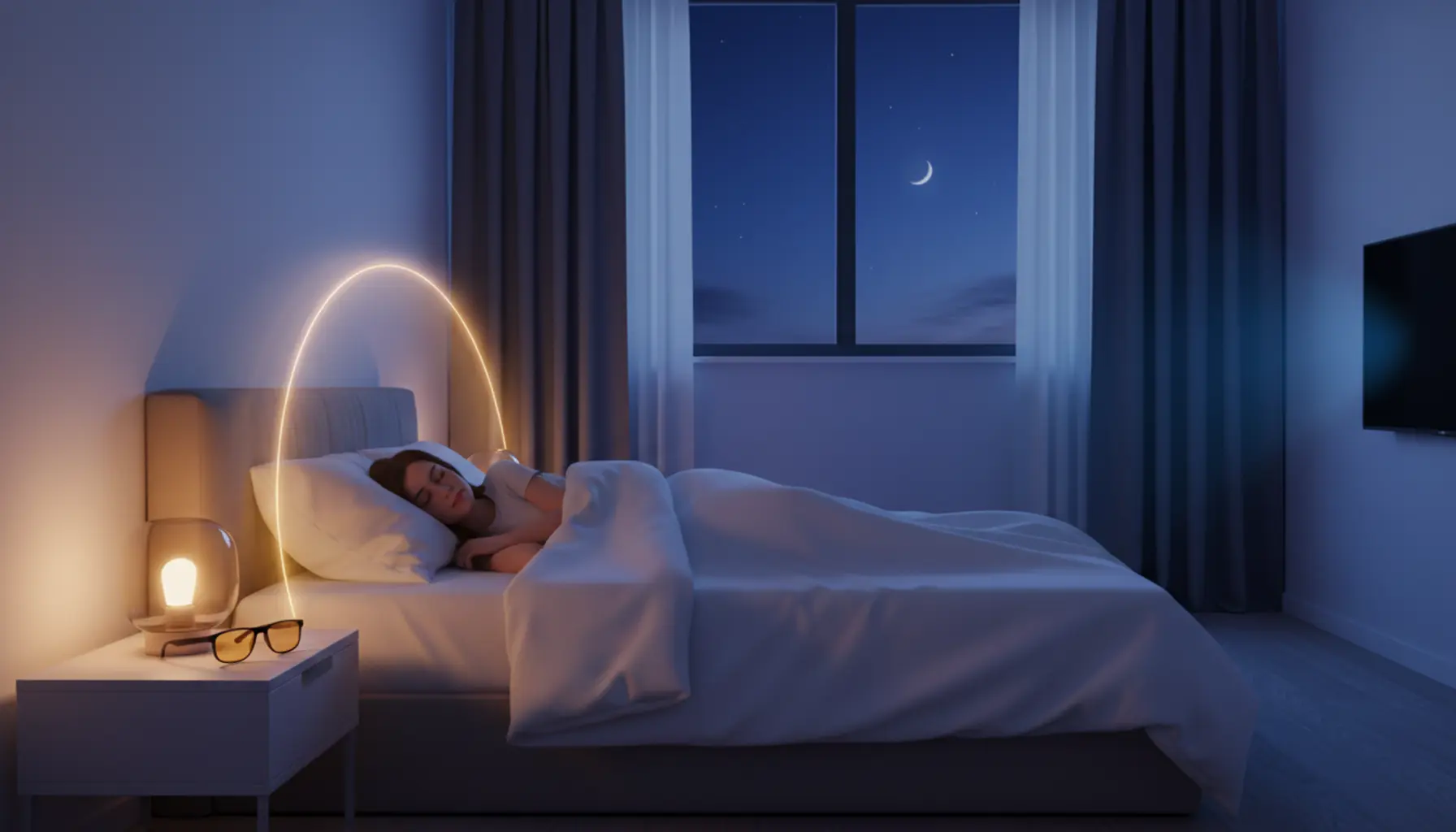
Blue light is one of the most frequently discussed topics regarding eye health and sleep quality. Find out how exposure to blue light affects the body, what science-backed facts and common myths exist, and how to effectively protect your eyesight and maintain a healthy circadian rhythm.
Discover how blue light impacts health and sleep. Learn about the myths and facts, which eyewear to choose, and how to protect your eyes effectively.
Table of Contents
- What is blue light and where do we encounter it?
- Effects of blue light on health – scientific facts
- Blue light, sleep quality and circadian rhythm
- Blue light filter glasses: do they really work?
- The most popular myths about blue light
- How to effectively protect your eyesight and sleep?
What is blue light and where do we encounter it?
Blue light is part of the visible electromagnetic radiation spectrum, i.e. the part our eyes can register as colors. In practice, it refers to wavelengths roughly from 380 to 500 nanometers – short waves, which means high energy compared to, for example, red light. Physically, we can distinguish a narrow range of blue-violet light (approx. 380–450 nm), often called “high-energy visible light” (HEV), and a blue-turquoise range (approx. 450–500 nm), which has slightly different, often more beneficial, properties. This distinction matters because public debate usually lumps all “blue light” together, while in reality, some of it is essential biologically, and other parts – especially in excess and at the wrong time – may contribute to eye fatigue and sleep disturbances. The natural, most important source of blue light is the sun. Daylight contains the full spectrum, but the blue component is particularly strong at midday and is largely responsible for the bright, “cool” feeling of sunlight. Thanks to natural blue light, our biological clock knows it’s daytime: this signal travels from the retina to brain structures regulating melatonin, the sleep hormone. Without blue light, we’d be sleepy, less focused, and out of sync with nature’s rhythm, which affects metabolism, mood, and overall performance. The problem arises when, outside the natural day/night cycle, we surround ourselves with lots of artificial blue light – often precisely when the body should be “winding down.” Technically, almost every modern LED light source emits blue components, but the most intense and focused sources are screens, which we use at close range. For this reason, we are now talking about a “blue light era” – not because it’s new, but because both quantity and timing of our exposure have dramatically changed in recent years.
In reality, we encounter blue light not only in obvious places like smartphone, laptop, or television screens. Other sources include classic office monitors, tablets, backlit e-readers, advertising LEDs, and even digital billboards. Each pixel in an LCD or OLED display consists of subpixels emitting red, green, and blue – with the latter accounting for a significant share of high-energy light reaching the eye. The brighter we set a screen, and the “cooler” (more bluish) the color temperature selected, the greater the share of blue light hitting the retina. So working in the evening with a bright, cool-toned computer or phone exposes our eyes to lighting resembling that of midday, which can then affect falling asleep. Beyond electronics, blue light is present in home and office lighting – especially LEDs and compact fluorescents. Many “energy-saving” sources have a pronounced spike in the blue-violet range, even if the bulb looks “warm” to us. Public spaces (shops, malls, offices) often use cool lighting to boost brightness and concentration, but at the same time inflate all-day blue light exposure. There are also less obvious sources: teeth whitening lamps, dermatological treatments, industrial and medical lighting, and car or street LED lighting systems where blue components are very strong. Diffused blue radiation reaches our eyes even if we don’t look directly at the source, adding to the cumulative daily dose. It’s important to note that completely eliminating blue light is neither possible nor desirable – it’s a natural part of daylight with an essential biological role. The key is to understand when blue light is beneficial (e.g. in the morning and early day, helping to “wake” the body and stabilize circadian rhythm) and when it may become problematic (evenings/nights, as the body prepares for rest). For eye protection and sleep hygiene, the point is not to demonize blue light, but to consciously manage sources around us: choosing lighting types at home and work, adjusting screen brightness and color temperature, and cultivating pre-sleep digital habits. Identifying which items and technologies around us emit the most blue light is the first step toward sensible, effective prevention, widely discussed later in this article.
Effects of blue light on health – scientific facts
Blue light plays a dual role in the human body: it is an essential signal for regulating the circadian rhythm, energy, and mood, but in excess or at the wrong time it can disturb sleep and increase eye fatigue. Scientifically, it’s crucial to distinguish between daytime and evening/night-time exposure. Chronobiological studies show that wavelengths of 460–480 nm particularly affect special retinal ganglion cells containing melanopsin, which send signals directly to the brain’s “clocks.” During the day, blue light is beneficial: it suppresses melatonin, boosts alertness and reaction time, and facilitates concentration, as shown in many lab studies and workplace research. That’s why morning exposure to natural light, or specialized lamps emitting more blue spectrum for treating seasonal affective disorder (SAD), is recommended by experts. The problem arises when powerful blue light is present in the evening – from phone, laptop, TV, or cold-white LED screens. Studies (e.g., “Journal of Clinical Endocrinology & Metabolism”) show that 2–3 hours of bright screen time before sleep can significantly delay melatonin onset, reduce total sleep time, and worsen subjective sleep quality (“shallow,” non-refreshing sleep). Importantly, it’s not just about the amount of blue light, but also light intensity, proximity, and duration – which is why a small smartphone close to the face can have a stronger impact than a larger, more distant screen.
There is currently no unequivocal evidence that typical blue light doses from digital devices cause lasting retinal damage in healthy adults, even though this myth is often repeated in public debate. Most alarming studies are based on animal or cell experiments with unnaturally high light intensities – incomparable to normal electronics use. Organizations such as the American Academy of Ophthalmology note that current knowledge does not support claims that screens “burn” the retina; however, long-term research continues, especially regarding children who use devices from a young age. Scientifically, digital eye strain is far better documented: symptoms such as burning, dryness, gritty sensation, headaches, and blurry vision after many hours on monitors. Crucially, the main reason is not specifically blue light, but prolonged close-focus, infrequent blinking, overly bright contrast, and poor workstation ergonomics. The blue component can, however, exacerbate discomfort with a greater scattering effect in the eye, adding to the sensation of “foggy” vision. For the nervous system, excess light stimuli at the wrong time, especially in the evening, can disrupt sleep, mood, relaxation, and subjective wellbeing. A multitude of observational studies link heavy night-time screen use to insomnia, as well as indirectly to obesity, poor glycemic control, or high blood pressure – interpreted as a result of circadian rhythm disruption, not uniquely blue light by itself. Certain groups need special attention: children and teens have thinner, more transparent lenses, allowing more high-energy blue light to reach the retina, while their circadian clocks are extremely light-sensitive. In older adults, especially those with existing eye diseases (e.g. age-related macular degeneration – AMD), blue light is under intensive research, but there is no hard evidence that blue light blocking lenses slow disease progression. Thus, current specialist guidelines focus less on demonizing blue light and more on “light hygiene”: minimize intense, cool lighting in the evenings, get plenty of natural sunlight during the day, make smart use of “night mode” features, and gradually reduce screen exposure before bed, especially for children and those with sleep issues.
Blue light, sleep quality and circadian rhythm
Blue light is one of the strongest regulators of our internal biological clock, the circadian rhythm. The retina contains special cells sensitive specifically to blue wavelengths – melanopsin-containing cells, which do not affect sharp vision but relay brightness information to the hypothalamic “master clock” in the brain. During the day, the eyes register large amounts of light, especially blue, signaling “it’s day” – cortisol rises, alertness and focus increase, and melatonin (the sleep hormone) is naturally suppressed. This is beneficial in the morning and daytime, keeping a clear division between the activity and rest phases. The problem arises in the evening, when the light stimulus no longer comes from daylight but from artificial sources, especially intense blue light from screens and LEDs. The body, which “sees” such light at night, mistakenly stays in an alert mode. As a result, melatonin is delayed or suppressed, making it harder to fall asleep, shortening the total sleep time, and disrupting sleep architecture and natural sleep phases. Research shows even 1–2 hours of intense blue light before bed can significantly shift the onset of sleepiness and lower subjective sleep quality – with more night wakings and a sense of not being rested despite getting enough sleep in theory. Notably, it’s not just about “looking at a screen” but the spectrum and brightness of emitted light: the brighter and “cooler” (higher color temperature) the screen or lighting, the stronger the signal to the biological clock. That’s why late-night computer work, TV or phone use in bed often leads to delayed sleep phase, with sleep and natural wake-up shifting far later than is compatible with work, school, or family life.
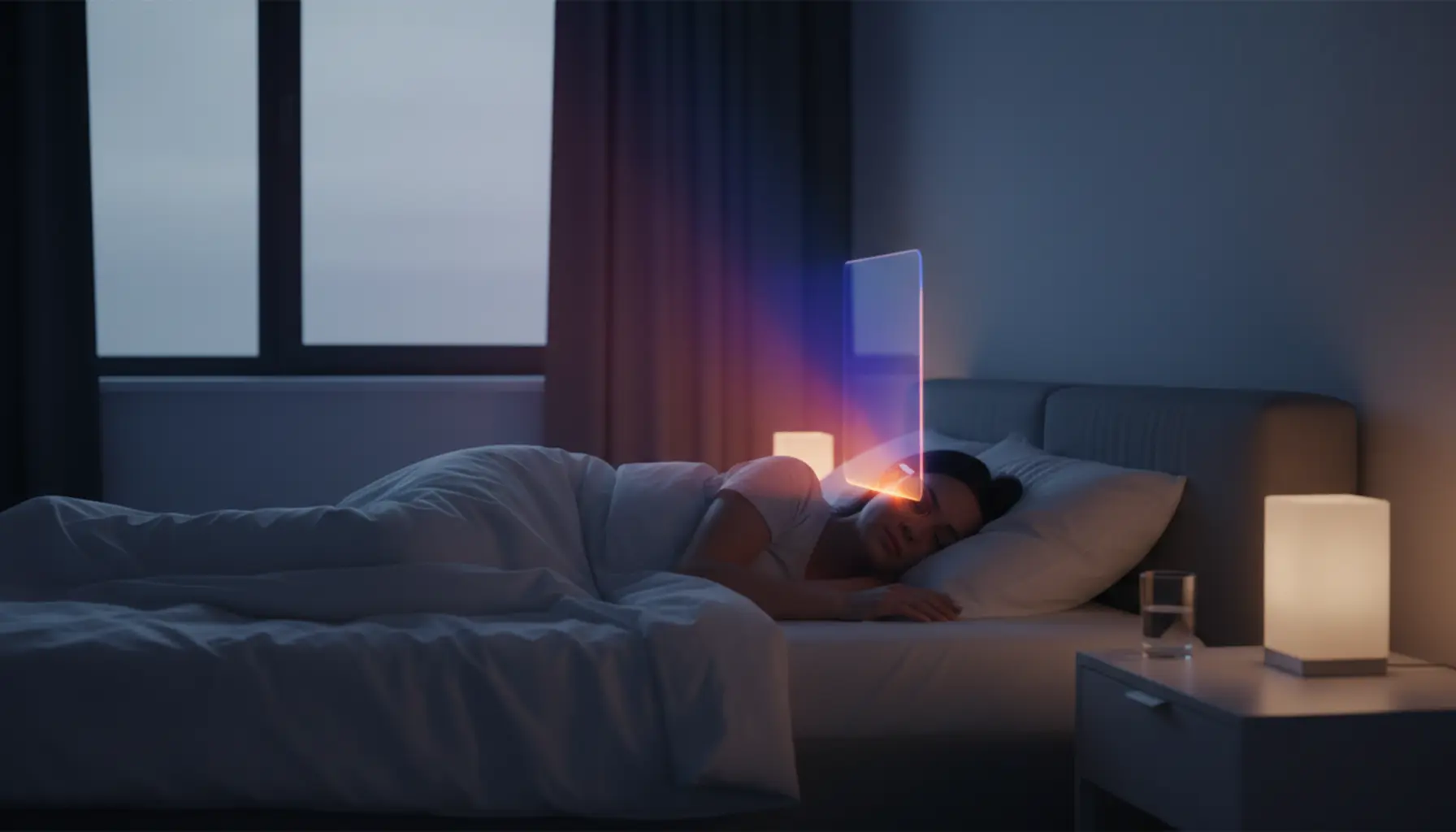
The effect of blue light on sleep quality and circadian rhythm is particularly marked in teens, shift workers, and people spending most of their time indoors. For adolescents, a natural tendency to go to sleep late is physiological, but intense blue light exposure in the evening (phones, gaming, streaming) further shifts their body clocks, causing chronic sleep deprivation, fatigue, concentration issues, and low mood. The same mechanism applies to shift workers exposed to bright blue light at night, which “switches” their clock to night mode – helpful at work, but problematic for recovery and functioning on days off. People who get little daylight and spend time in poorly lit rooms experience a “flattened” day-night rhythm: not enough day signal, and still stimulated with screen light in the evening. This blurring between day and night disrupts the circadian rhythm, worsening sleep and, over time, raising metabolic and mood disorder risk. Key sleep and circadian hygiene strategies are: maximizing morning daylight and minimizing intense blue light at dusk. In practice, this means using blue light reduction modes (night shift, screen warming), dimming screens after sunset, opting for warmer bulbs in bedrooms and relaxation spaces, and avoiding screens for 1–2 hours before bed. Blue light filtering glasses are gaining popularity as a supplement – especially for those who, for professional reasons, must use screens in the evening or at night. However, they should be seen as part of a broader circadian health strategy, not a “magic” fix. It’s important to remember that total elimination of blue light all day isn’t possible or desirable – daytime exposure helps synchronize the biological clock and improve night sleep. The right balance is to “feed” the body with light during the day, and gradually dim it after dusk, giving the brain a clear signal that it’s time to regenerate.
Blue light filter glasses: do they really work?
Blue light filter glasses have in recent years become a very popular health accessory for people working at computers, students, and gamers. Advertising promises better sleep, retinal protection, less eye fatigue, and improved screen comfort. But it’s important to separate marketing from scientific evidence and understand how these filters work, what kinds of glasses exist, and what can realistically be expected. A blue light filter is a lens coating (or tinted lens material) that partially blocks short wavelengths, usually around 400–450 nm. Depending on the technology, some glasses reflect blue light (with visible blue or violet highlights), others absorb it thanks to colorants, giving the lens a slight yellow or amber tint. The stronger the filter, the greater the targeted spectrum reduction, but also greater color distortion, which is a disadvantage for some, especially in visual work. Manufacturers often boast high percentages of blue light blocked, but this typically refers to a narrow part of the spectrum (e.g. 420 nm), not all “blue” wavelengths. For light hygiene purposes, the main focus is reducing intense short-wavelength light in the evening, which most strongly suppresses melatonin, whereas during the day, complete blue light blockage isn’t advised, as it helps maintain alertness and proper rhythm. Many people buy blue filter glasses hoping for retinal protection from “screen radiation,” but current research suggests that blue light emitted from ordinary monitors, phones, or TVs is too low to cause structural damage to the retina under normal use. Most user problems are digital eye strain – dryness, gritty eyes, headache, blurry vision – mainly due to screen distance, excessive brightness, infrequent blinking, and poor workstation ergonomics. Blue filters alone won’t solve these, though some users feel the light is “softer” and less visually fatiguing, especially if previously working with bright, cool lighting. To reduce digital eye strain, more important than glasses is applying the 20–20–20 rule (every 20 minutes, look 20 seconds at something 20 feet away), regular blinking, proper monitor distance, screen brightness matching ambient light, and minimizing glare.
As for sleep and circadian effects, blue blocking glasses may have a more measurable effect – under certain conditions. In the evening and at night, the retina’s blue-light-sensitive cells tell the brain “it’s still day,” which suppresses melatonin and delays sleep. Changing screen color temperature to warmer or dimming screens reduces part of this effect, though some blue still reaches the eye. Glasses with stronger, amber-toned filters can further lower light in the key biological range and help, especially for those unable to avoid evening screen time or working shifts. Some studies indicate using such glasses 2–3 hours before sleep can accelerate falling asleep and improve subjective sleep quality, but it’s not a “miracle” cure – regular sleep routines, morning daylight, and good sleep hygiene still matter the most. It’s worth distinguishing between subtle “blue control” coatings in ordinary prescription glasses and specialized evening blue blockers. The former only moderately reduce glare and a small blue spectrum slice, providing a subtle, often hard to notice, effect. Special orange or amber glasses, used only after dusk, may significantly cut down the light signal to the body clock. Expect some color distortion – white becomes cream, and blue/violet shades virtually disappear, which is not for everyone. The payoff depends on lifestyle, evening screen use, individual light sensitivity, and willingness to change other habits. For many, activating night mode, lowering screen brightness, using warm ambient light, and keeping phones out of bed are enough. Blue filter glasses can be a valuable supplement, especially for sleep disorders, shift workers, and teens who spend a lot of time on screens at night – but cannot compensate alone for chronic sleep shortage or lack of morning daylight. When choosing, check manufacturer credibility, transparent data on blocked spectra, frame comfort, prescription compatibility, and match filter strength to time of day – milder filters for daytime work, stronger only in the evening, to avoid blocking the beneficial effects of blue light during the day.
The most popular myths about blue light
Blue light has become the subject of headlines, marketing campaigns, and online debates, fostering myths and simplifications. One of the most frequently repeated myths is that “blue light from screens destroys the retina” and causes permanent vision loss. Current ophthalmic positions and research suggest that blue light from digital devices is too low to produce retinal toxicity under normal use. Experiments showing harmful blue light effects used much higher intensities than computer work entails. In reality, unprotected exposure to intense natural sunlight poses greater risks than screen viewing. A common belief is that “all blue light is bad,” whereas some blue wavelengths are vital for health – regulating the body clock, alertness, mood, and daily cognitive performance. Completely eliminating blue light, e.g. by always wearing strong block filters, can paradoxically disrupt circadian rhythms and worsen wellbeing. Another myth blames “blue light alone” for computer eye discomfort. In truth, “digital eye strain” is multifactorial: infrequent blinking, near-focus, screen glare, improper monitor distance, font size, dry air, or uncorrected vision are all critical. Reducing only blue light without addressing workplace ergonomics and eye breaks often offers little improvement. There’s also the myth that “daytime blue light from screens is as harmful as at night” – current knowledge shows context is key. Daytime screen use with bright ambient light seldom disrupts circadian rhythms, unless it replaces natural sunlight altogether. The real issue is at night, in dark rooms, when a bright screen is the main intense, cool light source, telling the body “it’s still day” and suppressing melatonin.
Blue light filter glasses spark many controversies and myths. One is that “blue light blocking glasses completely solve insomnia and screen fatigue.” In reality, they can help as part of a light hygiene strategy, especially at night, but cannot replace healthy routines – consistent bedtime, stress control, daily daylight, or avoiding hours of phone scrolling in bed. Another myth is “the darker (more orange) the lenses, the better,” but very strong filters should be used only in specific situations (e.g. severe sleep disorders, prescribed by a specialist at night). Worn all day, they may disrupt circadian regulation, impair color perception, and reduce visual comfort. Marketing also pushes that “all blue-filter glasses work the same,” but actual blue wave blocking varies widely by brand, coating, lens quality, and whether the filter is real or just marketing. Some so-called “blue light blocking” glasses mainly reduce glare and improve contrast, with little true blue light filtration. There’s also a belief that “night mode on phone or computer eliminates blue light problems,” which is a simplification – warmer screens reduce blue wave share but do not offset intensity, proximity, or late-evening use. Finally, a parental myth is that “blue light glasses alone are enough to protect children from excessive screen time.” For children, limiting device time, enforcing breaks, daily outdoor activity, exercise, and regular routines are crucial – glasses are only a supplement, not a main line of defense. Recognizing these myths and what truly stems from science versus advertising helps make better choices – when picking glasses, adjusting screens, and creating daily light routines.
How to effectively protect your eyesight and sleep?
Effective eye and sleep protection in the blue light era isn’t about a single “magic” solution, but a well-planned combination of daily habits, device settings, and, if needed, suitable optical accessories. It starts from understanding that our eyes and brain need both light and darkness at the right times. During the day, maximize natural light: working near a window, short outdoor breaks, and even 10–15 minutes of morning sunlight help regulate circadian rhythms, improve mood, and aid evening sleep. At dusk, the key is to reduce intense, cool lighting before bed: dim lamps, opt for warm (2200–3000K) bulbs, and skip bright white-blue LEDs in bedrooms and living rooms. A good strategy is to signal the body clearly: moderate light in early evening but dim, warm lighting 1–2 hours before sleep to promote melatonin release. Just as vital as light quantity is its arrangement – glaring point sources (e.g. bare LEDs above a desk or cold halogens in the bathroom) worsen visual discomfort; diffused light with shades or wall reflections is preferable. Eye protection is also supported by regular vision checks and eyeglass updates – working on a computer with outdated prescriptions, or at improper screen distances, increases accommodation effort and headaches, often wrongly attributed to blue light.
The second pillar is conscious use of digital devices. One of the simplest and most effective methods is activating night mode or “warm screen” functions on phones, tablets, and computers – gradual color warming in the evening reduces blue light emission at times the body expects darkness. Set it to change automatically with sunset and sunrise, for consistency. Also, keep screen brightness in check: in a dark room, a bright screen acts like a mini “sun” inches from your eyes, so match your screen’s luminosity to room brightness – the darker the room, the dimmer the screen. Duration and usage matter, too; the 20‑20‑20 rule (every 20 minutes, 20 seconds looking at something 6 meters away) relaxes eye muscles and reduces dryness and burning. Take a longer, 5–10 minute screen break each hour – move, stretch, look out the window for real daylight, which helps both eyes and muscles. Ergonomics is key: keep screens just below eye level, 50–70 cm from the eyes, avoid direct glare from daylight or lamps on the screen to minimize squinting and awkward posture. For sleep, it’s advisable to go “screen-free” at least 60 minutes before bed; use that time for a paper book, a warm bath, relaxation exercises, or a face-to-face chat. If screens at night are unavoidable, blue light filter glasses with amber or yellow-tinted lenses are helpful, especially for filtering short-wavelength blue. But not all glasses work equally: choose products with verified filtration, tailored for the intended use (office, phone, or console gaming). Prescription glasses wearers can consider blue filter coatings to avoid switching pairs throughout the day. Strong blue blockers with deep orange tint are best saved for evenings, as over-filtering blue during daytime – especially if lacking daylight – can paradoxically disrupt circadian rhythms. Remember also basic eye hygiene: keep them moist (blink, use drops if needed), sleep regularly, and cut out substances undermining sleep (caffeine late in the day, alcohol before bed). All this creates a coherent protection system, where blue light is only one part, not the whole determinant of visual comfort and night-time recovery.
Summary
Blue light accompanies us daily and can affect both concentration positively, and sleep or circadian rhythms negatively. That’s why smartly limiting blue light exposure in the evening – especially before bed – is worthwhile. Research confirms that too much exposure hinders falling asleep and disrupts melatonin production. Blue-blocking glasses can be effective, but it’s best to choose products verified by independent tests. Reliable knowledge helps separate myths from facts and take care of health, eyesight, and sleep quality every day.