Hair Loss in Men
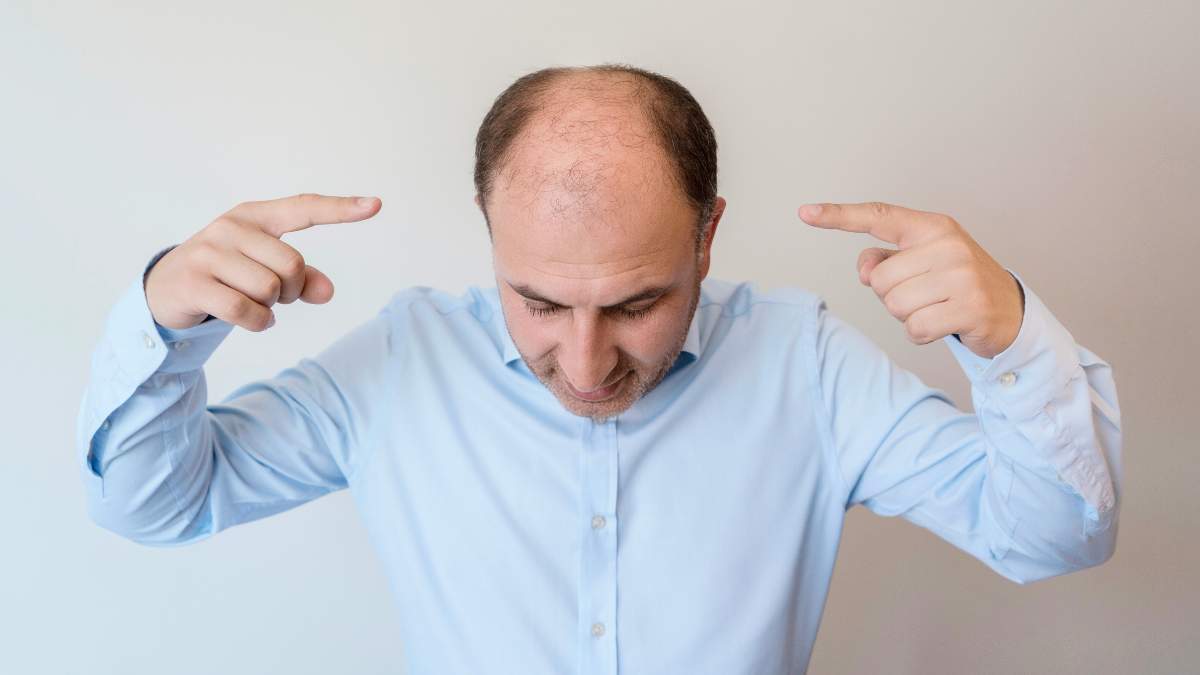
Hair loss is a natural phenomenon that affects everyone and is related to the cyclical process of hair growth. During the day, physiological hair loss is usually between 50 and 150. The problem arises when this natural loss becomes excessive and persists for a longer period of time. In men, the most common cause of excessive hair loss is androgenetic alopecia (AGA), also known as male pattern baldness. It is estimated that this type of alopecia accounts for about 95% of all cases of hair loss in men.
Spis treści
Alopecia in men
Androgenetic alopecia is a chronic disease of hair follicles, which leads to their gradual miniaturization and loss of the ability to produce hair in the characteristic frontal-parietal area of the scalp. It affects a significant part of the male population, because more than 80% of men will experience this problem at some point in their lives, and the first signs can appear as early as around the age of 20. In addition to androgenetic alopecia, men may experience other types of hair loss, such as alopecia areata, which is autoimmune, telogen effluvium, often related to stress, illness, or medication, and the less common cicatricial alopecia.
Each hair on our head goes through a specific life cycle, consisting of three main phases: anagen, which is the growth phase, which usually lasts between 3 and 6 years; catagen, a short transition phase lasting 1-2 weeks; and telogen, which is the resting phase, which lasts from 2 to 4 months. In a healthy scalp, most hair, as much as 80-85%, is in the phase of active growth (anagen), about 1% in the transition phase (catagen), and about 15% in the resting phase (telogen). Excessive hair loss can occur when a larger than usual number of hairs prematurely go into the resting phase and fall out, which is characteristic of telogen effluvium. In the case of androgenetic alopecia, the anagen phase is shortened, and the hair follicles gradually shrink, resulting in the production of thinner and weaker hair.
The fact that androgenic hair loss affects such a large proportion of the male population indicates that it is a significant health and aesthetic problem for many men. Such a high prevalence highlights the need to provide comprehensive information and solutions in this regard. Although hair loss is a natural process with a specific cycle, androgenetic alopecia disrupts this cycle, shortening the hair growth phase and causing the hair follicles to miniaturize. This shows that AGA is not only increased hair loss, but a fundamental change in hair production. The early onset of male pattern baldness in some men, sometimes in their early twenties or even teens, suggests that it is not a purely age-related problem and can significantly affect the self-esteem of younger men.
Causes of baldness in men
Genetic causes
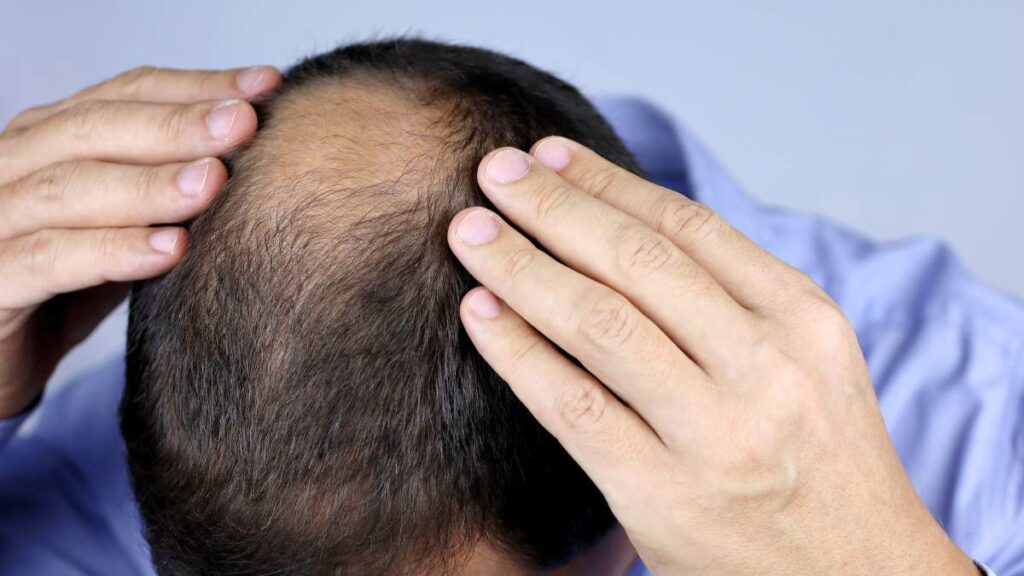
One of the main causes of hair loss in men, especially in the case of androgenetic alopecia, is genetic predisposition. Inheritance in this case is polygenic, which means that many genes can affect the development of this trait. A particularly strong link with androgenetic alopecia is the androgen receptor (AR) gene located on the X chromosome. Men whose parents or grandparents have experienced androgenetic alopecia are much more likely to develop this problem. Genes can affect both the level of androgen hormone production in the body and the sensitivity of hair follicles to their effects.
Androgenetic alopecia
A key role in the development of androgenetic alopecia is played by dihydrotestosterone (DHT), which is the active form of testosterone. Testosterone is converted to DHT with the help of an enzyme called 5-alpha-reductase, which is present in the hair follicles and in the scalp. In people with a genetic predisposition to androgenetic alopecia, hair follicles show hypersensitivity to DHT, which leads to their gradual miniaturization, shortening of the hair life cycle and, consequently, excessive hair loss. In addition, increased levels of DHT can contribute to increased sebum production and greater susceptibility of the scalp to inflammation, which can lead to weakened follicles.
Age
Age is another factor that can affect the severity of hair loss in men. Statistics show that about 25% of men with a hereditary tendency to baldness begin to lose their hair before the age of 21, and by the age of 50, this problem already affects about half of the male population. Androgenetic alopecia usually begins around the age of 20 and is characterized by a specific pattern of hair loss.
Hormonal causes
In addition to genetics, hormones, and age, there are a number of other potential medical causes that can lead to hair loss in men. Hormonal disorders, such as thyroid or adrenal gland problems, can have a negative impact on the condition of the hair. Autoimmune diseases such as alopecia areata, lupus erythematosus or Hashimoto’s disease can also cause hair loss. Scalp diseases such as psoriasis, seborrheic dermatitis or fungal infections can directly affect the hair follicles and lead to hair loss. Chronic systemic diseases, such as diabetes or liver and kidney diseases, can also affect the condition of your hair. Deficiencies in important vitamins and minerals, such as iron, zinc, biotin or vitamin D, are another potential cause of hair problems. In addition, taking certain medications, such as beta-blockers, antidepressants or cancer drugs, can cause hair loss as a side effect.
Lifestyle, stress
Lifestyle can also have a significant impact on the condition of your hair. Severe or chronic stress is a factor that often contributes to the severity of hair loss. A poor diet, poor in essential nutrients such as protein, vitamins, minerals and healthy fats, can weaken the hair and contribute to hair loss. Smoking cigarettes and excessive alcohol consumption also have a negative impact on hair health. Inadequate hair care, including the use of aggressive treatments, wearing tight hairstyles and using poorly selected cosmetics, can weaken the hair and lead to hair loss. Even insufficient sleep can contribute to hair problems, which can lead to weakening and excessive hair loss.
The interaction of genetic factors and DHT is the central mechanism of androgenetic alopecia. Genetic predisposition determines the sensitivity of hair follicles to DHT, which then initiates the process of their miniaturization. Understanding this interaction is crucial for both diagnosis and treatment strategies, as therapies often aim to block DHT production or reduce its impact on hair follicles. Although genetics and hormones play a major role, a wide range of medical conditions and lifestyle factors can significantly influence hair loss, acting as direct causes or exacerbating existing predispositions. This highlights the need for a holistic approach to understanding and treating hair loss, taking into account not only genetic factors, but also overall health and daily habits. The early onset of androgenetic alopecia in some men, even during the teenage years, combined with the fact that it is a progressive condition, highlights the importance of early intervention to effectively slow or manage the process. Younger men experiencing hair loss can benefit greatly from early diagnosis and treatment, which can help to preserve hair density for longer.
Norwood-Hamilton scale: how to recognize the stages of alopecia?
The Norwood-Hamilton scale is a commonly used classification system that is used to assess the severity of male pattern baldness. It consists of seven main stages that describe the different stages of hair loss, from minimal thinning to advanced baldness. This scale is often used by doctors, including hair transplant surgeons, to assess the degree of baldness in patients and to plan appropriate treatment strategies.
Stage 1 of the Norwood-Hamilton scale is characterized by the absence of significant hair loss or receding hairline. At this stage, the so-called youthful hairline may occur. Stage 2 describes a slight receding hairline around the temples, which is often referred to as a mature hairline. Stage 3 is the first stage in which signs of clinically significant alopecia are visible. It is characterized by a deep receding hairline at the temples, taking the shape of the letter M, U or V. Hair loss on the top of the head may also appear at this stage, which is referred to as stage 3 vertex. In stage 4 , there is a more advanced receding hairline at the temples and visible thinning or complete absence of hair at the top of the head. The balding areas at the temples and apex are separated by a strand of hair. In stage 5 , the balding areas at the temples and apex become even larger, and the strand of hair separating the two areas becomes narrower and thinner. Stage 6 is characterized by the connection of areas of alopecia at the temples with the area of alopecia at the top of the head. A strand of hair that was previously on the top of the head disappears or is very thin. The last, stage 7, is the most advanced stage of alopecia, in which only a narrow strip of hair around the sides of the head, resembling a horseshoe, remains. It is also worth mentioning the Norwood A-type variant, where the hairline recedes evenly from front to back, without the characteristic bald spot on the top of the head.
The Norwood-Hamilton scale provides a standardized and visual framework for understanding the progression of male pattern baldness. Thanks to this, men can make an initial assessment of the stage of their hair loss in men – the causes, and it also facilitates communication with doctors who use this scale to describe the severity of baldness. The existence of the type A variant shows that male pattern baldness can occur in different ways and does not always have to manifest itself in classic hairline receding and baldness on the top of the head. This is important for accurate self-assessment and diagnosis.
| Norwood-Hamilton scale stage | Key Features |
|---|---|
| Stage 1 | No significant hair loss or receding hairline. There may be a youthful hairline. |
| Stage 2 | Small, triangular areas of receding hairline around the temples, forming a mature hairline. |
| Stage 3 | Deep receding hairline at the temples (M, U, or V shape). Thinning may appear on the top of the head (Stage 3 Vertex). |
| Stage 4 | More advanced receding hairline at the temples. Thinning or no hair at the top of the head. Balding areas at the temples and apex separated by a strand of hair. |
| Stage 5 | Balding areas at the temples and apex enlarged. The strand of hair between them narrower and thinner. |
| Stage 6 | The balding areas at the temples merge with the balding area at the apex. The strand of hair on the top of the head fades or is very thin. |
| Stage 7 | The most advanced stage. All that remains is a horseshoe-shaped strand around the sides of the head. |
| Norwood’s Type A | The hairline recedes evenly from front to back, without thinning the hair at the top. Not having the typical bald spot on the top of the head can be a sign of other health problems, such as hypothyroidism. |
Diagnosing Hair Loss in Men: When to Seek Advice from a Specialist?
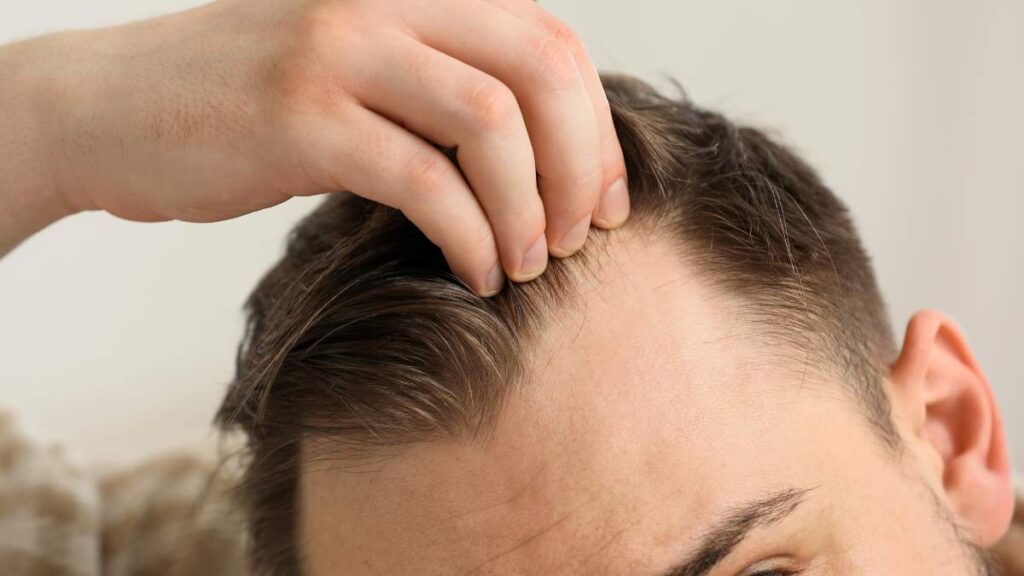
It is worth consulting a specialist when daily hair loss exceeds 100-150 and persists for several months. Another alarm signal is noticeable thinning of the hair, receding hairline, the appearance of so-called receding hairlines or bald spots on the top of the head. Particular attention should be paid to sudden or unusual hair loss, for example in the form of round patches. Situations when hair loss is accompanied by other symptoms, such as itching, pain or redness of the scalp, are also worrying.
The diagnostic process usually begins with a physical examination and a detailed medical history, during which the doctor will assess the pattern of hair loss, ask about family history, past illnesses, medications taken and the patient’s lifestyle. Trichoscopy, i.e. assessment of the scalp and hair follicles using a dermatoscope, is often performed. A hair pull test can also be useful, which allows you to assess the amount of hair falling out during gentle pulling. A loss of more than 10% of pulled hair may indicate active hair loss. In order to rule out other causes of hair loss, such as vitamin and mineral deficiencies or hormonal disorders, the doctor may order laboratory blood tests, including complete blood count, iron (ferritin), zinc, vitamin D, thyroid hormones, male hormones (testosterone, DHT) and cortisol levels. In rare cases where the cause of hair loss remains unclear, a scalp biopsy may be necessary.
Early diagnosis by a specialist is crucial for effective hair loss treatment. Quickly identifying the cause allows you to implement appropriate intervention, which can slow down or even reverse certain types of hair loss. Delaying the consultation can lead to the progression of hair loss, which reduces the effectiveness of treatment. The diagnostic process involves a combination of physical examination, medical history, and potentially specialized tests such as trichoscopy, blood tests, and hair root assessment. This comprehensive approach is essential to distinguish between the different causes of hair loss and adjust the treatment accordingly. Relying solely on self-diagnosis can lead to ineffective and even harmful treatments.
Alopecia Treatment Methods: Pharmacology, Treatments and Surgery
There are many treatments available for hair loss in men, ranging from over-the-counter medications to advanced surgical procedures. The choice of treatment method depends on the type and stage of alopecia, as well as the individual preferences and medical history of the patient, including the possibility of systemic lupus erythematosus.
In pharmacological treatment, it is often used against hair loss. minoxidil, an over-the-counter medication in topical liquid or foam form. Minoxidil works by dilating the blood vessels in the scalp and encouraging hair growth. The first effects of treatment are usually visible after about 3 months of regular use. Minoxidil is available in different concentrations, for example, 2%, 5% and 10%. Another drug used to treat androgenetic alopecia is platelet-rich plasma (PRP), which can promote the regeneration of the roots. Finasteride, which is an oral prescription medication that is primarily intended for men. Finasteride inhibits the conversion of testosterone into DHT, which leads to reduced hair loss and stimulating hair regrowth. Finasteride works by blocking the conversion of testosterone to DHT, which plays a key role in the process of androgenetic alopecia. In some cases, your doctor may also consider other antiandrogen medications, such as spironolactone, flutamide, or cyproterone acetate.
Among non-surgical methods, low-energy laser therapy (LLLT) is gaining popularity, which stimulates hair follicles and improves blood circulation in the scalp. Mesotherapy is another non-surgical method that involves injecting nutrients such as vitamins, minerals, amino acids, and peptides into the scalp to encourage hair growth and improve hair condition. Mesotherapy can be performed with the use of platelet-rich plasma (PRP) or special cocktails containing active ingredients. Platelet-rich plasma (PRP) is a modern approach to the treatment of androgenetic alopecia, supporting the regeneration of hair follicles. This is a method that uses the patient’s blood plasma, rich in growth factors, which stimulate the regeneration of hair follicles and the growth of new hair. Other non-surgical methods include microneedling, which can also stimulate hair growth , carboxytherapy, which involves subcutaneous administration of carbon dioxide to dilate blood vessels and stimulate hair follicles, LED light therapy, which increases blood supply to the scalp and stimulates hair growth, and oxygen infusion, which involves introducing nutrients into the scalp under oxygen pressure.
In more advanced cases of alopecia, surgical methods such as a hair transplant on the head may be considered. hair transplant. It involves taking hair follicles from the donor areas, usually at the back of the head, and transplanting them into the areas affected by baldness. Popular hair transplant techniques are FUE (Follicular Unit Extraction) and FUT (Follicular Unit Transplantation). Other, less commonly used surgical methods include scalp reduction, which involves surgically removing part of the balding scalp and bringing the areas with hair closer, and scalp expansion, which involves stretching the scalp before a planned reduction. Scalp micropigmentation is a cosmetic procedure that involves getting a tattoo that mimics a shaved head, which may be an option for people who are not eligible for a transplant or prefer non-surgical solutions.
There are many treatment options for hair loss in men, from over-the-counter medications to advanced surgical procedures. The choice of treatment depends on the type and stage of hair loss, as well as individual preferences and medical history. Non-surgical treatments such as laser therapy, mesotherapy, and PRP are gaining popularity as less invasive options for stimulating hair growth and improving hair condition. They often work by improving blood circulation and delivering essential nutrients to the hair follicles. While pharmacological drugs such as minoxidil and finasteride act on the underlying hormonal and vascular factors in AGA, surgical options such as hair transplantation offer a more permanent solution for restoring hair density in advanced stages.
How to prevent hair loss and slow down the process?
In order to prevent hair loss and slow down the process, men can take a number of steps related to hair care, diet, and lifestyle.
Proper hair care is important, which includes gently washing your hair and avoiding shampoos that contain strong detergents, as well as home remedies to improve the condition of your hair. Aggressive hairdressing and heat styling, such as frequent use of a hairdryer, straightener or curling iron, should be avoided. Hair should be combed gently, starting at the ends, to avoid breakage and pulling. Regular scalp scrubs can help to remove impurities and dead skin cells, creating a healthier environment for hair growth. Scalp massage can also be beneficial, as it improves blood circulation and oxygenation of the hair follicles.
Diet is also crucial. It should be balanced and rich in protein, which is the basic building block of hair, vitamins (especially those from group B, A, C, D, E and biotin), minerals (such as iron, zinc, selenium and copper) and healthy fats, including omega-3 and omega-6 acids. It is worth limiting the consumption of highly processed foods, sugar and excess dairy products, which can have a negative impact on the condition of the hair. Do not forget to properly hydrate your body.
Stress management is another important part of hair loss prevention. Relaxation techniques, meditation, yoga, and regular physical activity can help reduce stress levels and its negative effects on hair. It is also important to get enough sleep. In some cases, after consulting your doctor, you may want to consider supplementing your diet with vitamins and minerals such as biotin, zinc, iron, B vitamins, vitamin D, and omega-3s, which can support hair health. You should also reduce or completely eliminate stimulants, such as smoking and excessive alcohol consumption, which have a negative effect on the condition of your hair.
While the genetic predisposition to androgenetic alopecia cannot be changed, adopting a healthy lifestyle and proper hair care practices can play a significant role in slowing the progression of hair loss and improving overall hair health. This proactive approach can help men retain hair density for longer and potentially increase the effectiveness of other treatments. The emphasis on stress management and diet highlights the interconnections between overall health and hair health. Addressing these modifiable factors can have a positive impact not only on your hair, but also on your overall well-being, potentially reducing the severity of hair loss and improving your response to specific treatments.
The Psychological Impact of Hair Loss on Men and Available Support
Hair loss, although often seen only as a cosmetic problem, can have a significant negative impact on men’s mental well-being, affecting their self-esteem, confidence and mental health. It can lead to a deterioration in the quality of life and even contribute to the development of depression and anxiety. Many men experience anxiety and stress about changing their appearance , which can lead to difficulties in their social and professional lives and social isolation. Hair loss can also negatively affect your body image.
Men struggling with the psychological consequences of hair loss can benefit from various forms of support. Consultation with a psychologist or psychotherapist can help you cope with stress, anxiety and low mood. It is worth looking for support groups for people with hair loss, where you can share your experiences and get support from other people struggling with a similar problem. A consultation with a trichologist or dermatologist can not only suggest appropriate treatment, but also provide support and information about the options available. Support from family and friends can also be invaluable. It is worth considering various options for masking hair loss, such as wigs, toupees or scalp micropigmentation, which can help to improve the appearance and well-being, especially in the case of excessive hair loss. Ultimately, it’s important to accept your appearance and focus on your other strengths, especially when it comes to excessive hair loss.
Hair loss, although often considered an aesthetic problem, can have a significant negative impact on men’s mental well-being, affecting their self-esteem, confidence and mental health. This highlights the importance of addressing the emotional aspects of hair loss in addition to physical treatment, recognizing that the psychological burden can be significant. Seeking professional support, including psychological counseling and medical advice, is crucial for men struggling with the emotional consequences of hair loss. This highlights the need for a multidisciplinary approach to the treatment of this condition, in which both physical and psychological aspects are addressed with appropriate knowledge and care.
Applications
Hair loss in men, and androgenetic alopecia in particular, is a common problem that affects a significant portion of the male population. The causes of this condition are complex and include both genetic and hormonal factors (especially the role of DHT), as well as the influence of age, various medical conditions and lifestyle elements. The Norwood-Hamilton scale provides a useful tool for classifying the stages of alopecia, helping men understand the progression of this process. Diagnosing hair loss often requires consultation with a specialist, who can use a variety of methods, from a physical examination to specialized laboratory tests. The available treatment methods are diverse and include pharmacology, as well as non-surgical and surgical procedures. Prevention is also an important aspect, which through proper hair care, diet and stress management can help slow down this process. The psychological impact of hair loss on men should not be underestimated, and it is worth seeking support if necessary. Understanding the causes, stages, and available treatments is crucial for men experiencing hair loss so that they can make informed decisions about their health and well-being.