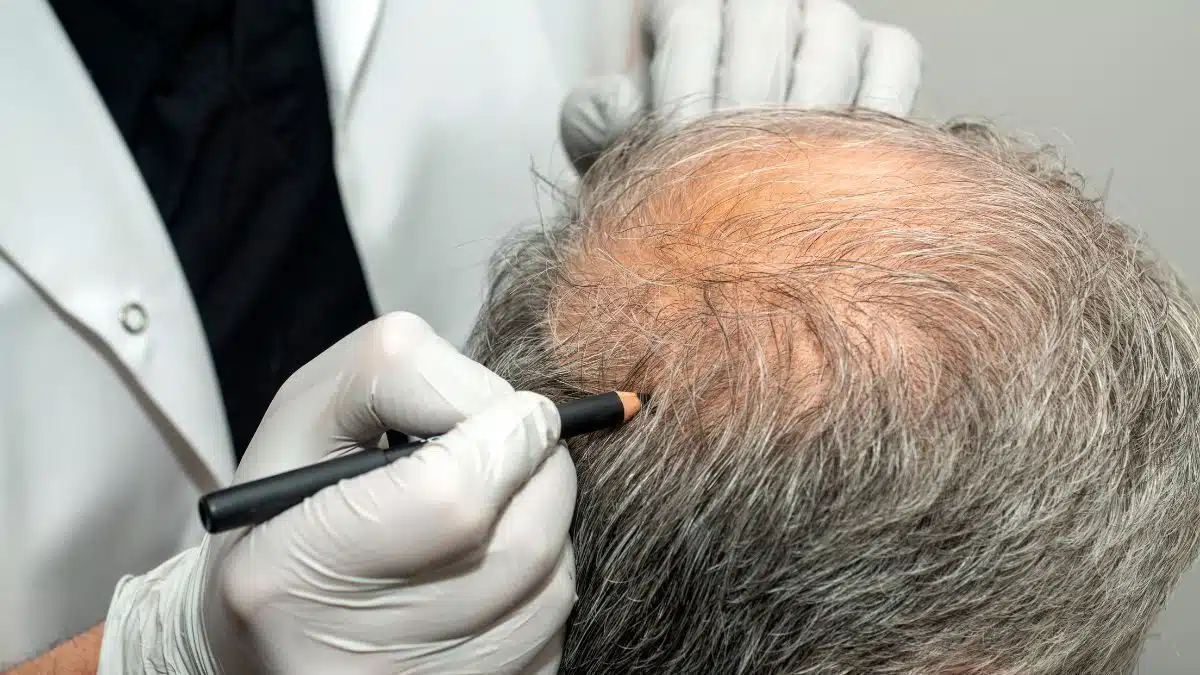
Hair loss is a problem that affects both men and women. It can lead to lower self-esteem and feelings of attractiveness. Fortunately, modern aesthetic medicine offers an effective solution – hair transplantation. This treatment allows for the permanent recovery of thick and natural-looking hair.
Table of contents
What is a hair transplant?
Hair transplantation is a surgical procedure that involves taking hair follicles from one area of the body (the donor) and transplanting them to the area where the alopecia occurs (the recipient). Most often, hair is taken from the back and sides of the head, because they are resistant to the effects of dihydrotestosterone (DHT), the hormone responsible for androgenetic alopecia. Transplanted hair retains its properties and grows naturally throughout its life.
Who is a hair transplant for?
Hair transplantation is an effective solution for people who struggle with:
- androgenetic alopecia
- alopecia areata
- post-traumatic alopecia (e.g. after burns)
- thinning hair
- receding hairlines
- lack of hair around the eyebrows, eyelashes or chin
Contraindications to hair transplantation
Although hair transplantation is a relatively safe procedure, there are some contraindications to performing it. These include, m.in:
- scalp diseases (e.g. psoriasis, mycosis)
- autoimmune diseases
- diabetes
- blood clotting disorders
- Pregnancy and breastfeeding
- taking certain medicines (e.g. anticoagulants)
Types of hair transplants
There are two main methods of hair transplantation:
- FUE (Follicular Unit Extraction) method – involves extracting individual hair follicles using a special tool. This method is less invasive and does not leave visible scars.
- STRIP (Follicular Unit Transplantation) method – involves taking a strip of skin with hair, from which the hair follicles are then isolated. This method is more invasive and leaves a linear scar at the site of skin collection.
How does the hair transplant procedure work?
The hair transplant procedure is performed under local anesthesia and usually takes from a few to several hours, depending on the amount of hair transplanted.
Stages of the procedure:
- Hair follicle extraction – depending on the method chosen (FUE or STRIP).
- Preparing hair follicles for transplantation.
- An incision or puncture in the skin at the recipient site.
- Implantation of hair follicles.
After the procedure
After the procedure, the patient may feel slight pain and discomfort at the transplant site. The skin may be red and swollen. These symptoms usually disappear after a few days. Scabs may appear at the transplant site, which fall off spontaneously after about 7-10 days.
Effects of a hair transplant
The first effects of a hair transplant are visible after about 3-4 months. Hair begins to grow gradually, and the final effect is achieved after about 12-18 months. Transplanted hair is permanent and grows naturally throughout life.
Recommendations after the procedure
After the hair transplant procedure, you should follow the doctor’s recommendations, which include, m.in:
- avoiding touching and scratching the transplant site
- using special scalp care products
- avoiding intense physical exertion
- avoiding saunas and swimming pools
- head protection from the sun
Cost of a hair transplant
The price of a hair transplant depends on many factors, such as:
- Transplant method
- Number of transplanted hair
- Doctor’s experience
- Location of the clinic
The approximate cost of the procedure ranges from a few to several thousand zlotys.
Where to perform a hair transplant?
Choosing a clinic where we will perform a hair transplant is very important. Attention should be paid to the doctor’s experience, patient reviews and the technologies used in the clinic.
Summary
Hair transplantation is an effective method of fighting alopecia. This treatment allows for the permanent recovery of thick and natural-looking hair. Before deciding on a hair transplant, it is worth consulting a specialist who will assess your health and choose the right method of surgery.