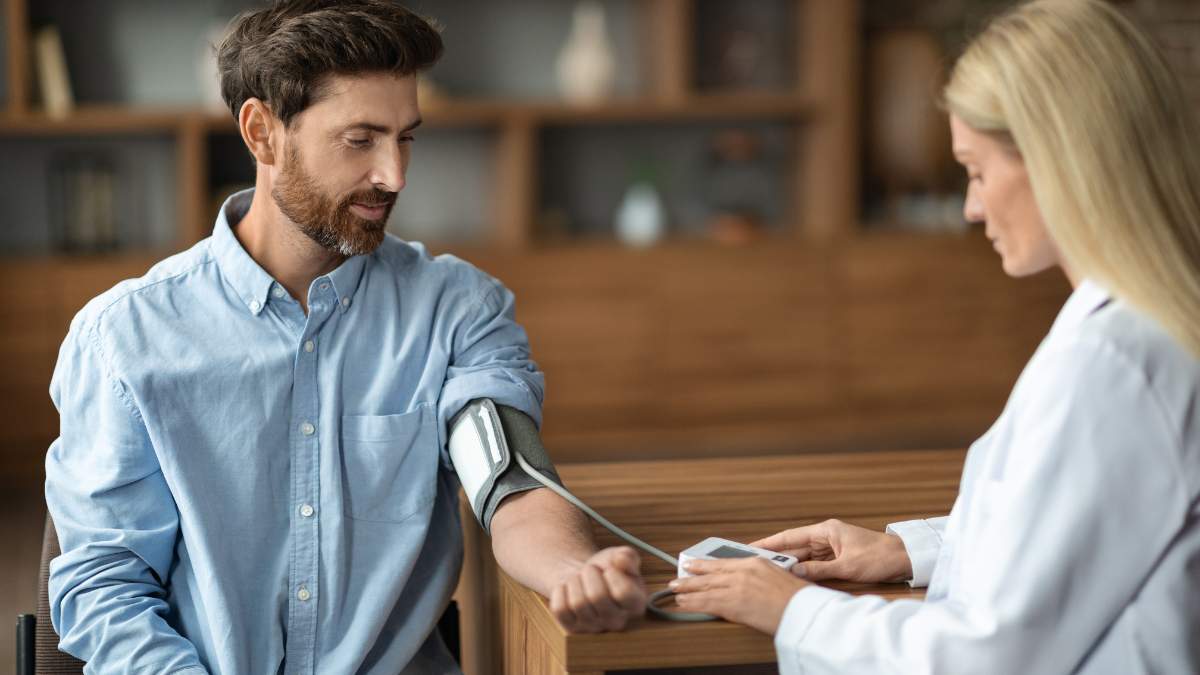
Hypertension in men
Hypertension is a disease of affluence that affects millions of people around the world. The statistics are alarming – especially for men, who are more likely to suffer from them and often underestimate the first symptoms. Called the “silent killer”, it can develop asymptomatically for years, wreaking havoc on the body and leading to heart attack, stroke or kidney failure.
Spis treści
Understanding the enemy: What is hypertension?
Imagine the circulatory system as a network of tubes and the heart as a pump. Blood, circulating in vessels (arteries), exerts a certain pressure on their walls – this is arterial pressure. We are talking about two values:
- Systolic pressure (first, higher value): This is the force with which blood pushes against the walls of the arteries as the heart contracts and pushes blood into the aorta.
- Diastolic pressure (second, lower value): This is the pressure in the arteries when the heart is at rest (diastole) between beats.
Hypertension is when these values are constantly, notoriously elevated, which is a sign that the patient may be suffering from hypertension. It is as if the water in the plumbing system is flowing under too much pressure – over time, this leads to damage to the pipes. In our body, arteries, heart, brain, kidneys and eyes are damaged.
Normal blood pressure in a man – what are the norms?
Blood pressure values are measured in millimeters of mercury (mm Hg). According to the guidelines of the European Society of Cardiology (ESC) and the European Society of Hypertension (ESH), the classification is as follows:
| Category | Systolic blood pressure (mm Hg) is an important indicator for patients with hypertension. | Diastolic pressure (mm Hg) |
|---|---|---|
| Optimal | < 120 | < 80 |
| Valid | 120–129 | 80–84 |
| High normal blood pressure values are crucial for health. | 130–139 | 85–89 |
| Grade 1 hypertension is a condition that requires attention and can lead to organ complications if not treated properly. | 140–159 | 90–99 |
| Hypertension Grade 2 | 160–179 | 100–109 |
| Hypertension grade 3 | ≥ 180 | ≥ 110 |
Important: The diagnosis of hypertension is made on the basis of at least two different measurements taken during at least two different medical visits. A one-time high result can be caused by stress (the so-called “white coat hypertension”), but it should always be a signal for further control.
A man’s business? Causes and risk factors for hypertension in men
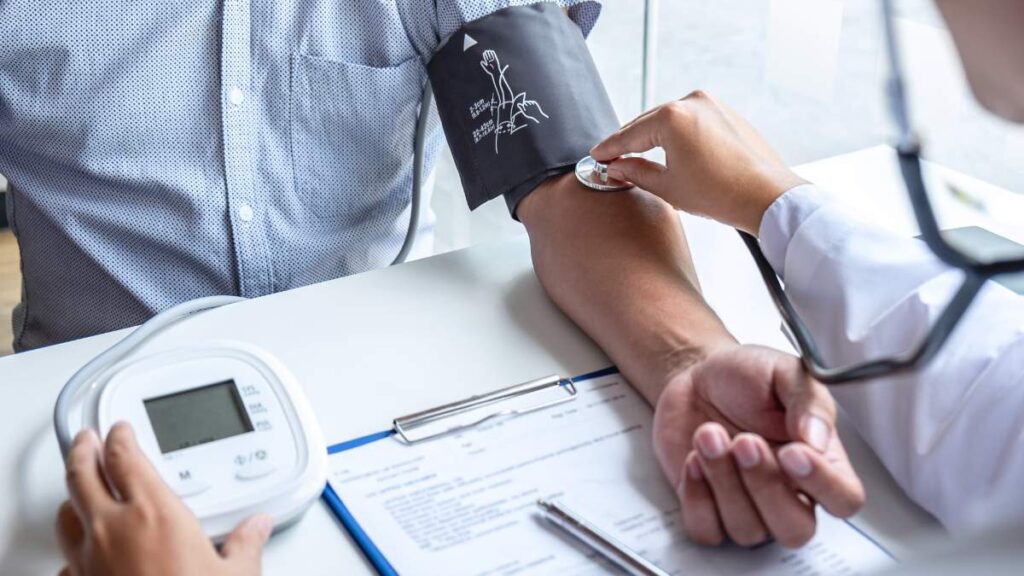
Men statistically develop hypertension more often and at a younger age than women (up to menopause). This is due to a combination of genetic, hormonal and, above all, lifestyle factors.
Risk factors beyond your control:
Genetics: If your family (parents, siblings) has a history of hypertension, your risk is much higher.
Age: The risk increases with age. In men, a significant increase in blood pressure is observed as early as after the age of 45, which can increase the risk of developing hypertension.
Sex: As mentioned, being a man in itself is a risk factor in younger and middle age.
Lifestyle – the key to the problem (and solution):
This is where the greatest field of action lies. The following factors are the main culprits of the hypertension epidemic:
Excessive consumption of table salt is one of the main causes of hypertension. Table salt (specifically sodium) retains water in the body, increasing blood volume and pressure in the arteries, which can lead to the development of hypertension. It is hidden in a huge amount of processed products: cold cuts, cheese, bread, ready meals and fast food, which can be the cause of the development of hypertension.
Unhealthy diet: A diet rich in saturated and trans fats (red meat, full-fat dairy, hydrogenated vegetable oils) promotes the development of atherosclerosis, which narrows and stiffens the arteries.
Low physical activity: A sedentary lifestyle weakens the heart, promotes obesity and worsens the condition of blood vessels. Regular movement helps to keep them flexible.
Obesity and overweight: Abdominal obesity (the “apple” type), typical for men, is particularly dangerous. Adipose tissue, especially visceral tissue (surrounding organs), is hormonally and pro-inflammatory, which directly increases blood pressure.
Excessive alcohol consumption: Alcohol in larger quantities raises blood pressure, damages the heart and contributes to weight gain.
Smoking: Nicotine causes immediate contraction of blood vessels and an increase in pressure. In the long term, it destroys the endothelium (the inner lining) of the arteries, accelerating the development of atherosclerosis.
Chronic stress: In stressful situations, the body produces hormones (adrenaline, cortisol) that increase heart rate and blood pressure. If stress is a constant part of life, the circulatory system is in a constant state of “alarm”.
Snoring and sleep apnea: Obstructive sleep apnea causes multiple, short hypoxia at night, which is a huge burden on the heart and results in rapid pressure spikes.
How to recognize hypertension? Symptoms that should concern a man
The insidiousness of hypertension lies in the fact that it may not give any specific symptoms for many years. The body adapts to higher values, and you can feel completely fine. However, when symptoms do appear, they can be:
Headaches: Often located at the back of the head (in the occiput), appearing in the morning after waking up.
Dizziness and tinnitus.
Palpitations (a feeling of fast, irregular beating).
Hyperhidrosis.
Hot flashes and facial redness.
Sleep problems, insomnia.
Easy tiredness, shortness of breath during exertion.
Nosebleeds for no apparent reason.
Concentration problems and “brain fog”.
Hypertension and potency – an uncomfortable but important topic
For many men, this is a crucial, although often embarrassing, warning signal. Erection problems can be one of the first symptoms of hypertension. The mechanism is simple: in order to achieve and maintain an erection, it is necessary for blood to flow freely into the cavernous bodies of the penis. High blood pressure damages delicate blood vessels throughout the body, including those responsible for erections. The arteries become less elastic and narrowed by plaques, which makes it difficult for blood to flow.
Remember: a healthy diet and lifestyle modification can help to lower blood pressure. The appearance of erectile dysfunction, especially in a man over 40, should be an urgent signal to control blood pressure and the general condition of the circulatory system.
Untreated hypertension – a ticking time bomb. Serious consequences for health
Ignoring high blood pressure is playing Russian roulette with your life, especially when you have hypertension. Chronically elevated pressure leads to irreversible damage to key organs:
Heart: Forced to constantly work against high resistance, the heart overgrows (like any muscle), which leads to heart failure. Damaged coronary arteries are a simple way to a heart attack.
Brain: Hypertension is a major risk factor for stroke – both ischaemic (clogging of an artery) and haemorrhagic (ruptured artery, known as “stroke”, can be avoided by controlling blood pressure and avoiding risk factors such as tobacco. It can also lead to microdamage and the development of vascular dementia.
Kidneys: The delicate vessels in the kidneys, which filter the blood, are destroyed, which leads to Chronic kidney disease can lead to secondary hypertension., and in extreme cases to their complete failure and the need for dialysis.
Eyes: Damage to the small vessels in the retina (hypertensive retinopathy) can lead to decreased vision and even blindness.
Peripheral arteries: Atherosclerosis in the arteries of the legs causes pain when walking (intermittent claudication) and increases the risk of aortic aneurysm – a deadly dilation of the main artery in the body.
Diagnosis is key: How to measure blood pressure correctly?
The key to control is regular measurement. Every man over 30 should measure his blood pressure at least once a year, and after 40 it is recommended to consult a cardiologist. – more often. It is worth investing in a certified, automatic upper arm blood pressure monitor.
Instructions for proper measurement at home:
- Relax: Before measuring, sit comfortably in a quiet room and rest for at least 5 minutes.
- Avoid stimulants: Do not smoke, drink coffee, tea or alcohol for 30 minutes before the measurement.
- Right position: Sit with your back against a chair, feet flat on the floor, do not cross your legs. The arm on which you measure blood pressure should be rested freely on the table, at the level of the heart.
- Cuff: Place the cuff on your bare arm, about 2-3 cm above the crook of your elbow. It should adhere, but not press (you can slide a finger under it).
- Measurement: Turn on the blood pressure monitor. Do not move or talk during the measurement.
- Repeat: Take two measurements 1-2 minutes apart and average the results. Record the results in a diary, noting the date and time to detect any blood pressure problems.
How to lower high blood pressure? A comprehensive approach to treatment
The fight against hypertension is a marathon, not a sprint. It is based on two pillars: a fundamental change in lifestyle and, if necessary, pharmacological treatment.
Step 1: Lifestyle change – your first line of defence
This is the absolute basis, without which even the best drugs will not be fully effective. These changes can lower blood pressure so much that drug treatment is not needed or lower doses can be used.
DASH diet: It is an eating plan created specifically to fight hypertension. It is based on vegetables, fruits, whole grains, lean dairy, fish, poultry and nuts.
Drastic reduction of salt: Aim for less than 5 g of salt (teaspoon) per day from all sources. Read labels, cook at home, use herbs instead of salt.
Regular physical activity: At least 150 minutes of moderate exercise per week (e.g. 5 x 30 min). Brisk walking, jogging, swimming, cycling are ideal.
Weight reduction: Losing every kilogram matters. Losing 5-10% of body weight can significantly reduce blood pressure.
Alcohol restriction: Men should not exceed 2 units of alcohol per day (e.g. 2 small beers, 2 glasses of wine).
Quitting smoking: It’s the best thing you can do for your circulatory system. The benefits are almost immediate.
Stress Management: Find healthy ways to relax: sports, hobbies, meditation, yoga, contact with nature.
Step 2: Pharmacological treatment – when is it necessary?
If your blood pressure is still above 140/90 mm Hg after a few months of lifestyle changes, your doctor will likely prescribe medication. There are several main groups of hypertension medications, and the doctor selects them individually, taking into account age, comorbidities and other factors.
Remember:
– Hypertension medications are usually taken for the rest of your life, but lifestyle modification can help reduce them.
– They should be taken regularly, even if the blood pressure normalizes.
– Never discontinue medication on your own or modify dosage without consulting your physician.
Summary: Take your health into your own hands
Hypertension in men is a serious health problem, but it is largely controllable. The key is to be aware of the risks and take responsibility for your lifestyle. Regular blood pressure measurements, a healthy diet, physical activity and avoiding stimulants are the best investment for a long, healthy life without cardiovascular complications, especially for patients with hypertension.
Do not ignore the signals. Don’t wait for a heart attack or stroke. Measure your blood pressure today. If the results are abnormal, don’t delay – talk to your doctor. Your heart, brain, and future will thank you.