Men’s Belt
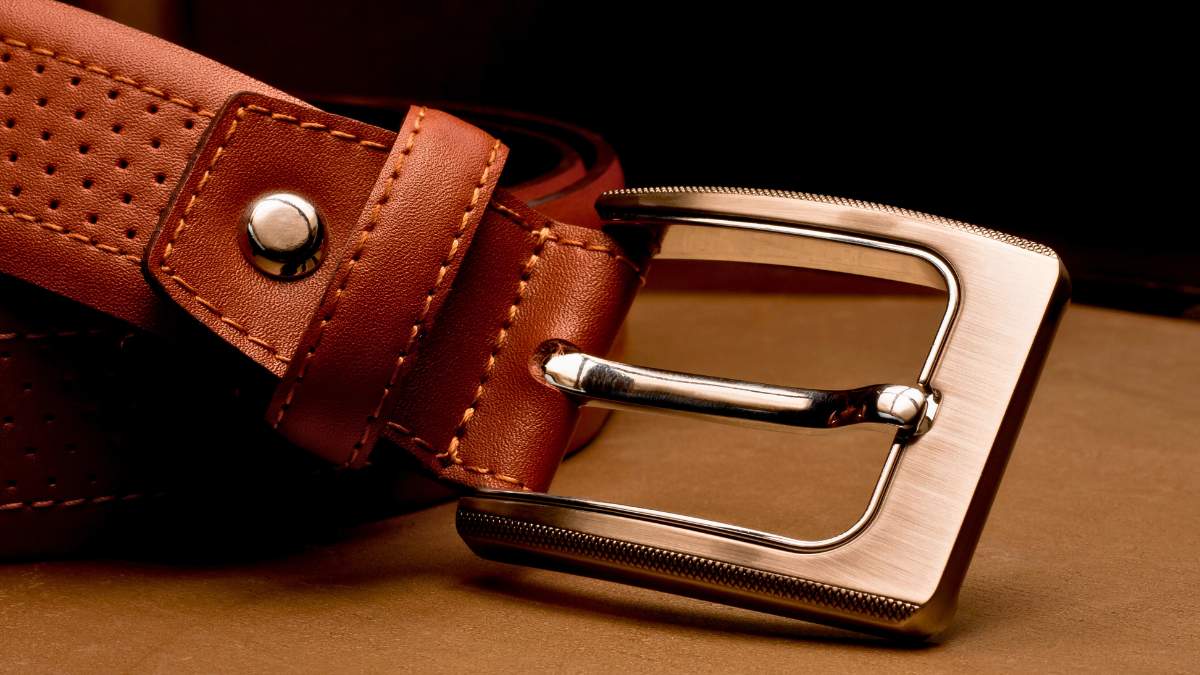
The men’s belt, although often underestimated, is not only a practical piece of clothing, but also a key fashion accessory. A properly selected belt can emphasize the character of the styling, add elegance or a casual expression. This article is an exhaustive compendium of knowledge about men’s belts, discussing their variety, materials, styles of buckles, rules for choosing the size and matching for various occasions.
Spis treści
Style Spectrum: Exploring Popular Types of Men’s Belts
Men’s trouser belts come in many variants, each of which is characterized by a different style and purpose. Knowing the popular types of belts will allow you to consciously choose an accessory perfectly suited to the occasion and individual preferences.
The timeless elegance of leather straps
Men’s leather belts are synonymous with classics and versatility. Made of natural leather, they are characterized by exceptional durability and aesthetics, which makes them an ideal choice for both formal occasions and everyday use. Natural leather, as the best material for men’s belts, acquires a characteristic patina over the years, which adds to their nobility. Leather belts go perfectly with suits, elegant trousers, as well as with more casual outfits, such as jeans.
Free comfort of webbing straps
Webbing straps, made of durable fabric, are a practical and comfortable choice for everyday use. Their casual nature makes them perfect for jeans, chinos and other informal pants. Webbing belts are available in a wide range of colors and patterns, which makes it easy to match them with a variety of styles, including a brown men’s belt. They are often equipped with clamp buckles that allow you to adjust the length without the need for traditional buttonholes.
The versatility of braided straps
Braided belts are a stylish proposition that successfully combines elegance with an informal character. Their unique texture and often rich colors add originality to the styling. Thanks to the elastic design, the braided straps provide high wearing comfort and fit the figure perfectly. Like webbing straps, many braided models do not have traditional holes, which allows them to be fastened anywhere.
The modern convenience of automatic belts
Automatic belts are an innovative solution, characterized by the lack of traditional holes and a special locking mechanism. They allow you to precisely and easily adjust the length of the strap to your waist circumference. They often have modern and elegant buckles. Many automatic belts can be shortened, which allows for a perfect fit to individual needs. They work well in both casual and business stylizations of a less formal nature.
Classic & Functionality: Single Buckle Straps
Men’s single buckle belts are the most traditional and common type of belts. Single buckles come in a variety of styles, from classic to more decorative, perfect for casual accessories. Their versatility makes them suitable for many different occasions, depending on the belt material and the style of the buckle.
A Unique Touch: Double Buckle Straps
Men’s double buckle belts are a less popular but stylish choice. Their distinctive appearance can add a unique character to the styling. They are often associated with a more casual or avant-garde style. Information on this type of straps is less numerous in the available materials.
Materials that make up a men’s belt
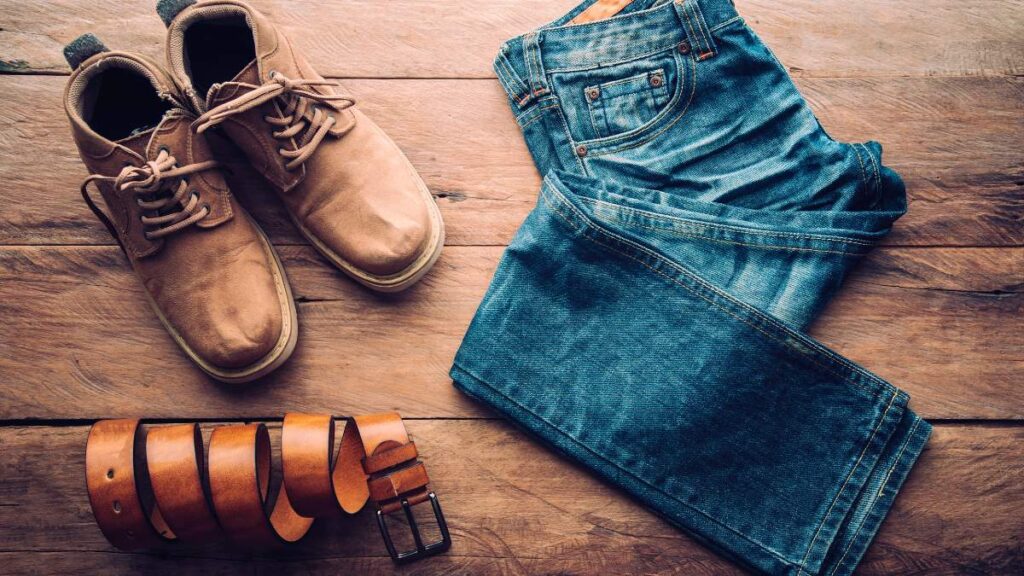
The choice of strap material is crucial for its durability, appearance, and comfort. Men’s belts are made of a variety of materials, both natural and synthetic.
Richness of skin: get to know the different types
Leather is the most frequently chosen material for the production of men’s belts, valued for its elegance and durability. There are many types of leather, each with unique properties.
Full-grain leather: Durability and Character
Full-grain leather is a premium type of leather, featuring a smooth surface, natural texture, and exceptional durability. It is resistant to dirt and moisture. Over time, grain leather can develop a noble patina, which adds to its unique character.
Suede leather: Softness and Texture
Suede leather is characterized by a soft, fuzzy surface. Suede belts are usually more casual in nature. Compared to full-grain leather, suede can be less durable and more susceptible to dirt and moisture.
Nubuck leather: velvety elegance
Nubuck leather is similar to suede, but has shorter and more velvety bristles, which gives it a more elegant look. It is formed from the outside of the leather (grain leather), which is then sanded. Nubuck has a matte finish and is sensitive to contact with water, requiring proper care.
Beyond the skin: textile options
In addition to leather, various types of fabrics are also used in the production of men’s belts, which expands the range of accessories.
Cotton: Breathability and Freedom
Cotton is a popular material for the production of casual belts, often used in webbing belts. It is characterized by breathability and wearing comfort. Cotton belts may be less durable than leather ones, but they come in many colors and patterns.
Nylon and Polyester: Durability and Versatility
Nylon and polyester are durable and often waterproof synthetic fabrics used in belts, especially for sporty and casual purposes. They are characterized by high tensile and tear strength, which makes them an ideal material for men’s leather belts. They are available in a variety of colors and weaves and are often used in military (webbing) belts.
Finish: Metals Used For Buckles
A buckle is an inseparable element of every belt, and the material from which it is made affects its appearance and durability.
Stainless Steel: Elegance and Durability
Stainless steel is a popular choice for buckles due to its durability, sleek appearance, and rust resistance. It goes well with both formal and casual belts. However, it is important to note that some stainless steel alloys may contain nickel, which can cause allergies, especially with elegant stripes.
Brass: Classic and Timeless
Brass is a traditional metal used to make buckles, giving belts a classic and often more vintage look. It is durable and can develop a patina over time. It goes well with leather and some webbing straps.
Aluminium: Lightness and Modernity
Aluminum is a lightweight metal that is often used in buckles with a modern or sporty design, making it a popular choice among men’s leather belts. It is resistant to corrosion, but it can be less durable than steel or brass in some applications, making it a less ideal choice for a men’s leather belt.
Centerpiece: Exploring Men’s Belt Buckles
A belt buckle is not only a functional element, but also an important stylistic detail that can significantly affect the character of the entire styling.
Classic Pin Buckles: Simplicity and Reliability
Pin buckles consist of a metal frame and a pin that slides into the holes of the strap. They are characterized by a simple mechanism and ease of use. They go well with both formal and casual belts.
Automatic Buckles: Precision and Convenience
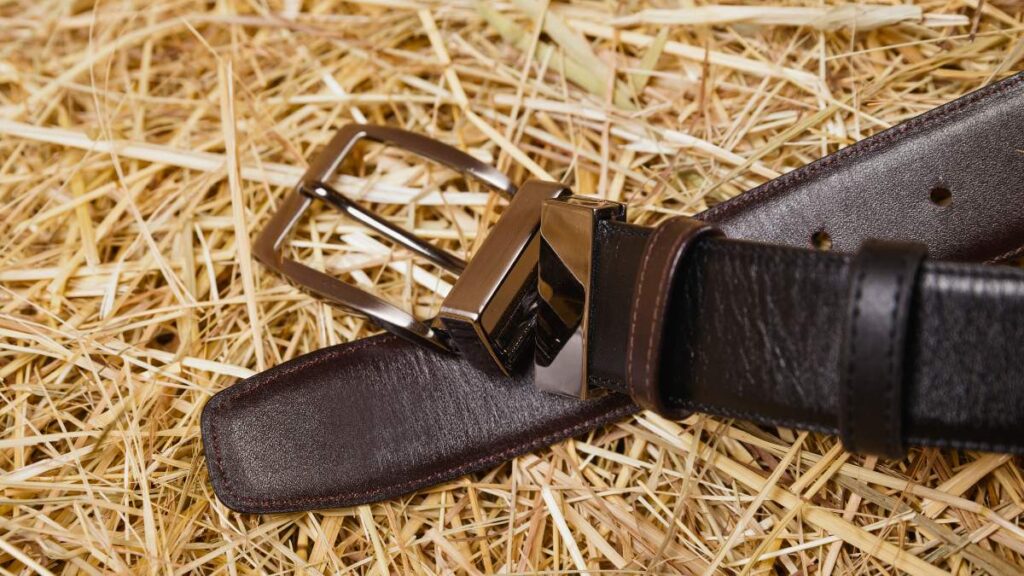
Automatic buckles have a mechanism that locks to the belt without the need for buttonholes. They provide precise adjustment and are easy to use, making them an ideal choice for a men’s leather belt. They often have a modern and elegant design. They have a mechanism that allows you to shorten the strap.
Plate Buckles: Style and Personal Expression
Plate buckles are characterized by a larger, often decorative, flat surface. They can include engravings, logos, or other designs, making them an attractive accessory. They are often associated with a more casual or expressive style.
Other Buckle Styles: D-Ring, Snap Fastener & More
There are also other, less common styles of buckles, such as D-ring buckles (often used in webbing straps), snap buckles (allowing quick release), roller buckles (to reduce wear on the belt), which are often used in fabric straps, and clip buckles, which are popular with fashion accessories. Each of these styles has specific functionality and is typical for specific types of belts, including men’s leather belts.
Finding the Perfect Fit: Men’s Strap Size Guide
Choosing the right belt size is crucial for wearing comfort and styling aesthetics. A bar that is too small or too large may not serve its purpose and look disproportionate.
Measuring Waist Circumference: Ensuring Accuracy
To accurately measure the waist circumference, use a tape measure. It is best to take the measurement at the height at which you usually wear the belt, by pulling the tape measure through the belt loops of your trousers. You should stand freely, without pulling your abdomen in or out.
Understanding Strap Sizes: Length and Fit
The size of the belt usually corresponds to the distance from the buckle pin to the center hole, which is important when choosing the perfect belt. The total length of the strap is larger than the specified size. It is recommended to choose a men’s leather belt a few centimeters longer than the waist circumference. Strap sizes can be given in centimeters or inches.
Tips for Choosing the Right Size
If possible, it is worth trying on the strap before buying. Check the size charts provided by manufacturers to find the perfect men’s belt for your pants. It is worth paying attention to the number of holes, which affects the possibility of adjustment. Especially with automatic belts, it is often possible to shorten the belt. A properly selected belt should be fastened with a central hole, and its end should reach the first loop, not hanging excessively, which is important for elegant belts.
Styling with Style: Matching the Men’s Belt to Your Wardrobe
Skilful matching of the belt to the style of clothing is key to creating a consistent and elegant styling. The rules for choosing belts vary depending on the occasion and the nature of the outfit, for example, elegant belts are suitable for formal events.
Formal Elegance: Belts for Suits and Elegant Trousers
In the case of formal styling, the rule is to match the color of the belt to the color of the shoes (black belt with black shoes, brown belt with brown shoes). It is recommended to choose narrow leather straps (about 3 cm wide) with simple, unobtrusive buckles (silver or gold, matched with other jewelry). Oversized or decorative buckles should be avoided for formal occasions, preferring a more elegant men’s leather belt.
Casual Style: Choosing Straps for Casual Outfits
In casual styling, there is more freedom in the choice of material, color and belt buckle. You can choose from leather, webbing and braided straps. Wider straps (3.5-4 cm) and more decorative buckles are acceptable, which can add style. The rule of matching the color of the belt to the shoes is less strict, although it is still worth taking care of color consistency.
Ready for Action: Belts for Sporty Looks
For sporty styling, it is recommended to choose straps made of durable and comfortable materials such as cotton, nylon or polyester. Functionality and secure fastening of the buckle are important. It is possible to use wider straps for greater comfort and support. The color scheme can be more flexible, guided by practicality and personal preferences.
Time Travel: The History and Evolution of Men’s Belts
The history of the men’s belt dates back thousands of years, and its role and appearance have undergone significant changes over the centuries.
From Functionality to Fashion: Tracing the Origins
Initially, belts were used by men for practical purposes, such as supporting clothing and carrying tools or weapons. In ancient times, they also served as symbols of status and military rank.
Key Steps in Strap Design and Use
In the Middle Ages, belts became more decorative, which can be seen in the styling with a classic belt. In the nineteenth century, narrower, more elegant leather models appeared. At the beginning of the twentieth century, there was a change in the way the belt was worn from the waist to the hips. After World War II, the belt became an inseparable element of men’s wardrobe.
Contemporary Men’s Belt: A Staple of Men’s Fashion
Currently, the men’s belt has both a practical and a fashion function. A wide range of styles, materials, and designs are available.
Market Leaders: Popular Men’s Belt Brands in Poland
There is a wide range of brands offering men’s belts available on the Polish market, both domestic and foreign.
Discovering Polish and International Brands
Popular international brands in Poland include Tommy Hilfiger, Calvin Klein, BOSS, Guess, Emporio Armani, Polo Ralph Lauren, Diesel and Hugo. Among Polish producers, it is worth paying attention to Lancerto, Próchnik, Ryłko, Big Star, Betlewski, Giacomo Conti, Pako Jeans, Zagatto and Aruccie.
With the Times: Trends in Men’s Stripe Fashion
Men’s fashion is constantly changing, and the trends also apply to belts. It is worth keeping up with current trends to choose accessories, such as a men’s leather belt, which fit into the latest canons of style.
Latest Trends in the World of Men’s Belts
In the upcoming spring/summer 2025 season, men’s fashion combines classic elegance with functionality. Minimalist cuts and natural fabrics dominate. Belts made of ecological leather and belts with metal details appear in trends. Stripes with geometric patterns will also be popular. Leather straps with a modern twist remain classics. It is worth paying attention to the various variations of belts, which are one of the trends of the season, including fashionable accessories in black.
The Key to Longevity: Men’s Belt Care and Maintenance
Proper care and maintenance of men’s belts is crucial to maintaining their aesthetic appearance and extending their life. The care rules vary depending on the material of the strap.
Caring for Leather Belts: Maintaining Elegance for Years
Leather straps should be cleaned regularly with a soft, dry cloth to remove dust and dirt. In the case of heavier dirt, you can use special leather cleaners. It is important to avoid soaking the skin and drying it at high temperatures, which is especially important for men’s trouser belts. Regular moisturizing of the skin with special lotions prevents it from cracking and drying out. It is also worth impregnating leather straps to protect them from moisture and stains.
Webbing strap care: keeping it fresh
The webbing straps can be cleaned with warm water and mild soap. After washing, the men’s belt with buckle should be rinsed thoroughly and left to dry at room temperature, avoiding direct sunlight. Stubborn stains can be removed with a soft brush.
Caring for Braided Straps: Maintaining Flexibility and Appearance
Braided straps can be cleaned similarly to webbing straps using a soft cloth moistened with water and mild soap. More difficult dirt can be removed with a soft brush. Avoid using hard brushes, which can damage the structure of the braided line. After cleaning, the men’s leather belt should be dried thoroughly to maintain its quality.
Conclusions
A men’s belt is a versatile accessory that combines functionality and style. Choosing the right belt depends on many factors, such as the occasion, style of clothing, material and individual preferences. Knowledge of different types of belts, materials, styles of buckles and the rules of choosing the size and styling will allow every man to consciously choose an accessory that will perfectly complement his wardrobe. Regular care of straps, such as a classic belt, will ensure their longevity and allow you to enjoy their impeccable appearance for many years.