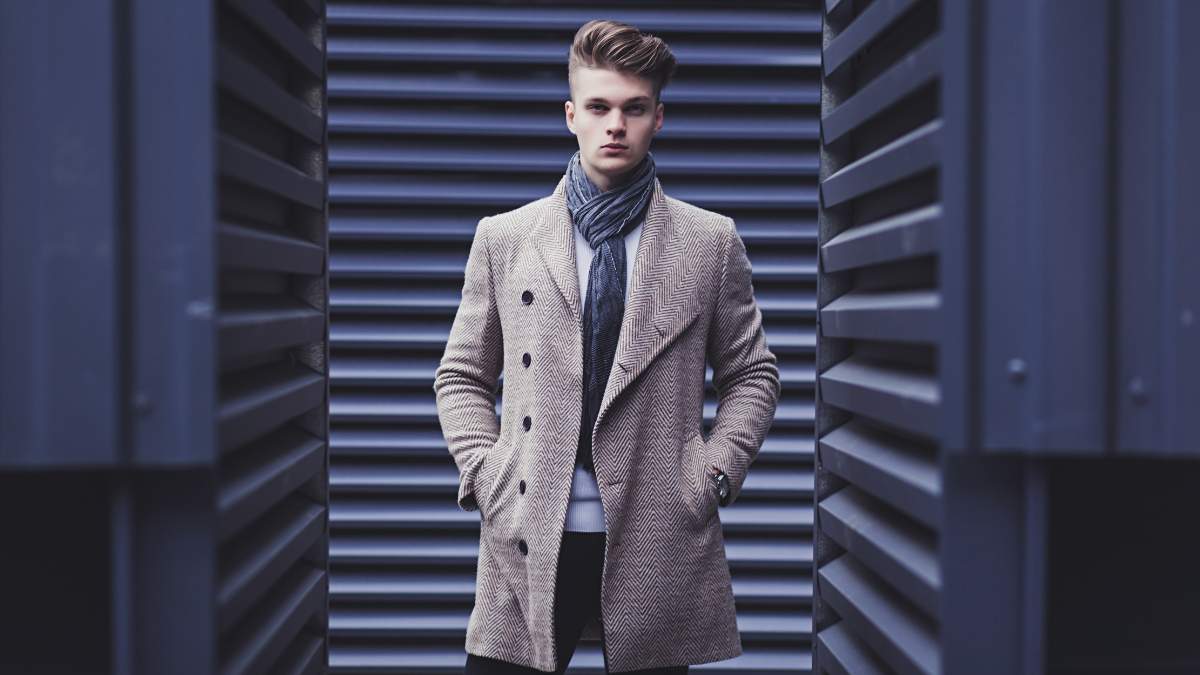
Men’s Coat
The Key to Timeless Elegance
A men’s coat is much more than just practical protection against the cold. It is a fundamental element of the wardrobe of an elegant man, being a clear testimony to his style, class and attention to detail. A well-chosen coat can not only compliment the figure, but even build it, giving confidence and defining the image. On colder days, it is the coat that is often the first element of the outfit that catches the eye, becoming a kind of business card. Therefore, its conscious choice is an investment that pays off for years, both in terms of aesthetics and functionality.
Spis treści
Elegant coat: the foundation of style
Elegance in men’s fashion is a subtle art, the essence of which is harmony, impeccable attention to detail, high quality of materials and workmanship, perfect fit and adequacy of the outfit to the occasion. It is a philosophy of clothing that avoids ostentation, valuing simplicity, classics and compliance with tradition, while allowing for the expression of an individual character. Outerwear, especially the coat, plays a key role in building a coherent and elegant image, constituting a kind of culmination of the entire styling. It is the coat that can set the tone for the whole – from formal seriousness to nonchalant casualness, but always within the framework of good taste.
Achieving true elegance is a process that requires not only knowledge of the basic rules, but also a willingness to experiment and search for your own style. It is not reserved only for one, strictly defined canon of clothing, but manifests itself in the ability to consciously compose one’s wardrobe, adequately to the situation and personality. In this context, the choice of coat – its cut, material, colour and details – becomes a reflection of this awareness and sense of style.
How to choose a fashionable coat?
Choosing the perfect coat is a decision that should be dictated not only by current trends, but above all by individual body features, functional needs and personal style. The following guide will help you navigate the key aspects of this process.
Fit to the Figure: How a Coat Affects Body Proportions
A coat, like no other element of men’s clothing, has the ability to shape and optically shape the figure. A properly selected cut can emphasize the strengths of the figure or cover up its shortcomings, affecting the overall impression of proportions.
- For men with a stronger body build , classic, slightly looser models are recommended, which will ensure freedom of movement and will not hug the figure. It is worth avoiding strongly waisted cuts and those with clearly marked, widened shoulders, which could further burden the figure. Coats with a V-neckline can effectively distract attention from the abdominal area. A single-breasted Chesterfield coat is often recommended for its slimming properties.
- Slim men can successfully reach for double-breasted coats, which will optically add volume and masculinity to the figure. However, you should avoid too voluminous, oversized cuts, which could overwhelm the slender figure.
- Short men should pay attention to shorter models of coats, ending in mid-thigh or even higher. Too long garments, reaching the knees or lower, can optically shorten the silhouette. An interesting proposition may be the diplomat dress, which, despite its classic length, is often recommended for short men, because its cut does not distort the proportions.
- Tall men have the greatest freedom of choice and can confidently opt for longer cuts that will emphasize their height and add elegance to the styling.
A conscious choice of the cut of the coat, dictated by understanding your own figure, is the key to creating a harmonious and beneficial image.
Size and Fit: Key Aspects of a Perfect Fit
The perfect fit of the coat is the foundation of its elegant appearance and wearing comfort. There are a few key areas to note:
- Arms: The seams of the shoulders of the coat should perfectly coincide with the natural shoulder line. The coat cannot be too wide in this place, as this would lead to unsightly creases around the lapels and the impression that it is too big.
- Thorax: The coat should not hug the chest. A certain amount of slack is necessary to ensure freedom of movement and allow you to put on additional layers of clothing, such as a jacket or a thicker sweater, underneath. Therefore, it is recommended to measure the coat on these items of clothing. A coat that is too tight will not only be uncomfortable, but will also quickly lose its cut and can be deformed.
- Waist: Depending on the cut, the coat can be slightly waisted (like a diplomat) or maintain a more casual cut. In general, even in fitted models, there should be some slack in the waist so as not to restrict movement.
Finding the golden mean between a sleek fit and the comfort you need is crucial. The coat must not be too tight or give the impression of baggy.
Optimal Coat Length: Relative to Height and Occasion
The length of the coat is an important factor affecting both the proportions of the figure and the degree of formality of the styling.
- The general rule is that coats with a higher degree of formality, such as diplomat or ulster, should be longer – reaching to the knees, or even slightly behind them. Such models provide better protection against the cold and look more classic.
- Shorter models, such as a boatswain’s jacket or a car coat, are inherently less formal and often more practical, especially for frequent car travelers.
- The fundamental rule is that the coat should never be shorter than the jacket worn underneath it. The jacket protruding from under the coat is a serious stylistic mistake.
- For short men , coats ending in mid-thigh or shorter are recommended to avoid optical shortening of the figure.
- Tall men are free to choose longer models that will be proportional to their height.
- It is usually assumed that the coat should end just above the knees or in the middle of them, but the final choice depends on individual preferences, body type and the specific cut of the coat. You should avoid blindly following trends promoting, for example, transitional coats, which may be less practical. Coats worn too short with formal outfits, as this can disturb the elegance of the entire styling.
Perfect Sleeve Length: Rules and Guidelines
The length of the sleeves of a coat is a detail that has a significant impact on the overall appearance and proportions. Sleeves that are too long or too short can spoil even the most elegant styling.
- The sleeves of the coat should be long enough to completely cover the sleeves of the jacket worn underneath while allowing freedom of movement.
- Ideally, they should reach about 1-1.5 cm below the wrist joint or end more or less flush with the cuff of the shirt.
- Some sources suggest that the sleeve of a coat may gently (by about 0.5 cm) expose the cuff of a shirt or sweater. This interpretation may apply to a situation where there is no jacket under the coat. For winter models, the sleeves can be slightly longer, slightly covering the hand for extra protection from the cold.
- The length of the sleeves should be assessed with naturally lowered, slightly bent arms.
- It is worth remembering that most of the sleeves of coats can be shortened without major problems at the tailor’s, which is a simple modification that significantly improves the appearance.
It is crucial that the sleeve of the coat forms a harmonious whole with the sleeves of the other layers of clothing, especially the jacket and shirt.
Space for Extra Layers: How to Include a Blazer or Sweater
A coat, especially one designed for colder seasons, must be voluminous enough to comfortably fit additional layers of clothing, such as a jacket, suit or thicker sweater.
- The coat must not be too tight; The jacket should fit softly and freely under it, without frowning or feeling embarrassed.
- When trying on a coat, you should always wear a jacket or a thick sweater (depending on what it will be worn with most often). This is a crucial step to make sure that the size you choose will provide adequate slack and comfort.
- A coat that is too tight will not only restrict movement and look inelegant, but can also be damaged or deformed more quickly, and will not provide adequate thermal insulation.
Taking into account space for additional layers is fundamental to the functionality and aesthetics of the coat, especially in the context of elegance, which always goes hand in hand with comfort.
Classics of the genre: an overview of the most important types of men’s coats

The world of men’s coats is extremely rich and diverse, offering styles with a long tradition and an established position in the canon of elegance. It is worth remembering, however, that systematics can sometimes be difficult, because individual models rarely appear in their “pure”, textbook form, and their features often interpenetrate and evolve. Below is an overview of the most important and iconic types of men’s coats.
The Diplomat (Chesterfield)
- History and origin: The Chesterfield coat, popularly known as the diplomat’s coat, was designed in the early nineteenth century for George Stanhope, the sixth Earl of Chesterfield. It is considered one of the most elegant and formal models of men’s coats.
- Characteristics:
- Cut: Minimalist, usually fitted to the figure, slightly waisted, widening from the waist downwards. It comes in a single-breasted version (which optically slims the figure and is recommended for shorter or corpulent men) and a double-breasted version (which visually strengthens the figure).
- Length: a men’s winter coat should be properly fitted to the figure. Most often it reaches the knees or mid-thigh.
- Collar: Traditionally, closed flaps (sharp, like in a tailcoat), although there are also models with open flaps. Sometimes the collar is velvety, often in a contrasting color.
- Pockets: Simple, cut pockets, usually with flaps, are characteristic of elegant coats.
- Materials: Classically sewn from high-quality sheep’s wool, cashmere or camel wool. Plain fabrics or fabrics with a delicate pattern, such as herringbone, are preferred.
- Degree of formality and occasions: an elegant coat can be suitable for various events. Very high. Perfect for a suit, and the black version is suitable for a tuxedo (worn after dark). It is perfect for official celebrations, important business meetings, going to the theater or opera.
- Styling tips: It looks most classic with a full suit and tie, especially in combination with a men’s winter coat. Nowadays, the diplomat is also more and more often combined with smart casual outfits: with chinos, turtleneck, V-neck sweater worn over a shirt, and even with dark, elegant jeans. Such versatility, despite her formal pedigree, makes the diplomat an investment not only for grand outings. It is also a cut often recommended for short men, as its proportions do not shorten the figure.
Trench Coat
- History and origin: The trench coat (which can be made in various color versions – trench coat) has its roots in the military. Its creation is attributed to Thomas Burberry, who in the nineteenth century developed gabardine and began to sew coats for British officers. The name “duster” also refers to the military origin, as a coat protecting against gunpowder and bad weather, worn, m.in, by officers of the French army.
- Characteristics:
- Cut: Usually double-breasted, with a characteristic wide collar that can be put up and fastened, and a belt with a buckle at the waist, emphasizing the figure. It often has raglan sleeves, giving it a dynamic character.
- Length: Classically, it reached mid-calf, modern versions are often shorter, ending above the knee.
- Materials: Traditionally made of waterproof and windproof gabardine (cotton or wool).
- Military decals: Epaulettes on the shoulders, D-rings (metal rings at the waist, formerly used to attach equipment), gun flap (an additional layer of material on the right shoulder, protecting against abrasion from the rifle), deep, often fastened storm pockets, buckles at the cuffs to adjust the width of the sleeves, a slit at the back to facilitate movement.
- Degree of formality and bargains: Extremely versatile. It goes perfectly with both a formal suit and everyday, casual sets, such as jeans and a sweater.
- Styling tips: In formal sets, it is worn buttoned up and with a tied belt. In casual outfits, it can be worn unbuttoned, with a belt loosely let down or tied at the back, and the sleeves can be nonchalantly rolled up. However, it is worth remembering that for the most formal evening outfits, such as a tuxedo, a covert coat may be more suitable. The versatility of the trench coat is key to its enduring popularity, combining functionality with timeless elegance.
Boatswain’s Lady, Peacoat
- History and origin: The boatswain’s coat, known as the peacoat, is a short, double-breasted coat with a sailor’s pedigree. Its design is based on jackets worn by sailors, m.in. in the US Navy and the British Royal Navy, since the 18th or 19th century.
- Characteristics:
- Cut: Always double-breasted, relatively short (reaching the hips or slightly lower), with a fitted cut, but not restricting movement.
- Collar: A wide, turn-down collar that can be turned upside down to protect the neck and nape from wind and cold (the so-called storm collar).
- Buttons: Large, often decorated with an anchor motif, arranged in two rows.
- Pockets: Usually vertical or slanted slip-in pockets at waist or rib level, allowing you to conveniently hide your hands. Sometimes additional inner pockets.
- Materials: Traditionally made of thick, heavy wool (often melton) in dark colors (navy blue, black), providing excellent protection against cold and moisture. The lining can be contrasting, e.g. in a tartan pattern.
- Details: Sometimes it has a small slit at the back to facilitate movement.
- Degree of formality and bargains: Considered a casual or smart casual coat. It is perfect for everyday, informal outfits, but can also be worn with less formal suits or coordinated sets.
- Styling tips: Looks great with jeans, chinos, thick sweaters, turtlenecks. It goes well with both heavier leather shoes and more sporty shoes. Due to its length, it is practical for drivers. It is a versatile garment that combines a raw, masculine aesthetic with practicality.
Ulster
- History and origin: The Ulster coat originates from 19th-century Ireland, from the province of Ulster, where the harsh, humid climate forced the creation of a warm and durable coat. Popularized in the British Isles, m.in. by the character of Sherlock Holmes, initially it often appeared in a single-breasted version with a characteristic short cape. At the beginning of the twentieth century, the cape disappeared, and the ulster took on a form similar to today.
- Characteristics:
- Cut: Usually double-breasted, which provides better protection against the wind and optically strengthens the silhouette. The cut is rather loose, with a reserve of material, which ensures comfort and freedom of movement.
- Length: Traditionally long, reaching below the knee.
- Collar: A large, wide storm collar that can be put up and fastened, effectively protecting against bad weather.
- Pockets: Characteristic large, patch pockets with flaps.
- Materials: Traditionally sewn from thick, heavy wool, often tweed (e.g. Donegal tweed), large checked, herringbone or houndstooth fabrics.
- Details: Folded cuffs, double pleats on the back (increasing freedom of movement), back slits (slit) often fastened with buttons, and a half-belt at the back at waist level, called “dragoon” (a reference to the military style, allowing you to adjust the coat).
- Degree of formality and bargains: Originally considered a sports coat, a travel coat, suitable for the countryside, but now also available in a slim version. Nowadays, its status has evolved – it is a semi-formal or smart casual coat.
- Styling tips: It goes perfectly with less formal suits (e.g. tweed, corduroy), coordinated sets, as well as with typically casual clothing, such as jeans, thick sweaters, turtlenecks. Ulster green is particularly versatile, suitable for both tweed sets and streetwear experiments. The blue ulster looks good with an urban suit. The raised collar and appropriate accessories (e.g. woolen hat, leather gloves) emphasize its stylish and practical character.
Car Coat
- History and origin: The car coat or driving coat was created at the beginning of the twentieth century, in the era of the first automobiles, which often had open cabins or poor heating. Drivers needed a practical, warm and unrestricted garment.
- Characteristics:
- Cut: Relatively short, usually single-breasted (although historically there were also double-breasted), with a simple, minimalist cut. Often slightly fitted at the top and widening downwards, which allows freedom of movement, especially when sitting and getting into the car.
- Length: It reaches at most to the knees, and most often ends in the middle of the thigh or even higher, so as not to interfere with driving and not to get dirty when getting in.
- Collar: A modest, simple collar that can sometimes be put up to protect against the wind.
- Pockets: Usually two practical pockets, often vertical or slanted, making it easier to hide your hands in a sitting position.
- Clasp: Fastened with buttons (sometimes hidden under a placket) or zipper.
- Materials: Made of a variety of materials, depending on the season and purpose: from heavy wool for winter, through leather and gabardine for transitional periods, to light cotton or linen for summer (protecting against dust).
- Degree of formality and bargains: It is a casual or smart casual coat. Ideal for everyday use, especially for men who spend a lot of time behind the wheel.
- Styling tips: Due to its minimalist and practical nature, the car coat fits many everyday outfits. It can be combined with jeans, chinos, sweaters, casual shirts, as well as with a colorful coat for a cohesive whole. Modern, well-tailored models can also accompany less formal suits or business outfits with a more casual character.
Covert Coat
- History and origin: A covert coat (or covercoat) is a classic British coat, originally intended for horseback riding and hunting ( covert – dense thickets, a hiding place for game). It is the quintessence of the English country style, which was adapted to the urban wardrobe over time.
- Characteristics:
- Cut: Always single-breasted, with a slim, fitted line.
- Length: It usually ends above the knee.
- Clasp: The buttons are characteristically hidden under the pleat (the so-called fly front).
- Collar: The collar lapels are open, not too wide. Often the collar is made of velvet (traditionally brown or green), often contrasting with the rest of the coat.
- Pockets: It has slanted pockets with flaps. An additional, third pocket at the bottom, the so-called ticket pocket, is also characteristic.
- Stitching: It is distinguished by visible, parallel stitching on the cuffs, edges of the pockets and at the bottom of the coat (often four or five rows).
- Materials: Traditionally sewn from a smooth, densely woven wool fabric with a twill weave, called covert cloth, which is durable and resistant to abrasion. It has a characteristic, slightly “rough” finish with noticeable bristles.
- Colors: Classic colors are shades of the English countryside: fawn (light brown, beige), brown, olive green. Nowadays, it is also available in more urban colors, such as navy blue or gray.
- Degree of formality and bargains: It is a coat with versatile use, from smart casual to more formal occasions. A thin covert coat in a dark color is an excellent alternative to a trench coat with a formal suit or even a tuxedo.
- Styling tips: In traditional, rural colors, it goes well with flannel, corduroy, tweed, denim. In urban colors, it goes well with business suits and smart casual sets. The velvet collar adds a hint of dandyism.
Polo Coat
- History and origin: The polo coat, as the name suggests, originates from the world of polo. Originally, at the beginning of the twentieth century in England, it was a kind of voluminous, bathrobe-like men’s winter coat, which players put on themselves in between games to avoid catching a cold. Initially, it had no buttons and was tied only with a belt. Over time, it also gained popularity off the pitch, becoming a symbol of casual elegance in the preppy style.
- Characteristics:
- Cut: Traditionally double-breasted (often with a 6×2 or 8×3 button arrangement), with a spacious, comfortable cut. Modern versions tend to be more fitted.
- Length: Usually long, reaching below the knee or to the knees.
- Collar: Wide pointed lapels (tailcoat) or a characteristic Ulster (storm) collar.
- Pockets: Large, patch pockets with flaps.
- Materials: Classically sewn from thick, fleshy camel wool (camel hair), which gives it a characteristic, luxurious look and softness. Models made of high-quality sheep’s wool, often with a fuzzy texture, are also popular.
- Colors: The most iconic is the color of the camel (camel). It also comes in other subdued colors, such as navy blue or gray.
- Details: It often has folded cuffs and a transverse stripe on the back at lumbar level, called a “dragon”. Some models keep the traditional tie belt at the waist, instead of or in addition to buttons. The pleats on the back ensure freedom of movement.
- Degree of formality and bargains: It is a smart casual coat, although more elegant versions can also be worn with a suit. Ideal for a not too cold winter, it is associated with elite sport and casual elegance.
- Styling tips: It looks great both with a suit and with less formal outfits, e.g. with a turtleneck, chinos, woolen pants. Its casual yet luxurious character makes it an excellent choice for men who value comfort and timeless style with a touch of nonchalance.
Other notable models
In addition to the above-mentioned classics, it is worth mentioning several other types of coats that also have their place in the men’s wardrobe:
- Loden: The coat is made of the characteristic loden fabric – thick, full-hearted wool, often from Tyrol. It features excellent heat insulation, waterproofness and windproofness, making it an ideal choice for severe frosts and inclement weather. It usually has a straight, loose cut, often with a pleat on the back and a modest collar.
- Duffle Coat: A coat with a sailor’s pedigree, just like the boatswain’s jacket. Its characteristic features are thick, often boiled wool material, a spacious hood, large patch pockets and a unique fastening with wooden or horn pegs and loops made of string or leather. It is a typically casual coat, valued for its comfort and protection against the cold. It is rather not recommended with a suit.
| Mantle Name | Typical fit (length) | Main Materials | Degree of formality | Key Features/Details | Best Deals |
|---|---|---|---|---|---|
| Diplomat | Single/Double breasted, fitted (knee/mid-thigh) | Wool, cashmere, camel are the materials from which winter coats are made. | Very formal | Minimalist, sharp/closed lapels, sometimes velvet collar, cut pockets with flaps | Suit, tuxedo, official celebrations, business meetings |
| Trench coat | Double-breasted, with strap (above the knee/mid-calf) | Gabardine (cotton/wool) | Universal | Wide collar, epaulettes, D-rings, gun flap, storm pockets, belt with buckle | Suit (less formal), smart casual, casual, rainy weather, and also suitable to wear with a coat in color. |
| Boatswain | Double-breasted, short (hip-length) | Thick wool (e.g. in a fashionable coat) is perfect for cold days. Melton) | Casual/Smart Casual | Wide storm collar, large buttons (often with anchor), vertical/slanted slip pockets | Everyday styling, less formal sets, practical for drivers |
| Ulster | Double-breasted, loose (above the knee) | Thick tweed, checked/herringbone wool | Semi-Formal/Smart Casual | Large storm collar, patch pockets with flaps, fold-over cuffs, pleat, dragoon (half-belt at the back) | Less formal suits, coordinated sets, casual, travel, countryside |
| Car Coat | Single-breasted, short (mid-thigh/above knee), with zippers for easier purchase. | Wool, leather, gabardine, cotton | Casual/Smart Casual | Straight cut, modest collar, widening downwards, button/zip closure | Everyday styling, ideal for drivers, less formal meetings |
| Covert Coat | Single-breasted, fitted (above the knee) | Wool covert cloth | Smart Casual/Formal | Buttons covered with a pleat, velvet collar (optional), topstitching, ticket card | Suit, smart casual sets, hunting, horse riding (historical) |
| Polo Coat | Double-breasted, spacious (knee-length/over-the-knee) | Camel wool, thick sheep’s wool | Smart Casual | Wide lapels/Ulster collar, patch pockets, fold-down cuffs, dragoons, sometimes a tie belt, as well as a stand-up collar for extra style. | Less formal suits, smart casual styles, casual elegance |
This table is a synthetic summary of key information, making it easier to find your way around the variety of styles and helping you make an informed purchase decision, tailored to your individual needs and preferences.
Coat Materials: From Wool to Modern Fabrics
Choosing the right material is as important as choosing the cut of the coat. Not only the aesthetics and price of the garment depend on the fabric, but above all its functionality – the ability to protect against cold and bad weather, wearing comfort, durability and care.
- Wool (sheep, lamb, merino) and cashmere: These are absolute classics and the most frequently chosen materials for autumn-winter coats. Wool is valued for its excellent thermal insulation properties, the ability to “breathe” (let water vapour out), natural resistance to creases and dirt, and durability. Cashmere, obtained from cashmere goats, is extremely delicate, light, and at the same time extremely warm and luxurious. Coats with an admixture of cashmere or made entirely of it are among the most expensive, but they offer unparalleled comfort. Lambswool is softer than standard sheep’s wool. Merino wool, which comes from merino sheep, is very thin and delicate, yet warm.
- Gabardine: Densely woven fabric, traditionally wool or cotton, with a characteristic twill weave. It is extremely durable, resistant to abrasion, and thanks to its dense structure, it is also waterproof and windproof, while maintaining good breathability. It was from gabardine that Thomas Burberry sewed his first trench coats. Modern gabardines may contain admixtures of synthetic fibers for increased elasticity and durability.
- Tweed: Thick, often rough to the touch wool fabric, originating from the British Isles. It is characterized by high durability, excellent thermal insulation and characteristic patterns such as herringbone, houndstooth or various types of checks. Traditionally associated with rural and sporty styles (e.g., hunting), today tweed is prized for its rustic charm and durability.
- Cotton: A natural plant fiber, valued for its lightness, breathability and wearing comfort. Cotton coats, often impregnated for added waterproofing, are a popular choice for lighter spring and fall garments, such as trench coats or car coats.
- Technical Materials (e.g. with membranes, synthetics): Modern technologies have brought a number of innovative fabrics that combine lightness with excellent protective properties. Membranes (e.g. Gore-Tex®) provide waterproofness and windproofness while maintaining high breathability. Synthetic fibres such as polyester and nylon are often used as admixtures or top layers for raincoats and sports coats, increasing their durability and ease of care.
- Loden: Traditional, thick wool fabric, originating from the Alpine regions (mainly Tyrol). It is formed in the process of felting (cooking) wool, which gives it a compact structure, high thermal insulation, water resistance and wind resistance. Loden coats are extremely warm and durable, ideal for harsh winter conditions.
The quality of the lining cannot be forgotten. Even the best outer material will not provide full comfort if the lining is made of non-breathable synthetic. Therefore, it is worth choosing coats with a lining made of natural or artificial cellulose fibers, such as viscose, bemberg (cupro) or silk, which are pleasant to the skin, wick moisture well and make the coat easier to put on. Investing in a coat made of high-quality natural fabrics is often a decision for many years, providing not only elegance, but also unparalleled comfort of use.
The color palette of an elegant man: how to choose the color of a coat?
The color of the coat is fundamental to the entire styling, especially in the case of gray coats. It can emphasize its character, add elegance or become an expressive accent. Choosing the right color should take into account both the principles of classic elegance, as well as individual preferences and the rest of the wardrobe.
- Timeless classics: There is a group of colors that have been the foundation of an elegant men’s wardrobe for years. These include primarily:
- Grenade: Extremely versatile, elegant and always suitable. The navy blue coat goes well with both formal suits and smart casual styling.
- Shades of grey (graphite, grey): Like navy blue, gray is a universal and elegant color. Darker shades (graphite) are more formal, lighter shades (ash) are also suitable for less formal outfits.
- Black: The color is associated with the highest elegance, but in the case of daycoats it can be debatable. The black diplomat is perfect for a tuxedo and for a night out. On a daily basis, a black coat may seem too formal or even gloomy, although for many men it is a safe and universal choice.
- Beige/Camel: colors that are popular in fashionable coats. Light, warm shades of beige and caramel (camel) are classics, especially with trench coats and polo coats. These are typically daytime colors, adding lightness and sophistication to the styling.
- Bolder, stylish choices: For men who want to introduce a little more character into their wardrobe, coats in other, more expressive, but still elegant colors can be an excellent choice:
- Brown: A color that is often found in elegant coats. Warm shades of brown (chocolate, cognac) go well with the autumn color palette and add depth to the styling.
- Bottle green, olive: These shades of green are becoming more and more popular in men’s fashion, especially in the context of a winter coat. They add nobility and originality to the styling, harmonizing well with both classic and more casual items of clothing, including diplomat coats.
- Burgundy: A burgundy coat is the perfect choice for any occasion. A deep, saturated shade of red that can be an elegant and eye-catching accent.
- Color matching: When choosing the color of the coat, it is worth taking into account several factors. Dark shades generally add elegance and formality. You should also consider how a given color will harmonize with your complexion, hair color and other items of clothing – especially suits, pants, shoes and accessories (scarves, gloves). The color of the coat should also be appropriate to the occasion.
- Avoiding extremes: In formal and business stylizations, it is better to avoid colors that are too flashy and bright (e.g. red, yellow), unless it is a conscious, well-thought-out and skilfully played element of styling, reserved for men with high self-confidence and a sense of fashion.
Remember that the color of the coat is not only a matter of aesthetics, but also a way to express your personality and build a coherent image. Classic colors are a safe and always elegant base, while more daring shades allow you to create unique and memorable styles.
The Devil Is in the Details: Build Quality and Details That Make the Difference
The true class of the coat and its value are defined not only by the cut and material, but above all by the quality of workmanship and attention to detail. It is these often subtle elements that distinguish a high-end product from mass production and testify to true elegance.
- What to pay attention to when assessing the quality of workmanship: material, details, as well as thermal comfort of the coat.
- Sutures: They should be even, dense, neatly routed, without any loose threads or shortcomings. Solid seams guarantee the durability of the coat structure.
- Buttons: They must be solid, well and firmly sewn. It is worth paying attention to the material from which they are made – high-quality coats often use buttons made of natural horn, mother-of-pearl, metal or special, chemically resistant haberdashery resin, rather than cheap plastic.
- Lining: As mentioned earlier, the quality of the lining material (preferably natural or viscose, e.g. Bemberg cupro) and the care with which it is sewn in (without wrinkles or stretches) are of great importance for the comfort of wearing and durability of the coat.
- The finish of details such as the stand-up collar and zippers is crucial to the final look of the coat. Precise stitching of buttonholes (and not just their fitting), the quality of buckles at belts and cuffs (e.g. metal covered with leather in trench coats), careful finishing of the edges – all this proves the quality of the product.
- The influence of details on the character of the coat: Details not only affect the quality, but also define the character and style of the coat. The type of collar (e.g. classic turn-down, wide storm collar in ulster or boatswain’s hut, which can be put up), the type of pockets (applied, which are less formal or recessed, more elegant; with or without flaps), the presence of epaulettes (characteristic of trench coats), belts, buckles, cuffs (e.g. folded in ulster) – each of these elements contributes something to the overall appearance and functionality of the coat. Many of these details have their historical justification, e.g. military elements in the trench coat.
- Investment in quality: A good coat is an investment for many years. Therefore, it is not worth saving on the quality of workmanship and materials. A carefully sewn coat made of high-quality fabric will not only look better, but also last longer, maintaining its cut and properties.
A careful look at the details and quality of workmanship when buying a coat will allow you to choose a model that will not only be elegant, but also durable and comfortable to use. It is these nuances that often determine the satisfaction of the purchase and testify to the real knowledge of the subject.
Care and Storage: To make the coat last for years
Even the most expensive and best-made coat will not retain its impeccable appearance and properties for many years if it is not properly cared for and stored. Taking care of outerwear is not only a matter of aesthetics, but also respect for craftsmanship and the investment of buying a good quality coat.
General care rules
Regardless of the material from which the coat is made, there are a few universal rules of care:
- Regular brushing: After each use, or at least regularly, it is a good idea to gently brush the coat with a soft clothes brush. This will remove dust, hair, small dirt and refresh the appearance of the fabric.
- Weathering: Coats, especially those made of wool, benefit from regular ventilation. After wearing, it is a good idea to hang the coat on a hanger in a ventilated place (but not in direct sunlight) to get rid of moisture and possible odors.
- Avoid frequent washing: Most coats, especially woolen ones, do not require frequent washing. Wool has natural self-cleaning and antibacterial properties. Washing too often can weaken the fibers and shorten the life of the coat.
- Spot stain removal: In the case of small dirt, instead of washing the entire coat, it is better to try to remove the stain in spots, using a damp cloth and a mild detergent suitable for the material. Friction should be avoided, which can damage the fabric.
Cleaning a Wool Coat (including Tweed)
Wool is a noble material, but it requires proper treatment.
- Self-cleaning properties: As mentioned, wool doesn’t get dirty easily and doesn’t absorb odors as intensely as other fabrics. Often it is enough to air and brush thoroughly.
- Dry cleaning: For most woolen coats, especially those made of high-quality wool, cashmere or tweed, the safest and recommended cleaning method is dry cleaning in a professional laundry (“dry clean only” marking on the label).
- Hand wash (with great care): If the label allows water washing and dry cleaning is not possible, you can wash the coat very carefully by hand. Use lukewarm water (maximum 30°C) and a special, gentle detergent for wool. The coat must not be rubbed, wringed or kneaded firmly. After a gentle rinse, drain the excess water, e.g. by wrapping the coat in a towel, and then dry it flat, away from direct sources of heat and sun.
- Machine wash (risky): Washing a woolen coat in the washing machine is generally discouraged, as it risks felting, shrinking or deforming. However, if the label allows it and the washing machine has a special, very delicate program for wool, you should proceed with the utmost caution, using low temperature and minimum spin speed.
- Ironing: Woolen coats are best ironed with a clothes steamer or a traditional iron set to a low temperature, always through a damp cotton or linen cloth to avoid shining the material.
Cleaning a Gabardine Coat (e.g. Cotton Trench Coat
Gabardine coats, especially cotton coats, are usually easier to care for than woolen ones.
- Machine wash: Many cotton trench coats can be washed in the washing machine, as long as the manufacturer’s label allows it. Select a program for delicate fabrics, low temperature (e.g. 30°C) and use a mild detergent. Before putting it in the washing machine, it is a good idea to turn the coat inside out, fasten all buttons and zippers and remove the detachable elements (e.g. the belt).
- Drying: Gabardine coats should be dried naturally, hung on a hanger, away from direct sun and heat sources. Avoid tumble dryer, which may cause shrinkage or damage to the fabric.
- Ironing: It is best to iron gabardine slightly damp, with an iron set to medium temperature, preferably through a cotton cloth to avoid shining. A clothes steamer will also work well.
- Impregnation: In order to maintain or restore the waterproof properties of gabardine, it is worth regularly using special fabric impregnates.
When is dry cleaning necessary?
There are situations in which taking the coat to a professional dry cleaner is the best or the only right solution:
- If the manufacturer’s label clearly indicates “dry clean only” – you should absolutely follow this recommendation.
- In the case of stains that are difficult to remove (e.g. grease, wine), which could not be removed with home remedies.
- For coats made of very delicate and expensive materials, such as cashmere, silk or some types of high-quality wool, where the risk of damage during home washing is too high.
- Before taking the coat to the laundry, it is worth making sure that the buttons and other delicate details will be properly secured. It should also be remembered that the cost of a dry cleaning service can vary depending on the type of material and the degree of dirt.
Storing your coat after the season – best practices
Proper storage of the coat in the off-season is crucial to maintain its shape, freshness and protection against pests.
- Preparation for storage: Before the coat goes into the closet for a long time, it must be clean and completely dry. It is also worth emptying your pockets.
- Hanger: it is important that it is solid to keep an elegant coat in the right shape. The coat should be stored on a solid, wide, profiled hanger, which will properly support the shoulders and prevent deformation, it is an important element of a men’s winter coat. Thin, wire hangers should be avoided.
- Cover: The ideal solution is to store the coat in a breathable cover made of natural fabric (e.g. cotton or linen), which will protect it from dust, light and moths, while ensuring air circulation. Avoid tight, plastic covers, which can trap moisture.
- Closet Space: The coat should have enough space in the closet so that it is not squeezed and crushed by other clothes. Too tight storage leads to the formation of creases that are difficult to remove.
- Moth Protection: It is worth using natural moth repellents, such as lavender sachets, cedar balls or bay leaves, placed in the wardrobe or in the pockets of the cover.
- Storage conditions: The closet or storage area should be dry, cool, and well ventilated. Damp basements or sunny attics should be avoided.
- Regular ventilation: Even during storage, it is worth taking the coat out of the closet every few months and airing it out for a few hours.
Conscientious care and proper storage of the coat is an investment that will pay off with its impeccable appearance and longevity, allowing you to enjoy your favorite garment for many seasons.
Find Your Perfect Coat and Wear It Classy
Choosing the perfect men’s coat is an art that combines knowledge of classic cuts, understanding your own figure, awareness of the quality of materials and attention to detail. As this guide has shown, a coat is much more than just protection against inclement weather – it is a key piece of clothing that defines style, builds image and gives you confidence.
Remember that the most important tips are, first of all, to match the coat to the figure in different color versions, so that it emphasizes its strengths and masks any shortcomings. It is equally important to choose a fashionable coat that will emphasize the style. choosing the right size and cut, ensuring comfort and freedom of movement, as well as taking into account the possibility of wearing additional layers of clothing. Pay attention to the quality of materials – natural fabrics such as wool, cashmere or gabardine are an investment in durability and comfort. Let’s not forget about fashionable coats that are in vogue right now. a color that should harmonize with the rest of the wardrobe and the occasion, and the details and quality of workmanship that testify to the quality of the product. Finally, regular care and proper storage will ensure that your coat will last for many years to come, maintaining its impeccable appearance.
The final decision on the choice of a coat is always personal, dictated by individual taste and needs. However, we hope that the information and tips presented will become a valuable source of knowledge that will help you make an informed choice. Let’s treat the coat as an investment – not only in an item of clothing, but above all in our image and well-being. A well-chosen coat, worn with class and self-confidence, is the best testimony to the elegance of a modern man.