Men’s Perfumes
The world of men’s perfume is a fascinating land of aromas that has been an important part of men’s image and expression of personal identity for centuries. Choosing the right fragrance is an art that allows you to emphasize your character, mood and occasion. However, the wealth of options available can be overwhelming, so this guide is designed to help you navigate through the various categories and nuances of men’s perfumes, helping you find the perfect fragrance.
Spis treści
The World of Men’s Perfume: Division into Fragrance Categories
Men’s perfumes, like women’s, are divided into different fragrance categories, which are characterized by dominant notes and general character. Knowing these categories is crucial when choosing the perfume that best suits your individual preferences and circumstances.
Fresh perfume: refreshing lightness
Fresh perfumes are compositions that bring to mind purity, energy and lightness. Their characteristic feature is the dominance of citrus, aquatic, green and herbal notes. Typical fragrance notes in this category include refreshing lemon, bergamot with subtle bitterness, cool mint and marine accords, which add space to the composition, making them attractive fragrances for men. Examples of well-known fresh perfumes for men are Azzaro Chrome, characterized by a combination of citrus and woody notes, the timeless Davidoff Cool Water with its aquatic accents , and Giorgio Armani Acqua di Gio, in which we find a wide variety of fresh notes, including citrus and marine accords. These compositions are extremely versatile, perfect for everyday wear, especially on warmer days of the year. Their lightness and energizing character make them a popular choice for men who value purity and dynamism, and the dominance of citrus and aquatic notes indicates a preference for refreshing and unobtrusive fragrances.
Woody Perfumes: Elegance and Character
Woody perfumes are a category of fragrances that exude warmth and are often associated with sophistication. Their compositions are dominated by notes of various types of wood, such as cedar, sandalwood, vetiver and patchouli. Examples of well-known woody men’s perfumes are Chanel Bleu de Chanel, a unique aroma that combines citrus, spicy and woody notes, the elegant Hermes Terre d’Hermès, in which citrus notes and woody accords are felt, and Tom Ford Oud Wood, a fragrance with a dominant note of oud wood, appreciated for its rich and exotic character. Woody perfumes often evoke a sense of maturity and elegance, making them perfect for both everyday wear and more formal occasions, especially in the colder months. The variety of woody notes used, from fresh cedar to creamy sandalwood and intense oud, offers a wide spectrum of sensations in this category of perfumes for men.
Oriental Perfumes: Sensuality and Mystery
Oriental perfumes are rich, deep fragrances that are often characterized by a spicy character. In their compositions, we can often find notes of ambergris, vanilla, musk, incense and various spices that are characteristic of the best brands. Examples of popular oriental men’s perfumes are Paco Rabanne 1 Million, a fragrance with woody tones enriched with spicy spices and citrus aromas, as well as the prettiest men’s perfumes, such as Prada L’Homme Prada, classified as chypre-woody. , Yves Saint Laurent Opium (although traditionally classified as feminine, its oriental character with notes of spices and resins corresponds to this category ), and Bvlgari Man in Black, standing out for its strong and expressive composition. Oriental perfumes are often associated with evening outings and cooler seasons due to their warmth and intensity. The richness of spices and resins gives them a luxurious and exotic feel, attracting men looking for a long-lasting men’s perfume that is bold and memorable.
Fougère perfume: classic masculinity
Fougère perfumes are a traditional category of men’s fragrances, whose characteristic accord is a combination of lavender, oakmoss and coumarin, often enriched with herbal, woody and spicy additives. Examples of well-known fougère perfumes for men are Hugo Boss Bottled, a fougère fragrance with fresh and fruity accents, Yves Saint Laurent’s La Nuit de L’Homme, also classified as fougère, and Dior Sauvage, which, although it contains elements of fougère, is often described as aromatic and spicy. Fougère perfumes are widely considered to be classic and traditionally masculine, suitable for many different occasions. The harmonious combination of fresh lavender with earthy oakmoss and sweet coumarin creates a balanced and attractive fragrance profile.
Chypre Perfume: Sophistication and Durability
Chypre perfumes are characterized by a complex structure, in which we usually find citrus top notes, a floral heart and a mossy-woody base, with dominant accords of oakmoss, patchouli and labdanum. Examples of men’s chypre perfumes are Creed Aventus, a fruity-chypre composition with rich and complex notes , Terre d’Hermès, which also incorporates chypre elements in its woody-citrus structure , and Prada L’Homme Prada, classified as chypre-woody and available in an elegant bottle. Chypre perfumes, such as those from Versace, are often associated with sophistication and longevity, making them an ideal choice for men who appreciate complex and long-lasting fragrances. The interplay of citrus, floral and woody notes creates an elegant and sophisticated character.
Gourmand Perfume: Sweet Temptation
Gourmand perfumes are a category of fragrances dominated by sweet, food-like notes such as vanilla, chocolate, caramel, coffee or honey. Examples of men’s gourmand perfumes include Thierry Mugler Angel (although more commonly associated with women’s fragrances, it contains distinctive sweet notes ), Tom Ford Noir Extreme, an oriental-woody composition with notes of vanilla and spices , and Giorgio Armani Stronger With You, an oriental composition with sweet chestnut accords. Gourmand perfumes offer a unique and often comfortable fragrance profile, perfect for men who like sweet and cozy aromas, especially on colder days or for evening outings. The use of notes associated with desserts makes this category unique and memorable.
Fragrance notes: the secret to unique compositions

Each perfume composition consists of three layers of fragrance notes that reveal themselves gradually after application, creating a unique and changing olfactory experience.
Top note: first impression, fleeting magic
The top note is the first sensual fragrance accords that we sense immediately after spraying the perfume. These are usually light and volatile ingredients that create the first, often decisive impression of the smell and last on the skin for about 10-15 minutes. In men’s perfumes, top notes often include refreshing citrus fruits such as bergamot, lemon and orange, aromatic herbs including mint and lavender, and bold spices such as pink pepper, making them excellent fragrances for men. The top note is crucial for the first impression and often influences the purchase decision, providing a fleeting introduction to the deeper layers of the fragrance.
Heart Notes: Soul of the Perfume, Developing Aroma
After the top note has evaporated, the heart note comes to the fore, which is the main character and soul of the perfume. These middle notes develop for about 2-4 hours and define the fragrance’s belonging to a given family (e.g. floral, woody, oriental). In masculine compositions, the heart note is often made up of warmer and more complex aromas, such as spices (cardamom, cinnamon), flowers (lavender, geranium) and woody notes (cedar, sandalwood), which makes them extremely sensual. The heart note combines the freshness of the top note with the depth of the base note, giving the perfume expressiveness and character, which is important in the context of fragrances for men.
Base note: foundation of the fragrance, long-lasting essence
The base note is the most enduring phase of the fragrance, which occurs when the heart note begins to fade. It is the foundation of the perfume, it fixes the composition and is responsible for how the fragrance develops on the person’s skin, which is important in the context of long-lasting men’s perfumes. These deep and persistent aromas can linger on the skin for up to many hours, and on clothes for up to several days. In men’s perfumes, the base note is often formed by rich and intense aromas, such as woody notes (vetiver, patchouli), resins (ambergris, incense), musk, vanilla, leather or tobacco. The base note provides durability and depth to the fragrance, and also interacts with individual skin chemistry, which means that perfumes can smell slightly different on different people.
How do fragrance notes work together?
In a men’s perfume, the top, middle and base notes work together to create a unique fragrance composition that evolves over time, making it worth ordering. The top note makes a first impression, the heart note develops the character of the fragrance, and the base note ensures its durability and depth. Perfumers carefully select and combine these three fragrance phases to create a harmonious and intriguing whole. The balance between all fragrance notes is crucial to creating a successful composition.
The history of men’s perfume: from antiquity to the present day
The history of men’s perfumes, including designer perfumes, is long and fascinating, dating back to ancient civilizations.
Antiquity: First Aromas and Rituals
Already in ancient times, civilizations such as Egypt, Mesopotamia and Greece used aromatic substances in religious rituals, to embalm bodies and as symbols of wealth and power. In Mesopotamia, the first records of perfumers were found, including Tapputi, who was considered one of the first perfume makers. In ancient Egypt, perfume was closely linked to religion, and ingredients such as myrrh and frankincense were of great importance in ceremonies and embalming. In Greece, it was believed that spices were a gift from the gods and were used both in rituals and in everyday life. The ancient Romans adopted the habit of using fragrances from the Greeks and Easterners, using them in huge quantities and in various forms, even perfuming animals and everyday objects.
Middle Ages and Renaissance: Perfumes in Healthcare and Luxury
In medieval Europe, perfumes began to be used for medicinal purposes, believing in their power to purify the air and protect against diseases. In the Arab world, perfume alchemy developed, and the Persian physician Avicenna perfected the technique of distilling essential oils. During the Renaissance, especially in Italy and France, perfumes became a symbol of luxury and wealth. They were used on a daily basis in wealthy homes, as well as to mask unpleasant odors, as bathing was not widely practiced at that time.
The 18th and 19th centuries: The birth of modern perfumery
In the eighteenth century, the perfume industry developed in France, especially in Grasse. In 1709, the first men’s cologne was created in Cologne, which gained enormous popularity throughout Europe. In the nineteenth century, the first professional perfume companies were founded, such as Houbigant and Guerlain, which began to combine natural ingredients with synthetic ones, revolutionizing the world of fragrances and making them more accessible.
20th and 21st Centuries: Trends and Innovations in the World of Men’s Fragrance
In the twentieth century, men’s perfumes underwent a significant evolution. New fragrance categories such as fougère, chypre and oriental have emerged and have gained immense popularity. In 1955, Coco Chanel launched the first men’s perfume, Chanel Pour Monsieur. In 1994, Calvin Klein created CK One, the first unisex perfume that revolutionized the market for designer men’s perfumes. In the 21st century, we see further development and innovation in the range of fragrances for men, with the growing popularity of niche brands and unisex fragrances.
How to choose the perfect men’s perfume? Key factors
Choosing the perfect men’s perfume depends on many factors that are worth considering.
Occasion: Casual Fragrance, Evening and Special Events
When choosing a perfume, it is worth considering the occasion for which we intend to use it. For everyday use, for work or casual meetings, lighter and fresher fragrances, such as citrus, aquatic or green, will work best. For the evening and special occasions, we can reach for richer and more intense compositions, such as oriental, woody or chypre. Some fragrances are universal and will work in many situations.
Season: Light and Fresh for Summer, Warm and Enveloping for Winter
The season also matters when choosing perfumes. For the warmer months, spring and summer, light, fresh and refreshing men’s fragrances with notes of citrus, fruit, flowers and aquatic accords will be perfect. For autumn and winter, it is worth choosing warmer and more enveloping compositions with woody, oriental, spicy and balsamic notes.
Personal Preferences: Discover Your Favorite Fragrance Type
The most important factor when choosing a perfume is individual preferences. It is worth experimenting and discovering different fragrance categories and individual notes to find the ones that suit us best and harmonize with our personality.
Skin Type: How Skin pH Affects the Shelf Life of Perfume
Your skin type and pH can affect how perfume smells and how long it lasts. On dry skin, fragrances can evaporate more quickly, so it is recommended to choose perfumes with a higher concentration of fragrance oils, such as Eau de Parfum (EdP) or Parfum, as well as oriental and woody fragrances. On oily skin, fragrances tend to last longer, so you can choose lighter compositions such as Eau de Toilette (EdT) or Eau de Cologne (EdC), as well as fresh, citrus and floral aromas.
Popular men’s perfume brands such as Versace offer flagship products that are highly appreciated by fragrance lovers.
| Brand | Flagship Product | Fragrance characteristics | Target audience |
|---|---|---|---|
| Dior | Sauvage | Fresh, spicy, woody | Confident, modern men |
| Dior | Fahrenheit | Woody, floral, musky | Mature, individualists |
| Chanel | Bleu de Chanel | Woody, aromatic, citrus | Elegant, free-spirited men |
| Creed | Aventus | Fruity, chypre, woody | Successful men, brave |
| Giorgio Armani | Acqua di Gio | Aromatic, aquatic, citrus | Fresh, elegant men |
| Paco Rabanne | 1 Million | Woody, spicy, citrus scent are popular notes in men’s perfumes. | Confident, extravagant men |
| Hermes | Terre d’Hermès | Woody, spicy, citrus | Sophisticated, nature-bound men |
| Yves Saint Laurent | La Nuit de L’Homme | Oriental, spicy, woody | Seductive, enigmatic men |
| Tom Ford | Oud Wood | Oriental, woody, spicy | Luxurious, unique men and women |
Men’s Perfume Application and Storage Guide: How to Make It Last and Intense
In order to enjoy your favorite designer men’s perfumes for as long as possible, it is worth following a few simple rules for the application and storage of perfumes.
Correct application of perfume on the skin
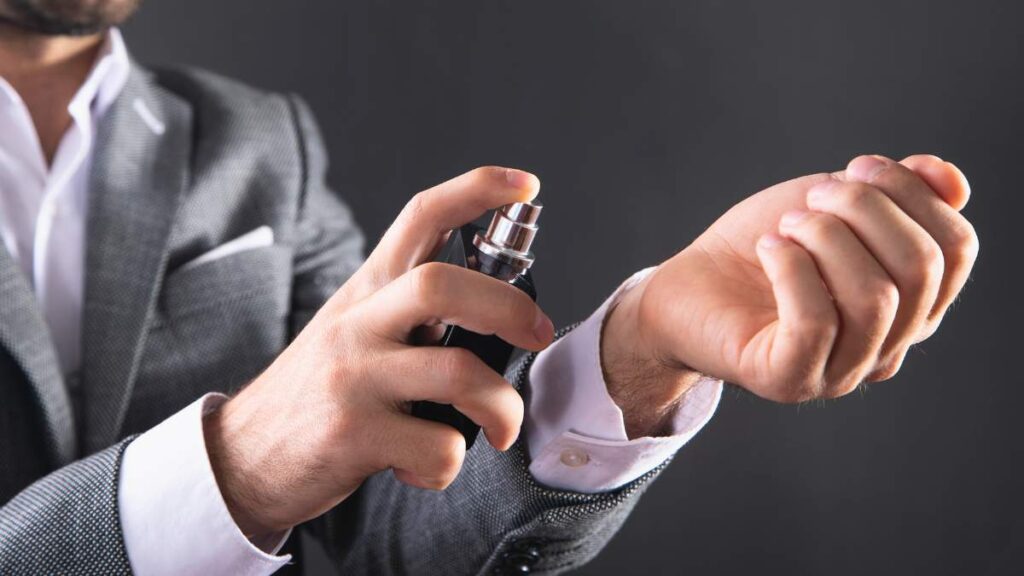
Perfume is best applied to clean and moisturized skin. Moisturizing the skin provides a better base for the fragrance, so it will last longer. Perfume should be sprayed from a distance of about 15-20 cm. It is important not to rub your wrists together after application, as this can damage the fragrance composition. You can also consider gently spraying your hair, but keep in mind that the alcohol in perfume can dry it out.
Where to apply perfume to make the fragrance last the longest?
The best places to apply perfume are the so-called pulse points, which are places where the skin is thinner and warmer, which helps to develop and release the fragrance throughout the day. These include the wrists, neck, places behind the ears, elbow bends and places behind the knees. The heat generated in these areas intensifies the diffusion of the fragrance, which translates into better fragrance projection and durability, which is especially important in branded perfumes.
How to store perfumes so that they retain their quality?
To keep your perfume for as long as possible, it should be stored in a cool, dark and dry place, away from direct sunlight and rapid temperature changes. It is best to keep branded perfumes in their original packaging, which protects them from light and air. Avoid storing perfume in the bathroom, where there is high humidity and frequent temperature fluctuations, which can negatively affect its quality.
The Psychological Effects of Scent on Men: Emotions, Memories, and Attraction
Scents have a profound effect on men’s psyche, affecting emotions, memories, and perceptions.
Smell vs. Emotions and Mood
The sense of smell is directly connected to the limbic system in the brain, which is responsible for emotions and memory. Therefore, certain scents can evoke specific emotions and affect our mood, which makes them even more sensual. For example, lavender has a relaxing effect, citrus gives energy, and vanilla evokes a feeling of comfort. Aromatherapy takes advantage of this relationship by using essential oils to improve well-being and reduce stress, which can be beneficial for men after shaving.
Smell and Memory and Memories
Smell has the unique ability to evoke memories, often very vivid and lasting, even those from early childhood. Scents can evoke strong emotions related to specific events or people from the past, which can affect our fragrance preferences.
Smell vs. Perception and Attractiveness
The smell a man surrounds himself with can significantly affect how he is perceived by others, building an image of self-confidence, sophistication and attractiveness. Choosing the right perfume can enhance your natural appeal and leave a lasting impression.
The Role of Pheromones and Natural Body Odor
Pheromones are natural chemicals secreted by the body that may play a role in human attraction, though their effects in humans are still under research, which could be of interest to men looking for an effective perfume. Natural body odor interacts with the applied perfume to create a unique fragrance profile for each person.
Summary: Find your unique fragrance
The world of men’s perfumes is extremely rich and diverse, offering countless opportunities to express yourself through fragrance. Choosing the perfect perfume is a journey of discovering your own preferences and experimenting with different categories and fragrance notes. Remember that the final choice of branded perfumes is always subjective and should give pleasure primarily to us.