Selenium for Men
Selenium, a trace element fundamental to human biology, plays an invaluable role in maintaining the proper functioning of the body. Although needed in small amounts, its impact on health, especially for men, is versatile and cannot be overestimated. Selenium deficiency can lead to a range of health problems, including muscle weakness, an increased risk of developing cancer, heart problems, and, especially importantly for the male population, fertility disorders.
Spis treści
What Is Selenium and Why Is It So Important for Men?
Selenium (Se) is a trace element that belongs to the group of essential micronutrients. Discovered in 1817 by the Swedish scientist Jöns Jacob Berzelius, it was initially considered a substance with toxic properties. Only later scientific research allowed us to fully appreciate the key importance of selenium in the human body for health.
The basic metabolic functions of selenium result from its presence in the structure of specific proteins, called selenoproteins. These proteins are involved in many life-critical metabolic pathways. Selenium plays a fundamental role in cellular oxidation and reduction (redox) reactions, protecting the body’s cells from the harmful effects of free radicals and oxidative stress. It is also an essential component of important enzymes such as glutathione peroxidase, which protects cells from damage, and deiodinases, crucial for the proper metabolism of thyroid hormones – they convert the less active thyroxine (T4) into its active form, triiodothyronine (T3). The action of selenium at such a fundamental cellular level explains its wide spectrum of effects on various systems and organs, which makes it extremely important for maintaining the homeostasis of the male body.
Key Benefits of Selenium for Men’s Health
Selenium has a multidirectional, beneficial effect on men’s health, playing an important role in the functioning of key systems and organs.
Selenium and male fertility
One of the most important aspects of selenium’s effects in men is its effects on reproductive health. Adequate concentration of this element is crucial for maintaining proper fertility. Selenium contributes to the improvement of sperm quality, increasing the number of sperm cells, their motility and proper morphology. Selenium deficiency is often linked to abnormalities in sperm structure and function, which can lead to difficulty conceiving. This element also plays an important role in the process of spermatogenesis, i.e. the production of sperm. Scientific studies also suggest that there is a correlation between selenium levels and testosterone levels – the main male sex hormone. Men with adequate selenium levels may show higher levels of testosterone, which has a direct impact on sexual function and overall well-being, especially in the morning or evening. Selenium participates in the proper functioning of enzymes necessary for the synthesis of sex hormones. What’s more, selenium can reduce the risk of mutations of certain chromosomes, which is important in the context of preventing birth defects and miscarriages, it is worth knowing that its adequate level is crucial.
Selenium for a healthy prostate
Prostate health is extremely important for men, especially in old age. Selenium plays an important role in the prevention of diseases of this gland, including prostate cancer. Numerous studies indicate that men with normal blood selenium levels have a much lower risk of developing prostate cancer – in some cases even more than half as much as people with selenium deficiency. One study observed 65% less advanced cases of prostate cancer in men with higher selenium levels. Another study found that supplementing with 200 μg of selenium per day for 10 years reduced the risk of prostate cancer by 49%. The mechanism of selenium’s protective effect on the prostate is complex. It is believed that selenium increases the body’s natural immune resistance to cancer cells and inhibits the process of angiogenesis, i.e. the formation of new blood vessels, which are necessary for the growth and development of cancerous tumors. This action is strongly linked to its antioxidant properties, protecting the DNA of prostate cells from damage that can initiate the process of carcinogenesis. However, it should be emphasized that the effect of selenium supplementation on the risk of prostate cancer may depend on the baseline level of this element in the body. Studies such as NPC (Nutritional Prevention of Cancer) and SELECT (Selenium and Vitamin E Cancer Prevention Trial) found that supplementation was most beneficial for men with low initial selenium levels, while in men with high levels, it may have no benefit or even been unfavorable. This suggests that the universal recommendation of selenium supplementation for prostate cancer prevention is inappropriate and potentially dangerous without prior assessment of selenium levels.
Antioxidant power of selenium
Selenium is a powerful antioxidant, which means that it protects the body’s cells from the harmful effects of free radicals. Free radicals are unstable molecules that can damage cell DNA, proteins and lipids, contributing to the development of many diseases and accelerating the aging process. A proper supply of selenium in the diet helps neutralize these harmful molecules, protecting cell integrity and preventing premature aging. The antioxidant effect of selenium is also important for the protection of brain cells against neurodegeneration. It has been suggested that selenium may play a role in the prevention of diseases such as Alzheimer’s and dementia.
Selenium and immunity
Adequate levels of selenium are essential for the proper functioning of the immune system. Selenium stimulates the body’s immune response, increasing its ability to fight infections, including viral ones. People with selenium deficiency may be more susceptible to various types of infections, as well as experience a more severe course of them.
Effect of selenium on thyroid function in men
The thyroid gland is the organ with the highest concentration of selenium per tissue mass. Selenium is absolutely essential for the proper production and metabolism of thyroid hormones. As previously mentioned, it is part of the deiodinase enzymes that convert the less active hormone T4 (thyroxine) into its biologically active form T3 (triiodothyronine). Selenoproteins also have a protective function, removing free radicals formed during the synthesis of thyroid hormones. Selenium deficiency can lead to thyroid dysfunction. Selenium supplementation is often considered as a support in the treatment of thyroid disease, especially autoimmune thyroiditis, known as Hashimoto’s disease. It has been shown that selenium can lower the level of antithyroid antibodies (anti-TPO), which is important in the context of hypothyroidism. Although thyroid disease is more common in women, proper selenium levels are just as important for thyroid health in men, affecting overall metabolism, energy levels, and well-being.
Other important roles.
The benefits of adequate selenium levels for men are not limited to the areas mentioned above. This element also affects:
- Muscle Health: Selenium is important for the proper functioning of muscles, including the heart muscle, and their regeneration after exercise. Its deficiencies can lead to muscle weakness.
- Nervous system: Adequate levels of selenium protect against the development of neurodegenerative diseases and affect mood. Low levels of this element are observed in people suffering from depression and mood disorders.
- Cardiovascular system: Selenium has a cardioprotective effect. It helps prevent the build-up of atherosclerotic plaque in blood vessels, protects against the harmful effects of oxidized LDL cholesterol (the so-called “bad” cholesterol) and may contribute to an increase in HDL cholesterol levels (the so-called “good” cholesterol).
- Support in the excretion of heavy metals: Selenium helps in removing toxic heavy metals such as cadmium, mercury, lead and arsenic from the body, forming less harmful complexes with them.
- Synergy with vitamin E: The absorption of selenium is supported by vitamin E, and their combination has particularly strong antioxidant properties. This suggests that a diet rich in both of these ingredients or properly selected supplementation may be more effective in protecting the body.
How much selenium does a man need? Recommendations and Natural Sources

Understanding the daily requirement for selenium and knowing its best sources in the diet is crucial to maintaining optimal levels of this element in the body.
According to Polish nutrition standards, the recommended daily intake (RDA – Recommended Dietary Allowance) of selenium for adult men is 55 μg (micrograms) per day. However, it is worth noting that the average selenium intake in Poland may be lower and amount to about 45 ug. 38 μg per day in men, indicating a potential risk of deficiencies in the population.
Blood selenium levels may vary slightly depending on the laboratory performing the test. Examples of reference values for men in Poland are:
- Men under 60 years of age: 75–85 μg/l.
- Men over 60 years of age: 110–120 μg/l. Some studies suggest that the optimal concentration of selenium in the blood for the Polish male population, especially in the context of cancer prevention, may be in the range of 85−120 μg/l. Taking into account that the average concentration of selenium in Poland is about 70 μg/l, this may indicate the need to increase the intake of this element in the population.
The best way to ensure an adequate supply of selenium is a balanced diet, rich in natural sources of this element. Selenium is found in both animal and plant products.
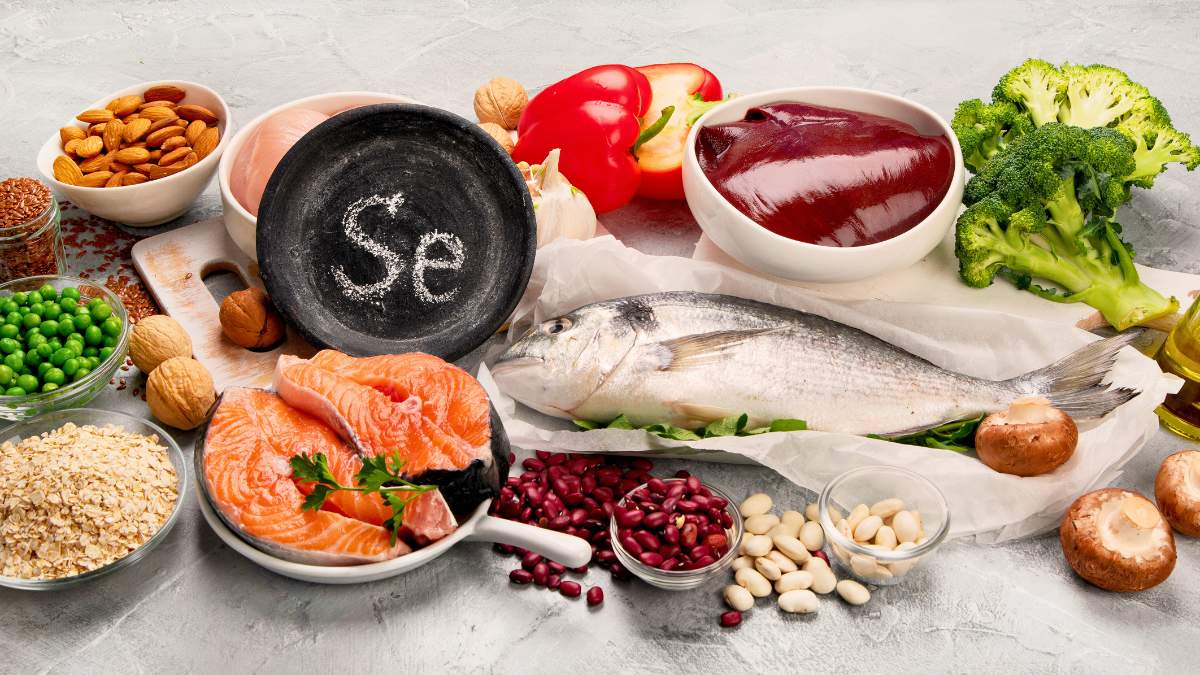
- Animal products rich in selenium: fish (especially salmon, tuna, mackerel, sardines), seafood (mussels, oysters, shrimps), offal (kidneys, liver), poultry, eggs and dairy products.
- Plant foods rich in selenium can support the proper functioning of the body and provide essential vitamins and minerals. Brazil nuts are the absolute leader – just one large nut can provide a dose exceeding the daily requirement (about 100 μg of selenium). However, it should be remembered that the selenium content in Brazil nuts is variable and depends on their place of origin (nuts from Brazil contain the most selenium, less those from Bolivia or Peru). Other good plant sources include: sunflower seeds, mushrooms (e.g. shiitake), garlic, onions, legumes (e.g. lentils), whole grain cereal products (wheat and oat bran, wheat germ, brown rice, buckwheat, wholemeal pasta), asparagus and tofu.
It is worth noting that the selenium content in plant products is strongly dependent on its concentration in the soil on which they were grown. Soils in Poland are generally poor in selenium, which may translate into a lower content of this element in locally produced plant food. This, in turn, increases the importance of imported selenium-rich or animal products, as farm animals often receive feed enriched with this micronutrient.
The absorption of selenium from food is relatively high and amounts to about 90% from plant products, and in states of deficiency, the body can increase its absorption. Selenium absorption is more effective in the presence of protein and vitamins A, C and E, so it is worth taking these ingredients together. On the other hand, large amounts of simple carbohydrates and insufficient protein supply in the diet can hinder its absorption.
The table below shows some of the rich sources of selenium in the diet that can support the proper meeting of the daily requirement for this element.
Top 10 Sources of Selenium in a Man’s Diet (With Approximate Content Per Serving)
| Product | Serving Size | Approximate selenium content (μg) |
|---|---|---|
| Brazil nuts | 1 piece (approx. 5g) | 50−100+ (depending on the origin of selenium in the human body) |
| Tuna (canned) | 100g | 60-90 |
| Sardines (canned) | 100g | 45–55 |
| Salmon (cooked) | 100g | 30−40 |
| Chicken eggs | 2 pieces (approx. 100g) | 20-30 hours |
| Chicken breast | 100g | 20-25 |
| Lentils (cooked) | 1 cup (approx. 200g) | 10-15 |
| Sunflower seeds | 30g (handful) | 15-20 |
| Shiitake mushrooms (cooked) | 100g | 5–10 |
| Wheat bran | 30g | 10-15 |
Note: The selenium content of food products can vary depending on a number of factors, including geographic origin and cultivation/breeding methods.
Higher blood selenium levels observed in men over 60 years of age may suggest either an increased demand for this element in this age group or other metabolic mechanisms related to the aging process that affect its levels. The extremely high concentration of selenium in Brazil nuts makes them an easy and quick way to supplement the diet, but it also poses a risk of easy overdose with regular consumption of larger quantities. This highlights the need for moderation and a conscious approach to vitamins and minerals, even for natural sources of micronutrients.
Selenium deficiency in men – symptoms that cannot be ignored
Selenium deficiency can manifest itself in a number of symptoms, which are often non-specific and can be confused with other ailments. However, knowing them is crucial for early detection of a potential deficit.
Alarm signals that may indicate insufficient selenium levels in the male body include:
- Deterioration of the condition of hair and nails: excessive hair loss, weakening, as well as brittle nails, in extreme cases even their loss.
- Skin problems: inflammation of the skin, deterioration of its appearance.
- Muscle weakness and pain: general muscle weakness, muscle pain, and in cases of severe deficiency, serious myocardial disorders such as Keshan disease (historically observed in selenium-poor areas) can occur.
- Fatigue and weakness can be symptoms of selenium deficiency in the human body. chronic feeling of fatigue, lack of energy, general weakness of the body.
- Mood and cognitive disorders: depression, irritability, anxiety, difficulty concentrating, memory deterioration, so-called “brain fog”.
- Weakened immunity: increased susceptibility to infections, more frequent colds and other infectious diseases.
- Thyroid problems: symptoms that indicate a malfunction of the thyroid gland, which is related to the role of selenium in the metabolism of its hormones.
- Fertility problems: difficulty conceiving, reduced sperm quality.
- Gastrointestinal complaints: nausea, vomiting.
- Bad breath: a specific smell sometimes referred to as garlicky smell from the mouth.
- Nervous system disorders: in some cases, neurological symptoms may appear.
People who are particularly at risk of selenium deficiency are:
- Those who follow diets low in selenium: especially those living in regions with low selenium content in the soil, which translates into a lower amount of selenium in local plant products.
- With gastrointestinal diseases: conditions such as Crohn’s disease, celiac disease, short bowel syndrome or chronic inflammation of the intestines can significantly impair the absorption of selenium from food.
- Long-term parenteral feeding: If this nutrition is not properly supplemented with selenium, it is worth taking selenium in the form of a supplement.
- Alcohol abuse: alcoholism leads to impaired selenium absorption and increased excretion from the body.
- With autoimmune diseases such as hypothyroidism, selenium plays an important role. for example, in Hashimoto’s disease, the need for selenium may be increased.
- With renal or hepatic insufficiency.
- Following certain elimination diets: Vegetarian and vegan diets, if not carefully balanced for selenium sources, may increase the risk of deficiency.
- Malnourished.
The long-term effects of selenium deficiency in men can be serious and include an increased risk of developing certain cancers (including prostate cancer), heart disease, persistent fertility problems, the development or worsening of thyroid disease, and cognitive decline.
The relationship between the condition of the intestines, selenium levels and the functioning of the thyroid gland is particularly important. Intestinal problems, leading to selenium malabsorption, can be the root cause of selenium deficiency, which in turn negatively affects the thyroid gland, potentially contributing to the development of conditions such as Hashimoto’s. This shows a complex cause-and-effect chain, where gut health is fundamental to adequate selenium status, which in turn is fundamental to normal thyroid function. Given the nonspecificity of many of the deficiency symptoms, men experiencing several of them, especially if they belong to risk groups, should consider medical consultation and possibly testing their blood selenium levels.
Supplementation – When to Take Selenium, Morning or Evening?
The decision to supplement with selenium should always be made consciously and preferably after consulting a specialist, because both deficiency and excess of this element can be harmful. Supplementation is justified when the diet is not able to cover the body’s needs or when there are specific medical indications for it.
The main indications for selenium supplementation in men include:
- Laboratory-confirmed selenium deficiency: This is the basic and most important indication of selenium properties. Supplementation should not be started “blindly”, without performing appropriate tests.
- Male fertility problems: If tests show that poor sperm quality or other fertility problems may be related to low selenium levels, your doctor may recommend supplementation.
- Support in thyroid diseases: Especially in autoimmune thyroiditis (Hashimoto’s disease), selenium supplementation, always after consulting an endocrinologist, can help reduce the level of anti-TPO antibodies and reduce inflammation. People with thyroid disorders should strive for the highest possible absorption of selenium, which can be achieved, for example, by taking it in the morning on an empty stomach.
- Periods of increased susceptibility to infections: If your diet is not getting enough selenium and your immune system needs support, supplementation may be considered.
- Situations of increased demand or impaired absorption: This applies to people at risk of deficiency, e.g. with gastrointestinal diseases (see previous section).
- Potentially in the prevention of some cancers: For example, prostate cancer, but only in men with confirmed low baseline selenium levels, it is worth reaching for supplementation after consulting a doctor and performing tests.
When choosing a selenium supplement, it is worth paying attention to several key aspects:
- Selenium form:
- Organic forms of selenium affect its absorption and effectiveness in the body. L-selenomethionine and selenium-enriched yeast (e.g. the patented SelenoPrecise) are generally considered to be better absorbed (the bioavailability of L-selenomethionine can reach 90%) and accumulate better in the body’s tissues. Organic forms are characterized by almost twice as high bioavailability compared to inorganic forms.
- Inorganic forms: Sodium selenate (IV) (sodium selenite) and sodium selenate (VI) (sodium selenite) are characterized by lower bioavailability. The absorption of sodium selenite can be further reduced in the presence of vitamin C and zinc.
- Dosage in the preparation: Dietary supplements usually contain from 50 μg to 200 μg of selenium in one serving. The dose should be selected individually, depending on the degree of deficiency and the specialist’s recommendations.
- Purity of composition: It is worth choosing preparations with a minimum amount of additional substances, such as unnecessary fillers, dyes or magnesium stearate.
- Additional Ingredients: Sometimes selenium is found in supplements in combination with vitamin E, which can be beneficial due to their synergistic antioxidant effects.
The principles of safe selenium supplementation are extremely important:
- Dosage: Always follow your doctor’s instructions or the information provided by the manufacturer on the supplement packaging. Do not exceed the recommended daily dose. Standard doses in supplements are often 100−200 μg.
- Time of admission: For most people, the time of day of selenium intake does not matter much. The exception is people with thyroid disease, who are often advised to take selenium in the morning, on an empty stomach, to increase its absorption. Selenium can also be taken with a meal, especially one rich in protein, which can improve its absorption.
- Duration of supplementation: Selenium supplementation is usually recommended for a certain period of time, e.g. 2-3 months, after which you should take a break or check your blood selenium levels. Long-term intake of supplements, especially those containing organic forms of selenium, can lead to its accumulation in the body.
Higher bioavailability of organic forms of selenium, while desirable for the efficacy of deficiency therapy, is also associated with a potentially higher risk of accumulation and toxic levels with long-term, uncontrolled use. This further emphasizes the importance of monitoring blood selenium levels and taking breaks from supplementation, as directed by your doctor. The repeated recommendation in many sources to consult a doctor before starting selenium supplementation, especially in the context of thyroid disease, fertility problems or cancer prevention, is absolutely crucial for safety and effectiveness.
Beware of Excess Selenium! Safe limits of selenium intake
Selenium, despite its numerous health benefits, is an element whose excess can be toxic to the body. The state of chronic selenium poisoning is called selenosis.
Symptoms of selenosis can be diverse and include:
- Characteristic garlic breath.
- Hair and nail problems: increased hair loss, even leading to baldness, as well as brittleness, brittleness, discoloration and loss of nails.
- Gastrointestinal problems: nausea, vomiting, diarrhea, abdominal pain.
- Fatigue and mood swings: apathy, chronic fatigue, irritability.
- Joint pain can be associated with a deficiency of vitamins and minerals, including selenium..
- Skin lesions: rashes, redness.
- Neurological disorders: metallic taste in the mouth, muscle tremors, impaired motor coordination, in more severe cases neuropathy.
- Increased risk of developing type 2 diabetes.
- In extreme cases of long-term exposure to very high doses of selenium, serious complications such as cirrhosis, pulmonary edema, heart disorders (low blood pressure, increased heart rate) and even death can occur.
To avoid the risks associated with excess selenium, the so-called Tolerable Upper Intake Level (UL) has been established. For adult men, it is usually 300 μg per day, although some sources, such as the American Food and Nutrition Board (FNB) or the WHO, give a value of 400 μg per day. In Poland, a more cautious limit of 300 μg is often adopted.
It is also important to know the regulations regarding the maximum selenium content of dietary supplements. In accordance with Resolution No. 7/2021 of the Dietary Supplements Team operating at the Chief Sanitary Inspectorate (GIS) in Poland, the maximum amount of selenium in the recommended daily dose in dietary supplements for adults is 200 μg.
The table below summarises the key values for selenium intake for adult men in Poland.
Selenium for Men: RDA, UL and Maximum Dosage in Supplements
| Parameter | Adult male value (μg/day) |
|---|---|
| RDA – recommended daily intake | 55 |
| UL – Upper tolerable intake level | 300 (Cautious Limit) |
| Maximum dose in a dietary supplement (according to GIS) | 200 |
Selenium may interact with certain medications and substances, which should be taken into account before starting supplementation:
- Anticoagulants: (e.g. warfarin, acenocoumarol, aspirin, clopidogrel, heparin) – selenium may increase their effect and increase the risk of bleeding.
- Chemotherapy drugs: interactions can be complex and require consultation with an oncologist.
- Corticosteroids: may affect selenium metabolism.
- Hormonal contraception: possible interaction.
- Immunosuppressants: selenium may affect their effect.
- Statins (cholesterol-lowering drugs): possible interaction.
- Niacin (vitamin B3): possible interaction.
- Alcohol: may impair absorption and increase selenium excretion.
- Heavy metals: selenium can form complexes with them, reducing their toxicity, however, the interaction is complex.
- Sulfur compounds: may impair selenium absorption.
- Vitamin C and zinc: Some inorganic forms of selenium (e.g. selenomethionine) are better absorbed by the body. sodium selenite) are less absorbable in the presence of vitamin C and zinc. However, other sources indicate that the simultaneous use of zinc and selenium (possibly in different forms or doses) may improve the retention of both elements in the body. This apparent contradiction suggests that the type of chemical form of selenium is crucial.
Selenium supplementation should be avoided or approached with particular caution in the case of:
- Hypersensitivity to selenium.
- Confirmed by tests of high levels of selenium in the blood.
- Kidney or liver diseases – medical consultation is necessary.
- Take medications that may interact significantly with selenium – always after consulting a doctor.
The fact that some symptoms, such as hair loss or gastrointestinal problems, can occur with both selenium deficiency and excess further complicates self-diagnosis. This underscores the fundamental importance of laboratory testing of blood selenium levels in case of any doubt and before deciding on supplementation. The maximum dose of selenium allowed in dietary supplements in Poland (200 μg) is much higher than the recommended daily intake (55 μg), indicating that these supplements are intended to supplement significant deficiencies, and not for routine use by people with a properly balanced diet.
Summary and Key Takeaways
Selenium is an element of indisputable importance for men’s health, playing a key role in maintaining fertility, protecting the prostate, supporting the immune system, proper thyroid function and as a powerful antioxidant. Its adequate level in the body is essential for maintaining well-being and preventing many diseases.
The basic and safest source of selenium should be a varied and balanced diet, rich in products such as Brazil nuts, fish, seafood, offal, eggs and wholegrain cereal products. Due to the potentially low selenium content in Polish soils, and thus in local plant products, conscious composition of the diet is of particular importance.
Selenium supplementation is justified only in certain cases, such as laboratory-confirmed deficiency, fertility problems associated with low levels of this element, or as support in some thyroid diseases – always after consulting a doctor or a qualified dietician. Choosing the right form (preferably organic, e.g., L-selenomethionine) and dosage of the supplement is crucial for its efficacy and safety.
It should be remembered that selenium is characterized by a relatively narrow safety margin – both its deficiency and excess can lead to negative health consequences. Selenium overdose (selenosis) can manifest itself, m.in other things, in hair loss, nail problems, gastrointestinal disorders or characteristic garlic breath. Potential interactions of selenium with certain medications are also important, further highlighting the need for caution.
In conclusion, selenium is a valuable ally for men in taking care of their health, but the key to its optimal use is balance and an individual approach. It is strongly recommended that you consult your doctor or nutritionist before starting any selenium supplementation. The specialist will help you assess your individual needs, interpret test results, choose the right preparation and dose, as well as determine the safe duration of supplementation, minimizing the risk of side effects. Conscious management of selenium levels in the body, based on sound knowledge and professional advice, is the best way to reap the full benefits of this extraordinary micronutrient.