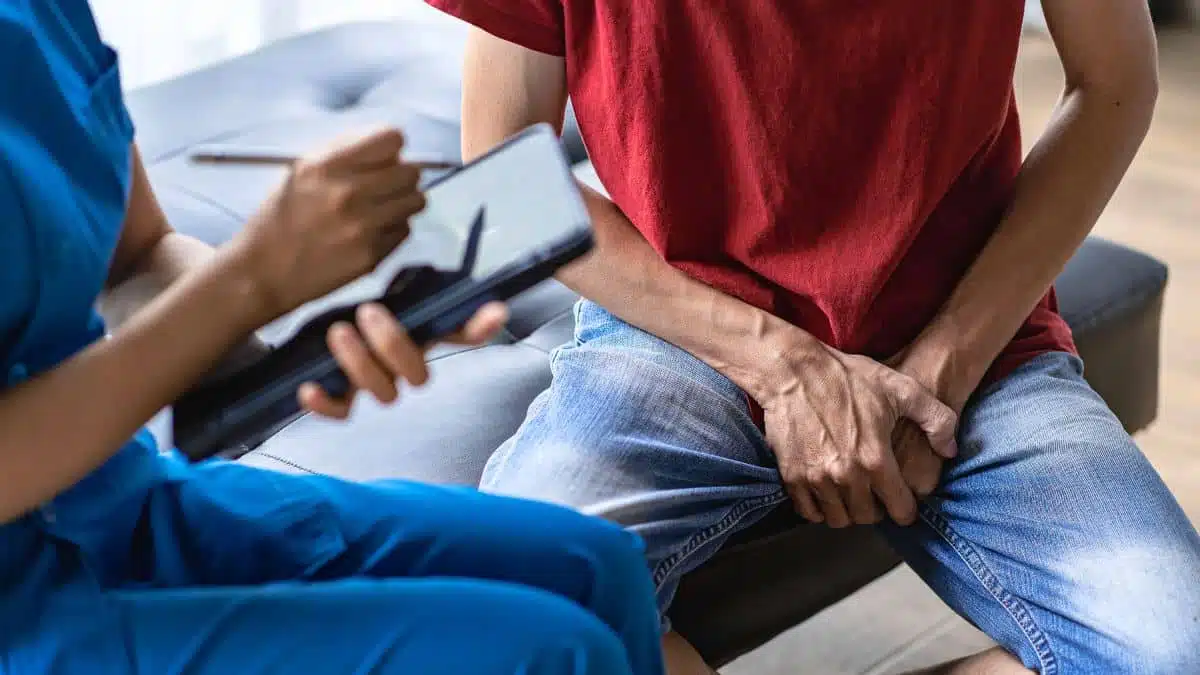
Are you ashamed to examine your testicles? Do you do it too rarely or not at all? This is a mistake! Testicular self-examination is a simple, quick and painless method that can save your life. Testicular cancer, although it sounds dangerous, is almost 100% curable if detected early.
Table of contents
Why is testicular self-examination so important?
Testicular cancer is the most common cancer in young men aged 15-35. In Poland, about 1500 men are diagnosed with it every year. Fortunately, if detected early, it is almost completely curable! That is why it is so important to regularly self-examine the testicles, allowing you to notice disturbing changes at the initial stage of the disease.
How often should testicular self-examination be performed?
It is best to perform a self-examination once a month, preferably after a warm bath or shower, when the skin of the scrotum is relaxed. The test only takes a few minutes and can have a huge impact on your health.
How to properly perform testicular self-examination?
- Get ready: Take a warm shower or bath to relax the scrotum.
- Position yourself comfortably: Stand in front of a mirror or lie down.
- Examine the kernel: Gently place the testicle between your thumb and fingers.
- Evaluate shape and size: Check that the testicle is smooth, oval and firm. Look out for any bumps, bumps, or changes in size.
- Repeat the test on the other testicle.
- Pay attention to the epididymis: The epididymis is a small structure at the back of the testicle that may resemble a nodule. Make sure there are no changes to it.
- Check the spermatic cord: It is a cord running from the testicle upwards. Make sure it is not thickened or painful.
What symptoms should you be concerned about?
During testicular self-examination, pay attention to the following symptoms:
- Nodules or thickenings: Any abnormalities in the structure of the nucleus, even slight.
- Swelling or enlargement of the testicle: If one nucleus is clearly larger than the other.
- Pain or discomfort: Feeling of heaviness, pain in the testicle or groin.
- Changes in consistency: The kernel is hard, irregular, or has a different consistency than usual.
- Changes in the appearance of the skin: Redness, itching, peeling of the scrotum skin.
Remember! Don’t panic if you notice any change. Many of them may be harmless, but it is always worth consulting a doctor.
What to do if you notice worrying symptoms?
If you notice any disturbing symptoms during a testicular self-examination, immediately see a doctor, preferably a urologist. Your doctor will perform a physical examination and order any additional tests, such as an ultrasound of the testicles.
Early detection of testicular cancer increases the chances of cure
Testicular cancer is one of the most promising cancers. If detected and treated early, it gives almost 100% chance of cure. That is why it is so important to regularly self-examine the testicles and react quickly if you notice alarming symptoms.
Don’t be shy about taking care of your health!
Many men avoid self-examining their testicles because of shame or fear. Remember that your health comes first! Regular self-examination is a simple way to take care of yourself and increase your chances of living a long and healthy life.
Additional tips:
- Don’t compare your testicles with others: Every man is different, and the size and shape of the testicles can vary.
- Do not ignore any symptoms: Even if you think the change is harmless, consult a doctor.
- Talk about health: Don’t be afraid to talk about your health problems with your doctor, partner or loved ones.
Testicular self-examination is your secret weapon in the fight against cancer. Do them regularly and enjoy your health!
Remark:
The above article is for informational purposes only and is not a substitute for a visit to a doctor. If you have any doubts about your health, you should consult a specialist.