Men’s Shirt
A men’s shirt is the absolute foundation of men’s elegance and style. It is much more than just an item of clothing – it is a business card, a way to express yourself and the key to building the image of a professional, classy person or casual aesthete. However, the world of men’s shirts is extremely rich and diverse. The multitude of cuts, collars, materials and patterns can make you dizzy. Which shirt to wear to a wedding and which to wear to a business meeting? What is the difference between a slim fit shirt and a regular shirt? When to bet on linen and when on Pima cotton?
Spis treści
Anatomy of a men’s shirt: what do you need to know before you buy?
Before we move on to specific styles, it is crucial to understand what elements the shirt consists of. Knowing these details will allow you to make informed choices and appreciate the craftsmanship of tailoring.
Types of Men’s Collars – The Key to Formalities
The collar is the most important element of the shirt, which defines its character and the degree of formality. It is the one that is closest to the face and attracts the most attention.
- Kent collar (classic, straight): This is the most universal and popular type of collar that provides comfort of wearing. Its lapels are of medium width and point downwards. It fits most face shapes and is a safe choice for both work and less formal occasions. It pairs perfectly with a variety of tie knots, from a simple Four-in-Hand to a classic Windsor.
- Italian collar (cutaway): It is characterized by widely spaced lapels that form an almost horizontal line. It is considered more modern and bold than Kent. It perfectly exposes a thick, symmetrical tie knot, like a Windsor. It is an excellent choice for business styling and special occasions, such as weddings, including fashionable men’s shirts with a suit.
- Semi-Spread Collar: As the name suggests, it’s a compromise between the Kent collar and the Italian one. His lapels are spaced wider than in the classic, but narrower than in the cutaway. It’s an extremely versatile option that’s growing in popularity thanks to its elegance and versatility.
- Button-Down Collar: Its characteristic feature is small buttons at the ends of the lapels, which are attached to the shirt. This type of collar comes from sports (polo players pinned collars so that they would not get in the way of the game) and has the lowest degree of formality. Shirts with a button-down collar are usually worn without a tie, in casual and business casual styles.
- Broken collar (tailcoat, wingtip): Designed only for the most formal evening outfits – tailcoat and tuxedo. It has small, “broken” lapels that protrude forward. It is worn only with a bow tie.
- Stand-up: Shirt without a traditional, turn-down collar. It only has a strip of fabric around the neck. This is an avant-garde or minimalist option, perfect for casual, modern styling.
Cuffs: With buttons or with cufflinks?
The cuffs are another detail that affects the formality of the shirt.
- The button cuff is an element that is often found in elegant and casual shirts . The most popular and practical type. It can have one or two buttons (the second one allows you to adjust the circumference). It is a standard in business and casual shirts.
- French cuff (for cufflinks): It is a double-folded cuff that is fastened with decorative cufflinks. It is synonymous with the highest elegance, the perfect choice for every man. Shirts with French cuffs are reserved for the most solemn occasions: weddings, galas, important business meetings at the highest level. It is a must-have element of a tuxedo shirt.
Shirt Cut: How to Choose the Cut for Your Figure?
A well-chosen cut is absolutely crucial. Even the most expensive shirt will look bad if it doesn’t fit your figure.
- Regular Fit (Classic Fit): A classic, straight cut that allows freedom of movement. It is looser at the chest and waist, which makes formal shirts more comfortable. It is a good choice for men with a more powerful body or who value comfort above all.
- Slim Fit: A shirt fitted to the body, with a clearly marked waist. It emphasizes the silhouette and is currently the most popular cut, especially among slim and athletic men. Perfect for modern, dynamic styling.
- Custom Fit/Tapered Fit: Cut between regular and slim. It is slightly tapered towards the bottom, but not as tight as a slim fit. This is a great option for men with a standard build who are looking for a compromise between wearing comfort and a modern look.
Material Matters: A Guide to Shirt Fabrics
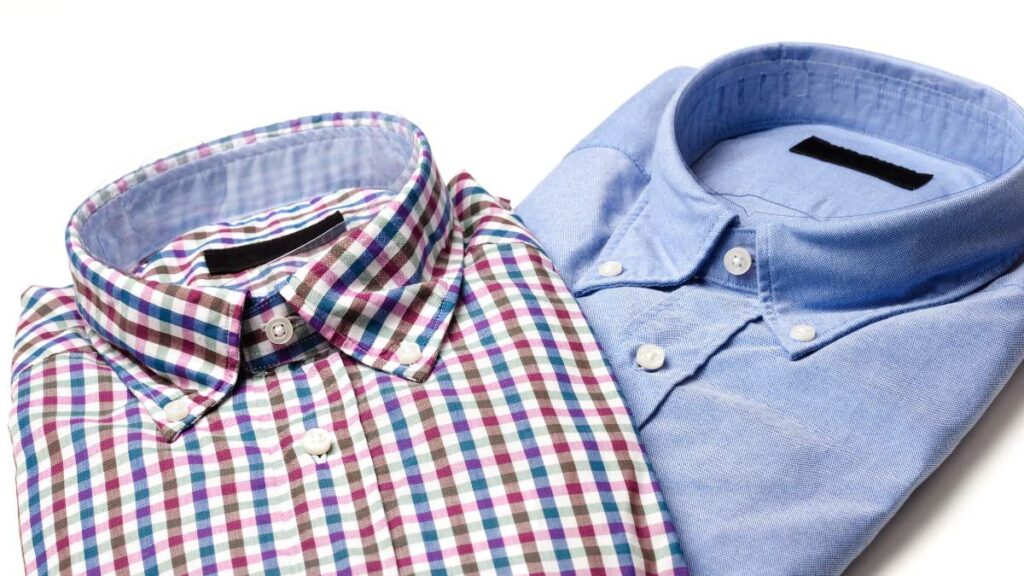
The fabric of a shirt determines its comfort, appearance, breathability, and durability.
- Cotton: The queen of shirt fabrics. It is natural, airy, absorbs moisture well and is relatively easy to care for, which makes men’s linen shirts an ideal choice for summer. However, cotton is not the same as cotton.
- Egyptian and Pima cotton is the material from which fashionable men’s shirts are made. Considered the best in the world. Their secret lies in the extremely long fibers, which allow you to create a very smooth, durable and slightly shiny fabric, which is important in the case of classic men’s shirts.
- Twill: A fabric with a twill weave, very durable, fleshy and resistant to creases. Perfect for business shirts for colder days.
- Poplin: Smooth, light and airy fabric with a straight weave ensures comfort of wearing. This is a classic of the genre, perfect for elegant summer shirts.
- Oxford: Fabric with a characteristic basket weave. It is thicker and more “sporty” in character. It is most often used to sew shirts with a button-down collar.
- Flax: The perfect material for summer. It is extremely breathable and has cooling properties. Its characteristic feature is the tendency to crease, which, however, is perceived as its charm and advantage in casual styling. A linen shirt is a must-have for holidays and hot days in the city.
- Silk: Luxurious, ultra-smooth and lightweight. Silk shirts have a beautiful shine and are very pleasant to the touch, but also expensive and demanding to care for. Usually reserved for special evening occasions.
- Flannel is a material that should be in the wardrobe of every fashion trend lover. Thick, soft cotton fabric with a characteristic “fluff”. Perfect for cold autumn and winter days. A checked flannel shirt is a classic of casual and grunge style.
- Jeans (Denim): Durable and timeless. A denim shirt is a versatile piece of clothing that can be worn in many ways – buttoned, unbuttoned over a T-shirt, in total look styles.
- Blends (e.g. cotton with elastane): The addition of a small amount of synthetic fibers (e.g. 2-5% elastane) makes the shirt more flexible, fits the body better and wrinkles less. This is a popular solution in slim fit shirts.
Men’s Shirt for All Occasions: Practical Division
Now that you know the theory, let’s move on to practice. Which shirt to choose depending on the situation?
1. Formal Shirts: When Ultimate Elegance Is Required
These are situations where there is no room for compromise. The dress code is strictly defined, and every detail matters.
Suit shirt for a Wedding, Gala or Important Meeting
- Colour: An absolute classic is the white men’s shirt. White is the most formal, creating a clean, elegant contrast to any suit color. The second safe choice is a light blue long-sleeved shirt that is a classic in every wardrobe.
- Material: High quality cotton (poplin, twill).
- The long sleeve collar adds elegance to any shirt. Kent or semi-Italian. If you want to add a modern touch to your outfit, choose an Italian collar (cutaway).
- Cuff: For the most important celebrations (e.g. your own wedding, gala), a French cuff with cufflinks will be perfect. For a wedding as a guest or for a business meeting, an elegant button cuff is enough.
- Pattern: Smooth. A very subtle micro-pattern (e.g. a delicate herringbone structure) is acceptable, visible only up close.
Tuxedo shirt (black tie)
- Colour: Only white.
- Material: Premium cotton.
- Front: Characteristic pleats (vertical pleats) or a smooth front with a corset (the so-called pika).
- Buttons: Instead of standard buttons, decorative jewelry buttons are often used, inserted into special holes. The button placket can also be covered.
- Collar: Classically broken (for a fly) or possibly Kent.
- Cuff: French with cufflinks is obligatory.
Tailcoat shirt (white tie)
This is the highest level of formality, reserved for the most solemn diplomatic or artistic events. A tailcoat shirt is always white, made of stiff piqué, has a broken collar and a single cuff for cufflinks.
2. Business Shirts: Professionalism at Work
In the professional environment, the shirt is the basis of the image.
Corporate Work Shirt (Formal Business)
- Colors: White and sky blue are essential. Other subdued colors are also acceptable: light pink, gray, ecru, which go well with elegant men’s shirts.
- Patterns: In addition to smooth fabrics, subtle, classic patterns work great: fine stripe (e.g. white and blue) or delicate check (e.g. Prince of Wales check, vichy/gingham in subdued colors).
- Cut: Fitted to the figure, but not tight – slim fit or custom fit.
- Collar: Kent or semi-Italian.
- Material: Cotton twill or poplin, preferably with a non-iron/easy-iron finish for easy ironing.
Business Casual Shirt – Casual Elegance
It’s a style that allows for a little more freedom. Perfect for “casual Friday” or for companies where there is no strict dress code.
- Shirt: You can reach for a wide selection of elegant men’s shirts. a shirt with a button-down collar.
- Colors and patterns: The color palette is wider. In addition to the classics, you can bet on navy blue, burgundy, bottle green. Patterns can be bolder – larger check, interesting micro-patterns.
- Material: In addition to classic cotton, oxford will work great. On warmer days, you can consider cotton/linen blends.
- Styling: Such a shirt looks great with chinos, woolen pants, and even dark jeans. It can be worn with a sports jacket, but not necessarily with a tie, which makes it comfortable clothing.
3. Casual Shirts: Style and Comfort for Everyday Use
This is the widest and most diverse category where you can fully express your style.
Linen shirt – Perfect for summer
- When to wear: Holidays, weekend getaways, meetings with friends on hot days.
- How to wear: With shorts, chinos, espadrilles or loafers, you can create a wide range of outfits. The sleeves can be rolled up freely. A linen shirt looks great slightly unbuttoned.
- Colors: White, blue, beige, khaki, but also pastel shades of pink or blue.
Plaid shirt – not only for lumberjacks
- Checked flannel: A classic of grunge and outdoor style. Perfect for autumn and winter, worn unbuttoned over a T-shirt or buttoned up with jeans and heavy boots.
- Vichy Trellis (Gingham): Fine, two-tone check. It is a great pattern for casual and business casual shirts.
- Tartan: Larger, multi-coloured check with a Scottish origin. Very expressive, it is a strong point of styling.
Denim shirt
An all-round classic. It can be worn in many ways:
- Buttoned up, tucked into chinos.
- Unbuttoned, thrown over a white T-shirt.
- In the “canadian tuxedo” style (jeans on the top and bottom), remembering that the shades of denim should be different.
Short-sleeved shirt – how to wear it?
It is a controversial piece of clothing. Rule No. 1: Never wear a short-sleeved shirt with a suit, jacket or tie! It is a purely casual element. It will work well in summer, in holiday outfits, with shorts or light pants. Choose models that fit well in the shoulders.
4. Shirts for Special Occasions (Outside the Formal Dress Code)
Shirt for a Date – How to Make a Good Impression?
- Key features: Perfect fit (slim fit), pleasant to the touch material (high-quality cotton, can be with an admixture of silk or linen), interesting, but not flashy detail.
- Proposals: A plain shirt in a deep color (navy blue, burgundy, bottle green), a shirt with a subtle micro pattern or a shirt with a stand-up collar for a more modern look.
Shirt for a Club Party
Here you can afford more. Dark colors, bolder patterns (floral, geometric), and even shirts with a slight shine. It is important that it is comfortable and allows for freedom of movement.
How to choose the size of a men’s shirt? Practical guide
Even the best shirt won’t fit well if you choose the wrong size. What to pay attention to?
- Collar circumference: This is a key dimension, especially if you are going to wear a tie. Measure the circumference of the neck at the base of the neck to choose the perfect formal shirt. A properly selected collar is one into which you can freely slide one or two fingers after fastening the last button. It must not suffocate or stand loose.
- Chest circumference: The shirt should fit smoothly around the torso, but it must not wrinkle or spread on the buttons.
- Sleeve length: The sleeve should reach the base of the thumb when the hand is freely lowered. The cuff should protrude from under the jacket sleeve for about 1-2 cm.
- Overall length: The shirt should be long enough to be easily tucked into the pants and not to come out of them when bending down or sitting down.
Shirt Care: How to Wash and Iron to Make Them Last for Years?
- Laundry: Always check the label. Most cotton shirts are washed at 30-40°C. Undo all buttons before putting them in the washing machine. Do not overload the drum.
- Drying men’s linen shirts should be done in a gentle way to preserve their quality. It is best to dry shirts on a hanger. Avoid tumble dryers, which can cause the material to shrink.
- Ironing: Iron shirts while they are still slightly damp – it will be much easier. Start with small elements: the collar (from the corners to the center), then the cuffs. Then iron the sleeves, front and finally back.
Wrapping Up: Build Your Perfect Shirt Wardrobe
The world of men’s shirts is rich, but by following a few basic rules, you can easily build a versatile and stylish collection. Remember the foundations:
- Start with the classics: Your wardrobe must include at least one perfectly tailored white and one light blue shirt. It is a base for formal and business styling.
- Invest in quality: Good fabric and careful sewing is an investment that pays off. Such a shirt will look better and serve you longer.
- Take care of the fit: Cut is king, especially in elegant men’s shirts. Find the cut that fits your figure best.
- Play with casual style: This is where you can experiment with colours, patterns and materials such as linen, flannel or denim to create your own individual style.
With this knowledge, you are ready to consciously and confidently choose shirts that will emphasize your style and make you look perfect in any situation.