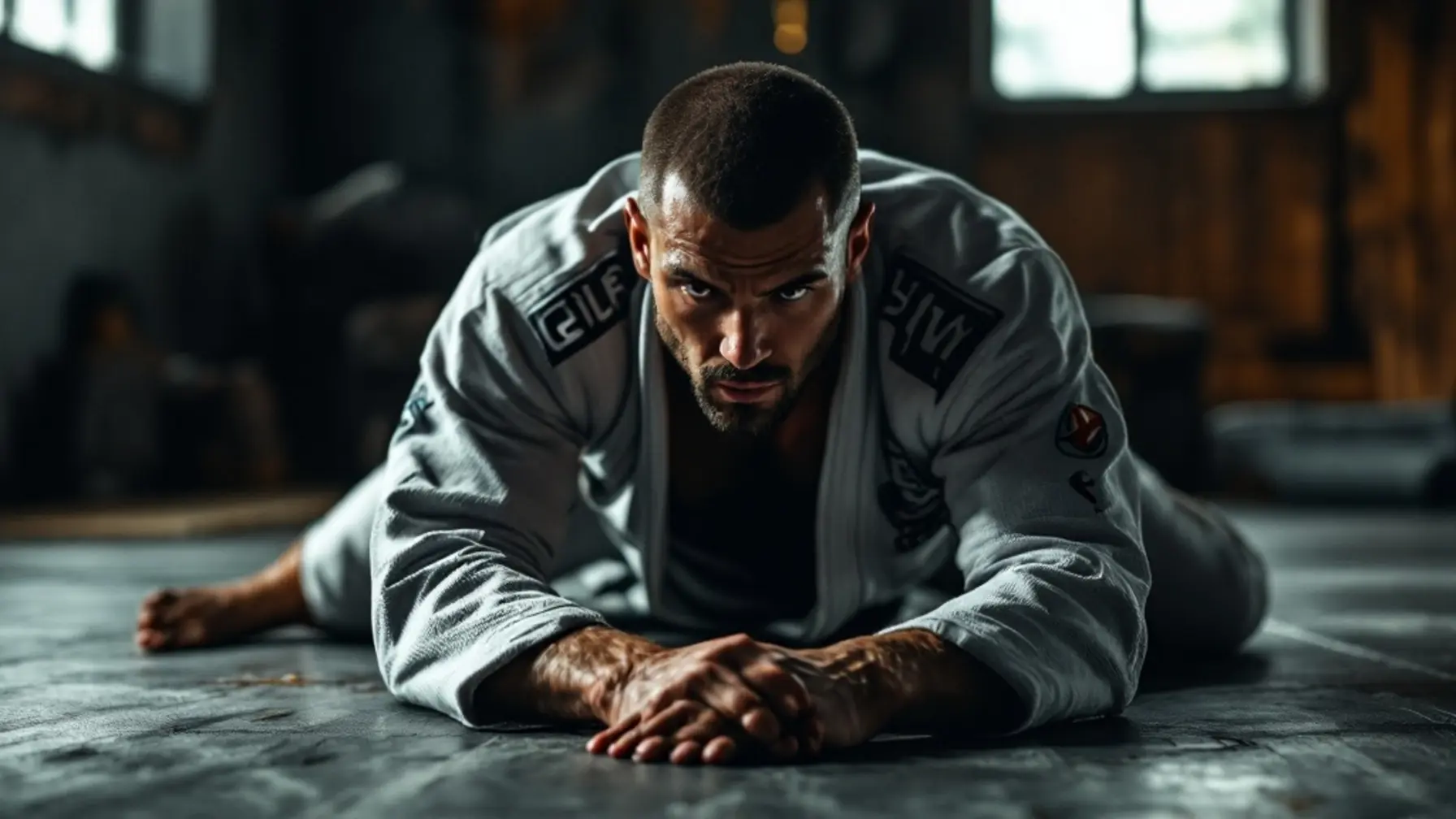
Brazilian Jiu-Jitsu for beginners trains both your body and your strategic mind. With “chess on the mat”-inspired classes, you’ll master BJJ techniques that are practical for real-life situations. Discover key foundations, benefits, and actionable advice for anyone starting out in BJJ for beginners.
Table of Contents
- Introduction to Brazilian Jiu-Jitsu: Fundamentals for Beginners
- Why BJJ is Chess on the Mat?
- Basic BJJ Techniques for Beginners
- BJJ Strategy & Tactics: How to Think Several Moves Ahead
- Benefits of BJJ Training for Body & Mind
- Starting Your BJJ Journey: First Steps on the Mat
Introduction to Brazilian Jiu-Jitsu: Fundamentals for Beginners
Brazilian Jiu-Jitsu (BJJ) is called “chess on the mat” for a reason—it’s a martial art where strategy, patience, and anticipation of your opponent’s moves matter far more than brute strength. For newcomers, the first steps on the mat can feel overwhelming: strange technique names, unfamiliar positions, and quick transitions abound. But BJJ was designed so that even a physically smaller person can effectively defend themselves against stronger opponents, using leverage, positional control, and smart body movement. At its core, BJJ revolves around ground fighting: instead of exchanging strikes, you aim to bring your opponent down, stabilize your position, and finish with chokes or joint locks. From a beginner’s perspective, BJJ is a puzzle built from foundations: key positions (like guard, side control, mount, and back mount), transitions, positional control, and finishing moves (submissions) such as triangle chokes, mata leão, or armlocks. Over time these elements connect into logical sequences, making each roll feel like solving a more intricate puzzle—where every movement counts. BJJ also embraces a philosophy of gradual progress: instead of chasing quick, strength-based wins, you develop “movement intelligence”: learning to relax in tough spots, conserve energy, and use leverage and gravity to your advantage. This art is extremely inclusive—children, women, seniors, and people of all body types train it because its rule is simple: “technique over strength.” Beginners should be reassured that perfection isn’t required. The first months are about adapting to physical contact, learning safety, and basic defensive reactions. Every class lays important groundwork: from breakfalls and rolling, to stabilizing positions, to your first simple chokes and joint locks under an instructor’s watchful eye.
Before you think about advanced combinations, focus on essential movement and safety—these are what determine whether BJJ becomes a rewarding, long-term passion. One of the first lessons is proper “tapping”—the act of submitting while your partner has a secure technique, to avoid injury. Tap the mat or your partner a few times, and they’ll release the hold instantly. This fosters humility and trust. Beginners should also be aware of ego—coming in thinking you need to “win” every round often leads to frustration or injury. Treat every spar like a mental exercise—think “what did I learn this round?” rather than “did I win?” Early on, learn the differences between guard (you’re on your back but controlling with your legs), side control, mount, and back control, as well as the basic positional hierarchy. For a beginner, escaping from a bad to a neutral position is already a big achievement—you don’t need to “reverse” the fight immediately; incremental improvement is a win. In BJJ training, repetition is key: bridging, shrimping, mount escapes, guard passes—all performed hundreds of times until they become second nature. Expect to spend your early months building habits and BJJ-specific conditioning: grip strength, hip mobility, core stability, and breathing under pressure. From your first session, you’ll learn BJJ etiquette: bowing onto the mat, keeping nails short and gi or rashguard clean, respect toward coaches and partners, no aggression. This creates a safe environment where beginners can experiment, make mistakes, and gradually uncover how BJJ turns chaos into strategy—a nuanced game of “chess on the mat,” where every action anticipates moves several steps ahead.
Why BJJ is Chess on the Mat?
Brazilian Jiu-Jitsu is often called “chess on the mat” because every move has consequences several steps ahead, and victory comes from coherent strategies, not lucky shots. From your first lessons, you’ll notice that effective BJJ doesn’t rely just on explosiveness or strength, but a mindset—anticipation, analyzing, and patiently building positional advantage. Just as you don’t attack with your king in chess but set your pieces, in BJJ you don’t chase a choke or lock recklessly. You first conquer and fortify positions: passing guard, stabilizing side control, getting the mount or back. Each position has its own “value” like chess pieces: back mount with seatbelt grips is a checkmating combination, while a weak closed guard is like a chess opening where both players are testing possibilities. Every grip, hip shift, and knee placement is a subtle “piece movement” that influences opportunities for attack or defense—sometimes several moves later. You’ll learn to spot nuances: is your elbow vulnerable to a kimura? Is your knee correctly positioned to avoid half guard? Did you expose your neck to a guillotine? For beginners, it’s fascinating to discover how minor adjustments—just like moving a pawn—can unlock whole new strategies several steps down the line. As in chess, long-term strategy is vital in BJJ: do you play closed guard targeting arm and neck attacks, open guard aiming for sweeps and dominant transitions, or side control as your favorite attack base? Training gives you a chance to test and refine these “game plans,” much like rehearsing chess openings.
The “chess aspect” of BJJ also comes from learning to provoke your opponent’s reactions—like a chess player luring a piece to the wrong square. On the mat, you might offer your collar grip so your opponent overcommits and exposes their arm for a submission; or you let them enter half guard, knowing you have sweeps ready from that position. Beginners soon see that BJJ isn’t chaos—it’s a system of pressure and response: if they push, you pull; if they pull, you push; if they hip escape, you close off their exits. This dynamic adjustment is very much like tactical chess exchanges—your opponent’s moves alter your plans, but a strong position means you can adapt without falling apart. Planning several moves ahead is crucial: instructors often talk about “technique chains”: you try attack A; if your opponent defends with X, you move to attack B; if with Y, go to C—just like chess variations. For beginners, this means learning sequences, not isolated moves. Instead of just an armbar from guard, you explore a whole pathway: control the sleeve, open your guard, angle out, go for the triangle, switch to armbar, return to control if it fails. It all unfolds at a fast pace, where adrenaline and analysis must work hand in hand—much like blitz chess! Unique to BJJ is physical exhaustion: your heart rate spikes, breathing quickens, yet you still have to “see the board”—feel balance, weight, and possible escapes. This builds what’s called “mat intelligence”—the ability to read positions almost subconsciously. Like an experienced chess player just “feels” what’s right or wrong, an advanced BJJ practitioner can sense both threats and opportunities just from body position. Beginners should know: this intelligence is learned through consistent practice, humble study, and many “games” on the mat—each one teaching you anticipation, planning, and steady execution, step by step.

Basic BJJ Techniques for Beginners
BJJ for beginners starts with a clear understanding of a handful of crucial positions and moves—the same way you learn the basic chess pieces before advanced combinations. The first pillar is guard work: you’re on your back, with your opponent between or above your legs. The main versions to learn are closed guard (legs locked around opponent’s hips), open guard (feet on their hips, knees or shoulders, legs apart), and half guard (one of their legs trapped between yours). In closed guard, you control distance by gripping the collar, sleeve, or pants, and by keeping your hips active—never flat on your back (think chess pieces on the optimal square). First submissions here are collar chokes, triangle chokes, and armbars. But before focusing on submissions, learn what creates leverage: controlling an arm, placing your leg on their neck, squeezing your knees, and extending your hips. In open guard, you drill simple hooks on their knees or hips, and “pummeling” your feet inside their arms to maintain connection and counter guard passes—each foot and grip is like a piece protecting a vital “chess square.” In half guard, you’ll learn to achieve an underhook (your arm under their armpit), beginning setups for sweeps like “old school” or basic roll-overs by blocking a leg and pulling them over. No matter the position, avoid passivity: hips, legs, and collar grips are active, head and shoulders off the mat, staying mobile and alert for every move.
The next key set for beginners: learning dominant positions and simple transitions between them, because “positional hierarchy” defines your advantage—just as controlling the chessboard’s center lets you dictate play. Mount (top), side control, and back control are three fundamental spots for both stabilizing and attacking. In mount, maintaining balance—knees wide, feet tucked, hips low, hands on the mat or chest—is top priority. From there, work on basic attacks like cross-collar choke and Americana (shoulder lock), focusing on body weight over muscle. In side control, keeping tight—shoulder into their jaw, hips low, one arm under their head, the other controlling their far arm or hip—is critical. Basic transitions might include moving from side control to mount by sliding a knee across their belly, or to north-south position, which teaches smooth movement and control. Back control is BJJ’s “king position”: you’ll train securing hooks (feet inside thighs) or body triangle, and the rear naked choke, focusing on hiding your hands and squeezing elbows tight. You’ll also practice escapes: from mount, the “upa” (bridge and roll) and elbow escape; from side control, regaining guard by framing and inserting your knee; from back control, protecting your neck, hip shifting, and recovering half guard. Equally important are guard passes and sweeps. A basic knee cut (knee slicing between their legs and shifting to the side) or stapled pass (stepping on their leg and passing over) teaches postural discipline: straight back, head higher than hips, elbows tight to avoid submission threats. Sweeps such as the scissor sweep from closed guard (one leg at their hip, the other slicing under their knee as you pull on sleeve and collar), or the simple hook sweep (hooking their leg and tipping them the way they have no base) build your sense of balance and timing. These basic BJJ techniques all serve a greater goal: teaching you to move around the “chessboard” mat deliberately, not chaotically. That’s why coaches stress “technique chains”—from guard to sweep, from sweep to dominant position, to submission attempts, and flowing to the next attack or control if the previous one fails. Beginners must embrace the idea that every technique has a “bigger picture”—like in chess: you’re not just learning a move, but the likely responses, building intuition and automating reactions to your partner’s every shift—even if it feels confusing at first with the foreign jargon and steps.
BJJ Strategy & Tactics: How to Think Several Moves Ahead
In BJJ, thinking several moves ahead means planning whole sequences—not just individual techniques—just as in chess, where knowing the piece moves isn’t enough without a game plan. Beginners often act on instinct: grabbing, forcing a sweep, muscling through guard. A strategic approach starts with understanding that each position has a larger goal and classic “paths” to the next phase of the match. From guard, your aim is to sweep or submit; from top, pass the guard, stabilize dominant position, then attack. Sequencing means building “decision trees”: if your opponent defends option A, switch to technique X; if they defend B, use Y. From closed guard, you might attempt a cross-collar choke—if they straighten their arms in defense, transition to armbar; if they pull out, switch to omoplata; if they curl up, look for a sweep. The key isn’t simply knowing attacks, but linking them logically so each step fits your rival’s reactions. Thus, BJJ develops adaptable, scenario-based thinking, not rigid game plans. At its root is positional hierarchy: always ask, is my position better, worse, or equal to my opponent?—then decide if you should escape, stabilize, or attack. Beginners often desperately hunt submissions even from bad spots—a strategic mindset means first reclaiming safety (e.g., escaping side control to half guard), then building towards offense. In practice, “chess on the mat” means risk management: sometimes it’s smarter to skip a flashy attempt that risks losing your dominant grip—just as you wouldn’t expose your king in chess.
Tactics in BJJ are about using tempo, pressure, grips, and feints to execute your strategy. One key principle is the “two-step concept”: you use a move not to finish, but to trigger a predictable reaction that opens up your real attack. For example, from bottom half guard you can “fake” a deep half guard, prompting them to flatten their hips—then sweep as they shift. Likewise, in mount, you may initiate an Americana, knowing they’ll raise their arms to defend, exposing their neck for a collar choke. These “combinations” work like chess openings—practiced step by step until automatic. Thinking ahead also means understanding timing: sometimes the best tactic is to momentarily ease pressure, luring your opponent to move where you want—then countering instantly. With time, your “mat IQ” sharpens: you learn to anticipate reactions from the way hips, eyes, or grips move. You can even practice scenario planning off the mat: if you land in closed guard underneath, Plan A is hip elevation and pendulum sweep; if not, switch to open guard and chase de la riva or tripod sweep. In sparring, enter with a single “theme” in mind: one session just on half guard passes, another devoted to back control. This focus is like drilling specific chess endgames: you master each “position,” then combine them into your full game. As you develop, you stop just reacting and begin “leading the match”: your grips, movement direction, breathing rhythms become tools to steer your opponent into your setups—often without them realizing. Over time, you’ll not only read the game but write it—step by step.
Benefits of BJJ Training for Body & Mind
Brazilian Jiu-Jitsu is a uniquely comprehensive activity, developing the body and mind together—no above-average strength or fitness required to start. Even just weeks into consistent BJJ training, cardiovascular fitness improves—constant movement between positions, gripping in the gi, and dynamic escapes provide HIIT-level cardio for the heart and lungs. Unlike many high-impact sports, BJJ is generally joint-friendly, done mostly on padded mats. You can build functional stamina without running marathons or endless jumping. Functional strength also improves—not machine-isolated, but full-body power: hips, core, legs, and back all working together in positions relevant to real movement. Grappling works deep stabilizers, improving posture and reducing back pain over time. BJJ truly trains both “balance”—literally (coordination, spatial awareness, proprioception) and in mindset. You’ll learn body awareness even when upside down or pinned, and good habits: warming up, stretching, and self-care become routine because you see the link between your condition and performance. Another unsung benefit: fat loss and body transformation—sparring burns high calories while building muscle, and you’ll “lean out” not by chasing weight loss, but through immersive, engaging activity. BJJ is easy to stick with long-term—there are always new puzzles to solve, not just repetitive workouts.
Mental benefits are just as profound. The “chess on the mat” metaphor fits the fast, focused thinking BJJ demands. Every scramble, guard battle, or sweep forces your mind to analyze: where am I, what’s at risk, what are my next moves, and what counters does my partner have? At first it feels like chaos, but over time patterns and sequences emerge as your brain forms new “strategic wiring,” especially under physical pressure. BJJ trains your cognitive (mental) abilities: learning to plan, anticipate, and adapt instantly, with immediate real-world feedback. It also teaches humility: you’ll tap, get stuck, or submitted by smaller, lighter, or newer opponents, especially at first. Regular “tapping” reshapes your attitude to failure—it’s not shame, but natural learning. This grows your resilience off the mat—criticism or setbacks at work sting less when you’re used to facing tough rolls and coming back stronger. Sparring is also a unique stress reliever: physically intense, totally absorbing, leaving no room for daily worries—a “mental reset” akin to meditation or a focused run. After class, you often feel clear-headed and emotionally lighter. Mindfulness is cultivated, too: on the mat, you have to “be present,” reacting instantly to shifts in balance and pressure. Any distraction instantly leads to lost position or submission. The BJJ community offers strong social benefits: you train in groups that rely on mutual trust (since you’re protecting each other’s joints and necks!), learning communication, respect, and appreciation for diverse styles and personalities. For many, that community becomes a second home—a place to decompress, grow, and feel genuine belonging. In the end, BJJ isn’t just a sport—it’s a comprehensive system for strengthening body, character, and mind, where simple ground fighting translates into remarkable resilience, focus, and strategic thinking.
Starting Your BJJ Journey: First Steps on the Mat
Your first encounter with Brazilian Jiu-Jitsu might start with… confusion! New faces, unfamiliar lingo, unusual movements, and close physical contact can feel both overwhelming and fascinating. Before stepping onto the mat, choose your BJJ school thoughtfully: check the atmosphere—do people smile, help each other, do coaches welcome newcomers? For beginners, a friendly, supportive community matters more than a “toughest gym in town” rep. Check instructor credentials and approach: a good coach explains basics in different ways for various skill levels. You can start in a gi (traditional uniform) or no-gi (rashguard and athletic shorts). Most clubs lend a uniform or allow you to begin in regular workout clothes—just avoid zippers and hard features. Hygiene is crucial: trim nails, shower, remove jewelry, tie up long hair. This isn’t just etiquette—it’s safety, with close-contact sports. You’ll generally leave your shoes off the mat and bow or nod toward the coach as a sign of respect. Don’t stress about initial fitness or knowledge; your first phase is just getting used to movement and the class pace. Warm-ups are BJJ-specific—hip movements, shrimping, shoulder rolls, and mobility drills build habits and skills you’ll instinctively apply later, like a chess player recognizing classic setups without thinking.
After warm-ups comes the heart of training—learning technique. Your first sessions will cover 1–3 basic moves: a simple guard pass, basic armlock, or a way to escape control. The coach breaks down technique into small steps, like chess: place hands here, hips there, shift weight, squeeze, then transition. The focus is correctness, not speed or strength. Partner drills swap attacker and defender, letting you understand both sides of the “board.” The technical block often leads to sparring, or “specific sparring”—limited mini-roles starting from specific positions (e.g., from guard). Many newcomers feel stress: “I don’t know anything, I’ll let everyone down!” In BJJ that’s normal, and your job is just to gain experience, not win. Good training partners will guide—not crush—you. Learn to tap—three clear taps with the hand (or foot, if needed) on your partner or the mat means instant stop; this is safety and learning, not defeat. Accept that you’ll tap often; the sooner you do, the faster you’ll improve. After training, cool down and shower, wear clean clothes, and disinfect minor scrapes. Reflect on your “debut”: which positions kept coming up, when did you feel lost or out of breath? Treat every first class like the start of a major strategic game. In the early weeks, your aim is to observe, learn the language of BJJ (positions, moves), and gradually master simple patterns—these will become your “opening game” on the mat in the future.
Summary
Brazilian Jiu-Jitsu, often called chess on the mat, is a unique martial art requiring both physical skill and strategic thinking. For beginners, mastering the fundamentals is key to unlocking the advanced tactics and strategies that set BJJ apart as a dynamic, ever-evolving discipline. Training brings long-lasting benefits for both body and mind, making BJJ an ideal path for anyone seeking well-rounded growth. As you take your first steps, focus on continuous learning and understanding the principles—these are the stepping stones to success in this compelling art.