
A men’s watch as a stylish accessory for various occasions is not just a practical gadget, but also an essential element of the modern man’s image. The right model can highlight your character and adapt to every outfit, from casual to elegant dress codes. A carefully chosen watch influences perceptions of professionalism and attention to detail.
Table of Contents
- The Importance of Choosing the Right Watch for Your Outfit
- Casual Watch for Everyday Wear
- Elegant Watches for Formal Occasions
- Business Dress Code and Watch Selection
- Sports Watches for Outdoor Activities
- What to Look for When Choosing a Watch?
The Importance of Choosing the Right Watch for Your Outfit
The men’s watch has long since ceased to be merely a tool for measuring time – today it is a fully fledged element of style that can enhance or completely disrupt your overall image. In the context of contemporary men’s fashion, a timepiece works on similar principles as shoes or a belt: it communicates the owner’s taste, status, lifestyle, and attention to detail. Thoughtfully choosing a watch for a specific occasion – be it business, formal, casual, or sporty – makes your look appear coherent and intentional, while lending the wearer an aura of professionalism and consistency in crafting his personal brand. Even the most impeccably cut suit loses its elegance when paired with a massive, distinctly sporty watch on a rubber strap; on the other hand, a minimalist dress watch will “disappear” in a dynamic streetwear look, where a bolder, more striking case and bracelet design would serve better. The watch is one of the few accessories people actually notice within the first seconds of meeting you – especially in business and formal situations, when a handshake, a revealed shirt cuff, or reaching for a business card automatically exposes your wrist. At such moments, the right model acts as a subtle business card, suggesting attention to detail, punctuality, and respect for dress code rules that prevail in that environment or during a given event. Choosing the right watch to pair with your outfit also has significant psychological meaning for the wearer himself: many men confirm that a well-suited timepiece boosts their confidence, helps “complete” an outfit, and step into a given role – whether as a boss leading an important meeting, a guest at an elegant party, or an active man in a weekend, relaxed setting. The wrong watch, meanwhile, can create a sense of dissonance – when you feel that something is “off,” though it’s hard to name; more often than not, that “something” turns out to be an accessory mismatched to the situation, the rest of the outfit, or your personality.
The importance of properly matching a watch to an outfit is especially visible when considering the principles of visual harmony and appropriateness to the occasion. The watch should match the formality of your attire – the more ceremonial or business-like the situation, the more subtle, thinner, and simpler the timepiece should be. For a classic suit, slim models with a clear dial, a leather strap in a muted colour, and a limited number of complications on the dial work best; their task is to discreetly complement your attire, not to steal the show. It’s quite different with casual outfits, where the watch may serve as a bold accent – for example, through a larger case, metal bracelet, contrasting hands, or the presence of a chronograph. In sporty style, functionality and durability count – here, rubber or silicone straps, solid cases, and extended features (such as stopwatch, water resistance, activity counters) cease to be at odds, but become a natural part of the ensemble. Equally important is the consistency of colours and materials: it’s worth matching the metal of the case and bracelet to the colour of your belt buckle, cufflinks, or trouser belt clasp, and the leather of the strap to shoes and your belt. Such consistency signals a sense of style and an understanding of the rules of men’s elegance, even to those who do not follow trends daily. Importantly, watch selection is not just about strictly following the rules, but also a tool for building a personal narrative. A man who values classic and timeless style will choose one model, a tech enthusiast another, and a fan of sports or motoring yet another – and each, skilfully pairing their watch with their wardrobe, can tell the world about their interests without saying a word. That is precisely why having one, ‘universal’ watch is less and less enough for all occasions; the significance of a small but well-thought-out collection of specialized models is on the rise – from elegant to everyday to sporty. Mindful building of such a set, and consistently choosing the right timepiece for the outfit and situation, makes the men’s watch an irreplaceable, functional, and stylish accessory that strengthens the final message of every style – no matter whether we’re talking about a formal meeting, a casual night out, or an active weekend outside the city.
Casual Watch for Everyday Wear
The casual men’s watch for daily use should primarily combine comfort, functionality, and a relaxed character, while remaining universal enough to suit both jeans and a T-shirt, and chinos with a checked shirt. Unlike elegant dress models, which are minimalist and discreet, an everyday timepiece can be somewhat bolder – with a larger case, a more interesting dial, or details that give it a unique character. The key, however, is not to go overboard with flashiness: a casual watch should harmonize with your natural, relaxed style, not overpower it. For many men, this will be the most ‘worn’ watch in the entire collection, so it’s worth investing in quality craftsmanship and timeless design that won’t bore you after just one season. The safest colour choices are shades of black, brown, navy, as well as silver or steel finishes – you can easily combine them with most of your everyday wardrobe. The dial of a casual watch may be more developed than that of a formal one: sub-dials for the chronograph, a date window, applied Arabic numerals, or bold hands add character and highlight the informal style, but should remain legible. It’s also worth paying attention to the thickness of the case: too bulky a watch may look good with a hoodie or bomber jacket but will not sit well under a shirt cuff; thus, a medium size (e.g. 40–42 mm for most wrists) and moderate case height is a good compromise, keeping the watch comfortable for all-day wear. For day-to-day models, scratch and splash resistance are also important – mineral or sapphire glass and water resistance to at least 5 ATM will keep you from worrying about your watch while washing your hands, unexpected rain, or weekend activities. A casual watch is also a great way to express your personality through subtle flourishes: a bolder colour second hand, a textured dial, matte-finished case, or an unusual shape for the hour markers lets the watch stay informal but not dull. However, you should remember that the more ‘special effects,’ the harder it is to pair with different outfits, so the most universal models are those built on simple, clear lines, with originality brought in details seen mostly up close.
With casual watches, the choice of strap or bracelet is particularly important, since it most strongly influences the overall impression and adaptability to various occasions and styles. A leather strap (natural or high-quality vegan) in tones of brown, cognac, or dark chocolate works great in smart casual: suitable both for jeans and a polo and for chinos and a V-neck sweater. Matte, slightly distressed leather pairs nicely with lightly faded denim, creating a cohesive, masculine look for a relaxed outing or going to the movies. A steel bracelet, meanwhile, gives a more expressive, ‘urban’ character to the watch, fitting minimalist sneakers, a bomber, T-shirt, and classic denim or leather jacket. It’s important that the bracelet finish is not too shiny – satin or brushed surfaces make a watch appear less formal and more everyday-friendly. Models with straps made from synthetic material, rubber, or nylon (like NATO straps) are great choices for active men who prefer city practicality and sporty ease; such a watch can be worn without hesitation for cycling, dog walking, a quick jog after work, or a spontaneous trip out of town. From a practical point of view, it’s good if the casual watch has a quick-change strap system – this allows you to adapt one watch to several outfits: for instance, wear it on a leather strap to the office during the week, then switch to a nylon or rubber strap for the weekend when it needs to withstand sweat, sand, or water better. Also, consider colour harmony with your other accessories: pair a brown strap with a brown belt and shoes in a similar shade, coordinate a steel bracelet with your belt buckle, wedding band, or a men’s metal bracelet. The right casual watch for daily wear is one that almost “disappears” on the wrist – you don’t feel it while working at the computer, driving, or being physically active, it doesn’t catch on cuffs, and doesn’t require constant adjustment. At the same time, when you glance at your wrist, you should feel that the watch is a natural extension of your style, not a random accessory. That’s why, when choosing, you should be guided not just by trends but by your lifestyle, preferred colours, and your go-to everyday outfits; only then will your daily casual watch genuinely become a functional and stylish complement for every look – from your morning coffee, through a day at the office, to an evening out with friends.
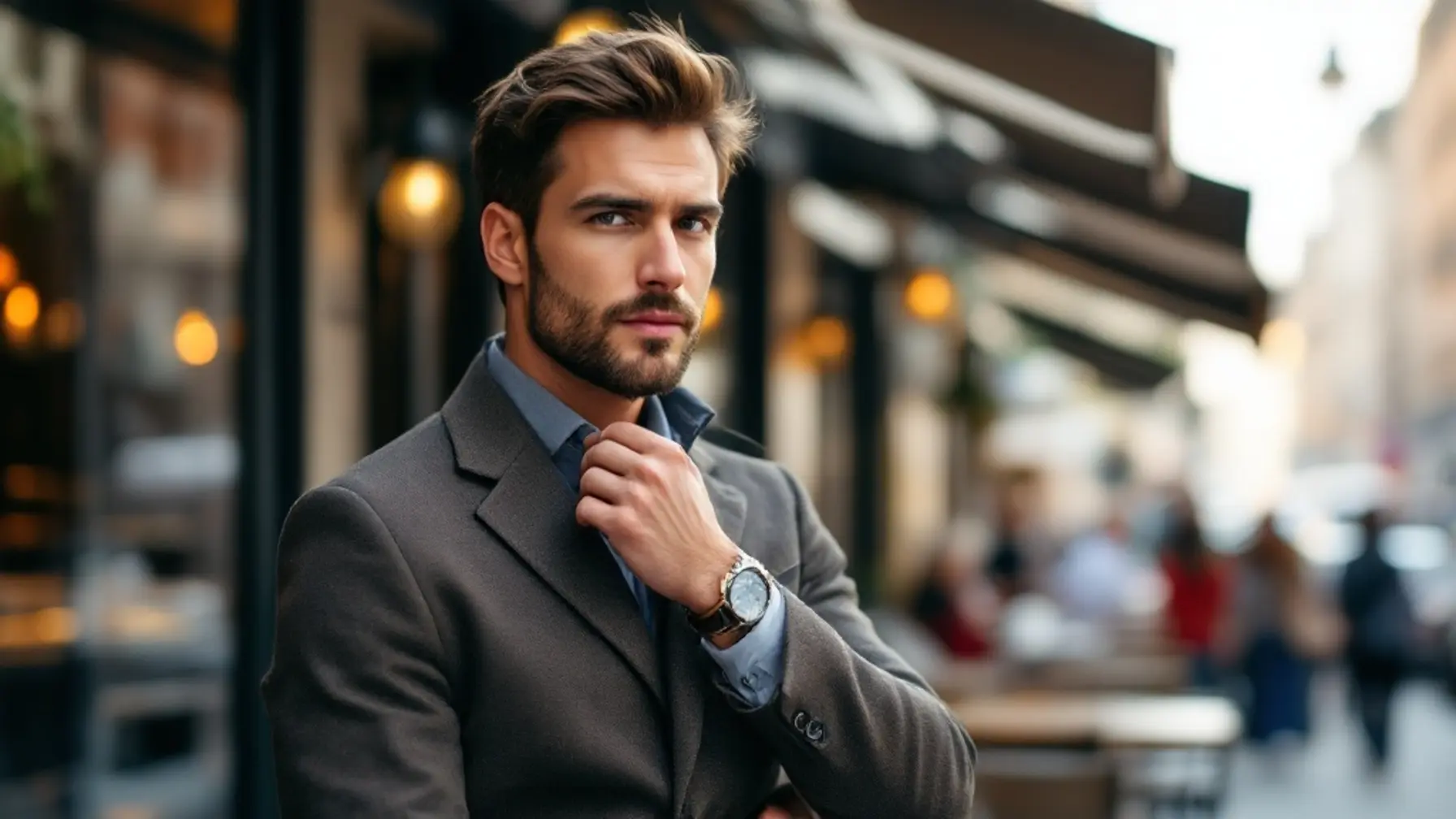
Elegant Watches for Formal Occasions
An elegant men’s watch for formal occasions is one of the most important accessories in a man’s wardrobe – it should discreetly highlight the significance of the event, comply with dress code rules, and not draw attention away from the suit or tuxedo. The main rule here is minimalism: a classic evening watch typically has a simple, flat case, a restrained dial free of too many complications, and subdued colours. For the most formal occasions, such as black tie weddings, galas, or banquets, dress watches work the best: thin, 36–40 mm in diameter, with a smooth or subtly textured dial in white, silver, or black. Hour markers in the form of subtle lines, Roman numerals, or small dots keep the watch legible without overpowering the look. Avoid overly chunky cases, rotating bezels, flashy colours, or extended functions (like chronographs or large counters), which are better suited to sports or casual watches. If you opt for a date display, make sure it is subtly integrated – a small window in a colour close to the dial will not upset the watch’s elegant nature. The case material is equally crucial: for formal styling, noble steel in a polished or brushed finish is best, while for exceptionally festive occasions, gold-plated or rose gold cases (so long as they match the other jewellery and accessories) are appropriate. Remember the rule of metal harmony – if your cufflinks, belt buckle, and wedding ring are in silver, the watch should also have a steel tone; if gold is dominant, it’s wiser to choose a timepiece with a warm gold-toned case. High gloss on polished surfaces adds sophistication but is best balanced with matte or brushed sections, increasing elegance and reducing the risk of excessive “glare” under lights. To maintain the slim line of your shirt cuff, case thickness matters – an elegant formal watch should easily slide under the cuff, without being clearly visible under fabric. This is not just a matter of aesthetics but also etiquette: in the most official settings, the watch should not overshadow your outfit or attract too much attention, but only be seen when the wrist is subtly revealed.
Choosing the strap is as important as the model of the watch itself because it largely determines the formality of the timepiece and how harmoniously it integrates with your entire outfit. For a suit, tuxedo, or tailcoat, the classic is a leather strap – smooth, of high-quality calfskin or alligator leather, with minimal stitching and no contrasting colours. The matching rule is simple: the strap colour should coordinate with your leather shoes and trouser belt – black straps for black oxfords, brown for shoes in shades of cognac, chocolate, or walnut. For slightly less formal occasions, such as business dinners, conferences, or important client meetings, watches on elegant steel bracelets are acceptable, provided that their design remains simple and balanced. A delicate, well-profiled “rice” or “jubilee” style bracelet can be a tasteful alternative to leather, especially in business formal settings where the dress code is not as strict as for a tuxedo. Conversely, heavy, sporty bracelets with wide links, dark PVD coatings, or rubber straps are better reserved for less official events as they can disrupt the elegant tone of the outfit. Matching the watch’s design to the suit’s style is also essential: for classic, dark suits (navy, graphite, black), watches with straightforward forms work best, while for checked or textured suits, a model with a touch of subtle detail is suitable – e.g. a “clous de Paris” patterned dial or slender dauphine hands. In business situations, a watch that combines elegance with functionality (in a discrete fashion) is a good choice: a thin model with a “small seconds” dial or a modest date indication looks professional without being overly sporty. Remember the rule: “the later the hour and the more ceremonial the occasion, the simpler the watch” – for evening galas, operas, or elegant receptions, choose the most understated models, avoiding excessive complications or fancy dial colours. In this way, a men’s watch will be a coherent, stylish compliment to a formal style, building the image of a man aware of the principles of classic elegance and able to select accessories appropriately.
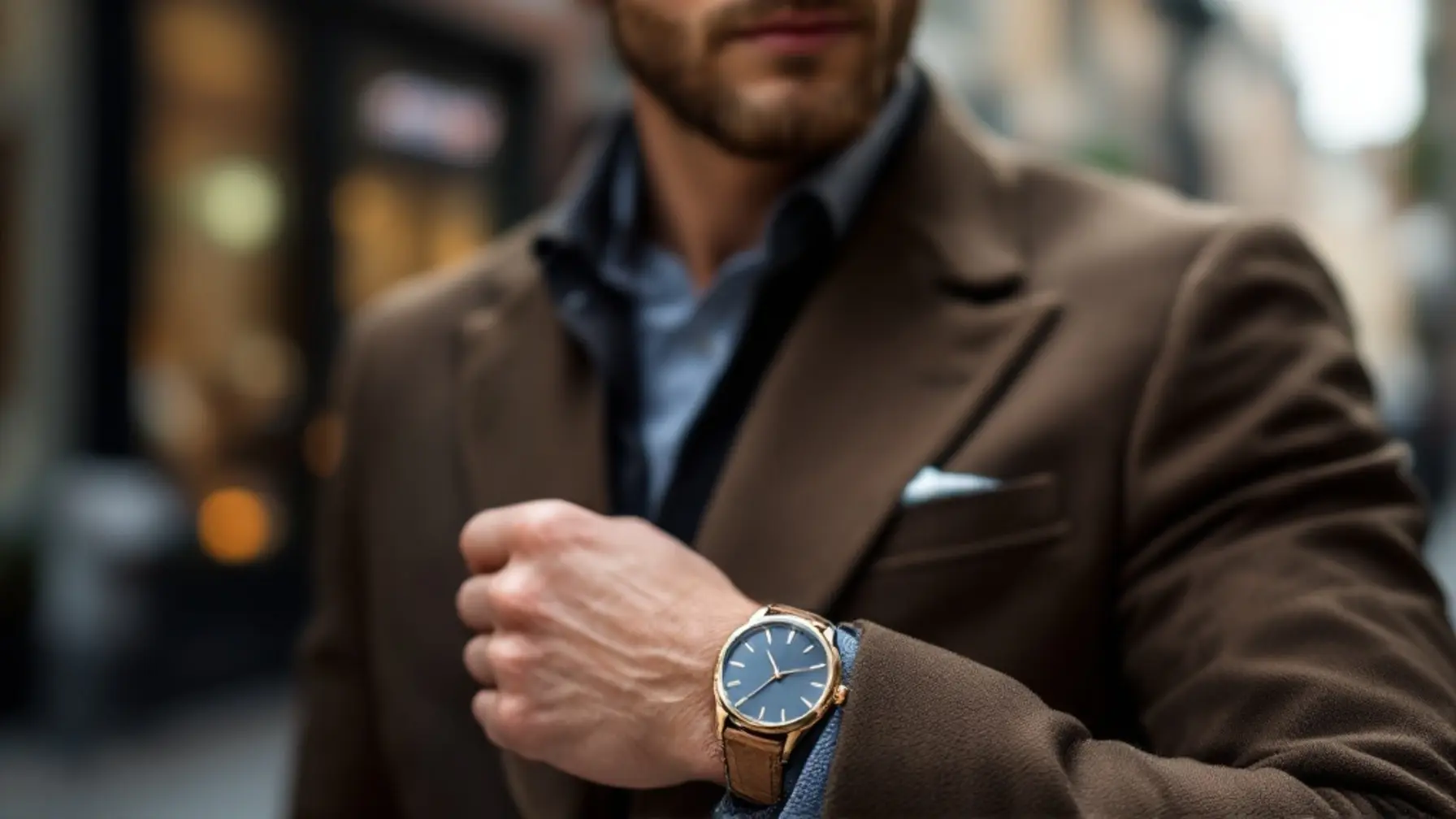
Business Dress Code and Watch Selection
In the business environment, the men’s watch stops being just a practical gadget and becomes a subtle but very readable message about professionalism, position, and understanding of the business dress code. In the context of the office, client meetings, or industry conferences, it’s crucial to distinguish between dress codes: business formal and business casual, because each imposes slightly different watch rules. In business formal – typical for executives, law offices, or the financial sector – classic, relatively simple watches with a thin case, usually on a leather strap in a subdued colour, work best. Such a watch should fit easily under the cuff of a shirt and jacket – too thick a case or a busy dial with many complications can be seen as a lack of sophistication or a desire to draw attention in the wrong way. Muted colours – silver, steel, possibly subtle gold, white, black, or navy on the dial – coordinate with the seriousness of business surroundings, while a lack of flashy details underscores focus on the meeting, not your accessories. Within business formal, avoid sporty watches, massive divers with thick bracelets, and also digital or overtly “tech” smartwatches on silicone straps, unless the company’s culture clearly allows a more relaxed style. The watch, like the suit, should play a supporting role, not be the main highlight of the ensemble – it should signal order and respect for the rules without overwhelming your surroundings. In more creative industries where business casual prevails, you can allow a bit of freedom, still within the boundaries of elegance: opt for a watch on a moderate-sized steel bracelet, a simple chronograph model, or one subtly inspired by military style but in a muted colour palette. Remember: the more formal your position and the more conservative the industry, the simpler, slimmer, and more classic the watch should be.
A key aspect of matching a man’s watch to the business dress code is consistency with other styling elements – suit, shirt, shoes, and accessories. In practice, this means coordination of colours and materials: the leather strap should reference your footwear and trouser belt colour – black with black Oxfords, dark brown with brown Derbys or brogues; while a metal bracelet looks better with cool-tone suits, such as navy, graphite, or grey. The colour of the case and dial details should be consistent with your belt buckle, cufflinks, or eyeglass frames; combining silver with cool colours and gold with a warmer palette (e.g. beige, brown, burgundy) creates a thought-out, harmonious look. Watch size also matters – too large a case (over approx. 42–43 mm with a classic suit) can upset proportions and make the wrist look “heavy,” while a 38–40 mm model is usually the safest and most versatile. In daily office life, the question arises increasingly whether a smartwatch suits business dress. In innovative settings, IT, or start-ups, a stylish smartwatch on a leather or metal strap, with the always-on screen mode turned off and a discreet dial, can be an acceptable compromise between function and elegance. In traditional sectors, however, classic analog watches are still preferred, as they don’t vibrate constantly during important meetings. Regardless of position and sector, a men’s watch in a business dress code should be well-maintained – a scratched case, worn strap, or dirty bracelet sends a signal of carelessness. Regular cleaning, strap replacement, movement servicing, and consciously choosing a watch for a given day (e.g. a simple model for a client presentation, a more expressive one for an internal day without external meetings) show that the owner controls his image. In this way, the watch becomes a tool for building credibility, highlighting respect for business partners, and demonstrating the ability to navigate the world of unwritten rules of elegance.
Sports Watches for Outdoor Activities
A men’s sports watch designed for outdoor activities must combine durability, functionality, and legibility, while also working harmoniously with the rest of the style – from mountain gear, to running outfits, to urban athleisure. Durable construction is crucial: for watches meant for trekking, trail running, or cycling, look for models with reinforced cases made of high-strength composite, steel, or titanium, with tough mineral or sapphire glass that resists scratches. Water resistance is a key parameter – if the watch needs to withstand running in the rain, kayaking, or water sports, a minimum of 5 ATM is required, and for swimming or recreational diving, 10 ATM or more is preferable. For mountain, hiking, and endurance sports fans, features like compass, altimeter, barometer, or thermometer directly support outdoor navigation and workout planning, rather than being mere gimmicks. From a style perspective, the case size is important: bulky, feature-packed sport watches go well with softshell jackets, down coats, or tech hoodies, but more minimalist urban outfits are better suited to slimmer models with well-designed ergonomics. Proper case profiling, material lightness, and a well-matched strap affect comfort, especially for extended outdoor activities when the watch is on the wrist for hours.
The dial and interface are a separate issue – classic “analog” sports watches offer high readability with contrasting hands and pronounced indexes, perfect for cycling or running in variable light, while digital watches or sports smartwatches bring more advanced training functions: heart rate monitors, GPS tracking, calorie counting, or detailed recovery stats. To still make such a timepiece a stylish addition to your image, limit bold colours and details – neon accents, orange buttons, or striking strap elements enliven true sports styling, but if you want to wear the watch daily in a city setting, pick a base in black, graphite, navy, or steel, using colour only as an accent. The strap plays a special role – silicone and rubber straps are most practical since they don’t absorb sweat or moisture, are easy to clean, and pair well with running Tees, rain jackets, or sports pullovers. For those who like to transition smoothly from outdoor activity to a casual city meeting, interchangeable straps are a great solution: after training, simply replace a highly coloured strap with a more subdued textile or nylon NATO, making your sports watch work better with jeans, chinos or urban sneakers. The key to styling is also proportion – a beefy, thick-cased sport watch looks good with full-cut jackets, hoodies, or technical softshells but can overwhelm a fitted leather jacket or plain tee; in such situations, choose a less “tank-like” model that’s still rugged and functional. Also consider the overall character of the watch paired to the activity: running watches tend to be lighter and more aerodynamic, outdoor models are chunkier, with extra sensors, and true diving watches with a rotating bezel and high water resistance are great with beach or vacation wear, though not always with minimalist urban looks. Consciously selecting a sports watch for outdoor activities means combining technical parameters with considered aesthetics, so your timepiece accentuates your dynamic, active lifestyle and is a natural, coherent part of men’s styling in different outdoor situations – from mountain trails, cycling, to a weekend walk around town.
What to Look for When Choosing a Watch?
Choosing a men’s watch as a stylish complement to your outfit requires considering several key factors that go beyond “I like it or I don’t.” The first criterion should be the proportion of the watch in relation to your wrist and figure. A case that’s too big on a slender wrist will look caricatured, while too small on a heavy wrist gets lost under a shirt cuff. The universal range for most men is 38–42 mm in diameter, but thickness and lug length also matter. For a suit and narrow-cuffed shirt, pick thinner models that fit easily under the sleeve, while for casual and sports styles, you can go for chunkier builds. Also match the shape of the case and dial to your face shape and clothing: round and oval forms are the most universal, while square and rectangular highlight a retro or modern minimalist mood and work well in business and smart casual outfits. Another aspect worth considering is dial design – the more formal the occasion, the simpler and more legible the array of indices, chronographs, and date windows should be. For evening looks, smooth, minimalist dials with discreet hour markers are best, while for daily or casual versions you can allow for bolder contrasts, textures, sub-dials, and highly coloured hands to add character without dominating the style.
Material and colour coordination with your outfit and the occasion is also crucial when choosing a watch. Stainless steel cases in silver tones are the most versatile and blend well with cool colour palettes (grey, navy, black) and most everyday clothing. Gold and rose gold shades are best paired with warm clothing colours (beige, browns), especially when the watch is meant to be a jewellery accent – particularly at formal and evening events. Remember the principle of matching metals: case and clasp colour should harmonize with other accessories like cufflinks, trouser belt buckle, or wedding ring. Strap or bracelet choice is equally important for the occasion. A smooth, black or dark brown leather strap is the classic for suits and business outfits; a matte texture and tonal stitching bring elegance without distracting from your overall look. For casual styles, you might pick more distinct textures, lighter browns, navy straps, or nubuck, while in smart casual, natural leather straps with basic steel cases work great. A steel bracelet gives the watch a more technical, urban feel, suitable for shirts without a tie, knit jackets, chinos, or even slightly smarter weekend looks. For sports and outdoor activities, synthetic straps or NATO nylons are most practical – sweat, water, and damage resistant, now available in stylish variants that fit right into a daily jeans and sweatshirt combo. You shouldn’t ignore the movement and functionality when selecting a watch either. Quartz mechanisms are the most hassle-free for everyday wear – just change the battery periodically, which matters if you live actively and switch up your looks often. Automatic and mechanical movements are seen as more prestigious – a good choice for elegant and business watches that signal classic awareness and attention to detail. If you change watches often depending on the occasion, consider models with quick-release straps – this lets you switch from a formal (leather strap) to a weekend (bracelet or synthetic strap) version in seconds, without visiting a watchmaker. Finally, balance features with real needs – advanced chronograph, tachymeter, or diving scale look spectacular, but if you mostly wear suits or classic smart casual, too many dial features can diminish the elegance. The watch should be a logical extension of your image: discreet when formality matters, bold when you want to convey ease and personality, and always matching the colours and textures of your other wardrobe elements.
Summary
Selecting a men’s watch is an art that requires considering the occasion and dress style. Casual models work for everyday use, while elegant watches perfectly complement formal outfits. For business dress codes, it’s crucial to pick a watch that’s not too ornate. Sports models, on the other hand, are ideal for outdoor activities. Remember to pay attention to the watch’s functionality and compatibility with the rest of your outfit when choosing.


