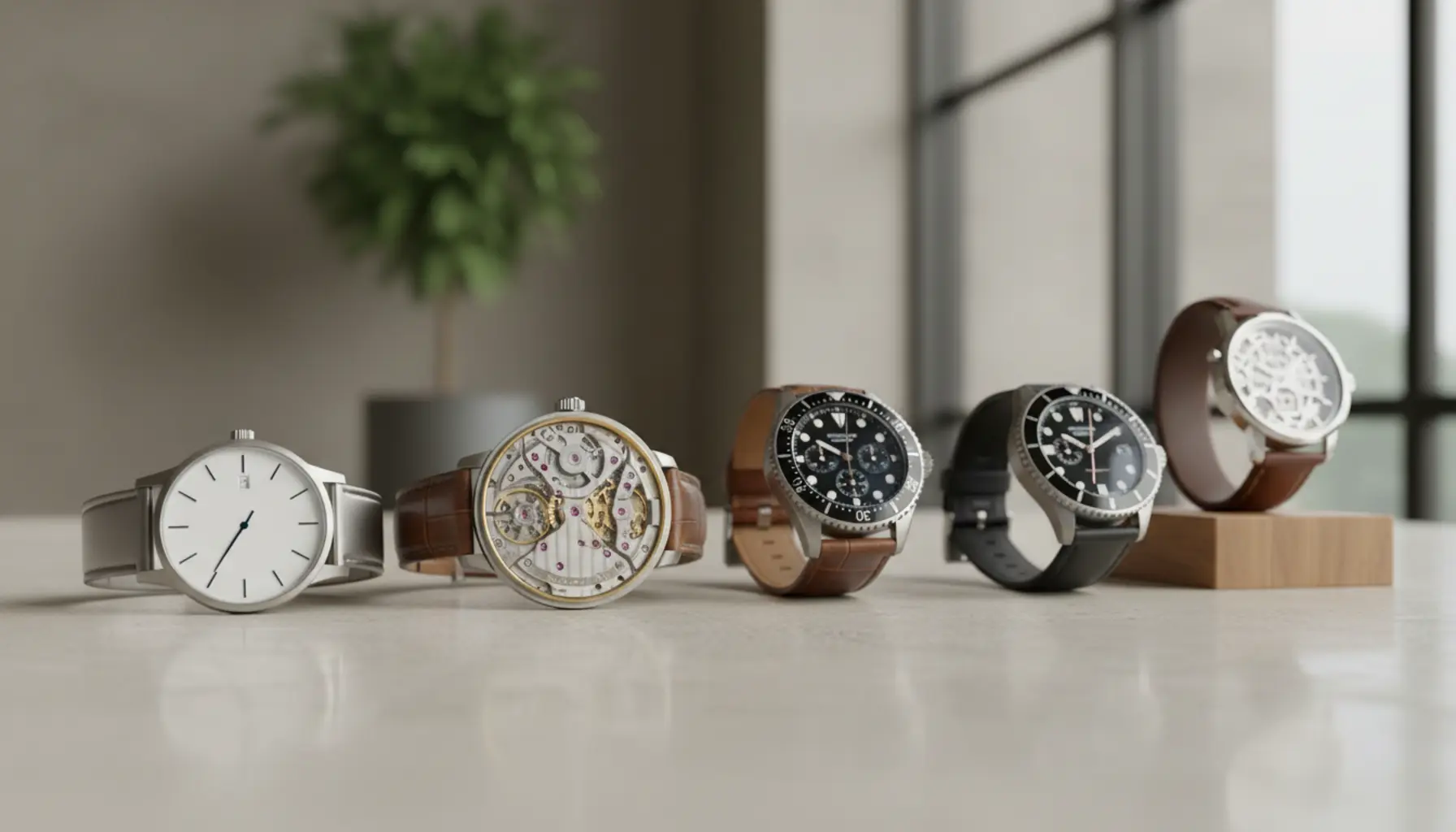
Watch collecting is a passion for those who appreciate not only the functionality but also the history and mechanical precision of these exceptional objects. The first steps in this hobby show that choosing the right models can influence not just your personal style, but the future value of your collection. Understanding key aspects – from movements to investment trends – allows you to grow your collection consciously and with engagement.
Table of Contents
- Why collect watches?
- First steps in collecting watches
- Which watches to choose at the beginning?
- Are watches a good investment?
- What are in-house movements?
- How to develop your collection?
Why collect watches?
Watch collecting is much more than simply buying accessories to tell the time – it’s a hobby at the intersection of engineering, functional art, history, and personal expression. For many, the first encounter with watches stems from a practical need, but quickly it turns out you’re wearing a small, precise mechanism on your wrist, where every detail matters. Some are fascinated by micro-mechanics – how a set of miniature gears, springs, and jeweled bearings can track time with amazing accuracy. Others are drawn to design: the case’s proportions, the dial’s texture, the shine of the hands, lume color, the harmony of indices. Collecting allows you to immerse yourself in this world and understand why classic patterns, such as divers with rotating bezels or elegant dress watches with minimalist dials, have been so highly valued for decades. A watch also becomes a tool for self-expression – just as some collect paintings or vinyl records, a collector chooses timepieces that reflect their character, lifestyle, values, and passions; you’ll wear a different watch to a business meeting, a mountain hike, or one with sentimental value passed down generations. Modern watch collecting has a cultural and social dimension, too. Every model often stands for a specific story: a pilot’s watch inspired by WWII aviation, an iconic model tied to a space program, a dive watch made for special military units, or a watch worn by a famous athlete or actor. Delving into these stories not only broadens your knowledge of the brand but also helps you understand the era’s context, technological development, and the impact of historical events on design. Collecting also builds a sense of belonging to a community. Internet forums, Facebook groups, enthusiast meetups (so-called “watch meets”), and watch fairs create an environment for exchanging experiences, advice, opinions, and seeing watches live that you’d only read about before. In this world, it’s not just the objects themselves that matter but the discussions about them, debates about calibers, modifications, restorations, and “watch of the day” outfits. Thanks to this, collecting becomes a passion that unites, educates, and provides regular stimulation to keep learning more, allowing you to develop a sophisticated taste and critical eye for the market and trends over time.
You also can’t skip the investment aspect, which attracts more and more beginners. Although not every watch will appreciate and you shouldn’t treat your collection simply as an investment portfolio, a carefully considered choice of models can be a long-term way to store capital. Renowned brands, limited editions, vintage watches in good original condition, or models of historical significance often maintain or increase their value over time. A collector who invests time in learning – understanding references, how the secondary market works, reading serial numbers, and distinguishing original parts from later replacements – gains an edge and can make buying decisions consciously. Over the years, a collection can become a tangible asset that not only pleases the eye but also stabilizes finances or can be passed on as a valuable memento. But even if you have no interest in profit, watch collecting develops skills that are useful in many areas of life: patience (waiting for the right occasion, “hunting” for your dream piece), analytical ability (comparing technical specs, prices, condition), financial discipline (budgeting for your collection, avoiding impulse buys), negotiation, and attention to detail. There’s also an ecological and anti-consumerist dimension – instead of swapping out a smartwatch for the latest model every year, you can wear the same mechanical watch for decades, servicing it and taking care of its condition, thus reducing electronic waste. Finally, watches remind us of the value of time, both literally and metaphorically. Every glance at your wrist can be a small ritual of mindfulness, a signal that time is a resource worth managing wisely. It’s this fusion of beauty, precision, history, community, and potential financial value that makes watch collecting a lifelong passion for many, evolving and changing with them, as every new timepiece added brings a new story and meaning.
First steps in collecting watches
The first step toward conscious watch collecting is defining your motivation and framework. Before you buy any model, consider what you’re actually looking for: are you interested mainly in wearing watches daily, or do you want to build a display collection kept in a safe and rarely used? Is brand prestige more important, or does a specific technology fascinate you – for instance, automatic or manual winding movements, or high-precision quartz? It’s worth setting an indicative budget right away – monthly or yearly – that you’re willing to spend on this hobby. Clearly defined limits (e.g. “for a single watch up to PLN 1500” or “no more than PLN 10,000 per year”) guard against impulsive purchases that don’t fit your long-term vision. Another foundation is gaining basic knowledge. Start by understanding the differences between main movement types (mechanical, automatic, quartz, solar), learn terms like power reserve, balance frequency, complications (e.g. chronograph, GMT, date, moon phase), case types (steel, titanium, bronze, precious metals), and glass types (mineral, sapphire, acrylic). Do this by using watch forums, blogs, YouTube channels, and official manufacturer sites. A good habit is to keep notes – in a spreadsheet or notebook – listing brands, models, references, case diameters, thickness, used movements, and other users’ impressions. This “watch database” quickly becomes your personal compendium. At the same time, take a look at your lifestyle and wardrobe: if you wear shirts and jackets daily, you’ll likely use a classic dress watch or a toned-down model; if you prefer jeans and T-shirts, sports watches, divers, or field models may be natural picks. Also think about case proportions to your wrist – trying on watches in-store, even without buying, is a great way to sense whether you prefer, say, 36–38mm or 40–42mm diameters and which lug-to-lug lengths are most comfortable. This makes later online purchases less risky.
A reasonable entry into collecting is to start with 2–3 carefully chosen models rather than immediately building a large, random collection. A “watch triangle” is often recommended: a casual daily watch, a more elegant (dress) watch, and a sports watch like a diver or pilot. This way you test different styles, learning what you actually wear, not just what looks good in photos. At this stage, focus on honest, reputable brands in the lower and mid price range rather than going luxury right away—you’ll more easily absorb mistakes and quickly learn what features are most important for you (e.g., lume, strap comfort, bracelet quality, water resistance). At the same time, start building relationships: join Facebook groups, Polish and international forums (e.g., brand-specific), and follow collectors’ profiles on Instagram. Don’t be afraid to ask questions – the watch community can be very helpful, especially to those eager to learn and open about being beginners. In the watch world, the ability to distinguish genuine pieces from fakes and attention to technical detail are crucial; for this reason, first purchases are better made from authorized dealers, reputable online stores, or well-known pre-owned shops and auction houses. Over time, you may use the secondary market – auction sites, forum listings – but always insist on full documentation (box, warranty card, invoice, service history) and additional photos. Learn from the start to care for your watches: invest in a simple watch winder if you have several automatics, buy a box or case for storage, avoid magnets (speakers, magnetic phone cases), and don’t ignore recommended servicing, especially for mechanicals. Also, develop an investment strategy: while not every watch will appreciate, consciously choosing popular, limited, or renowned models increases your chances of holding or growing value over time. Initially, it’s best to stick to the rule of buying first for yourself—for enjoyment and satisfaction—with the investment aspect a nice bonus. As you learn the market, you’ll spot which references disappear from offers and increase on the secondary market, understand the role of rarity, condition (so-called full set, original parts, unpolished case), and fashion. These first, well-thought-out steps will introduce you to collecting in an orderly way, allowing you to build a collection that’s consistent, conscious, and suits your personality.
Which watches to choose at the beginning?
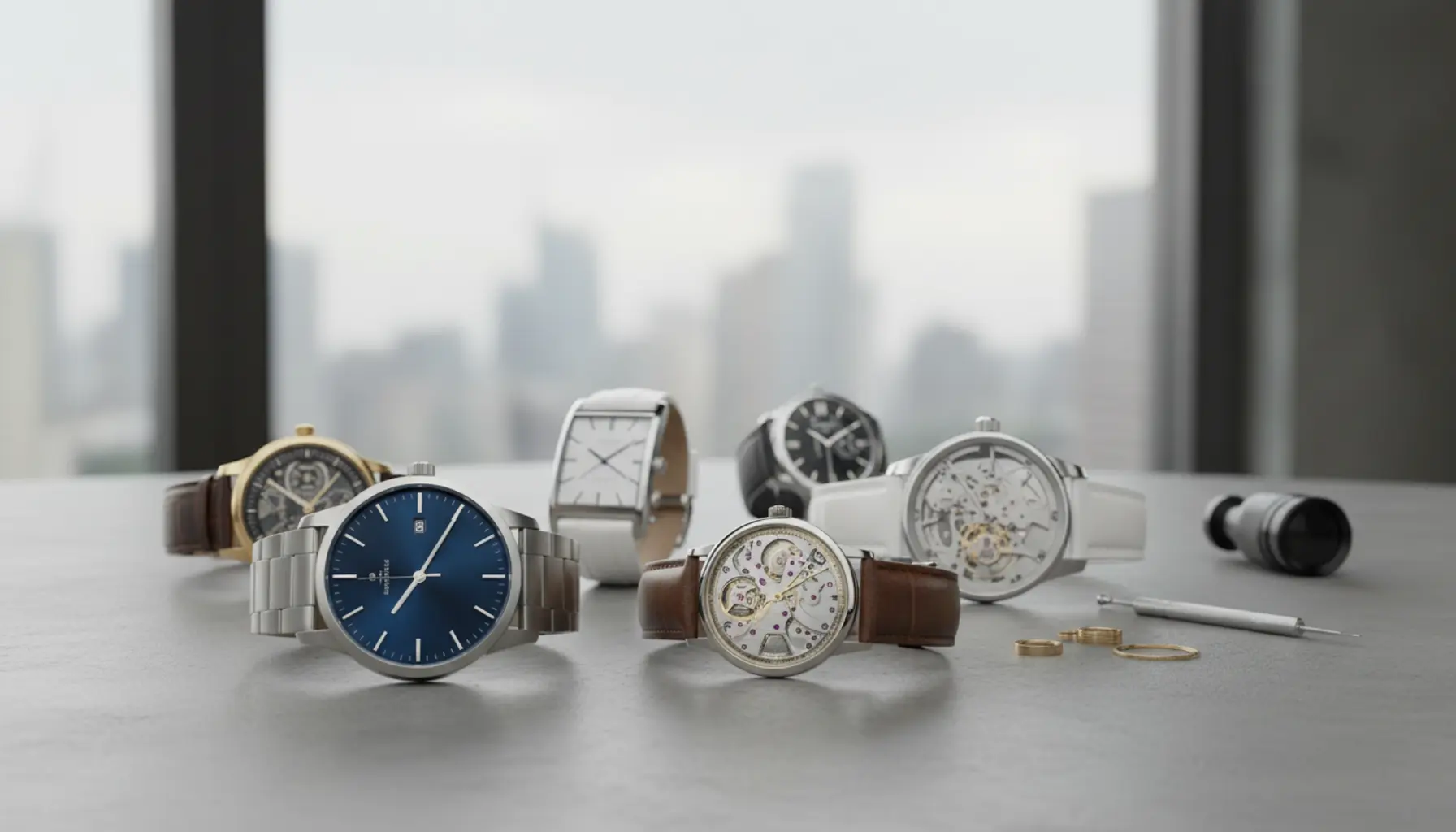
Choosing your first watches for the collection is worth basing on a few simple but thoughtful rules to avoid disappointment and overpaying. At the start, it’s best to stick with the proven concept of the “watch triangle”: a daily (casual) model, an elegant (dress) watch, and a sports model (field, diver, or pilot). The daily watch should be as universal as possible: a simple dial, legible indices, subdued colors (white, black, navy, grey), and a case diameter around 38–40mm, making it suitable for both shirts and T-shirts. In this category, watches on leather or fabric (NATO) straps with quartz or automatic movements, depending on your budget, work very well. The elegant watch should be discreet and slim to slip easily under a shirt cuff – usually with a minimalist dial, no major complications (e.g., without chronograph), and classic strap colors (black or brown). The sports watch may be more expressive: higher water resistance, a bulkier case, rotating bezel (as in divers), or large, contrasting numerals (as in field watches). The key is for these three watches to complement each other and not duplicate; if your first sports watch is a bulky diver on a bracelet, the second shouldn’t be a very similar model from another brand, but perhaps a lighter field watch on a strap. Beginners should pay special attention to the movement. Quartz watches are cheaper, more shock-resistant, and basically maintenance-free except for battery changes, so they’re perfect daily “workhorses.” Mechanical—and especially automatic—watches deliver more emotional value, require interaction with a watchmaker and more care, but introduce you to the real world of horology. A good starting solution is a mix: e.g., one tough quartz as your “do-it-all” watch and one automatic as the collection’s “main star” to enjoy on every occasion. When picking your first models, go for brands with solid reputations but in a reasonable price range: Seiko, Orient, Citizen, Tissot, Certina, Hamilton, Casio (including the G-Shock line), as well as select microbrands recommended by enthusiasts. These offer good value for money, readily available parts and service, and some brand recognition, which helps with resale down the line.
When building your first trio of watches, focus on functionality, not just looks or dial logos. Ask yourself when you will wear a given model most: if you work in an office, a dress and daily watch may be priorities, and a sports model for weekends; if your life is more active, invest in a durable diver or G-Shock as your main watch and keep the elegant one for special occasions. Choose features like water resistance of at least 50m (preferably 100m) for daily and sports watches, sapphire glass or good quality mineral with anti-reflective coating, and proven, commonly used movements (e.g., Seiko, Miyota, ETA, Sellita). At the outset, avoid excessively complicated complications (chronographs with many sub-dials, perpetual calendars, tourbillons) and very exotic brands, which can be hard to service and difficult to resell. Pay attention to case size and so-called lug-to-lug (the distance between the ends of the lugs) – a watch that’s too large on a narrow wrist will look disproportionate and quickly lose its charm. Try watches on in-store whenever possible, even if planning to buy online later. From an investment perspective, at the very beginning focus on models that hold value well rather than trying for quick profit. Popular references from mainstream brands have a predictable secondary market, so if your tastes change, you can resell with minimal loss. Observe which models are often recommended on forums and groups—the so-called “classics” for each price bracket—as these are often the safest choice. At the same time, approach “hot” trends sold by influencers with caution, as such watches often have inflated prices. Stick to a simple principle for starters: the watch should above all bring you pleasure in daily wear, and only secondarily fulfill investment criteria. Once you learn what you truly like on your wrist—specific sizes, case shapes, dial types, and complications—future purchases will become much more deliberate, and your collection will gain coherence and an individual character.
Are watches a good investment?
The answer to whether watches are a good investment is more complex than it might seem and depends largely on the collector’s approach. Financially, a watch isn’t a classic investment instrument like stocks or bonds—it doesn’t generate dividends or interest, and its liquidity (ease of sale) is often limited. Still, the market for mechanical watches—especially premium brands—has caught investors’ attention in recent years, since certain models can increase significantly in value. The keyword here is “certain,” because most watches, like new cars, lose some value immediately after leaving the boutique. Thus, watches are best viewed as alternative assets, combining utility, emotional, and potential investment value. At a basic level, a well-chosen watch can be a safe “store” of some capital—even if it doesn’t bring spectacular gains, it helps preserve significant value, especially with established brands. To grasp investment potential, you need to consider several factors: brand, specific reference (model), rarity, condition, completeness (box, papers, accessories), current market trends, and the luxury sector’s overall condition. Iconic models—such as classic divers, timeless tool watches, and selected chronographs—have decades-long collector interest, which translates to stable demand on the secondary market. Conversely, niche, overhyped or fad-driven watches can quickly lose value when the market’s attention shifts. Beginners often err by buying “for investment” impulsively, guided mainly by internet hype without deeper analysis. In practice, a better strategy is “passion plus reason”: pick watches you’d like even if they never appreciated, but minimize risks by making informed purchase decisions. It’s also important to distinguish between investing in new watches and the used market. Buying from a boutique usually means the highest price, including retail margin and marketing costs. Much of this vanishes as soon as you leave the store; thus, investing in new watches requires exceptional care in model selection and good insight into waiting lists, availability, and brand distribution policies. The secondary market is a different game, where prices reflect real demand more accurately. Buying a good-condition pre-owned watch, you’re typically paying a “market” sum, so potential for further loss is lower—especially for sought-after pieces. Still, you must factor in service costs (overhauls every few years can be expensive), the risk of prior shoddy repairs or aftermarket parts, and fakes that can fool even seasoned collectors at the highest levels. Investing in watches, therefore, means investing in knowledge—without it, it’s hard to tell a bargain from a trap. Finally, time is a factor: the investment horizon for watches is usually long. Gains, if any, appear over years, not months; short-term speculation on hot models is very risky as price bubbles eventually burst. Therefore, a collector treating watches as a diversification for their investment portfolio should approach it as with art collecting: buy quality, timeless items from proven brands with a long-term view and the understanding that, at worst, you’ll be left with a beautiful object.
For beginners, a good starting point is to assume watches are primarily an investment in lifestyle, enjoyment, and education, rather than purely financial value. When building your first collection, focus on models that at least hold value—spectacular appreciation is not required. In practice, these are often mid and upper-mid market watches from well-recognized brands, with universal design and proven movements. Models with classic aesthetics—simple dials, clear indices, steel cases, neutral sizes—have an advantage, as they weather changing trends. Very extravagant watches with oversized cases or controversial designs may be hard to resell, even if initially attention-grabbing. Also remember the watch market is cyclical: boom periods for steel sports models from famous brands can be followed by years of stagnation or correction. Don’t assume every trend lasts forever. Diversification works here as in classic investing: rather than tying up a large capital in one “hot” piece, it’s wiser to own several solid, different types of watches (e.g., diver, simple three-hander, basic chronograph), preferably from different brands. Storage and insurance are also important. More valuable watches should be properly secured—a home safe, bank deposit, or insurance all add to the costs of ownership, which must be included in any profit calculation. Even cheaper watches need thought-out storage to avoid scratches, corrosion, or mechanism damage—all directly impacting resale value. Documentation is vital: original box, warranty, receipts, and certificates of limitation—the lack of these can lower value by tens of percent on the secondary market. For beginners, it’s therefore wise to buy watches as “complete” as possible and wherever possible from authorized dealers or reputable secondary-market sellers with proven transactions. Lastly, when weighing if watches are a good investment, remember the intangible benefits: wearing a beautiful timepiece builds confidence, underlines style, and is often a conversation starter or an excuse for new acquaintances. For many collectors, these values—everyday joy from a fine object, participating in the history of watchmaking craftsmanship, satisfaction from finding a rare reference—are the true “profit,” and the possible increase in secondary market value is just a welcome bonus. Such an approach works especially well when starting out, as it avoids the pressure to “make a profit,” which often leads to hasty purchases, chasing trends, and disappointment if the market reality doesn’t live up to expectations.
What are in-house movements?
In-house movements are those designed, developed, and typically produced directly by a brand itself, not bought from external suppliers (such as ETA, Sellita, or Miyota). In practice, this means the heart of the watch – the movement responsible for keeping time – is the manufacturer’s own creation, unique to them and often protected by their own technical documentation, patents, and specific finishing standards. For watchmaking brands, having in-house movements is a sign of prestige and proof of engineering skill: it signals technical independence, the capacity for innovation, and the ambition to be more than just an assembler of ready-made components. For beginning collectors, it’s worth understanding that “in-house” isn’t always clear-cut—sometimes so-called proprietary movements are based on heavily modified external calibers, and the actual scope of manufacturing (from design to production to assembly) can vary significantly across brands. That said, watches with in-house movements are market-accepted as more advanced and “collectible,” often reflected in higher prices, smaller production runs, and greater enthusiast interest.
The hallmark of in-house movements is primarily the uniqueness of their construction and aesthetics. A brand can design the movement exactly to its needs: adjust balance frequency, design unique bridge layouts, apply individual decorations (e.g., their own finishing style, skeletonization, engraving), or introduce proprietary complications—like a bespoke shock-absorber system, non-standard chronograph module, or unusual power reserve. This makes a watch with an in-house movement a kind of brand signature—a seasoned collector, seeing the movement through a display back, can often tell the maker without looking at the dial. This uniqueness carries a few practical consequences: first, it makes the movement harder to copy; second, a particular reference can be more collectible, especially if the movement was short-lived or produced in limited numbers; third, technical solutions may be better integrated with the watch design, sometimes resulting in greater reliability or user satisfaction. On the flipside, in-house movements can also have disadvantages and limitations that beginners should know. Servicing such a movement is often pricier and trickier than with common external calibers: spare parts are harder to come by, and some brands allow repairs only at authorized service centers, increasing costs and wait times. Due to smaller production scales, early in-house movement series can have “teething problems” – minor design issues revealed only during real use. From an investment perspective, an in-house movement can be an important argument, boosting status, but it’s no guarantee of value growth—brand, model history, secondary market demand, and overall condition all play a part. For beginners, it’s sensible to treat in-house status as just one selection criterion, not the sole quality marker: in many cases, a simple, proven construction from a renowned supplier is just as good, and sometimes more practical for the start of a collection, than an advanced but expensive-to-maintain proprietary movement.
How to develop your collection?
Developing a watch collection starts with a conscious plan, not spontaneous additions. Determine your direction: do you want to focus on a specific type (divers, pilots, dress), one brand, a chosen decade, or perhaps a function (chronographs, GMT, military watches)? This “thematic axis” works as a filter – you instantly know which models fit your vision and which are just fleeting whims. In time, you may have several parallel collections, e.g., a small capsule of dress watches, a separate stream of sports automatics, and a vintage niche. For each new watch, ask yourself a few questions: what gap does it fill, what sets it apart, does it bring a new complication, case material, movement type, or style? If it’s very similar to a piece you already own, make sure the similarity is intentional (e.g., you’re building a comparative mini-collection of divers) and adds true collecting or practical value. A good habit is to keep a “wishlist” of target watches, organized by short-, medium-, and long-term horizons. This way, you grow your collection step by step, not at random. Another element of wise development is aligning the collection with your life. Consider how many watches you actually wear in a month and in what scenarios – work, formal outings, sport, travel. If a watch sits untouched for months, maybe its place in the collection is unclear. Ask yourself: do I want a “museum showcase,” or to rotate watches that truly live on my wrist? There’s no bad answer – what matters is consistency with your collecting philosophy. If you value utility, grow your collection so that each model serves a specific role: a GMT travel watch for business trips, a robust diver for holidays, an elegant three-hander for business meetings, etc. If you lean historical or artistic, you may accept rarely worn pieces, but important to your collection’s narrative – e.g., first editions of particular calibers or limited re-issues of iconic references. In both approaches, consistency is key, as that gives your collection character and value over time.
Wise development also means learning the art of selling watches—the so-called “collector recycling.” Instead of endlessly adding to the box, take stock occasionally and honestly assess which watches no longer delight you, duplicate the function of others, or don’t fit your current life stage. Selling a few less significant pieces to finance one special purchase is a natural step in collector maturity—this upgrades quality, not just quantity. Learn to value your watches, track actual transaction prices on auctions, forums, and groups—not just retail prices. Ensure a complete set (box, papers, receipts, service docs), as this hugely affects resale liquidity and value. At the same time, remember that chasing quick “flipping” can easily kill the joy of collecting. It’s better to take a long-term view: buy watches you want to wear and see in your collection for years, not weeks. Building knowledge and relationships is also crucial to development. In time, broaden your horizons—explore vintage watches, more complex complications, lesser-known microbrands, or manufactures with interesting stories. Attending meetups, fairs, visiting luxury brand boutiques, or talking to watchmakers will help you get familiar with higher price segments and better understand what you’re really buying (hand-finishing, movement design, complex cases). As your taste evolves, your priorities may shift—it’s natural to be dazzled by big logos and flashy designs at first, but later look for subtlety, proportion, index finishing, or the sweep of the second hand. Document your collection: take photos, keep notes on purchase dates, costs, service, and user impressions. After a few years, you’ll see not just the history of your watches but also the evolution of your own style. This way, growing your collection stops being chaotic accumulation and becomes a conscious, long-term project where every new piece has a logical place and rationale.
Summary
Watch collecting is a fascinating hobby that merges a love of mechanics with the potential for investment gains. Starting your collection should begin with understanding why it’s worth doing and how to wisely choose your first models. Learning the differences between movements, and picking watches that best mirror your personal taste and interests, will help your collection evolve. By exploring the concept of in-house movements and considering investment value, your watch collection can become both a passion and a valuable asset for the future.