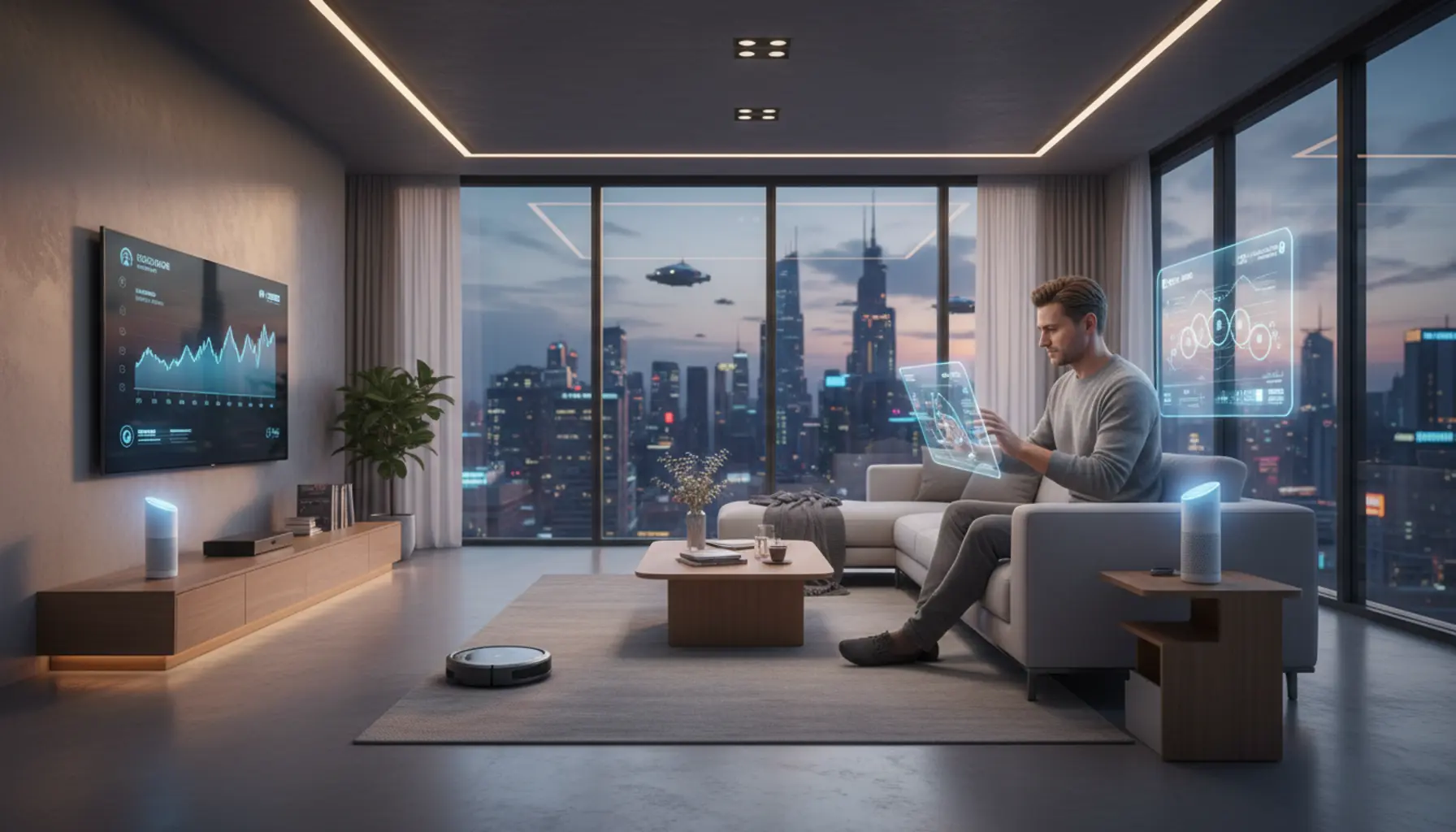
A modern smart home is no longer just about convenience and entertainment—it’s real support for everyday life. In this article, we present the most important smart home trends for 2026—find out how AI, automation, energy efficiency, and security are transforming homes, and how to start your own journey with these technologies.
Discover the key smart home trends for 2026: AI, automation, energy savings, security, and a practical beginner’s guide!
Table of Contents
- What is a smart home and how does it work in 2026?
- Key smart home trends in the coming years
- Artificial intelligence and automation—a revolution at home
- Energy efficiency and a sustainable lifestyle in a smart home
- Security and comfort—future technologies for everyone
- How to start your smart home journey—and what to avoid?
What is a smart home and how does it work in 2026?
The smart home in 2026 is much more than a few “gadgets” operated from your phone. It is a coherent ecosystem of devices, sensors, and cloud services, working together, learning your habits, and making decisions independently based on data. The foundation of such a home is an integrated infrastructure—Wi‑Fi 6E or 7 router, a smart home hub (either physical or virtual in the cloud), and a network of devices that follow universal standards such as Matter, Thread, Zigbee, Z‑Wave, or Bluetooth LE. Because of this, smart bulbs, sockets, blinds, locks, cameras, motion, temperature, flood, air quality sensors, or video doorbells can communicate seamlessly, regardless of manufacturer. A key role is played by the voice assistant and automation management system—by 2026, this is usually a hybrid: some logic works locally on the hub (for speed and security), and more advanced operations (such as image recognition, advanced data analysis) are processed in the cloud using artificial intelligence. This means homes can “understand” more natural commands, predict your needs (e.g., raise the temperature before you return from work if, based on your location and calendar history, the home knows you’re usually back at a certain time) and dynamically optimize energy usage. The 2026 smart home runs on scenarios (like “Morning,” “Work from home,” “Vacation”) that combine multiple actions: opening blinds, starting the coffee machine, adjusting lighting, activating certain cameras, or locking doors. Importantly, these scenarios no longer need to be manually programmed step by step—more and more, the system itself proposes automations based on the observed domestic behaviors and external data such as weather forecast, energy tariffs, air pollution in the area, or traffic on your way to work. In practice, the smart home becomes a digital home manager, coordinating all systems—from heating, ventilation, and AC (HVAC), to lighting, multimedia and household appliances, to monitoring and alarm systems—with the user having complete control from a single app or by voice.
A key differentiator in smart home functioning in 2026 is the deep use of AI and data analytics for ongoing “learning” of household members and their environment. The system not only responds to single events (button presses, motion detection), but builds behavior models: knowing what time you typically go to bed, how many people are home, your preferred temperature, when you charge your electric car, which rooms you use during the day, and how energy bills are trending. Based on this, it makes autonomous decisions within your set priorities—whether max energy savings, temperature comfort, or security are most important. If savings are the goal, the smart home lowers temperature in rarely used rooms, runs the washing machine or dishwasher during cheaper energy tariffs, utilizes photovoltaic panels to prioritize power storage and EV charging, and adjusts lighting to daylight levels. It also takes care of security—with state-of-the-art yet discreet monitoring systems using edge-computing camera image analysis as standard in 2026. The camera need not send the whole video stream to the cloud—it detects locally whether it sees a known face, suspicious movement around windows or the front door, or a package left in the hall. The system distinguishes household members from strangers, people from animals, and responds appropriately—sending notifications, turning on deterrent lights, triggering sirens, or alerting security. Privacy is key: 2026 smart homes offer “privacy by default” modes, where sensitive data (audio/video recordings, presence info) is processed locally and encrypted, and users decide what goes to the cloud and which external integrations (insurance, energy supplier, streaming services) are active. Thanks to this, a smart home is no longer seen as a “giant wiretap,” but as a tool genuinely supporting daily life—auto-opening the gate upon recognizing your car, matching light and sound scenes to mood and time, controlling air quality (managing HVAC, windows, purifiers, humidifiers), and monitoring device health to predict failures and suggest service before costly breakdowns. All this happens as unobtrusively as possible—the home becomes a “self-regulating” system that reacts faster than a human, requires little manual app “clicking,” and mainly occasional behavior tweaks or new preferences as lifestyles change.
Key smart home trends in the coming years
In the next few years, smart homes will evolve mainly toward greater autonomy, interoperability, and energy-conscious management. A primary trend is further adoption of the Matter standard and related communication protocols, finally solving the “island” ecosystem problem. Devices from different brands—from bulbs and sockets to locks, robot vacuums, and AC—will increasingly communicate without needing extra bridges and manufacturer apps, letting users centrally control their infrastructure via one panel or voice assistant. Locally processed data (edge computing) is also growing: image analysis from cameras, voice commands, and energy patterns are handled more by home hubs, not the cloud, cutting system response time, reducing Internet dependency, and boosting privacy. Another trend is “transparent” automation: users don’t have to manually define every rule as the system learns routines—when residents typically return home, go to bed, use heating, and AC—then autonomously optimizes temperature, lighting, and blinds. By 2026 and beyond, there’s more focus on adaptive scenarios that react not only to home sensors but also external data: weather forecasts, real-time energy prices, traffic in the city, or local smog. A smart home, for example, may pre-heat rooms using cheaper tariffs, or turn on purifier systems before air quality drops below acceptable levels.
We also see a strong trend of smart home integration with renewable energy and e-mobility. Photovoltaic systems, home energy storage, heat pumps, and EV chargers will be run by a single intelligent logic deciding in real-time whether a power surplus should be used immediately, stored, sent to the grid, or used for fast car charging. Prediction algorithms, based on habits and sunlight forecasts, plan heavy device operation to maximize free rooftop energy and lower nighttime tariffs. In security, we notice a shift to “proactive security”—cameras, motion sensors, smart locks, and video intercoms work with cloud/edge-based image and sound analysis. The system recognizes usual patterns (courier, neighbor, householder) and distinguishes them from threats, combining info from various sources: suspicious sounds, unusual activity times, tampering attempts at locks/gates. Cybersecurity is also rising in importance—manufacturers implement end-to-end encryption, device certification, regular firmware updates, and “guest modes” limiting data for visitors. Another clear movement is the development of voice and conversational interfaces, shedding the role of “voice remote” and becoming a home assistant capable of natural dialogue, understanding context, and joining various tasks into complex commands (“I’m going away for the weekend, prepare the house” means simultaneously turning off unneeded sockets, lowering temperature, switching on presence simulation, and a stricter alarm mode). Complementing this trend is growing wearables and health sensor integration—smart homes can, for instance, adjust bedroom lighting and temperature based on last night’s sleep quality, suggest ventilation based on CO₂ levels, or auto-enable a “quiet mode” when a focus-required work session is detected. All these trends are linked to sustainability and “digital well-being”: smart home systems are not just about saving kilowatt-hours and lowering bills, but about reducing a household’s carbon footprint and shielding residents from digital overload, filtering notifications, and auto-limiting noise or blue light exposure in the evenings.
Artificial intelligence and automation—a revolution at home
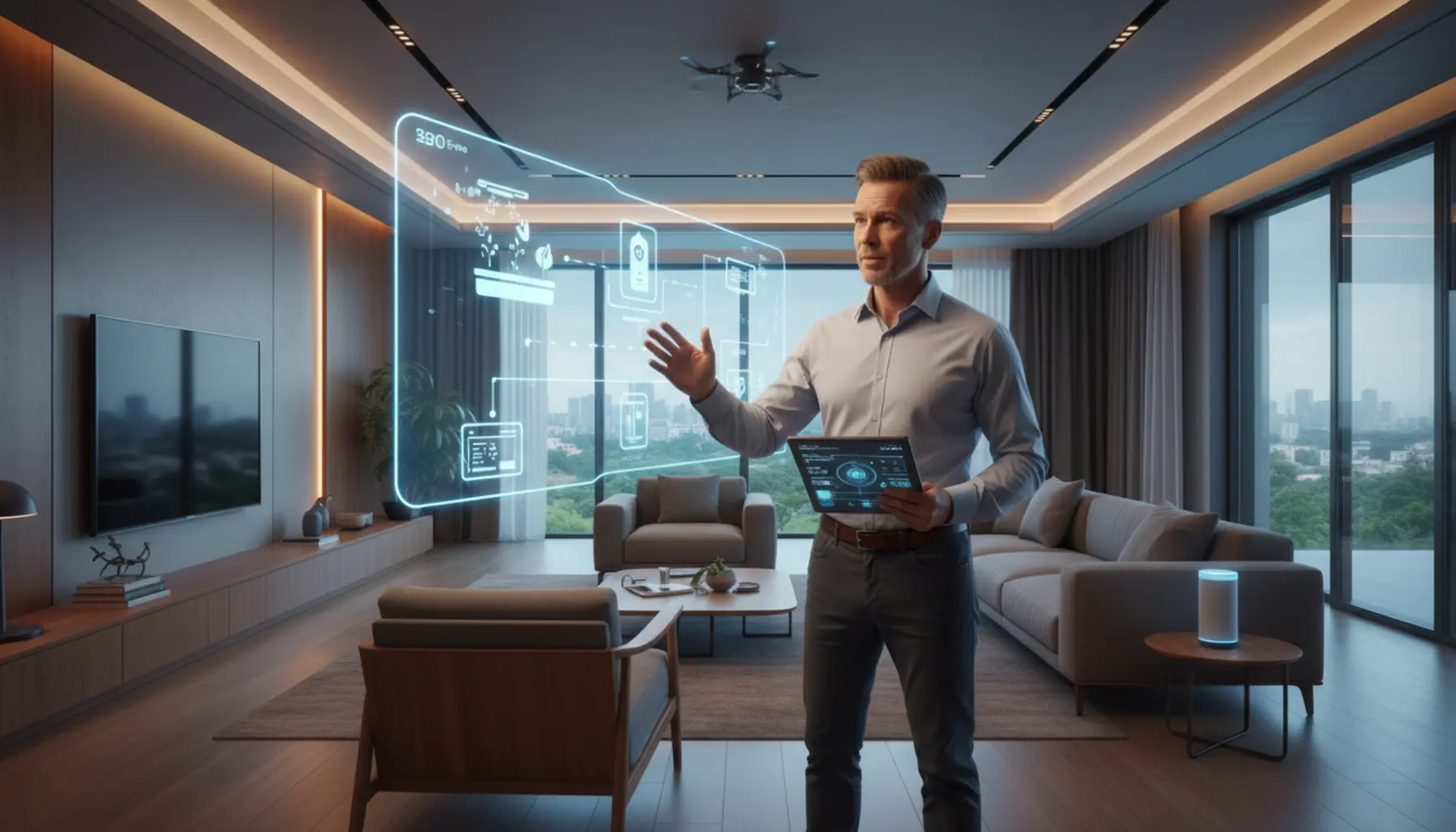
By 2026, artificial intelligence will no longer be an add-on to a smart home but its “brain,” merging data from sensors, schedules, weather forecasts, energy prices, and resident presence into a unified decision system. Instead of single scenes like “turn on the light at 7pm,” AI analyzes the context: time of day, natural light, number of people in the room, their activity, and historical preferences. Lighting, heating, air conditioning, blinds, audio, and even appliances then work together as a smooth organism, caring for comfort and energy efficiency. Self-learning systems recognize repetitive patterns—for example, that you usually return home between 5:30 and 6:00pm, prefer 22°C in the living room, and like soft music—and build adaptive scenarios without manual programming. Algorithms can also adapt in real-time: if you return late from work, the home won’t overheat itself for hours; if presence sensors spot you sleep in on weekends, blinds go up only when you get out of bed. The difference between classic “automation” and an AI-based approach is data from outside. For example, with photovoltaic and power storage integration, a smart home can shift high-consumption appliances to hours when energy is most plentiful or cheapest. If hot weather is forecast, AC launches early so the building “leads” the heat, instead of overcooling later. Thus, residents feel no extreme climate swings, bills visibly drop, and, combined with rising energy prices, this becomes a key business argument for investing in smart home tech. Local processing (on-device AI) is also crucial: more analysis happens right on hubs, cameras, or speakers for increased privacy (no need to send sensitive data to the cloud) and faster system response. This translates into faster voice command recognition, more reliable presence detection, and more precise temperature control across zones.
AI-driven automation profoundly impacts security and well-being. Modern cameras analyze footage in real time for unusual events: distinguishing residents from strangers, identifying pet vs. human movement, detecting tampering at doors/windows. Instead of bombarding users with false alarms (cats, moving branches), the system intelligently prioritizes alerts—sending a warning, for example, only if an unknown person is at your door and you’re away. Algorithms can combine inputs: if the door sensor signals a breach but indoor motion sensors detect nothing, the system may infer configuration glitches, not a break-in; if, however, a door opens at 3am with unusual movement, the smart home raises alert status, triggers warning lights, records higher-quality footage, and sends immediate mobile notifications. Health features are increasingly relevant: smart homes monitor air quality, humidity, CO₂, and even behavioral changes that could signal health or stress issues. The system can auto-activate an air purifier, remind you to ventilate, or suggest changes in temperature and lighting for better relaxation. Deeper integration with wearables (smartwatches, fitness bands) ties the home environment to your circadian rhythm—if bad sleep is detected, the house adjusts bedroom temperature, white noise, and morning light intensity. Permissions management and algorithm transparency are key: users have insight into what data is collected, why, and how it’s used to automate. In 2026, best practices include “guest” and “privacy” modes, temporary camera/mic disabling, local storage, and granular consent for external integrations. AI in the smart home is not about replacing humans but discreetly supporting daily life—eliminating repetitive chores, cutting costs, and taking care of safety and comfort so naturally that it often becomes nearly invisible.
Energy efficiency and a sustainable lifestyle in a smart home
By 2026, a smart home is above all about conscious energy and resource management, leading to lower bills and a smaller carbon footprint—not just convenience. Here, integration of HVAC systems (heating, ventilation, AC), lighting, blinds, sockets, and appliances with a central hub and AI algorithms is key. The system learns the residents’ daily rhythm to optimize energy use: lowering temperature when no one’s home, gently warming up the house before you return, and limiting high-drain device operation at night. Presence, window, sunlight, and local weather sensors help the system anticipate incoming solar heating or suggest cutting back on heating. Smart thermostatic radiator valves or floor heating zoning allow individual temperature adjustments by room, avoiding overheating rarely used spaces. LED lighting, controlled by motion and light level sensors, dims or shuts off when no one’s around; lighting scenes adjust to the time of day and activity—from bright for work to cozy in the evening, saving more energy. Contemporary smart systems increasingly use dynamic energy tariffs—devices like washing machines, dishwashers, or EV chargers auto-start during cheaper power hours, with the user only approving the time window for a given task. Tied-in home batteries and photovoltaics let you prioritize self-generated energy, falling back on the grid only when needed. A smart inverter analyzes weather forecasts and projected use to decide whether to store or use energy right away. Thus, the home becomes a micro-ecosystem balancing production and consumption, minimizing losses and grid burden.
Smart home energy efficiency isn’t just about electricity and heat, but a fully sustainable lifestyle approach. Monitoring water consumption matters more each year—smart meters and valves detect leaks or burst pipes and shut off water instantly, while notifying the owner. Smart irrigation systems use weather and soil moisture data so watering happens only when truly needed, not on rigid schedules—significantly reducing water use. There’s also consumable management—smart washing machines and dishwashers choose optimal detergent amounts, boosting lifespan and reducing chemicals in the environment. Many systems provide clear reporting panels so users can see which devices consume most, where “energy vampires” lurk, and the savings achieved via automations. This transparency alters behaviors—household members ditch standby on electronics, upgrade to energy-efficient models, and schedule heavy usage (e.g., ironing, drying laundry) for times when the house is running on self-generated PV. Comfort and health also benefit: smart air management systems filter smog, regulate humidity and air exchange for a microclimate supporting rest and focus, while working in eco-modes when the home is empty. Air quality, CO₂, and VOC diagnostics help guide better decisions—from venting, limiting scented candles, to choosing eco-friendly furnishings. An important trend is wearables and health app integration: the system can tailor temperature, light, and ventilation to sleep phases or physical activity, minimizing energy use since it knows exactly when comfort is truly needed. Combining smart energy management, user education, and easy visualization in an app means savings become a natural part of life, not a chore—the house itself suggests eco-friendly options, and residents simply approve their preferred scenarios.
Security and comfort—future technologies for everyone
By 2026, home security is no longer just alarms and a camera over the door. In a modern smart home ecosystem, protection covers three connected layers: physical, digital, and health, each linked closely to user comfort. External cameras with object recognition distinguish a courier from an intruder, reducing false alerts. Real-time image analysis systems respond contextually: instead of sounding sirens at every movement, they send app notifications, turn on garden lighting, or simulate presence by lighting up indoor rooms. Smart locks and video intercoms, managed via app or voice assistant, let you remotely admit guests, cleaners, or technical staff, and one-time access codes help control who enters, and when. The system can auto-activate standby when the last householder leaves (based on geolocation and occupancy sensors), and switch to high alert if unusual activity occurs, saving extra video to secure cloud storage. Digital security is also evolving: smart home hubs in 2026 use end-to-end encryption, local processing of sensitive data (voice recordings, for example), and automatic firmware updates, making it harder to hijack devices. Two-factor authentication to the home management app is standard, and users can view events, manage permissions, and decide which data is local or cloud-stored from a single panel. “Privacy modes” abound—suspend mic recording, lock camera access, or block remote control with a click or voice command. The same system protecting you also streamlines daily routines and keeps living conditions personalized. Smart motion, temperature, sunlight, and air quality sensors form a dense network, letting the house regulate microclimate, lighting, and blinds autonomously. Combining sensor data with householders’ schedules and weather forecasts, the system lowers temperature when the home is empty, then prewarms so it’s comfortable upon return without energy waste. Lighting is dynamic and health-oriented: warm hues in the evening for relaxation, cooler, brighter tones by day for focus. The system can auto-adjust scenes for reading, working, watching movies, or tending to a child at night—respecting every resident’s preferences.
The key change in 2026 is that security and comfort tech is no longer just for gadget enthusiasts, but solutions for everyone—including seniors, children, and people with limited mobility. Smart flood, smoke, and gas detectors integrate with notifications not only in the app, but as voice and light alerts, letting the home instantly warn residents even if their phones aren’t nearby. Upon detecting water leaks, the system can auto-shut the main valve; in case of fire, it unlocks doors, opens blinds, and marks escape routes with emergency lighting. Elderly care is boosted: motion sensors watch for unusual inactivity, e.g., a senior living alone not moving all day, and notify relatives or caregivers. Integration with wearables monitors heart rate, sleep, or activity; the smart home responds by, for example, improving bedroom ventilation, silencing night notifications, or turning on gentle night lights to prevent tripping. Children can have “safe zones” indoors or in the garden, where machine learning identifies typical play and warns parents of potential dangers—like wandering toward the street or accessing garage tools. Intuitive voice interfaces and simple mobile apps let all residents run the house to their needs; automation scenarios are template-based, requiring no programming knowledge. Brands emphasize inclusivity: large, high-contrast interfaces, compatibility with screen readers, gesture controls, or wall panels with pictograms help users with disabilities. Meanwhile, “silent comfort” is being developed—systems working in the background, minimizing unnecessary notices or interventions, while users can always take manual control. Thanks to standardization (e.g. Matter) and falling costs, even small apartments can have basic smart features—smart lighting, thermostatic valves, flood detectors, or front door locks—democratizing access to solutions once reserved for luxury villas. As a result, security and comfort are not extras, but an integrated, subtle part of daily life, accessible and understandable for users of all ages and technical skill levels.
How to start your smart home journey—and what to avoid?
Starting your smart home adventure in 2026 doesn’t require a huge budget or advanced technical knowledge, but still calls for a strategic approach. The first step should be establishing your actual needs, rather than buying random gadgets on sale. It’s wise to prepare a short list of priorities: is convenience (like automated lighting or blind control), security (cameras, motion sensors, smart locks), or energy savings (thermostats, radiator valves, smart plugs, energy management systems) most important for you? Based on this, you can pick your “first automation scene,” such as controlling living room lighting, optimizing apartment heating, or integrating a lock, video intercom, and camera in the entry zone. At the same time, think about which ecosystem you’ll use: Google Home, Apple Home, Amazon Alexa, Samsung SmartThings, or local open-source solutions like Home Assistant. By 2026, Matter compatibility and Thread, Wi‑Fi 6/6E, or Zigbee/Z‑Wave support matter most. When choosing a hub or the system “brain,” opt for devices supporting as many protocols as possible and allowing local processing for more privacy and reliability. Before you buy your first devices, check if your ecosystem supports your language, integrates with popular services (Spotify, Netflix, alarm, ventilation, photovoltaics), and has a strong user community—crucial when searching for ready scenarios or solving problems. Beginners often overvalue voice assistants, but what’s key in practice is well-planned automation that doesn’t require commands—such as “Goodnight”, “I’m home”, or “I’m away,” triggered by phone location, door closure, or scheduled time. Set up room structure, device names, and groups (“Living room lamps”, “Bedroom blinds”) from the start to avoid confusion later as your system grows. Planning an apartment or house? Consider socket, LAN, and sensor point layouts from the beginning—though even in completed interiors you can create an efficient smart home with wireless devices. Make sure you have a strong, stable Wi‑Fi network—many “smart home not working” issues are simply signal range or overloaded router. A mesh system is a great way to ensure even coverage throughout your home.
Equally important as a solid start is avoiding the most common pitfalls in building your smart home. One is creating an “app museum” by buying devices from varied brands without checking for Matter, open API, or central system integration. The result? Five separate apps that don’t talk to each other, making automation limited or impossible. Another mistake is relying solely on the vendor’s cloud—should the service shut down, change business model, or introduce paid subscriptions for features (camera recordings, advanced AI scenes, facial recognition), you may face costly hardware swaps. Favor devices offering local control, use two-factor authentication, and make sure crucial features (locks, alarms, winter heating) have emergency backup (physical switches, traditional keys, manual thermostat) in case of internet or server outage. Avoid “over-automation”: too many conflicting rules frustrate residents—lights go off while someone reads, blinds shut during cleaning, and AC and heating fight each other because algorithms are misconfigured. Introduce changes gradually, test new scenes, and get feedback from all users, including children and seniors, to avoid making the system an obstacle rather than an aid. From a digital security perspective, beware suspiciously cheap, anonymous devices with unclear privacy, software update, and certification policies—cameras or mics from unknown brands may pose real risk to your data. Check where recordings are stored, for how long, whether local archiving is possible, and if the manufacturer offers end-to-end or at least strong communication encryption. Before integrating with voice assistants, carefully plan which features really need to be remote/voice-controlled (e.g. main door unlocking only after extra authorization), and which are best kept only local. Finally—avoid “forever” mentality: smart home tech evolves quickly, so choose solutions that are easy to update/expand (modular systems, interchangeable hubs, support for next-gen comms standards), so that your home in 2026 will also remain up-to-date in years to come without starting from scratch.
Summary
Smart home technologies in 2026 offer not only convenience but also advanced automation, security, and energy efficiency. Artificial intelligence simplifies daily life, and the integration of multiple devices enables the creation of a coherent and efficient home ecosystem. Trends such as sustainable development and environmental protection are becoming standard. It’s worth planning your smart home journey now, carefully matching devices and avoiding random solutions. A smart home is an investment in the future and genuine savings of time and energy.