
Modern military technology is evolving faster than ever, with drones and artificial intelligence becoming its foundation. The revolution on the battlefield brings solutions that increase army effectiveness and radically change the role of the soldier. Information superiority and AI-supported decision-making set new directions for the development of military strategies.
Table of Contents
- Modern Military Technologies: Drones and AI
- Autonomous Drones: The Future of the Military
- Artificial Intelligence in Countering Threats
- Challenges and Advantages of Inexpensive Military Technology
- The Future Soldier: Skills for Modern Times
- China and the Technological Arms Race
Modern Military Technologies: Drones and AI
Modern military technologies are increasingly based on the synergy between drones and artificial intelligence, transforming the conduct of warfare from the level of the individual soldier to integrated command systems. Unmanned aerial vehicles (UAV), unmanned ground vehicles (UGV), and surface or underwater units (USV/UUV) are becoming key components of the battlefield’s architecture, with AI serving as the “brain” enabling them to autonomously analyze their environment, make decisions, and cooperate within a single system-of-systems. In practice, this means not only remotely controlled reconnaissance platforms, but—more and more often—semi-autonomous or fully autonomous drone swarms that can independently navigate difficult terrain, identify targets, avoid threats, and even dynamically change tactics in response to enemy behavior. AI supports them on many levels—from analyzing data from electro-optical, infrared, and radar sensors, to fusing information from multiple sources (ISR – Intelligence, Surveillance, Reconnaissance), all the way to predictive models that anticipate enemy movements and suggest optimal action scenarios. Importantly, AI development is also changing the role of the operator: instead of manually steering each platform, the soldier is increasingly managing an entire “team” of autonomous systems, supervising the machines’ decisions and intervening only at crucial moments (the so-called human-in-the-loop or human-on-the-loop concepts). This approach significantly increases operational tempo, reduces soldiers’ cognitive burden, and shortens the time from target detection to neutralization. Drones with AI can search vast areas in fractions of a second, detect anomalies, track enemy vehicles or troops, and then relay verified information to C4ISR command systems (Command, Control, Communications, Computers, Intelligence, Surveillance and Reconnaissance), which, aided by machine learning algorithms, prioritize targets and coordinate the actions of various units. As a result, the battlefield becomes a data-rich environment, where the advantage goes not only to those who have the most soldiers and equipment, but above all to those who process, interpret, and utilize information the fastest. Modern armies therefore invest in integrated ecosystems: lightweight reconnaissance drones cooperate with heavier strike platforms, which are in turn linked to artillery, missile launchers, and air defense systems, all connected via a software layer based on AI algorithms capable of semi-automatic strike and defense coordination in real time. These solutions blur the traditional lines between “reconnaissance” and “strike,” as the same drone platform can simultaneously gather intelligence, relay live video, jam enemy communications, and conduct precision attacks with minimal risk to one’s own forces.
The development of drones and artificial intelligence in the military is not limited to airborne platforms alone—it also comprises advanced software, communications, and cyber security that determine whether a given solution will be truly effective in modern conflict. Computer vision algorithms enable automatic detection of human shapes, vehicles, rocket launchers, or artillery positions even in poor visibility, smoke, fog, or night, while neural networks trained on vast datasets from real-world conflicts enhance systems’ resistance to enemy concealment and camouflage. Meanwhile, reinforcement learning is used to train autonomous drones in simulated environments, where they can “make mistakes” without real consequences, perfecting strategies for evading anti-aircraft fire, moving through urban areas, or breaching electronic interference zones. Modern military technologies also emphasize electronic warfare resilience: AI-equipped drones can autonomously switch communication channels, create mesh networks, and, if contact with the operator is lost, continue the mission autonomously or safely return to base. Increasingly important is the use of AI for mission planning and logistics: analytical systems forecast ammunition, fuel, and spare part usage, and optimize flight routes and drone deployment in the theater, to maximize their range, flight time, and sensor capabilities. Against this backdrop, an intense ethical and legal debate continues about weapon system autonomy; however, technologically, the direction is clear: militaries worldwide seek to create distributed, intelligent combat networks, where drones and AI function as agile, rapid-response “sensors” and “effectors,” while humans shift to the role of overarching coordinator, leveraging information and decision superiority no previous weapon system could provide just a few years ago.
Autonomous Drones: The Future of the Military
Autonomous drones are increasingly becoming a symbol of military transformation—from the classic “soldier + equipment” model towards distributed, intelligent combat systems that network together and make decisions in near real-time. Contemporary unmanned platforms equipped with advanced AI algorithms can not only autonomously move through complex environments, but also interpret tactical situations, prioritize targets, and coordinate operations with other systems. In practice, this signals a shift from operators manually controlling every drone movement to adopting the role of supervisor and higher-order decision-maker who sets the rules of engagement, objectives, and force usage boundaries. Tactically, autonomy means drones can fly in “sense-and-avoid” mode, circumvent obstacles, react to sudden threats, and dynamically alter mission profiles and routes without human consultation. Combined with inertial navigation systems, alternative positioning sources (in case of GPS jamming), and redundant communications, autonomous air, maritime, and ground vehicles can operate deep behind enemy lines, conducting reconnaissance, jamming, or even precision kinetic strikes. Additionally, “drone swarms” are increasingly significant: teams of many small, relatively inexpensive platforms that exchange data and, in a distributed manner, decide how to allocate tasks—some conducting reconnaissance, others jamming radars, and others executing strikes. This architecture makes it very difficult for the enemy to simultaneously neutralize all swarm components, which greatly increases operational survivability and effectiveness. Logistically and for defense budgets, this is revolutionary: instead of one extremely costly, advanced aircraft, the military can field dozens or hundreds of autonomous drones, which, if lost, can be quickly reproduced without losing crucial combat capability. Equally important, autonomous systems reduce the risk to soldiers’ lives in high-risk missions, transferring dangerous tasks—like penetrating heavily defended A2/AD zones or urban reconnaissance—to machines.
The future of a military dominated by autonomous drones also means a growing emphasis on software, data, and cyber security, which become as strategic as traditional firepower or troop numbers. For drones to operate fully autonomously, they need machine learning models capable of identifying targets in any condition (night, smoke, camouflage), analyzing enemy movement patterns, and distinguishing military from civilian objects. Such models require vast training datasets, often from simulations and exercises, meaning militaries become not just users but creators and curators of specialist “combat knowledge databases.” Simultaneously, autonomy development forces a new approach to command-and-control architecture (C2/C4ISR). Instead of centralized command issuing detailed orders, the “mission command” concept arises, where the commander defines the desired effect and general terms of force use, leaving execution details to intelligent distributed systems. In practice, this could mean a drone swarm is tasked to “disable air-defense systems in a given area” and autonomously decides which sensors to deploy, which flight paths to take, and which weapons to use, only reporting key events to humans. Such high autonomy levels raise serious ethical and legal concerns regarding so-called LAWS (Lethal Autonomous Weapon Systems). The international community has debated—and continues to debate—the permissibility of allowing machines to decide on lethal force use without direct human intervention “in the loop.” Some countries call for a total ban on such systems, others for restrictions and “meaningful human control” principles, while others see them as essential deterrents and sources of strategic advantage. At the same time, there are growing concerns about potential enemy takeover of autonomous drones via cyberattacks, malware injection, or training data manipulation (data poisoning), which could cause unpredictable battlefield behavior. In response, states are investing in robust cryptographic systems, software integrity verification mechanisms, and “explainable AI” to track decision logic. All this means that, as autonomous drones advance, the future military will increasingly depend on the quality of code, algorithms, and the ability to safely integrate decision-making machines into the complex military environment, where humans gradually stop being direct operators of every shot and become architects and guardians of the entire combat ecosystem.
Artificial Intelligence in Countering Threats
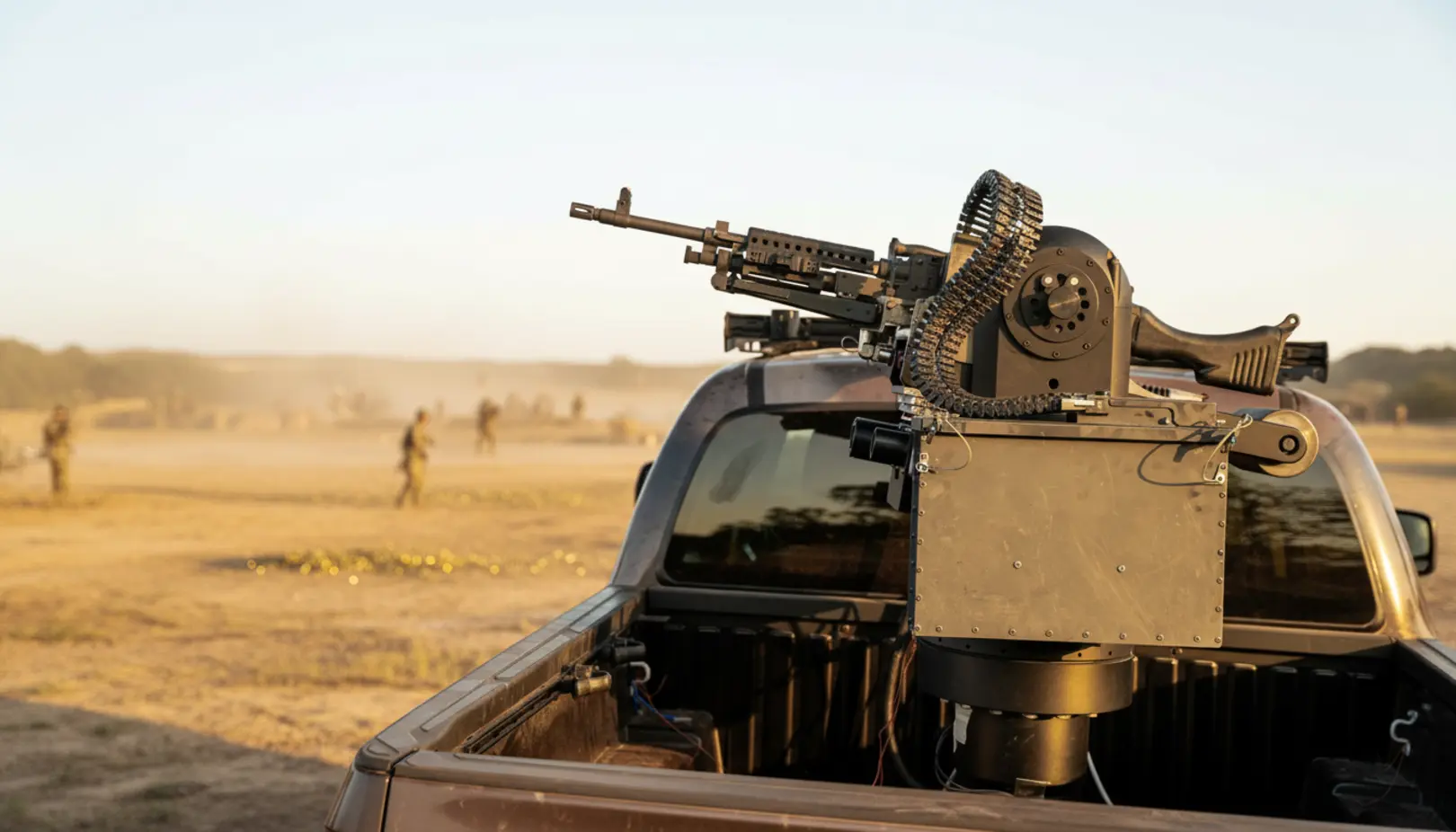
Artificial intelligence is becoming a key tool for identifying, predicting, and neutralizing military threats both on the conventional battlefield and within the cyber and information domains. Modern AI systems analyze vast amounts of data from drones, satellites, radars, SIGINT, HUMINT, and open sources (OSINT) in near real-time, detecting subtle, often invisible patterns indicating attack preparations, troop movements, or hostile network activity. Machine learning algorithms recognize not just classic targets like vehicles or infrastructure but also less obvious threat indicators—for example, unusual stock trades, increased social media activity in a region, or radio anomalies suggesting electronic warfare systems’ presence. Thus, command receives not isolated, scattered pieces of information but a synthetic situational picture—a risk map where AI marks priority points of interest, suggests scenario developments, and offers recommended responses. Especially important here is the role of ISR (Intelligence, Surveillance, Reconnaissance) systems, where AI fuses data: merging drone images with radar and acoustic data, reducing noise, filtering false alarms, then delivering operators processed, categorized information. In multidomain operations—where land, sea, air, and cyber actions overlap—such automated analysis is essential for maintaining information superiority over the adversary. AI is also the first line of defense against surprise strikes, learning from past conflicts and computer simulations to recognize event sequences that precede missile attacks, kamikaze drone raids, or organized disinformation campaigns. In crisis situations, seconds count: deep neural networks can instantly classify threats, predict the trajectory of incoming objects, trigger defense procedures, or even switch systems to autonomous mode if humans cannot react in time. AI also strengthens the protection of critical infrastructure—military bases, command centers, energy and communications networks—by monitoring systems’ status, detecting suspicious deviations, and reporting before sabotage or attack-induced failures occur. This combination of prediction, automated response, and continuous learning transforms artificial intelligence from a mere analytical support tool into an active “guardian” of multi-layer national security.
AI’s role in countering threats is also growing in cyber defense and combating hybrid aggression, where kinetic actions are combined with cyberattacks, economic sabotage, and information warfare. Modern cyber security systems based on machine learning monitor military and governmental network traffic, detecting unnatural behavior patterns—unauthorized access attempts, configuration changes, new or previously unknown malware types (zero-day attacks). Instead of only reacting to past threat signatures, AI builds a dynamic profile of “normal” network behavior and identifies anomalies early in the attack. This enables blocking suspicious connections, isolating infected infrastructure, tracking attack sources, analyzing vectors, and preparing countermeasures before the opponent transitions to the next operation phase. In parallel, AI strengthens information resilience by detecting organized propaganda campaigns, botnets generating fake content, and coordinated attempts to destabilize public opinion or troop morale. By analyzing millions of posts, comments, videos, and images, AI systems can identify repeating narratives, check message consistency, trace sources and links between accounts, and mark the most influential nodes in the disinformation network. In the strictly military sphere, AI also supports electronic warfare and defense against intelligent enemy drones. Algorithms classify radio signals, determine transmission types, predict drone swarm communication channels, and suggest jamming measures most likely to disrupt command chains or take over incoming platforms. On yet another level, AI helps manage risk and minimize collateral damage, analyzing data about civilian population distribution, critical infrastructure, and protected zones. Thus, planned combat actions can be optimized to minimize humanitarian and political fallout—which is vital in media-sensitive conflicts. All these applications, however, require solving tough dilemmas about systems’ autonomy levels and the scope of human control over threat neutralization—especially regarding lethal force or actions in sensitive informational environments. Ultimately, it is the “human-in-the-loop” or “human-on-the-loop” architectures and transparent rules implemented in the algorithms that decide whether AI serves as an effective protection tool or a source of new, unpredictable strategic risks.
Challenges and Advantages of Inexpensive Military Technology
Cheap military technology, based on commercially available components and relatively simple designs, has become one of the most important trends in contemporary conflicts. Mass-produced consumer or prosumer drones, cheap sensors, communication modules, and open-source software allow even poorly equipped armies or irregular formations to build their own reconnaissance, targeting, and strike systems. Instead of investing in single, extremely expensive platforms, the focus is shifting to quantity, flexibility, and scale—hundreds or thousands of simple drones that, in a swarm, can overload enemy defenses, disrupt logistics, or precisely mark targets for artillery. This approach aligns perfectly with AI’s development: relatively low computing power in inexpensive drones is enough, with clever algorithms, to conduct complex tasks such as obstacle avoidance, object recognition, or basic swarm coordination. For states with limited defense budgets, this enables quick entry into the “smart battlefield” era without building advanced defense industries—all that’s needed is a consumer electronics supply chain, access to 3D printing, programming expertise, and basic test facilities. Strategically, inexpensive technology bolsters asymmetric warfare capability: opponents with costly air-defense, warships, or air forces must react to threats from devices whose unit cost may be lower than that of a single interceptor missile. It inverts the cost-effectiveness logic—the side using cheap systems can deliberately cause excessive enemy resource drain, forcing them to “shoot at sparrows with cannons.” Combined with AI, this provides new campaign planning options: algorithms analyze where the most strategic effect can be achieved cheaply, which vulnerable infrastructure or communications points to strike with low-cost weapons, and where to deploy more advanced and costly assets. At the same time, cheap technology encourages rapid prototyping and iterative field innovations: a damaged drone or module can be quickly replaced or modified, without paralyzing the entire logistics system, fostering a culture of continuous innovation and adaptation amid real conflict.
However, the growing availability of cheap military systems brings serious challenges that go far beyond technical issues. First, mass adoption and low costs favor proliferation—combat assets based on commercial drones, GPS, or openly accessible AI algorithms may fall into the hands of non-state actors, terrorist groups, or criminal organizations, complicating traditional arms export control. Second, cheap technology often means lower cybersecurity standards: inexpensive communication modules, unencrypted links, and software built on public libraries result in a wide attack surface for adversaries, who may intercept, disrupt, or take over such systems. In the AI context, this adds risks of model manipulation—malicious updates, “poisoned” training data, or introducing false images/signals to fool autonomous systems. Another issue is the physical resilience of cheap platforms: drones made from lightweight, civilian components are highly susceptible to GPS jamming, primitive electronic warfare, or adverse environmental conditions, curtailing their effectiveness in prolonged high-intensity campaigns. Doctrinally, maintaining clear chains of command and accountability becomes hard—when thousands of cheap, semi-autonomous platforms are fielded, the line between human decisions and system behavior blurs, and documenting decision chains grows complex. There’s also the problem of data management: even basic, low-cost drones generate huge volumes of data to be transmitted, processed, and interpreted—otherwise, numerical superiority turns into informational chaos. Armies investing in cheap technology must therefore also rapidly develop analytical capacity, communication networks, and data-filtering systems, lest they “drown” in stimuli. Finally, mass use of low-cost munitions raises new ethical and legal questions: where is the boundary of proportionality if an adversary uses cheap, hard-to-detect systems to attack civilian infrastructure, necessitating a much costlier response? How should the law of armed conflict be interpreted if lethal payloads are delivered by drones assembled partly from civilian components and operated by open-source software? The balance between the advantages and risks of inexpensive military technologies is becoming a central concern in contemporary military transformation—especially now that artificial intelligence increasingly enables the automation of combat decisions and the management of a growing number of distributed, affordable—but potentially deadly—systems.
The Future Soldier: Skills for Modern Times
The transformation of the battlefield, driven by the development of drones and artificial intelligence, means a radical change in the profile of today’s soldier. Traditional physical fitness and shooting skills remain fundamental but are no longer sufficient in an environment saturated with sensors, algorithms, and robotic systems. The soldier of the future becomes an operator of integrated systems, data analyst, and manager of autonomous combat platforms. Key skills now include operating and configuring drones, understanding AI basics, and assessing the reliability of information generated by decision-support systems. In practice, this means that every level of command—from the squad to the operational staff—must function within a “combat cloud,” merging and instantly analyzing data from reconnaissance drones, satellites, SIGINT systems, and soldier-borne sensors. The ability to read such “digital battlefield maps” is now as important as reading classic topographic maps. Cybersecurity skills are also increasingly vital—a soldier must not only use IT systems, but understand basic protection principles, recognize cyberattack symptoms, phishing, or communication interference. Many armies now offer specializations combining operational and cyber defense knowledge, and digital hygiene training is as common as first aid. The future soldier must also thoroughly understand the legal and ethical framework for autonomous systems’ use—grasping principles of proportionality, distinction between military and civilian targets, and machine delegation limits, not as theoretical regulations but as practical competencies. This requires training in interpreting AI-generated recommendations: knowing when to trust an algorithm and when to question its “verdict,” understanding model limitations and possible errors due to data quality.
The psychological and cognitive profile of the soldier is also changing. In an environment demanding decisions faster than ever before, with vast information from varied sources, resistance to information overload, prioritization, and critical thinking become paramount. AI systems and augmented reality (AR) interfaces displaying data on helmet visors or tactical screens are designed to reduce information chaos yet can also create new risks—from tech dependency to misinterpretation. Hence, training now often includes simulations in high-uncertainty environments, teaching soldiers to work with a “virtual tactical assistant,” while retaining ultimate decision authority. Besides hard skills—handling advanced communications, drone swarm configuration, basic sensor data analysis—soft skills are gaining ground: cross-domain teamwork, communication with operators of cyber, air, and ground forces, and rapid adaptation to new tools. Military technologies evolve faster than traditional training; thus, the future soldier must be a “learning professional,” ready for constant upskilling, often remotely, using simulators and virtual ranges. Increasingly plausible is a scenario where a single operator manages several or a dozen unmanned platforms at once, delegating specific tasks, controlling engagement rules, and responding to exceptional situations the system could not foresee. This demands a unique mix: stress resistance, capacity for both complex and monotonous work, and trust in technology allied with critical oversight. On the horizon are also challenges around integrating human-enhancement technologies—from exoskeletons, biomedical monitoring systems, to brain-computer interfaces. Operating them requires not only technical knowledge but an informed approach to data privacy, body intrusion boundaries, and long-term psychophysical consequences. Overall, this evolution drives armies worldwide to redefine training programs, creating profiles for hybrid soldiers: specialists in technology, tactics, and risk management on a battlefield where drones and AI are indispensable combat partners.
China and the Technological Arms Race
Over the past two decades, China has gone from being a follower of Western military solutions to becoming one of the main innovators in drones and artificial intelligence. Beijing views autonomous technologies as pivotal for offsetting the U.S. military advantage, bypassing the classic paradigm of competing in ship or crewed aircraft numbers. The People’s Liberation Army (PLA) is investing in so-called “intelligentization” (zhìnénghuà), maximizing AI, unmanned systems, and data analytics for integrated, multidimensional operations. Drone development programs—from small, commercial designs to heavy MALE/HALE-class UAVs—are tightly linked to a civilian tech ecosystem with giants like DJI, Huawei, and Baidu. The “civil-military fusion” model ensures that consumer-sector innovations quickly reach military applications, enabling accelerated R&D cycles, cost reduction, and rapid mass production. At the same time, China is making major advances in drone swarm technology—small, relatively cheap platforms capable of cooperating via coordination and machine learning algorithms. Demonstrations featuring hundreds of drones in complex aerial light displays have propaganda purposes but reflect real progress in combat swarms, capable of saturating enemy defenses, conducting reconnaissance, and jamming operations. In PLA doctrine, unmanned swarms are considered asymmetric tools—able to paralyze defenses, cut communications, and “blind” the adversary during a conflict, especially in regions like the South China Sea or a Taiwan scenario, all with relatively modest financial input.
Simultaneously, Beijing aggressively develops AI for defense, focusing not only on weapon autonomy but above all on information dominance, big data analytics, and decision support. Chinese research centers are crafting next-generation C4ISR systems, with AI integrating satellite, radar, drone, and land/sea sensor data to provide commanders “intelligent battlefield images” in near real-time. Algorithms for predicting ship, aircraft, or ground formation trajectories aim to enable pre-emptive action and precise management of long-range strike assets, including ballistic and cruise missiles. A core element of China’s strategy is also the development of “algorithmic weapons” for cyberspace—autonomous systems for vulnerability detection, infiltration campaigns, and network disruption, which, combined with physical drone or missile attacks, produce a coordinated effect on enemy command and communication infrastructure. The tech race with China is sparking rising concern in the U.S., NATO, and Indo-Pacific nations, since the rapid pace of Chinese AI and drone development complicates traditional arms control—dual-use technologies easily reach the civilian sector and military program transparency is limited. Moreover, China’s political and military elites—unlike many in the West—take a more pragmatic approach to ethics, placing less emphasis on limiting autonomous combat systems. In practice, this may mean faster deployment of autonomous strike drones, air-defense systems with automatic targeting and firing, or intelligence data analysis tools with minimal human involvement. For other countries, including Poland, China’s AI and drone military course is both a challenge and a benchmark: on the one hand, it increases the risk of global destabilization and advanced system proliferation to authoritarian regimes; on the other, it forces acceleration of native R&D and the building of resilience to scenarios in which Chinese-developed technologies could play a key role at both kinetic and info-cyber levels.
Conclusion
Technology plays an ever-growing role on today’s battlefield, bringing innovations that change the rules of the game. AI-powered drones have become a key element of military operations, reducing civilian casualties and increasing precision. China, breaking successive technological barriers, demonstrates its dominance with laser anti-drone systems. For future soldiers, this means the need to develop new skills for effective collaboration with advanced autonomous systems. Modern technologies not only redefine military strategies but also challenge the most powerful armies to stay one step ahead of their adversaries at all times.


