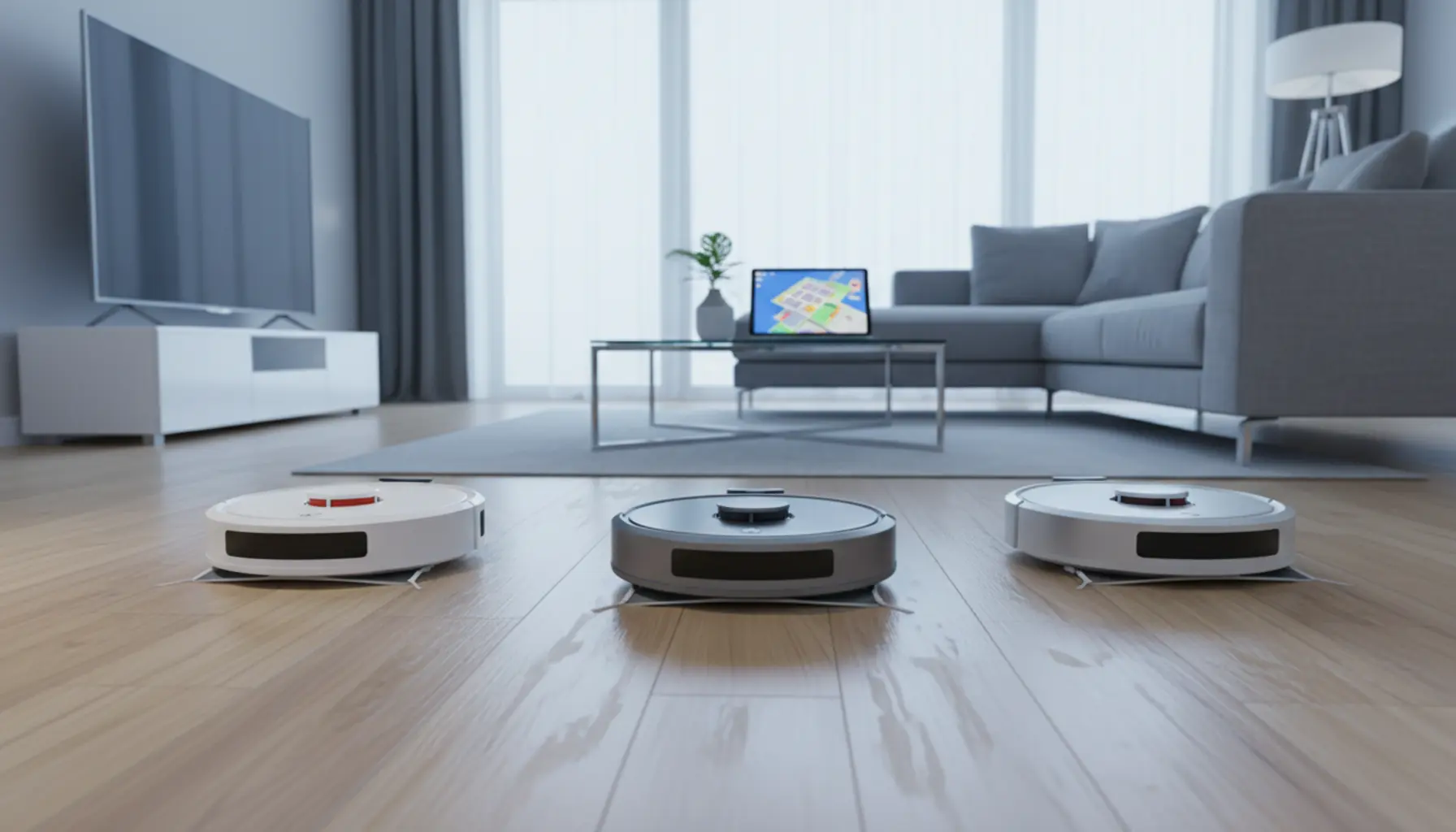
Cleaning robots of 2026 are no longer just a technological curiosity, but a practical support for any home. The cleaning robot ranking 2026 shows just how advanced today’s devices can be, making it difficult to choose a universal model. Discover key features, the latest technologies, and check how to pick the robot that best suits your needs.
Table of Contents
- Introduction to Cleaning Robots 2026
- How to Choose the Perfect Cleaning Robot?
- Top 10 Mopping Robots According to Reviews
- Features and Technologies of Cleaning Robots
- Ranking of the Best Robots with Mopping
- Expert Advice: What to Know Before Buying?
Introduction to Cleaning Robots 2026
Cleaning robots in 2026 are no longer futuristic gadgets, but a mature category of household appliances that genuinely change the way we keep our homes tidy. Compared to models from just a few years ago, today’s robots aren’t just more powerful and quieter—but above all, significantly smarter. They better understand their surroundings, learn room layouts, recognize types of dirt, and automatically adjust their operating mode. A key role is played by ever-more advanced navigation: laser LiDAR systems, 3D sensors, and ToF cameras have become standard, allowing robots to precisely map the interior of your home, avoid obstacles with millimetric accuracy, and plan routes to clean quickly and systematically—without repeating the same floor segments. In 2026, you’ll more often encounter robots capable of recognizing specific objects—cables, socks, pet water bowls, or children’s toys—and safely steering around them instead of getting tangled or splashing water. Thanks to these innovations, using the robot requires less “preparation” before cleaning, and the device fits better into your daily routine, whether you live in a small apartment or a multi-storey house full of rugs and pets. At the same time, automation and docking stations are increasingly important—top models in 2026 can not only return to base, but also automatically empty their dust container, refill water for mopping, wash and dry mop pads, and even dose detergent. As a result, maintenance often boils down to a few simple actions every couple of weeks, instead of daily manual cleaning. In practice, this translates to real time savings and less annoyance with minor upkeep chores that discouraged many users of older equipment generations. In 2026, the suction power of many devices reaches or exceeds 8000–10,000 Pa, once reserved only for the most expensive models—now appearing even in mid-range units, so even owners of lots of carpets can expect effective removal of dust and hair from their depths. At the same time, manufacturers are improving noise insulation, so you can clean without significant acoustic discomfort, even while at home or working remotely. Another clear trend is the advancement of mopping functionality—from basic wiping of the floor with a damp cloth, the market has evolved to advanced systems with vibrating or spinning pads, mechanical pressure, and the ability to control moisture levels based on floor type. More and more models can automatically lift the mop module on carpets to minimize the risk of dampening them, and some even recognize stains and will pass over them more intensively. Combined with sophisticated mobile apps, allowing detailed schedules, no-go zones, zoned cleaning (for example, “under the table” or “by the entrance”), and integration with smart home systems, the cleaning robot becomes an integral part of a smart home—responding to voice commands, activating when you leave home, or syncing with other devices like air purifiers or air conditioning.
Cleaning robots in 2026 are also characterized by increased personalization and greater user awareness about technical parameters and operating costs. Modern models frequently allow saving several separate floor maps, profiling of rooms (e.g., “living room”, “child’s room”, “office”), and assigning individual settings—different cleaning rules for a child’s allergy-prone room versus a hallway, where just a quick run after coming home suffices. Users also gain more control over privacy and data processed by cameras and sensors; many manufacturers offer local processing of maps and enhanced app security features, addressing concerns about data security in the era of ubiquitous IoT. There is a clear division into price segments—from budget models without self-cleaning stations, but with decent navigation and suction power, through mid-range units with mopping and a basic bin-emptying station, to flagship “all-in-one” sets with object detection and advanced voice support. Prices in each segment are increasingly competitive, as new manufacturers enter the market and established brands refresh their line-ups, raising standards even for affordable models. This translates to a much wider choice for buyers—but also the necessity for more conscious analysis of specs; mere suction power or battery capacity are no longer the only indicators of quality. Factors like navigation quality, actual mopping effectiveness, the cost of consumables (bags, filters, mop pads), service availability, and software updates—all play a greater role. In 2026, cleaning robots clearly address the specific needs of different user groups: allergy sufferers appreciate better air filtration and frequent, effortless automatic vacuuming; pet owners value effective hair removal and intelligent dodging of litter trays and food bowls; busy people—full automation with minimal supervision. As a result, choosing a robot is less about buying a “gadget to test,” and more about a long-term investment in everyday comfort, where key is matching the device’s features to your household’s layout, the presence of children and pets, type of flooring, and individual automation expectations and budget.
How to Choose the Perfect Cleaning Robot?
Choosing the ideal cleaning robot in 2026 requires looking beyond just price or brand—the key is to match the unit to your home size, type of flooring, presence of pets, and your household habits. First, determine the area where the robot will most often operate: for small apartments up to 50 m², simpler models with a single map and smaller battery suffice. For homes over 80–100 m², robots with advanced LiDAR navigation, multi-floor mapping, and a larger dustbin are recommended. Take note of your flooring—if mostly panels and tiles, prioritize effective mopping and even mop pad pressure; with lots of carpets, real suction power (expressed in Pa) and the ability to auto-boost power on rugs is crucial. Pet owners should look for models with higher suction, a main roller resistant to hair tangling (e.g., rubber brushes), and objection recognition to steer clear of small toys or beds. Robot height is also important—if you have many legged furnishings, pick a model that actually fits underneath (measure gap heights before purchase); check that the unit includes anti-blocking sensors for furniture and tight spots.
Aside from room fit, take a closer look at navigation technology and automation, which gives pricier models their edge in 2026. Robots with 3D cameras or LiDAR produce precise room maps, avoid smaller obstacles (shoes, cables, pet bowls), and handle complex layouts—if you have lots of furniture, tight passages, and niches, such systems are virtually essential. Check if the robot supports advanced app features: multiple map creation (useful in multi-storey homes), no-go and virtual wall zoning, schedules for individual rooms (e.g., kitchen daily, bedroom every other day), and “spot cleaning” of chosen room areas. Examine the docking station—modern bases can auto-empty the dustbin, wash and dry mops, and even dispense detergent, hugely reducing your time commitment. For maximum convenience, pick a set with a large bag or bin in the station, so waste disposal is needed only every few weeks. Everyday comfort also depends on operating noise—check the listed decibels and user reviews, especially if you plan to run the robot in the evenings or at night. Don’t overlook privacy or smart home integration: in 2026, many models use cameras for mapping, so choose units with clear data policies, local image processing, and camera-off/night shutter options. If you use voice assistants (Google, Alexa, Apple), ensure the robot supports voice commands and integrates with your smart home, so you can trigger cleaning when you leave or after your kitchen session. Lastly, compare real usage costs—besides the purchase price, factor in bags, HEPA filters, side brushes, and mops; choose a brand with easily available consumables and long-term software support, as these determine how modern and effective the robot remains over time.
Top 10 Mopping Robots According to Reviews
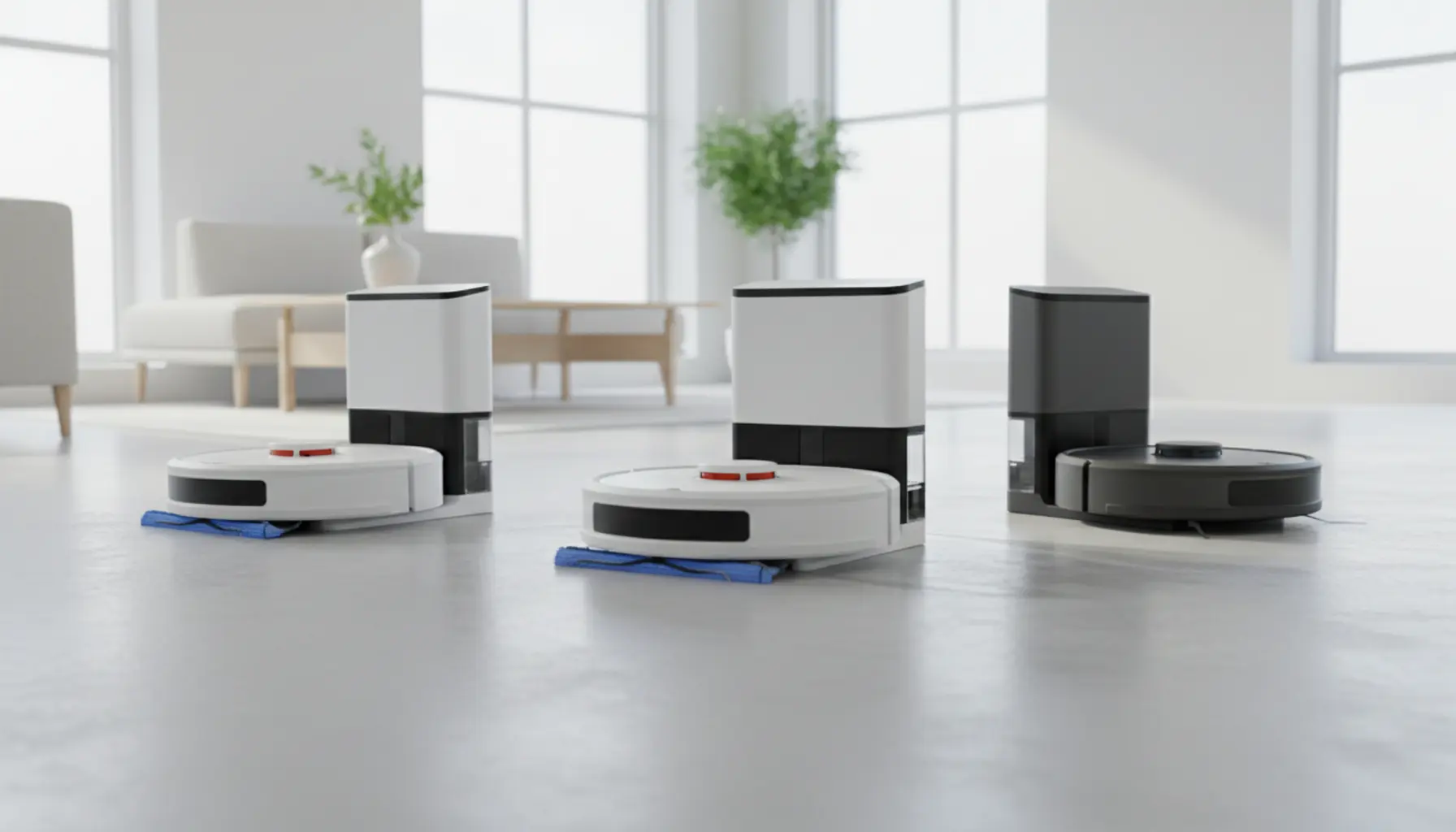
The ranking of the best mopping robots for 2026 is based on user reviews and editorial tests, placing special emphasis on their ability to remove dried stains, avoid carpets, work quietly, and ease of use. On top are hybrid vacuum-mop premium models such as the Roborock S9 Max Ultra, Dreame L20 Ultra Mop, or iRobot Roomba Combo j9+, which combine high suction with advanced sonic-vibrating mopping. Users praise these for effectively cleaning greasy kitchen tiles, coffee, or sauce stains while smartly lifting the mop or skipping carpets, minimizing the risk of wetting. Leading in this group are models that can automatically raise the mopping module by several centimeters, letting the robot climb thick carpets without creating extra no-go zones. The second most often recommended are robots with “all-in-one” docking stations: Ecovacs Deebot X5 Omni, Roborock Q Revo 2, or Yeedi Cube Wash Station. Reviews note that such stations not only empty the dustbin but also auto wash and dry mop pads, refill the clean water tank, and sometimes even heat the water—great for dissolving greasy stains. Thus, the robot can mop daily with minimal owner effort; in practice, you just need to change the bag and floor detergent every few weeks. Another key criterion is mop pressure and movement type: models with rotating discs or sonic (oscillating) mopping outperform systems that only drag a cloth across the floor. That’s why the top 10 typically features dual rotating pad constructions that mimic hand-scrubbing movements—users note the difference especially in hallways and entryways where most dirt accumulates.
Review analysis clearly shows a division of needs: some look mainly for a mopping robot for tiles and stoneware in large, open spaces; others—for a gentle solution for panels and parquet. The former are best served by powerful units with a large water tank and “deep clean” programs—passing the same route multiple times, changing movement direction, and increasing pad moisture more often. Models like the Ecovacs Deebot X5 Omni or Dreame L20 Ultra Mop offer adjustable moisture levels for the kitchen vs. living room, so kitchen floors get “truly clean” while the living room is left streak-free. For delicate surfaces, high marks go to robots that permit reduced mop pressure and wetting intensity, like the Roborock S9 Max Ultra or iRobot Combo j9+, or those with well-thought-out cleaning paths—moving more slowly and in a cross-pattern rather than making quick, straight passes, reducing streak marks. Accurate navigation is also crucial: users value robots with LiDAR and 3D cameras that efficiently avoid cables, pet-food bowls, or laundry dryers on the floor. Among these, Roborock Q Revo 2 and Yeedi Cube stand out for their price-to-quality ratio. For small apartments, budget designs like Xiaomi Mi Robot Mop 3C or Ecovacs Deebot N12 suffice—users note that with regular cleaning, even simple robots do well, and the lack of a dedicated wash-dry station isn’t a big problem. Across all price ranges, details matter hugely: ease of putting on and washing mop cloths, accessible cheap replacement pads, transparent app interfaces with no-mopping zones, and per-room scheduling. These practical aspects often determine final review scores—meaning some models, despite having similar tech specs, end up ranked higher and make it to the top 10 mopping robots of 2026.
Features and Technologies of Cleaning Robots
Cleaning robots in 2026 are essentially small, autonomous cleaning systems where hardware and software cooperate much more intelligently than just a few years ago. The foundation today is advanced navigation—most mid-range and high-end models use LiDAR, 3D cameras, or a combination of the two. LiDAR (laser spatial scanning) draws a precise map, enabling the robot to drive in logical lines instead of bouncing randomly off walls. 3D cameras and ToF sensors, meanwhile, recognize small obstacles such as cables, kids’ toys, or… pet surprises. This means the robot gets stuck less often and doesn’t suck up things that could jam brushes or the motor. Add to this classic proximity sensors, gyroscopes, cliff sensors (to prevent falling down stairs), and dirt sensors that drive the robot repeatedly over particularly grimy patches. Room recognition is also a rising trend: the robot analyzes the furniture layout, flooring type, and cleaning frequency to label rooms (kitchen, living room, bathroom, etc.) and suggest individual schedules and power levels per zone. For hybrid vacuum-mop models, mopping technology is key. Simpler constructions still drag a wet cloth, but by 2026, vibrating or sonic mop pads—making thousands of movements per minute—are standard even in mid-range units, excelling with dried stains in the kitchen or hallway. Pricier devices feature not only vibrating but also pressure pads, with advanced algorithms managing water flow to avoid over-wetting panels and ensure tiles are thoroughly cleaned. Intelligent carpet-avoidance modes let robots automatically raise the mop on rugs, retreat from textile surfaces, or set custom “no-mop zones” in the app. The software also lets you define intensive scrubbing zones (around the kitchen, hallway, or pet bowls) and choose route patterns, e.g., Y-shaped washing to mimic manual scrubbing. Vacuuming technology is also advancing quickly—manufacturers compete with suction ratings (Pa value), but brush and air duct design matters too. Robots in 2026 are especially praised for rubber main brushes that handle pet hair with less tangling, and side brushes with flexible arms for getting dust from corners and baseboards. Many include “Pet” or “Allergy” modes, raising suction, altering brush speed, and prioritizing spaces under sofas, around pet beds, or under tables—where fur and crumbs collect. For daily comfort, work culture is also key—new robots use better silencing for motors, compressors, and fans, plus smart sound profiles that automatically quieten the device at night or when people are detected in the living room.
One of the biggest innovations in recent years is the “all-in-one” docking station—turning the robot into an almost fully autonomous helper. Simple docks still only charge the battery, but in 2026 it’s common to see solutions that automatically empty the dustbin into a large, sealed bag (lasting weeks), wash and dry mop pads, refill the clean water tank, and sometimes even dose diluted detergent. For allergy sufferers, sealed HEPA/ULPA bags matter—as does auto dust suction to minimize allergen contact. Many stations now feature mop pad drying with warm air, cutting bacteria growth and smells. Equally important is the “smart” aspect—integration with an app and the smart home ecosystem. Modern cleaning robots connect via 2.4GHz Wi‑Fi (some even 5GHz), enabling remote control, complex scenarios, and cleaning history tracking. Today’s apps set not just simple schedules but specific chores for zones (e.g., “after breakfast, clean just the kitchen and around the table”), control water for each floor type, select suction level, and even determine how many passes per room. Manufacturers increasingly enable integration with voice assistants (Google Assistant, Alexa, Siri), so you can command cleaning of a specific room with your voice. In the background, advanced artificial intelligence algorithms learn the home layout, family routine, and common issues (like frequently left shoes in the hallway) and optimize paths accordingly. For privacy-conscious users, features such as local camera image processing (not sending cloud data), encrypted maps, and the option to fully disable cameras while keeping LiDAR navigation are increasingly available. OTA (over-the-air) updates complete the package—letting the robot “learn” new features months after purchase, such as more precise obstacle avoidance, improved mopping patterns, or better recognition of tall-pile carpets. All these elements—from hardware and software to docking stations and smart home integration—make up a set of features you should analyze carefully before choosing a robot, matching technology not only to the size and flooring but also your lifestyle, noise sensitivity, privacy, and automation expectations.
Ranking of the Best Robots with Mopping
The ranking of the best mopping robots for 2026 is based on a combination of practical test results in various home types, user opinions, and price-to-feature analysis. At the top are hybrid premium models that excel equally at vacuuming and mopping. Leading the “all-round” segment is the Roborock S9 Max Ultra, often cited as the most versatile choice for large homes with mixed surfaces—from tiles and panels to thick carpets. Editorial tests highlight its very high suction, precise LiDAR navigation with accurate multi-level mapping, and advanced docking station that not only auto-empties the dustbin but also washes and dries mop pads with warm air, reducing bacteria and odors. Room detection algorithms allow you to set separate cleaning modes for the kitchen, living room, or hallway, and the automatic mop module lift on carpet detection means no need for manual no-mop zones. Users also praise its polished mobile app, where you can adjust mop pressure, set extra passes in critical areas (like entrances), and tailor mop moisture to the floor type. Dreame L20 Ultra Mop—the second top hybrid model—focuses on maximum mopping automation, highlighted by a comprehensive “all-in-one” station that automatically refills detergent and highly effective vibrating pads, excelling with dried coffee or sauce stains on kitchen tiles. It also features a side-extending mop system for cleaning right up to baseboards and in corners—an area where many rivals struggle. Larger home owners appreciate the large battery, which can mop 140–180 m² per cycle and intelligently recharges—returning to base only as needed to finish the job. In the same price bracket, the iRobot Roomba Combo j9+ stands out mainly for its advanced 3D camera/AI obstacle avoidance and refined carpet-vacuuming mode; while its mopping is sometimes described as less aggressive than vibrating competitors, users value its intuitive controls, excellent apartment-learning algorithms, and performance on carpets, where it auto-boosts suction and lifts the mop. Editorial rankings also give the Roomba Combo j9+ points for the iRobot ecosystem, extensive support, fast OTA updates, and its ability to recognize typical “home hazards” (cables, pet bowls, children’s toys) and consistently avoid them cycle after cycle—critical in homes with little kids and pets.
Also crucial for the ranking are high mid-range models that deliver advanced mopping without the flagship price. Ecovacs, Xiaomi, and Yeedi dominate this segment, equipped with rotary or vibrating mops and docking stations with basic pad washing. Ecovacs Deebot T and X series (in 2026 versions) are often named the “golden mean” for families in medium-sized apartments—they offer effective floor scrubbing via two rotating pads, excellent LiDAR+camera navigation, and modest noise levels that don’t disturb working from home. The latest Xiaomi Mi Robot Vacuum Mop models from late 2025 and 2026 focus on value for money—their vibrating mop and solid suction work well in homes up to 70–80 m², and simplified stations with automatic dustbin emptying reduce manual work, though they may lack the full “mop service” of high-end docks. Users report that with daily cleaning, even less aggressive mopping keeps floors clean, though for very dirty kitchens and hallways, “intensive” or extra pass modes are still worthwhile. Important too is carpet handling: models ranking best not only auto-lift the mop upon detecting pile, but also let you assign precise no-mopping areas in the app—vital for large, irregular-shaped shaggy rugs. The ranking also accounts for economy: replaceable pads and cloths, HEPA filter costs, dust containers for the station, and potential cloud-function subscriptions. For many buyers, easy access to replacement parts and service support is as important as maximum suction, which is why brands with a strong distribution network in Poland rank high. At the lower end, but still in the recommended group, are budget hybrid robots for small apartments—lacking advanced docking, yet offering surprisingly good mopping with flat cloths and water control. These are best for studios or spaces with homogeneous flooring, where simplicity and low entry price matter more than full automation or perfect handling of tough stains and complex layouts.
Expert Advice: What to Know Before Buying?
Before buying a cleaning robot in 2026, it’s crucial to move beyond comparing watts and feature lists—start by analyzing your home and habits in detail. Critically measure your floor space and its divisions—one large, open studio is a totally different challenge than an equally sized, but chopped up, corridor-peppered apartment. The more narrow passages, thresholds, and corners, the more you should stress navigation quality (LiDAR, 3D cameras) and a slim chassis for getting under cabinets and sofas. Count your carpets and check their pile—thick and fluffy textures can be problematic for cheaper robots or those unable to auto-boost suction on rugs. If you have pets, focus not only on suction (realistically above 4000 Pa) but also brush design—rubber rollers work better for hair than classic bristle brushes, which clog quickly. Don’t judge power by peak spec numbers—some brands list lab values. Instead, check practical tests and working modes: does the robot auto-boost on carpets, have quiet/night mode, and a “spot” mode for rapid cleanup, for example, under the dining table?
The second key issue is: vacuum-only or hybrid mop model? If your home has a lot of tiles, stoneware, panels, or vinyl—and traditional mopping is a hassle—choose a robot with mopping, but only if it does it well. Check whether the mop vibrates or scrubs (the so-called sonic mopping), or just “drags a cloth behind”—the latter suffices for daily dust but won’t remove set stains from the kitchen. Mop lifting/raising systems on carpet are also vital—by 2026, these are standard mid- and high-end features; their absence means you’ll have to set manual no-mop zones or detach the mop module. Don’t overlook the docking station: “all-in-one” units greatly increase convenience by auto-emptying the dustbin, washing mops, and refilling water—but add higher operating costs (bags, filters, proprietary detergents). So, before buying, check not just the robot’s price but also projected annual accessory costs—bags, HEPA filters, side brushes, mops, cleaning fluids. Sometimes a “cheaper” robot with expensive spare parts ends up less economical long-term than a pricier model with affordable accessories. Smart home is another topic: if you choose a camera-equipped robot, make sure it offers enhanced privacy modes (local image processing, toggling off the camera, encrypted connections) and check how long the manufacturer promises OTA support. Check in advance if the robot works with your setup (Google Home, Alexa, Apple Home, Home Assistant) and if the app (preferably in English!) allows accurate control: creating virtual barriers, room-specific schedules, no-mop zones, adjusting suction and water per map, etc. When buying, assess real noise levels—stated 60–65 dB specs are usually for “eco” mode, while max suction can be much louder. If you plan on night cleaning or live in a thin-walled flat, pick models with night mode and reduced emptying-station noise—that’s often the loudest part. Finally, check service: are there authorized points, how long is the warranty (standard 2 years, but some brands extend this after product registration), repair times, and spare part availability. Even the best-ranking robot that takes months to service can, in reality, be a poor investment.
Summary
In summary, choosing the right cleaning robot in 2026 depends on factors like the cleaning area, preferred features, and budget. Our ranking presents the best available models worth considering. By following expert advice, you’ll easily find a solution perfectly suited to your needs, ensuring effective and hassle-free cleaning in your home. Regardless of your choice, be sure to pay attention to features such as suction power, dustbin capacity, and compatibility with mobile applications.