Self-sufficiency is a practical path to independence and maintaining peace of mind, even during uncertain times. By focusing on key skills and implementing permaculture and household solutions, you can increase your safety and quality of life. Discover proven methods for building self-sufficiency along with inspiring stories of those who have already chosen this path.
Table of Contents
- What does self-sufficiency mean?
- Home Survival: Tools and Equipment
- Permaculture Education: Pros and Cons
- Working During Crisis: How to Prepare
- Carpenter Jędrzej Cyganik: An Inspiring Story
- How to Start Living without Dependency?
What does self-sufficiency mean?
Self-sufficiency is often associated solely with growing your own vegetables and owning a hen that lays eggs, but in reality, it is a much broader and multi-dimensional concept. In the simplest terms, it means the ability of an individual, family, or community to meet most of their basic needs—food, energy, housing, and even education—using their own means and local resources as much as possible. It’s not about total isolation from the world, but about breaking free from unreliable and increasingly expensive external systems: supply chains, big corporations, or financial institutions. In practice, self-sufficiency is the ability to endure crises—economic, social, ecological—without losing the foundations of security and a dignified life. It can be understood as a combination of concrete skills (food cultivation, DIY, processing, budget management), conscious lifestyle choices (minimalism, reducing consumption, resource sharing), and proper organization of living space (garden, plot, house, city apartment). A self-sufficient person doesn’t need to produce everything themselves but understands where the products they use come from, knows alternatives, can fix things instead of immediately buying new, and strives to secure key needs like staple food or access to water on-site. The mental aspect is just as important: self-sufficiency requires a change in thinking from “someone will do this for me” to “how can I handle this myself or with help from family and neighbors,” which builds agency, self-confidence, and mental resilience in the face of change.
In the modern approach, self-sufficiency covers several key areas. First, food self-sufficiency—the ability to produce at least some fresh, healthy products—vegetables, herbs, fruits, sometimes also eggs or milk—on your own balcony, plot, garden, or homestead. This doesn’t require acres of land, but thoughtful utilization of available space, knowledge of permaculture principles, composting, and skills in processing surpluses (fermenting, drying, canning) to build reserves for hard times. Second, energy self-sufficiency, which can mean full independence through photovoltaic panels, biomass stoves, or small turbines, as well as simpler actions: improving home insulation, reducing heat loss, using energy-efficient devices, and learning to manage during power outages. Another dimension is economic and occupational self-sufficiency, understood as the ability to build multiple income streams, reduce debts and loans, develop skills that enable remote or local work on your own terms, as well as exchanging services within the community (barter, time banks). Equally important is housing and technical self-sufficiency: basic knowledge of construction, plumbing, or electrics that allows for small repairs, adapting space to your needs, or creating simple rainwater collection systems. Finally, there is increasing discussion about social and emotional self-sufficiency—building support networks, strong neighborly bonds, sharing tools and skills, while also developing mental resilience, which helps maintain calm in uncertainty. Here, self-sufficiency is not about escaping the world, but about a conscious, balanced lifestyle where technology, permaculture education, and cooperation with others support independence rather than eroding it.
Home Survival: Tools and Equipment
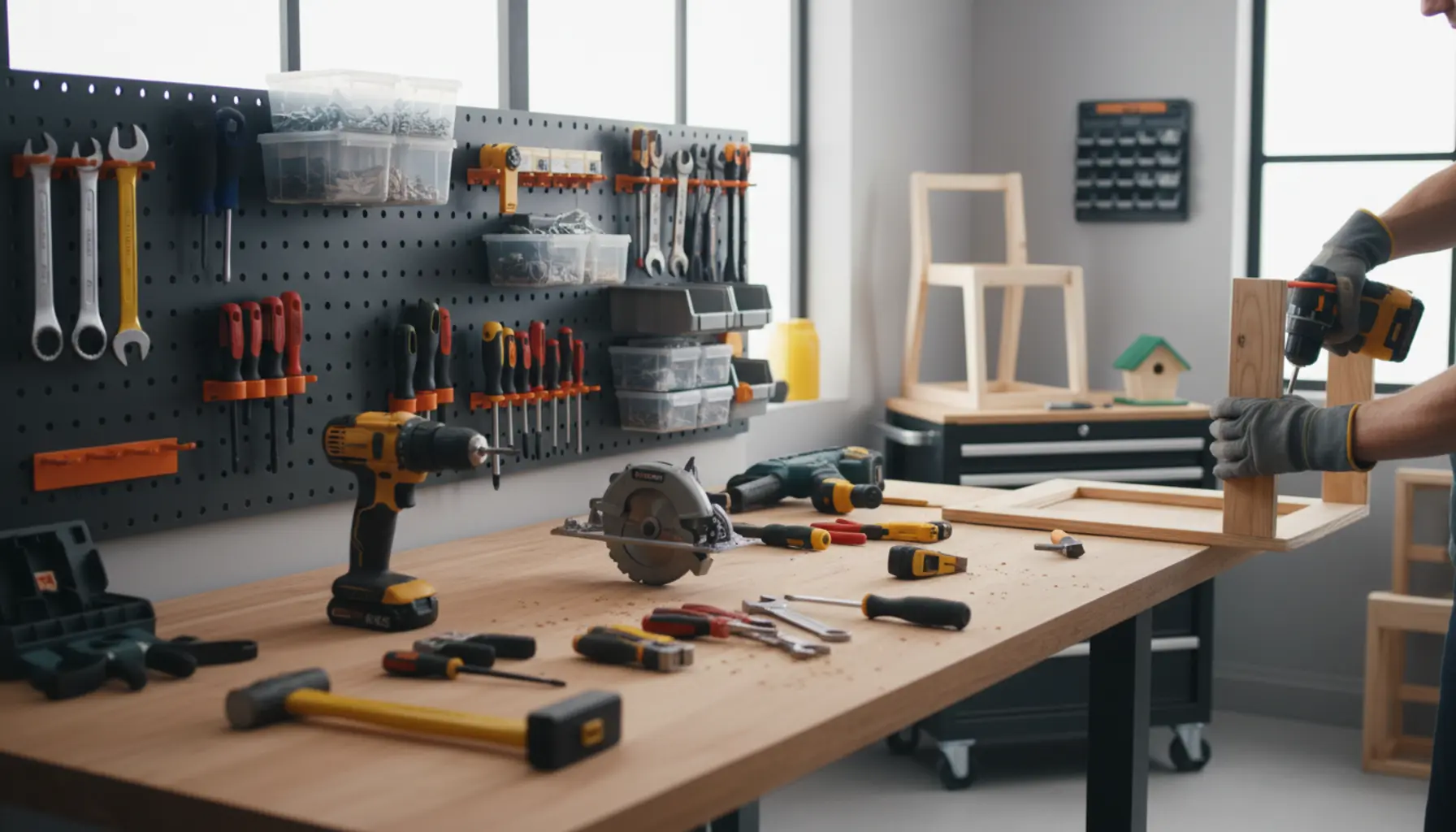
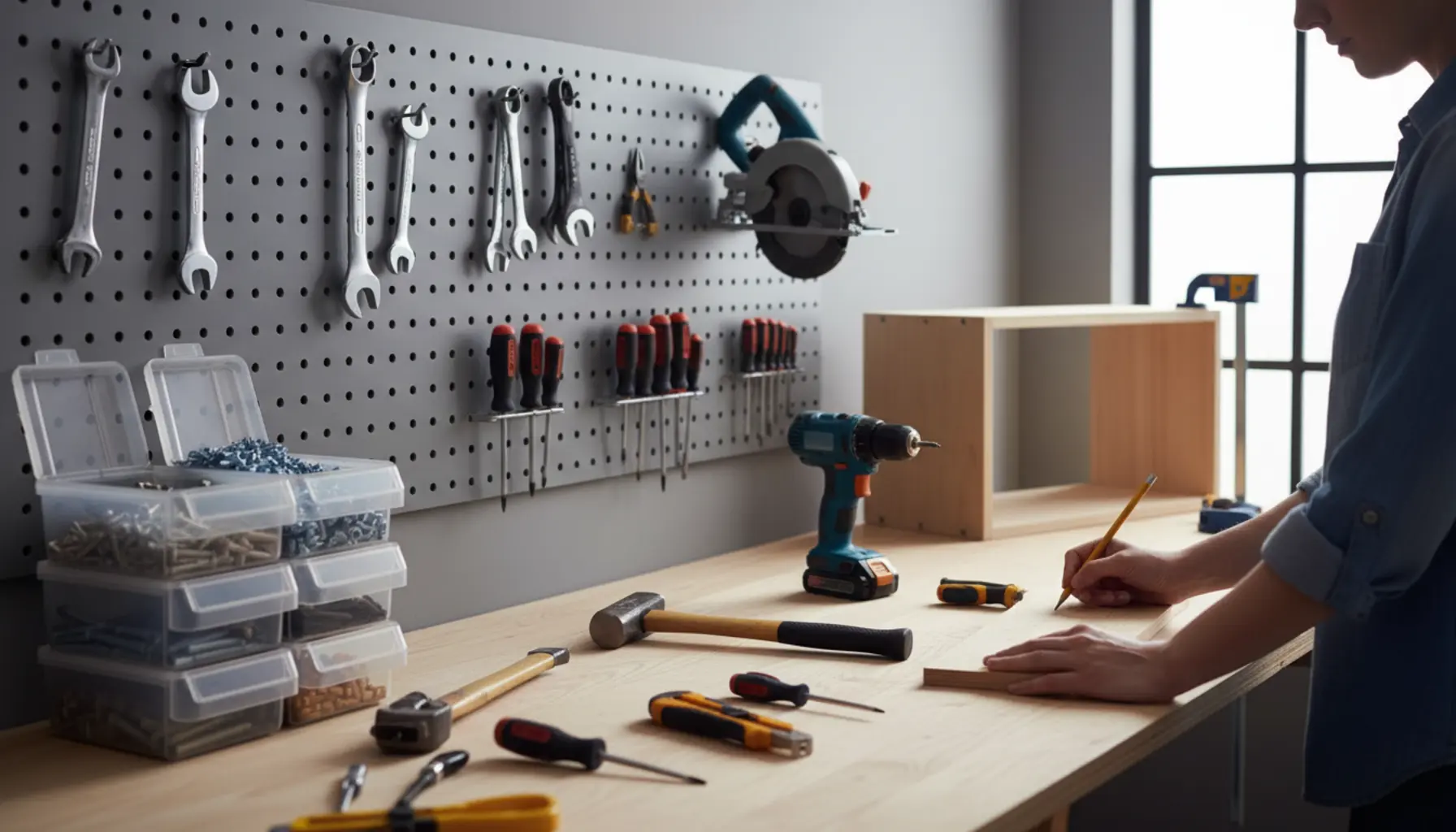
Home survival is not just about stockpiling food and water, but above all smartly equipping yourself with tools and equipment that allow you to function in crisis situations—from power outages to water supply interruptions and prolonged supply chain collapses. The key here is versatility, reliability, and simplicity of use. In a self-sufficient home, the foundation is a solid set of hand tools: hammer, saws (hand and metal), set of screwdrivers, pliers, wrenches (open-end and socket), hand or battery drill with spare bits, tape measure, level, and utility knives. This minimum allows for furniture repairs, fixing installations, fences, and even building simple farm structures. Important are also carpentry tools (plane, chisels, sandpaper, vise, carpenter’s square) to make or refurbish shelves, harvest boxes, tunnel frames, or simple garden furniture—this saves money and frees you from dependence on hardware stores. You should also consider gardening tools: spade, shovel, pitchfork, rakes, hoe, pruners, branch saw, wheelbarrow, watering cans, and a hose with various nozzles. Well-chosen and maintained gardening tools are essential for food self-sufficiency—they make it easier to prepare beds, compost, mulch, prune trees and shrubs, and build simple gravity watering systems. In home survival, human-powered tools that don’t need electricity are also extremely valuable: hand grain mills, graters, vegetable presses, juicers, can openers, corkscrews, meat grinders, and pasta makers. These enable food processing and a high level of comfort during long power outages. Complementary to this are simple food preservation devices: canning pots, jars with good lids, large pots and roasting pans, enamel bowls, dryers (electric and traditional, like sun-drying sieves), and ceramic fermentation pots. A separate equipment category that truly increases independence is emergency supplies for water and energy. Even in a city apartment, it’s worth having a few canisters or water containers (with spouts), a gravity filter or high-efficiency camping filter, water purification tablets, and water-filtering pitchers. For detached homes, rainwater tanks, basic mechanical filters, and if possible, a well with a manual pump are good solutions. For energy, the basics are flashlights (headlamps and handheld) with spare batteries and a solar charger, candles, matches, lighters, firesteel, small power banks and—if possible—a folding photovoltaic panel for charging a phone or radio. Even a small, portable solar installation can provide basic communication and lighting, which greatly improves safety and psychological comfort in tough times. Consider alternative heat and cooking sources as well: a camping stove (gas or solid fuel), cast iron stove, rocket stove, cast iron pots and pans suitable for open fire. This set allows you to cook, boil water, and heat a room even during extended power or gas outages.
The second, often underrated, group of home survival equipment is items that improve safety and health. The basic set should include a well-equipped first aid kit (plasters, bandages, sterile compresses, disinfectants, disposable gloves, thermal blanket, rescue scissors, elastic bandages, pain and fever medication, anti-diarrhea meds, electrolytes) plus prescription medication with at least several weeks’ supply. Add hygiene products: bar soap, pure soap, soap flakes, laundry powder, salt, baking soda, vinegar, toilet paper, fabric towels, and simple, multi-purpose cleaning agents that can be diluted. For a self-sufficient home, personal protective equipment is also important: work gloves, safety goggles, dust masks, simple hearing protectors, and garden-construction helmets for heavy-duty work. From a safety perspective, firefighting and emergency equipment are essential: powder or CO2 fire extinguisher, fire blanket, smoke detector, CO detector, simple water-leak detectors, shut-off wrenches for water and gas, and a supply of painter’s foil, duct tape, electrical tape, and zip-ties for quick repairs to windows, temporary roofing, or leaking pipes. Another important category is information and communication tools: a battery, dynamo, or solar radio, walkie-talkies for local communication, larger-capacity power banks, and printed instructions (first aid, preservation recipes, water filtration diagrams) that remain available even if the internet fails. When planning home survival, make sure your equipment fits your real life: the needs of a downtown apartment differ from those of a country house with a large garden. Always, however, the priorities are ergonomics (tools that fit the hand, don’t require specialist knowledge), modularity (the ability to expand the set gradually), and the possibility of DIY repair or replacement of simple parts. In the spirit of self-sufficiency, it is far better to own fewer, more robust and familiar tools than dozens of random gadgets. Each tool should have a well-defined function, be regularly tested in practice (in the garden, for minor repairs, or during emergency drills), and stored systematically: labeled boxes, tool chests, first aid kits in visible places, printed instructions collected in a binder. This way, home survival ceases being a theoretical “collection for a rainy day” and becomes a natural element of sustainable, self-sufficient daily life.
Permaculture Education: Pros and Cons
Permaculture education is not just about learning ecological gardening but a holistic approach to designing life systems—home, garden, energy sources, and even work models and neighbor relations—so that they’re stable, self-regulating, and as independent as possible from unreliable external structures. Its huge advantage is practicality: most courses and trainings—from short weekend workshops to full Permaculture Design Certificate (PDC) programs—focus on hands-on activities, observation, and experimentation. Participants learn to recognize microclimates on their own plot, plan zones of use (from the most intensive near the house to wild, nearly untouched areas), build raised beds, compost, create irrigation systems, and coexist with nature instead of fighting it with chemicals and heavy equipment. This way, permaculture education really increases food self-sufficiency, teaching you how to get the most nutritious crops from small spaces using minimal resources and time. Another key advantage is the integral approach to resources: in a well-prepared course, you learn rainwater collection and storage basics, simple gravity systems, soil water retention, and introducing renewable energy sources on a micro-scale—from rocket stoves to using solar energy for cooking and food drying. Thus, permaculture education becomes a bridge between the ‘green living’ idea and actionable, proven techniques, applicable even in a small suburban garden or balcony. Another plus is the development of soft and social skills: workshops and courses gather people with similar values, encouraging the exchange of seeds, tools, experiences, and creating local support networks. In a world where self-sufficiency is wrongly equated with isolation, permaculture encourages cooperation, community self-help, and sharing surpluses as the basis for a sustainable system. Finally, permaculture education has a strong ethical component—based on three pillars: care for the Earth, care for people, and fair share—which helps you better understand the consequences of your choices, work style, or travel and consciously design your life in harmony with the ecosystem and the idea of self-sufficiency.
Despite many advantages, however, permaculture education also has its limitations and potential downsides, which are worth considering before investing your time and resources. Firstly, many courses—especially certified PDCs taught by experienced practitioners—are relatively expensive, which can be a financial barrier for those starting out toward self-sufficiency. On the other hand, there are also low-quality workshops that treat permaculture superficially as “trendy eco-gardening,” without solid design foundations or knowledge of local climate conditions. As a result, participants receive a set of ready-made recipes instead of learning systemic thinking, leading to disappointment when projects don’t work as promised and time and effort investments don’t yield desired results. Another minus is that a significant portion of educational materials, especially advanced, is available mainly in English, and many examples come from climates very different from Poland; adapting solutions from Australia or Portugal to cold winters, unstable rainfall, and short growing seasons requires critical thinking, which not every course fosters sufficiently. Another challenge is that implementing permaculture ideas is time-consuming: although its principles say “work with nature, not against it,” the first years of design, observation, and reshaping your space are physically and organizationally intense, which can conflict with work and family life. For people expecting quick results, permaculture education may be frustrating, as it encourages multi-year—sometimes even decade-long—thinking, not just one season. There is also a psychological aspect: deeper understanding of ecological links, soil degradation, biodiversity, and energy dependencies can be emotionally burdensome—when courses reveal the full scale of the climate and resource crisis, some experience a sense of overwhelm or helplessness. This requires course leaders to be responsible, combining knowledge of threats with real, scalable solutions that empower individuals and communities. Yet another potential minus is that permaculture is sometimes viewed with suspicion—as a “niche ideology” or “Western fad”—making cooperation with institutions, neighbors, or family harder, especially in rural areas attached to traditional growing methods. Introducing zoned plantings, living fences, or “wild” parts of the garden is sometimes seen as disorderly, leading to social conflicts if you lack good communication and willingness to explain these solutions’ purpose. Despite these challenges, those who opt for reliable permaculture education gain tools to consciously design self-sufficiency: blending traditional farming wisdom with modern ecosystem science, adjusting their expectations, and step-by-step building systems resilient to crises yet tailored to their individual abilities, budgets, and lifestyles.
Working During Crisis: How to Prepare
Preparing to work during a crisis starts well before real problems knock at your door. The first step is a sober risk analysis: thinking about which elements of your current employment are most vulnerable to economic shocks, supply chain disruptions, infrastructure outages, or political changes. A salaried employee at a big corporation relies on the entire sector’s health and global markets, whereas a craftsman with a local customer base, a farmer, a technical specialist, or a healthcare worker operate close to people’s everyday needs. For self-sufficiency, it’s crucial to shift your career toward jobs and skills that will always be needed: food, repairs, healthcare, education, communication, security, and simple technologies. This often involves changing your professional path gradually—first as a hobby or side activity, eventually as your main source of income. In practice, the right direction is investing in manual and technical skills—from basic carpentry, locksmithing, electric/electronic servicing, gardening, and food processing through tailoring and home repairs. At the same time, develop soft skills vital in crisis: team management, mediation, communication under stress, basics of psychological first aid, work organization with limited resources. These competencies help not only in adapting to the changing job market but also in building value within your local community, which translates into mutual support, service exchange, and protection from sudden income loss. It’s wise to create a “plan B” and even a “plan C” ahead of time—a list of alternative income sources you can activate within days or weeks: selling surplus produce, handling simple local repairs, teaching practical skills, care for children or seniors, making simple products (candles, soap, preserves, small furniture). Try these scenarios on a small scale now, to understand actual client needs, value your work, and fine-tune logistics. Another pillar is diversifying income: instead of one job or contract, gradually build several, even small, streams—partly online, partly local, partly through barter. In a world of unstable currencies and rising inflation, valuable assets include both money and specific skills, along with community trust; so, nurture neighbor relations, get involved in local initiatives, and showcase your usefulness beyond the official labor market.
Crisis work also requires thoughtful home organization—the house often becomes the center of production, education, and service. For self-sufficiency, a well-planned living area doubles as workshop, office, studio, and storage. Even in “normal” times, rearrange part of your home into a workspace and manufacturing zone: a simple workbench in the garage, tool shelf, sewing nook, space for storing raw materials and semi-finished products, and a functional worktable for packing, labeling, preparing orders or exchanges. During crisis, internet and power cuts are common, so prepare “analog” work tools: paper notebooks with production plans, printed instructions, contract templates, service catalogs and price lists, and simple hand tools that don’t rely on electricity. Make a physical portfolio of your skills and products (printed photos, product samples) to show potential clients even without web access. Also, rehearse working in limited conditions—performing essential tasks with just a single LED light powered by a battery, organizing work with intermittent water, securing tools and materials against theft or destruction. Psychological preparation is equally important: crisis brings pressure, uncertainty, frequent rule changes—flexibility, rapid learning, and readiness to abandon ineffective solutions is needed. Keeping a simple journal—what works and what should change in work or household logistics—helps. Secure a basic financial cushion (even for a few frugal months) and cut fixed costs—abandoning some subscriptions, excess loans, and unnecessary spending increases resilience to income drops. Important is also an understanding of local regulations: rules for small business, taxes, food sale sanitation laws, health and safety for service jobs—even in crisis, authorities often enforce some laws, and ignoring them may result in penalties at the worst possible moment. Finally, from a permaculture point of view, crisis work should not aim for “preserving existing standards,” but be an opportunity to redesign the whole system: reducing dependency on global supply chains, basing more income on local production and services, and including household members in work in ways that strengthen relationships, teach children practical skills, and build real agency instead of constant fear of the future.
Carpenter Jędrzej Cyganik: An Inspiring Story
The story of Jędrzej Cyganik, a carpenter from a small village at the foot of the Beskid mountains, perfectly illustrates that self-sufficiency isn’t some abstract survival-enthusiast ideal, but a path that can be successfully taken step by step, starting from almost nothing. Jędrzej grew up when every family had a “handyman”—his grandfather built a barn himself, his father could fix a roof and build furniture with whatever was at hand. Ironically, it was the prosperity of the early 21st century that led the young Cyganik to cut himself off from tradition for several years: moving to the city, studying non-craft-related subjects, living the shopping mall, cubicle, and mortgage lifestyle. The turning point was losing his job in the global economic crisis—a sudden realization that his life stability depended entirely on a system he had no control over. He returned to his family village “for a while” to rest and rethink things, which turned into the decision to build a life less dependent on market fluctuations, corporate reorganizations, and supermarket prices. His starting point was an undervalued skill: the basics of carpentry he’d picked up from his grandpa. Instead of seeking another office-access pass, Jędrzej literally started with a batten and a hammer—first repairing an old shed, then replacing rotten beams in a neighbor’s barn, building a small woodshed, and a shelter for rainwater runoff. He quickly realized that carpentry is not just a way to earn, but a core element of self-sufficiency: carpentry lets you create a roof overhead, shelter for animals, garden structures, storage for food and firewood. He designed his first projects to maximize use of local resources—timber from a nearby forest, salvaged nails and brackets, old windows from a house being demolished next door. Over time, he realized that the fewer dependencies on a building store, the more freedom and flexibility in hard times.
Jędrzej’s journey then combined elements of permaculture education, economic creativity, and local community-building, making him an example of someone who truly implemented the ideas of “home self-government” and crisis work. Inspired by online permaculture courses and traditional wooden construction books, he began designing structures to serve several functions at once: simple shelters became herb and vegetable dryers, terraces roofed with boards doubled as tool storage and rainwater catchment, small sheds served as workshops not only to work in but also to teach others. He invested in sturdy hand tools—saws, chisels, planes, clamps, squares—that need no electricity and are easy to maintain, even if the power is out for a long time. Gradually his homestead became a small, well-designed ecosystem: gazebo connected to a vegetable garden, composters integrated with the woodshed, a henhouse shielded from the wind by plank walls that also protected garden beds. Importantly, Jędrzej didn’t shut himself in a “self-sufficiency fortress”—on the contrary, he launched informal workshops teaching neighbors basic woodworking: how to build with pallets, reinforce ceilings without costly renovations, make raised beds and modular pantry shelves from old fence boards. In times of crisis—from surging building materials prices to local flooding—his know-how and practical skills became invaluable. He helped repair damaged buildings, secure roofs, and build temporary but safe shelters. His activity evolved into an economically shock-resilient model: some work was paid, some was barter—for food, services, or help during harvest. By diversifying income, he didn’t rely on one source. He emphasizes that the most important effect of this journey is not the number of gazebos, but the network of connections and trust: people who know they can count on him—and he, on them. Jędrzej Cyganik’s story shows how technical skills (carpentry), mindful use of hand tools and local resources, combined with permaculture thinking, lead to real economic, energy, and social self-sufficiency built not by escaping the world, but by wisely rooting oneself in a specific place and community.
How to Start Living without Dependency?
Beginning a life without dependency doesn’t mean instantly cutting off all modern conveniences, but rather consciously “unraveling” yourself from the system, step by step. The first stage is an honest diagnosis of your starting point: listing all repetitive dependencies—financial, technological, logistical, and social. In practice, it is much like a detailed audit: how much of your monthly budget goes to bills, rent, loans, subscriptions, takeout food, and fuel; which energy, internet, banking providers you’re completely reliant on; which skills you outsource to others (device repair, tailoring, small renovations, cooking, child care). The very act of listing these elements helps you realize where you’ve most handed away control. The next step is selecting one or two axes of change—e.g., nutrition and energy—instead of trying to revolutionize everything at once. Set up a simple 12–24 month plan with small, measurable milestones: cutting dining out by 50%, building a mini pantry for three weeks, setting up your first vegetable bed, swapping major lights for energy-efficient ones, buying a small solar panel to charge devices. This “chunked” approach reduces burnout and feelings of failure while giving tangible effect in the form of real dependency reduction. Mental attitude is key—moving from the consumer mindset of “I buy solutions” to a creator mindset: “I learn to produce or repair.” In practice, use the 48-hour rule: before buying a new device or service, give yourself two days to find a workaround (repair, borrow, share, DIY). Step by step, you’ll start seeing your surroundings not as a ready-made supermarket, but as a resource warehouse. At the same time, take care of your financial foundation. Building an emergency fund (even 1–3 months of living costs) creates space for independent decisions—like quitting a toxic job, shifting your work form, or moving somewhere cheaper. Reducing consumer debts, renegotiating subscriptions, and dropping some recurring services are quick moves that often free up meaningful resources. Redirect these savings not toward new “conveniences,” but to tools that boost self-sufficiency: sturdy work boots, a basic set of hand tools, books and skills courses, equipment for growing plants, a simple rainwater harvesting system, or thermal insulation for your home. This way your money starts working towards independence, not deeper systemic dependency.
In daily lifestyle terms, living without dependency often starts in the kitchen and the immediate home area. Cooking from basic ingredients, regularly baking bread, making preserves, and cutting out highly processed food are not only savings, but also regaining skills that were recently the norm. Even in a small apartment, you can grow herbs on the windowsill, sprouts, and some vegetables in containers—minimizing your reliance on stores, while learning to observe nature’s cycles and plan harvests. The next level is turning your home into a place of production, not just consumption: refurbishing clothes instead of tossing them, DIY furniture repair, self-service fixes (with video tutorials or local courses), and building simple space organization systems for daily efficiency. Simultaneously, expand your local network—life without dependency doesn’t mean loneliness, but conscious, partner-like mutual dependencies. Collective gardens, food co-ops, service and item exchange groups (time banks, local currencies, messenger groups) replace money and institutions with trust and mutual support. In a crisis, those bonds—not a credit card—are your most valuable safeguard. Also consider the digital dimension: minimizing reliance on big platforms (diversifying communication channels, using open-source software where possible, storing crucial data also in analog form) ensures that failures or lockouts don’t paralyze your life. In your profession, opt for transferable skills: crafts, repairs, farming, herbal medicine, education, organizational and leadership abilities. Even if you work for a corporation today, you can develop a “backup profession” and grow your own client base—even micro-scale, on weekends. Over time, this side job may become your main income source or at least a crisis stabilizer. The crucial thing is for every step—from the first garden to changing your earning model—to be tied to the clear intent: “what exactly am I gaining independence from?” Such awareness guides your decisions, prevents chaotic purchases, and helps you build a life rooted in real skills, resources, and relationships rather than the fleeting illusion of security offered by outside systems.
Summary
In an era of uncertainty, self-sufficiency becomes a key element of life. It enables not just survival but also internal peace thanks to the ability to cope with varied life situations. Permaculture education offers invaluable growth lessons and practical skills for creating your own ecosystems. Stories like that of Jędrzej Cyganik motivate change and demonstrate that self-sufficiency is a route to personal and professional success. Preparation for crisis and learning new competencies can become the foundation for an independent and fulfilling life.