Whisky and wine tastings are a unique experience for the senses and the imagination. Discovering the differences between these beverages allows you to consciously develop your own taste and appreciate their rich traditions and histories. Rank_math_focus_keyword makes it possible to find precise information about the tasting of whisky and wine in one place.
Table of Contents
- The World of Whisky and Wine: What Makes It Special?
- Whisky Tasting: How to Recognize Good Flavor?
- How to Taste Wine Like an Expert?
- A Story Sealed in Glass: The History of Whisky
- Tasting Workshops: What to Pay Attention To?
- Tips for Beginners: How to Enjoy Your Drink?
The World of Whisky and Wine: What Makes It Special?
The world of whisky and wine consists of two distinct but surprisingly complementary universes of flavors, aromas, and traditions, united by one thing: deep roots in the history and culture of their regions of origin. Whisky is a grain distillate—most commonly from barley, corn, rye, or wheat—aged in oak barrels, where time, wood, and climate shape its character. Wine, meanwhile, is made from fermented grape juice, with the grape variety, terroir (a combination of soil, climate, and topography), and the winemaker’s style playing key roles. In practice, a whisky lover will often discuss maturation length, type of casks, and distilleries, while a wine enthusiast will focus on vintage, grape variety, and appellation. The classification methods also differ: whisky is divided into Scottish single malt, blended, bourbon, rye, or Japanese whisky, while wine is categorized as white, red, rosé, sparkling, still, fortified, and within these groups into hundreds of styles. Whisky’s character is hugely determined by its place of distillation: the cool, damp Scottish climate favors slow aging, allowing the spirit to meld harmoniously with oak tannins and aromas; in warmer climates (e.g., the USA), the aging process is more dynamic, boosting notes of vanilla, caramel, and toasted wood. In wine, climate dictates acidity, sugar, and alcohol levels: cooler regions (e.g., Chablis, Germany’s Mosel) produce lighter wines with more acidity and minerality, while warmer areas (Tuscany, Rioja, Barossa Valley) yield fuller, riper wines with more body, higher alcohol content, and a richer fruit profile. Coastal-region whiskies often reveal notes of iodine, sea salt, or peat smoke, while wines grown on volcanic soils delight with their stony impressions and herbal accents.
A distinctive feature of whisky is the role of the barrel: it is responsible for much of the drink’s color and aroma. The distillate leaves the still colorless, only acquiring its golden, amber, or mahogany hue during maturation. The type of wood (usually European or American oak), char level, and previous use (ex-bourbon, sherry, port, rum, or wine) define the flavor profile: from vanilla, coconut, caramel, honey, through dried fruit, nuts, and spices, to smoky and tobacco notes. In wine, the equivalent to the barrel is both the grape variety and winemaking techniques: whether the juice ferments in steel, concrete, or oak; maceration time; whether malolactic fermentation is used; and how long the wine stays in contact with yeast lees. Oak barrels can impart vanilla, toast, coffee, or chocolate accents to wine, but natural grape characteristics are just as important—Sauvignon Blanc is associated with green aromas, citrus, and herbs; Pinot Noir with red fruit and delicate earthiness; Cabernet Sauvignon with blackcurrant, plum, cedar, and graphite. With whisky, the reference point is the distillery and its style—is it a light, floral Lowlands whisky, peaty, oily Islay Scotch, elegant, precise Japanese single malt, or sweet-corn, vanilla-caramel bourbon from Kentucky? In wine, appellations and producers play a similar role—names like Bordeaux, Barolo, Champagne, or Burgundy say much about the potential style in your glass. Consumption style also differs: whisky is typically enjoyed in smaller portions, savoring concentrated flavor, while wine accompanies meals, integrating with dining culture and pairing with dishes. Despite their differences, both worlds offer rich aromatic diversity and almost endless opportunities for discovery—from approachable, beginner-friendly styles to complex, demanding beverages that reveal their nuances through mindful, conscious tasting and familiarity with historical and cultural backgrounds.
Whisky Tasting: How to Recognize Good Flavor?
Recognizing truly good whisky begins long before the first sip—from the very moment you pour the spirit into a glass. Professionals typically use a tulip-shaped or Glencairn glass, as its narrowing top concentrates aromas, allowing for precise assessment. The first step is to observe the color: from pale, straw gold to deep amber or even mahogany brown. The color tells much about age, barrel type, and maturation intensity—lighter hues often indicate youth or aging in ex-bourbon barrels, while darker shades suggest longer maturation or the use of ex-sherry or wine casks. Also, pay attention to the “tears” or “legs” whisk(e)y leaves on the glass walls—the slower they run down, the higher the viscosity and potentially fuller body, hinting at a richer flavor experience. At this stage, you can rule out whiskies with artificial-looking color or a watery appearance, a sign of a meager profile or excessive chill filtration, which often “smooths out” character at the cost of intensity. The next stage is the aroma assessment or “nosing.” Avoid bringing your nose close to the glass abruptly—high alcohol can numb your olfactory receptors. Instead, gently swirl the glass, let the aromas release, and take a few short, light breaths. Good whisky features a multi-layered, complex but harmonious aroma—the various notes intertwine, with none dominating in an aggressive way. You might detect malty notes (grain, cookies, barley malt), fruity (apples, pears, apricots, tropical fruits), floral (honey, linden blossom), spicy (vanilla, cinnamon, pepper), and smoky whiskies display peaty, smoky, iodine, or leathery accents. Balance is key: if alcohol harshly “bites” your nose and masks other aromas, the drink is likely poorly balanced or overly young. High-strength single cask whiskies may seem sharp at first, but after a moment and possibly a few drops of water, they should open, revealing aromatic depth—not just alcoholic punch.
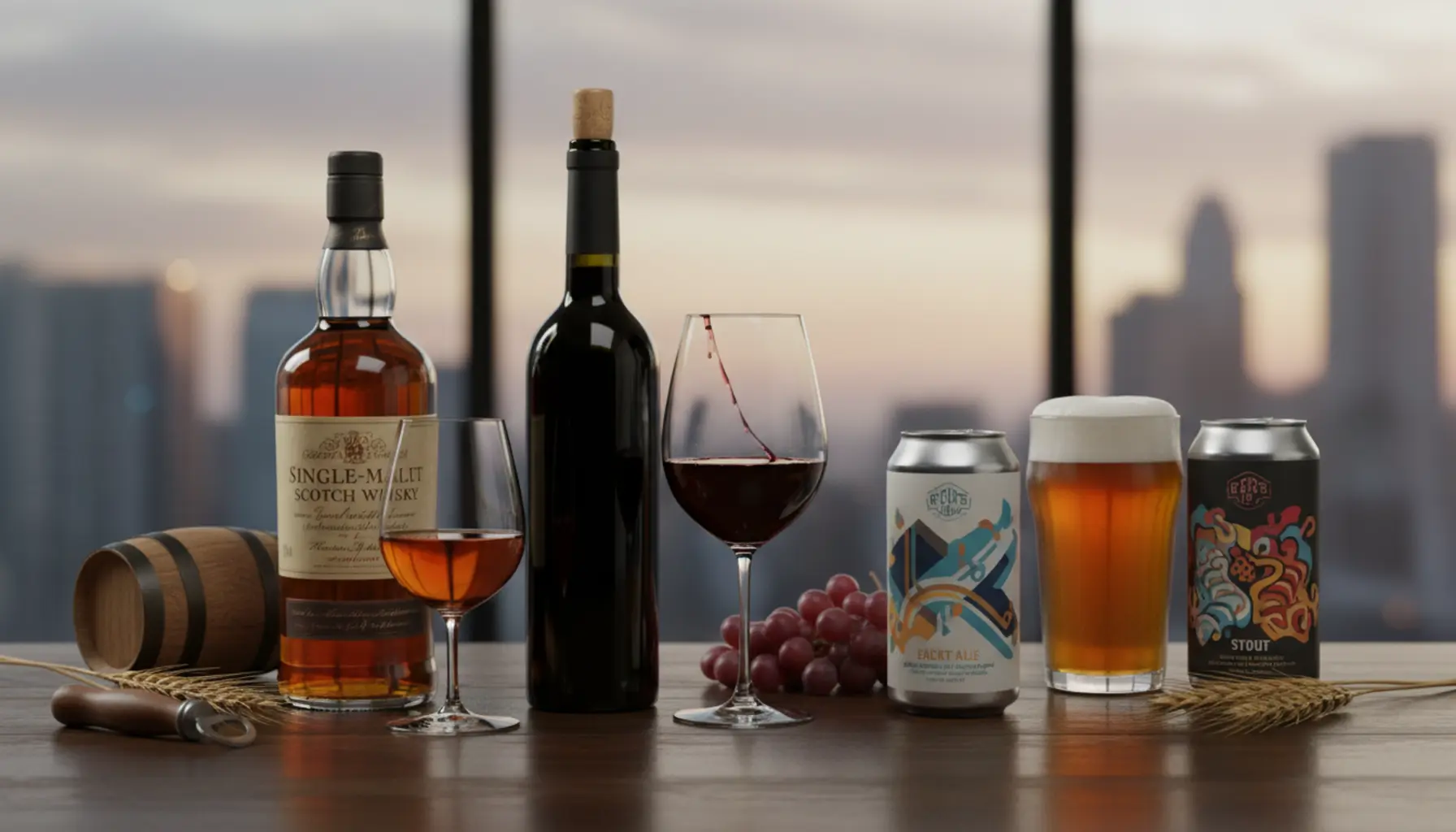
As you proceed to the proper tasting, the key at the first sip is to give your palate a moment to adapt—don’t rush, let the whisky “roll” around your mouth. Good whisky flavor is recognized by its harmony between sweetness, acidity, bitterness, and occasional saltiness, as well as texture and finish length. Quality whisky is full-bodied, smooth, often even creamy on the palate; the alcohol is integrated, doesn’t burn aggressively, and doesn’t cause unpleasant stinging on the tongue or roof of the mouth. With subsequent sips, try to detect the different flavor layers: sweetness from malt, vanilla, honey, or caramel may come first, followed by fruitiness, spicy or nutty notes, and in peated whisky—smoke, dried meat, seaweed, or ash. In good whisky, these sensations compose a coherent story: flavors blend seamlessly, with no sudden sharp notes that disrupt the whole. If you sense only raw alcohol, flat sweetness, or overwhelming bitterness without depth, it’s likely a simple, uncomplex spirit. The finish—the aftertaste lingering after swallowing—is also a key quality indicator. Good whisky leaves a long, pleasant, evolving tail—initial sweetness fades to spiciness, smokiness, or subtle barrel tannins. A short, abruptly ending, or harshly bitter finish (