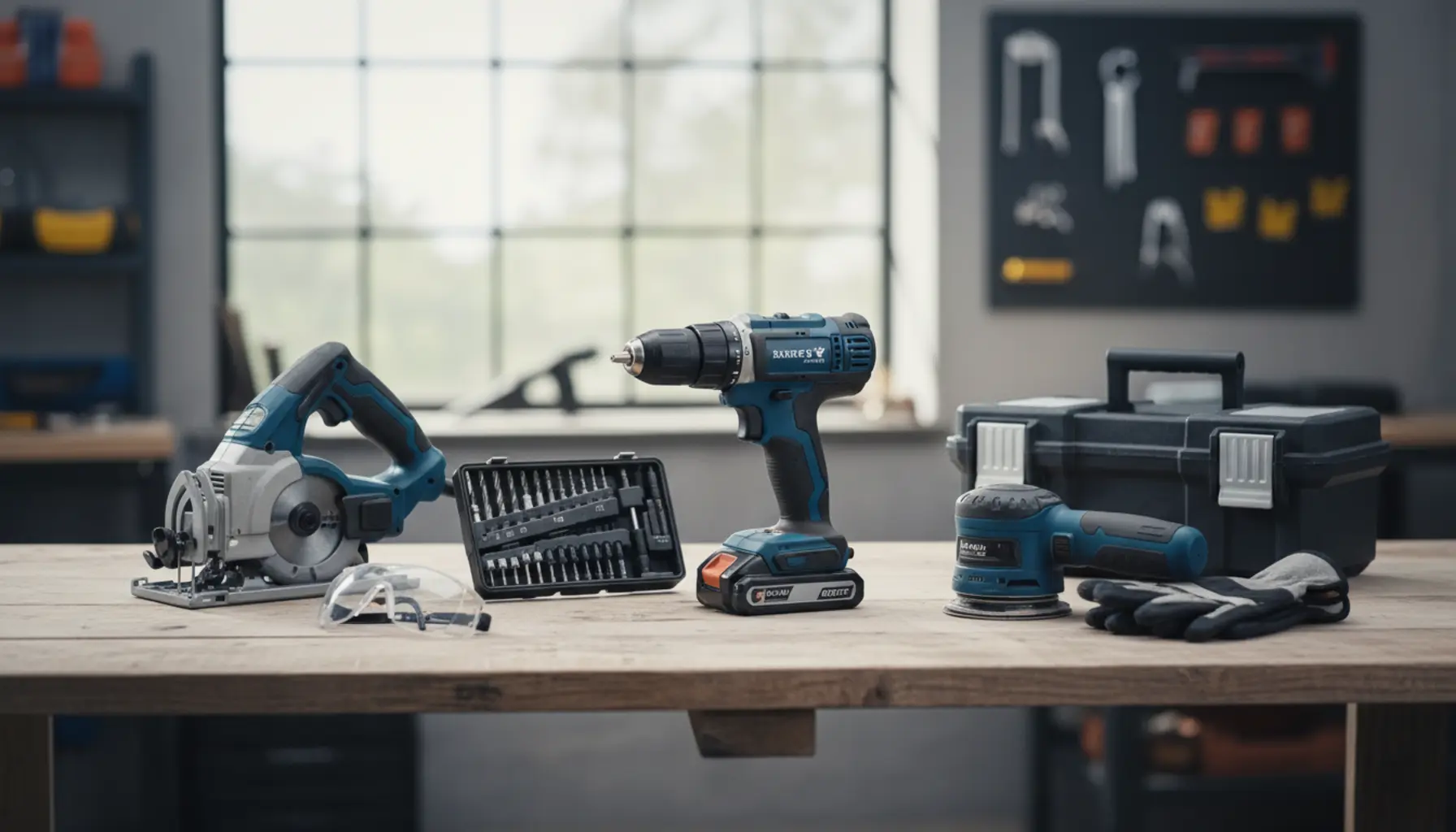
Choosing the best starter kit for DIY enthusiasts allows you to freely undertake a range of home improvement tasks and minor repairs. The most important thing is that the kit should include power tools and accessories that enhance functionality and safety. The best starter kit for a DIY enthusiast is perfect for those who want to build, repair, or renovate home furnishings themselves.
Table of Contents
- Which Tools Should Be Included in a Starter Kit?
- Best Power Tools for Beginners
- Choosing a Tool Set: Price vs Quality
- Beginner DIY Guide
- Offer Review: Top Deals and Prices
- Which Power Tools to Buy to Last for Years?
Which Tools Should Be Included in a Starter Kit?
A complete DIY starter kit should combine several tool groups: basic power tools, a solid set of hand accessories, measurement elements, and safety devices. The absolute foundation is a cordless drill-driver—ideally 18 V, with two batteries included, torque adjustment, and a hammer function if you plan to drill into concrete or brick. The drill-driver will be your “workhorse”: assembling furniture, mounting shelves, drilling through metal, wood, and, with the right bits, even installing lamps and curtain rods. Choose models with a keyless chuck for easy bit changes, a comfortable balance in your hand, and an integrated LED to light your workspace. The second pillar is an angle grinder—even if you don’t think you need one yet, in a starter kit it unlocks huge possibilities: cutting metal pipes, paving stones, grinding welds, and cleaning rusty elements. Opt for a 115 or 125 mm disc, power of about 700–1000 W (for corded models), and ensure it has a disc guard with a spindle lock for easy disc replacement and added safety. For those planning mainly woodworking and decorative tasks, a jigsaw with an adjustable foot, the ability to cut at an angle, and pendulum stroke adjustment will be invaluable. With it, you can trim a countertop, cut an opening in a furniture board, or fit skirting boards. Later, consider an orbital or random-orbit sander for smoothing wood and refurbishing furniture, and a small angle screwdriver if you know you’ll often work in tight spaces.
Power tools, however, are only part of the equation—hand tools and good accessories are just as important. Your basic set should include a carpenter’s hammer (with a solid hilt, preferably wood or fiberglass), a set of flat and Phillips screwdrivers in various sizes, and a set of wrenches: at minimum a few box-end wrenches in popular sizes (8, 10, 13, 17, 19 mm), and optimally—an entire set in a practical case. A set of bits for the drill-driver (PH, PZ, Torx, hex) in various sizes is a must, as is a set of drill bits for metal, wood, and concrete—preferably color-coded for quick selection. For finishing work and adjusting components, you’ll need a handsaw, a snap-off blade utility knife, pliers, wire cutters, and an adjustable wrench (the so-called French wrench). Measuring tools form a very important group: a sturdy steel tape at least 3–5 m, a spirit level (ideally 60 cm for checking lines and levels of furniture or shelves), a carpenter’s square, and a simple carpenter’s pencil for marking. Separate are work comfort and safety items: safety goggles, work gloves sized to your hands, hearing protection for grinder work, and a dust mask when sanding wood and gypsum. It’s also worth having a few carpenter’s clamps in your kit—they “replace an extra set of hands” when gluing or assembling parts. Keep all these tools organized in a single, decent suitcase or toolbox with compartments for bits, drills, and small fasteners (screws, wall plugs, nuts), so you don’t waste time looking for items. When composing your kit, pay attention to battery system compatibility (so new power tools can use the same batteries), handle ergonomics and build quality—it’s better to have fewer but sturdy tools than a loaded kit full of random, unreliable elements that will fail at a crucial moment.
Best Power Tools for Beginners
When choosing your first power tools, a beginner DIYer should focus on universal models that can handle as many home tasks as possible and are also easy to use. The cornerstone of such a kit is an 18 V cordless drill-driver—an “essential” tool for assembling furniture, mounting shelves, and drilling wood, metal, or even soft concrete (if you pick a hammer model). For beginners, a good choice is a drill-driver with two lithium-ion (Li-Ion) batteries of 2.0–4.0 Ah capacity, a 13 mm keyless chuck, and torque adjustment. In practice, this means you don’t have to interrupt your work to charge, you can easily swap bits, and the device will “let go” before you damage your screw or material. Look for an ergonomic, rubberized handle, well-balanced build, and built-in LED—seemingly small details that greatly enhance comfort, especially in tight or poorly lit spaces. It’s good to buy, together with the drill-driver, a set of drill bits for wood, metal, and concrete, and a set of driver bits (PH, PZ, TORX, flat), ideally in a small organizer. The second extremely useful entry-level power tool is a jigsaw—a simple saw for straight and curved cuts in furniture panels, boards, panels, and plastics. For beginners, variable speed control (slower for precise or harder materials, faster for rough cutting), pendulum motion for faster cutting of soft wood, and a tool-free quick-release blade system are all key. Models with a vacuum adapter or integrated dust extraction option are ideal for better line visibility and a tidier workshop or apartment. Beginners often worry about jigsaws due to noise or “blade wandering,” so choose one with a stable steel base, base angle adjustment (for cutting up to 45°), and a clearly visible guide bar; extra material support and a steady work pace build confidence quickly.
Choosing a Tool Set: Price vs Quality
When building your first DIY starter kit, you quickly face the dilemma: save as much as possible or invest in better quality, hoping for longer tool life. Shelves in home improvement stores show a wide price spread—from very cheap promotional sets to branded kits costing several times more. The difference isn’t just in the logo. The higher price often hides more powerful motors, better materials (metal gears vs. plastic), more efficient batteries, tighter-fitting elements, plus an extensive service network and longer warranty. On the other hand, cheaper sets tempt with price and numerous accessories, but often mean shorter lifespans, less precision, and a higher chance of failure right when you’re in the middle of a renovation or assembling furniture. Therefore, you should look beyond the price tag and consider the total cost of ownership (the tool’s lifecycle cost), including repairs, replacement parts, and even your time lost struggling with imprecise or weak tools. In practice, it’s wise to buy a kit at least one quality level higher than the cheapest options, but without overpaying for pro features a beginner DIYer won’t use. A sensible approach is to set a budget and then examine offerings in the “semi-pro” segment or from reputable DIY brands—they often provide an excellent price-to-quality ratio without the cost of truly professional, daily-use workshop gear.
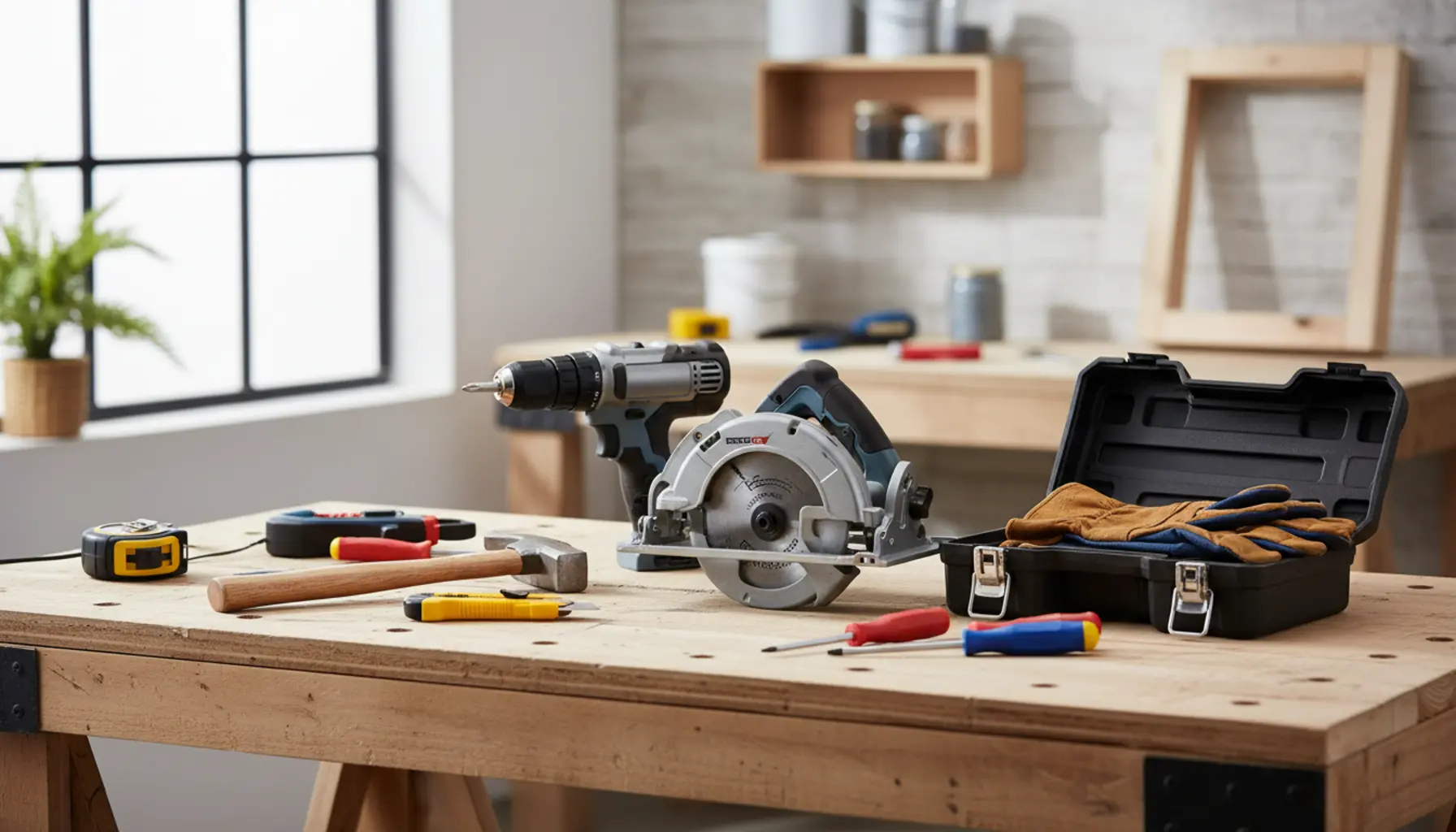
It’s crucial to understand not all set elements have to be of the same quality. It pays to invest in heavily used, safety- and precision-oriented tools: the drill-driver, angle grinder, jigsaw, batteries, and charger should come from a reputable source, have good user reviews, and a decent warranty (at least 2 years—ideally with the option to extend it via registration). Less critical accessories, such as single screwdrivers, a hammer, or simple wrenches, can be cheaper as long as they function reliably day-to-day. In practice, instead of buying a huge “all-in-one” market set, it’s better to assemble a smaller but thought-out pack: a solid base of single-brand power tools on a battery platform plus cheaper, gradually acquired hand accessories. Pay attention to design details—rubberized handles, case stability, minimal shaft play, smooth speed control. These nuances determine comfort and control, and thus the end result. Analyze extra accessories: a carrying case, spare batteries, drill and bit set, depth stops, disc keys—these can be costly separately. A pricier kit up front may be cheaper overall if it includes the essentials you’d have bought anyway. Also check the manufacturer’s service policy (repair times, part availability, authorized centers) and durability reviews after several years, not just first impressions. Ultimately, a price-quality balance means choosing a sufficiently solid kit to serve reliably for years of home use, without draining your budget on features meant for construction professionals. As your skills grow, you can gradually expand your kit with specialized tools, but a foundation of a few key, well-made power tools and well-chosen accessories ensures every new investment is a planned step—not a rescue after disappointment with a bargain-priced “deal.”
Beginner DIY Guide
Most DIY journeys start the same way: you buy your first screwdriver set, do a simple repair, and then try ever-bolder projects—from installing shelves to building a piece of furniture. To make this process satisfying, approach it methodically and treat DIY as learning a new skill, not a one-off spree. First, establish your true needs: someone mainly assembling flat-pack furniture needs a different starter pack than someone dreaming of building a gazebo or workshop in the garage. Write down your typical tasks over the coming months (mounting curtain rods, drilling in concrete, cutting trim, small plumbing repairs), and select your kit for those—you’ll avoid buying “for the future” tools that just sit in your drawer. It’s important to learn the basics of workspace organization—even if your “shop” is currently a basement corner or part of a kitchen counter. Keep everything tidy from the beginning: assign a home for your tools, sort bits, drills, and accessories in small containers or organizers, and label boxes (e.g. “drilling”, “sanding”, “fastenings”). The quicker you get used to returning each wrench and screwdriver to its place, the less time you’ll lose searching and the less risk of losing small parts. Beginners often want to leap into complex projects, but it’s much wiser to start with simple tasks that build confidence in handling power tools and materials. A good plan for your first weeks: put up shelves, mount hangers, drill a series of holes in wood or metal, cut straight board sections with a jigsaw, sand down rough edges. Treat these as exercises where you learn to use safety goggles, proper body positioning, carpenter’s clamps to stabilize pieces, and measuring tape or a level. At the same time, build basic material knowledge—pine wood is much more forgiving than hard oak, particleboard is prone to chipping at edges, and you choose different anchors and bits for concrete, brick, block, or drywall. The better you understand what you’re drilling into or what your tools cut, the easier it is to choose the right speeds, pressure, and accessories, which means safer, longer-lasting connections.
In practice, the biggest challenge for beginners is safe, correct use of power tools, which is why it’s wise to adopt a few iron rules. Always make sure your material is securely fastened before switching on your drill-driver or grinder—use a vise, carpenter’s clamps, or even makeshift “sawhorses”. Check your cables’ condition and make sure disc guards and accidental start locks operate correctly before plugging in or attaching a battery. Have a separate box for PPE: goggles, earmuffs, gloves, a dust mask, and basic kneepads or mats—if it’s all in one place, making safety gear a habit becomes second nature. There are many instructional videos online, but choose content from reputable tool manufacturers and experienced woodworkers or builders, who stress not just results, but also safety. Set your time budget—assume your first projects will take 2–3 times longer than guides say; haste is a prime safety risk. Keep a simple DIY notebook: jot down what you learned, which drill bit worked, what went wrong and what tools you’d add next time. Your next project will be better planned and your purchases more thought-through. Over time, you’ll expand your starter kit: upgrade the most-used bits, buy specialty drills for concrete or wood, and add more power tools to your battery system—without needing new batteries. Remember basic tool care: regularly dust your drill-driver, don’t leave grinding discs and saw blades in damp places, use a drop of oil where the manufacturer suggests, and occasionally check your batteries and contacts. These habits require no advanced knowledge and can double your tools’ lifespan. Finally, ensure work comfort: proper counter height, good workstation lighting, anti-slip mats, or even a basic scrap bin make DIY less chaotic and stressful, becoming a relaxing, skill-building hobby—where each project grows your confidence and the real value of your homemade home improvements.
Offer Review: Top Deals and Prices
When choosing the best starter kit for DIYers, it’s essential not only to know which tools you need but also to skillfully compare deals and promotions. The power tool market in Poland is highly competitive: you’ll find similar starter sets in big home improvement stores (Castorama, Leroy Merlin, OBI), specialty tool shops, and on popular online services (Allegro, Amazon, official brand stores). In practice, the very same drill-driver, angle grinder, and tool case may cost 10-30% less, depending on place and time of purchase. For beginners, the safest strategy is to select 2–3 brands offering complete battery systems (e.g., 18 V), then watch for their specific deals: combo sets, seasonal sales (spring—renovation season, autumn—tidy up and close out exterior work), and “extra battery free” or “case and accessories included” actions. Battery system starter kits are often better value than buying tools separately—the difference can amount to the price of a tool you essentially get as a bonus. Pay attention to kit contents: some sets are attractively priced but have weaker batteries (e.g., 1.5–2.0 Ah instead of 4.0–5.0 Ah) or less useful devices (flashlight, mini-vacuum) instead of more versatile tools. Calculate real value: compare the individual prices of the drill-driver, grinder, and jigsaw, add the cost of two batteries and a charger, and compare with the kit price. If the difference is below 10%, you mostly gain convenience; over 20–25%, it’s a real deal. Don’t ignore longer warranties and service—brands with 3-year warranties after product registration are often pricier but offer genuine savings in the long term thanks to reduced repair/replacement risk. Using price comparison sites (e.g., Ceneo), you can check price histories and verify if a current promotion is truly special or just a “standard promotional price” maintained most of the year.
It’s also wise to avoid marketing traps. “500-element set” promotions at suspiciously low prices may sound impressive, but upon inspection, most “elements” are cheap bits, low-quality drills, or plastic anchors destined for the trash. Judge a kit’s real usefulness by whether it has at least two batteries, a solid (preferably fast) charger, a sturdy toolbox or case, and at least two major power tools (e.g., drill-driver + angle grinder or drill-driver + jigsaw). In the budget segment, look for “middle-range” sets—not the cheapest store brands, but not strictly pro lines either; these often have the best price-to-quality ratio, especially during sales. Mainstream stores regularly run theme weeks (“Power Tool Week,” “Garden and Workshop Week”), discounting selected starter kits by 10–30%, plus extra loyalty coupons or 0% installment deals. Online shops also offer discount codes, cashback, and “outlet” discounts on sets with damaged packaging—a great deal for DIYers, as a scratched case doesn’t matter if you save dozens or even hundreds of zlotys. Calendar occasions when tool prices usually drop: Black Friday and Cyber Monday, the post-holiday period, spring renovation season, and product line changeovers (older models get steep discounts but remain functional). Get in the habit of making a priority tool list—e.g., 18 V drill-driver with two batteries, angle grinder with 125 mm disc, jigsaw—and set price alerts for them in comparison engines, so you can grab real bargains and not shop impulsively. When reviewing offers, factor in full ownership costs: the price and availability of extra batteries for your system, the cost of original accessories (discs, blades, holders), and user opinions on reliability and servicing. Sometimes a kit that’s cheaper “at the register” turns out costlier long-term if battery replacement nearly equals buying a new tool, or warranty repairs take ages. A well-thought-out deal review is not just about finding a great price one day, but about picking a tool system that remains practical and financially sound through years of home DIY.
Which Power Tools to Buy to Last for Years?
The durability of power tools begins with choosing a brand and entire system—not just a single device. For DIYers, this means going for a recognizable manufacturer with a robust 18 V battery platform, a broad Polish (or local) service network, and easy access to spare parts. Check if the brand has been on the market for years and what long-term test reviews—not just “first impressions”—are like. Assess quality by small details: case sturdiness, precision fit, absence of loose parts or wobbles in drill chucks or transmissions. The more “meaty” the plastic (reinforced with glass fiber rather than thin, slick plastic), the better resistance to cracks, drops, and vibration. The type of motor is also vital—cheaper models still use brushed motors, but for “tools for years” consider paying extra for brushless models. These are more efficient, heat up less, provide longer runtimes per charge, and wear out much more slowly. Also important is battery quality: top-brand Li-Ion cells, sensible capacity (e.g., 2–4 Ah to start), integrated overheat and overcharge protections, and information on expected charge cycles. Before you put a set in your cart, check whether the batteries are classified (e.g., Pro/Heavy Duty vs. DIY), if they’re compatible with the full tool range, and how much replacements cost; if a battery is almost as expensive as a new drill-driver set, that system may become a financial trap in the long run. In power tools meant for long-term use, ergonomics matter a lot: a well-shaped rubber handle, sensible weight (important overhead), good balance, and intuitively placed buttons. The easier it is in your hand and the less vibration you feel, the less wrist fatigue and, at the same time, the less component wear from shocks. Look for practical details like metal gears rather than plastic, aluminum jigsaw bases, or sturdy grinder guards. Another sign of “tools for years” is service-ready design—screws instead of plastic snaps, user-replaceable brushes in cheaper models, and consumables (carbides, discs, saw blades) available from various suppliers, not just pricey OEM spares.
Choosing long-lasting power tools means also considering technical specs for real, not marketing, tasks. Focus not on claimed maximums (such as “metal drilling to 13 mm” or “steel cutting to 115 mm”) but comfortable, everyday use: where the tool isn’t always at the edge of its capability. An all-purpose drill-driver meant for years of use should have a solid, metal keyless chuck, plenty of torque adjustment points, and a drilling mode with shiftable gears (slow for driving, quick for drilling). The manufacturer should clearly state torque in Nm, battery charging times, and expected battery life. In jigsaws and grinders look for features such as soft start, accidental start prevention, speed adjustment, and dust protection which prolong bearing and switch life. Equally critical are warranty and repair policy: many brands offer extended warranties (e.g., 3 years), if you register online—this signals confidence in durability. Check where the closest authorized repair point is, what parts cost and how quickly repairs happen, if out-of-warranty service is realistic, and how much typical spares cost (switches, chucks, bearings). In a “for years” kit, it’s better to have a few “semi-pro” or “pro” machines than a super-extended yet budget breakable set. A good approach: start with three or four key cordless power tools (drill-driver, jigsaw, angle grinder, possibly an orbital sander) of one battery system, then gradually expand, without buying new charging sets. Whether a tool really lasts often comes down to user opinions posted after years of work—look for real-life reviews on forums, under video reviews, and in DIY groups where people share info about common failures, slacks, or “childhood illnesses” of certain series. Carefully selected power tools from one well-designed system, with strong motors, tough gears, and service-friendly builds, will pay off with not only longevity but also predictable, dependable performance in each new project—a priceless asset when DIY becomes an everyday hobby.
Summary
Buying a starter tool kit is a step toward independent repairs and projects. It’s important that it contains basic tools such as hammers, screwdrivers, or wrenches. Choosing appropriate, durable, and functional power tools can greatly simplify home tasks. When purchasing, pay attention to manufacturer reputation and the quality-to-price ratio. Regularly reviewing deals and promotions allows you to buy at the best price. Investing in a good-quality tool set pays for itself quickly due to its long service life and versatility in use.