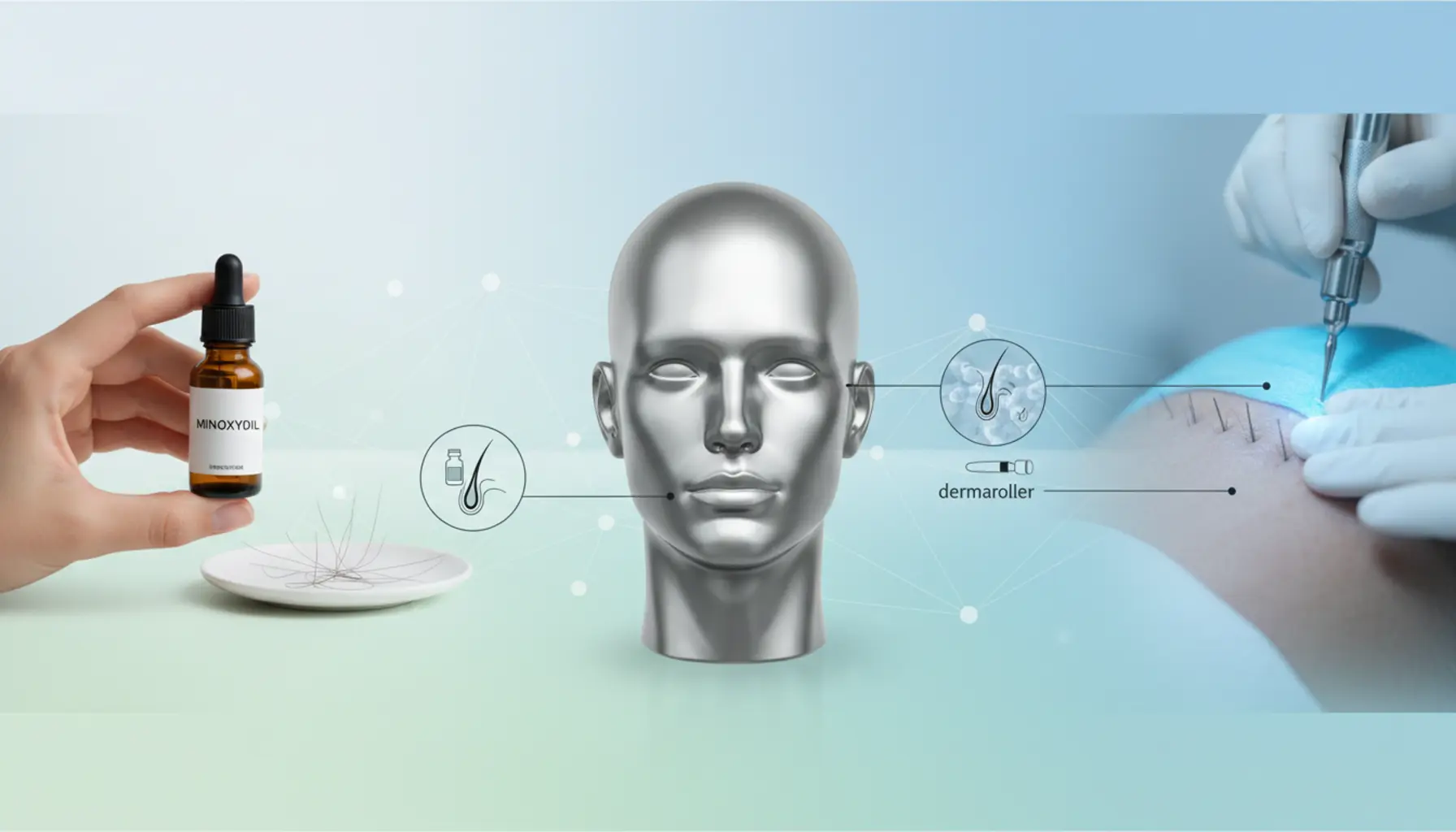
A hair transplant after 5 years allows for a realistic assessment of long-term results and the durability of an improved appearance. The procedure’s effectiveness depends on the surgeon’s skill, proper planning, and further pharmacological treatment. Discover the key factors affecting hair transplant results in a multi-year perspective.
Table of Contents
- Hair Transplant After 5 Years: Results and Conclusions
- Androgenetic Alopecia Treatment: Pharmacotherapy
- Innovative Methods to Combat Baldness
- Genetics and Hair Transplant: Facts and Myths
- Prevention of Androgenetic Alopecia: Key Tips
- Hair Loss in Women: Specialist Approach and Solutions
Why Caliber Matters? .22LR vs 9mm – Basic Differences
Caliber is not merely a number in millimeters or inches on the cartridge – it is a set of very specific features that affect recoil, noise, shooting costs, training possibilities, and also the defensive potential of the weapon. For a beginner shooter, choosing between .22LR and 9mm is essentially a decision about the learning environment: whether to prioritize maximum stress reduction and cost-effectiveness (typical of .22LR), or to quickly get accustomed to the “target” caliber commonly used in self-defense and law enforcement (9mm). The .22LR (i.e., .22 Long Rifle) is a small rimfire cartridge with a very light bullet (usually 2.6–3.2 g) and relatively low muzzle velocity. The 9mm Luger (9×19) is a centerfire cartridge with a heavier bullet (usually 7–9 g), more powder, and much higher kinetic energy. In practice, this means a different shot characteristic, different recoil, different sound, and often a different trigger and slide mechanism operation in many designs. For those just starting out, the essential thing is that the smaller and weaker .22LR round produces incomparably less recoil and less noise, which reduces anxiety about the first shots and makes it easier to focus on technique. On the other hand, the 9mm, though still regarded as relatively “mild” in the world of handguns, is noticeably more powerful, which can be significant when learning proper grip, trigger work, and controlling body response to each shot. The difference in bullet energy between .22LR and 9mm is enormous: approximately, a standard .22LR generates about 100–200 J, while 9mm is usually in the 400–600 J range or even more in some loads. This discrepancy translates not only into “recoil force” but also into penetration and effect on the target, which is why .22LR is practically never considered a primary defense caliber, while 9mm is the de facto market standard for service and civilian self-defense weapons in many countries. Also worth mentioning are the construction differences: the .22LR, as a rimfire cartridge, has a thinner rim and the primer is located on the rim of the casing, making cartridges more vulnerable to mechanical damage and production quality, which can result in occasional misfires. The 9mm, as a centerfire cartridge, is generally more reliable, withstands intensive use better, and the casings are easily reloadable, which is of interest to those planning to make their own ammunition. These technical nuances have practical implications for training, costs, and available pistol constructions.
The differences between .22LR and 9mm are best understood by looking at several key aspects: recoil, operation culture, ammunition cost, intended use, and learning ergonomics. Recoil in .22LR is very mild—the pistol makes a gentle “pop,” and the barrel practically does not rise after the shot. This is the ideal environment to learn trigger work, sight alignment, breath control, and stance, because the shooter is not fighting with dynamic muzzle climb. Such comfort translates into faster development of correct habits, especially for petite individuals, those sensitive to noise, or complete beginners. In the case of the 9mm, the recoil is clearly felt—the gun rises more, and errors in grip, hand tension, or improper wrist work become apparent immediately. For some, this is an advantage (they instantly learn to control a “real” pistol), for others—a psychological barrier, leading to flinching and reflexively moving eyes or the weapon just before the shot. Another fundamental difference is the cost and availability of ammunition: .22LR is usually several times cheaper than 9mm, which is critical if you plan to train intensively. For the same amount of money, you can fire much more from a rimfire pistol, which directly impacts the number of repetitions and progress speed. In practice, many sport shooters and instructors use .22LR to work on basic technique, and 9mm to refine recoil control, rapid shooting, and defensive training. The practical purpose aspect is also crucial: .22LR works great for recreation, precision shooting at short distances, sport pistol competitions, and as an affordable training tool. 9mm, on the other hand, dominates in dynamic shooting (IPSC, IDPA), service training, defensive shooting, and situations where not only hitting but also appropriate bullet energy is important. This is why the caliber for your first pistol matters so much: by choosing .22LR you invest in the most user-friendly learning platform, making it easier to overcome fear of shooting and allowing thousands of rounds on a limited budget. Going straight for 9mm, you immediately learn to operate a “combat” caliber, with full recoil, which you will later encounter in most defensive courses and dynamic competitions. Both paths are correct, but the fundamental differences in the characteristics of these two calibers mean it’s worth consciously matching them to your goals, temperament, and shooting development plans from the outset.
Hair Transplant After 5 Years: Results and Conclusions
Five years after a hair transplant is when it is possible to realistically assess the final outcome of the procedure and the durability of the achieved improvement. In the first 12–18 months, patients observe gradual thickening and maturation of hair, while after 3–5 years, the effect stabilizes and largely reflects the surgeon’s quality of work, proper hairline planning, and scalp care. For most patients, if the procedure was performed correctly (especially via FUE or FUT with reasonable use of grafts), the hair in the recipient area maintains a similar density as after complete healing, though a slight density decrease of several to a dozen percent may result from the natural aging process. The key issue is the overall harmony of the hairstyle: a well-planned frontal hairline is not set too low, has an irregular, natural outline, and the density distribution from the front to the crown mimics the physiological pattern—densest at the front and slightly sparser at the vertex. About five years post-op, it becomes especially evident whether the surgery accounted for the progressive nature of androgenetic alopecia. If the surgeon overestimated the scope of the procedure in a young patient, ignoring the genetic risk of further hair loss, it may result in “islands of density” surrounded by thinned or completely bald areas. On the other hand, with a reasonable plan leaving graft reserve in the donor zone for possible corrections, everything looks natural over the years, and the patient can gradually adapt the hairstyle to changes in the non-transplanted hair. After five years, a well-designed transplant is also characterized by growth direction stability—the hair arranges as intended, does not stick out, and does not form “plumes”, which used to be a problem after outdated procedures with large, unnatural grafts. For many, the appearance of the donor area scars after this time is also important: after FUE, the dot scars are generally almost invisible as long as a minimal hair length is maintained, while after FUT, they can usually be hidden within the hairstyle, unless the scar widened due to excessive skin tension or poor healing.

Analysis of hair condition after five years also shows how important the continuation of conservative treatment alongside the transplant is. Patients who used finasteride/dutasteride, minoxidil, or low-level laser therapy (LLLT) after the procedure much more often retain good density of non-transplanted hair, making the entire hairstyle look coherent and youthful. On the other hand, those who treated the transplant as the only solution and abandoned pharmacotherapy often experience further thinning in untreated areas—e.g., behind the transplanted hairline or at the vertex—which after a few years may require an additional touch-up procedure or at least intensive conservative treatment. It is also worth noting the quality of hair strands five years post-transplant: in many cases, the strands become thicker, stronger, and more resistant to breakage, as a result of both the transplant and improved care (gentle shampoos, avoidance of aggressive styling, proper diet). However, in patients with strong androgen-dependent miniaturization, even hair from the occipital—considered “permanent”—may gradually thin, making regular scalp monitoring by a trichologist or dermatologist crucial. From a psychological perspective, a five-year observation period reveals how much a hair transplant can boost self-esteem and social comfort—patients often report greater self-confidence in professional situations, less avoidance of photos or social events, and no longer needing to wear hats to cover up baldness. At the same time, some people notice that a transplant is not a “magic time reset”: general aging continues, and the structure of hair and skin changes, demanding a realistic approach to expectations. Five-year experience allows for practical conclusions regarding future therapy planning—for some, it will be a possible second, smaller thickening procedure, for others initiation or modification of pharmacological treatment (e.g., switching from topical to oral minoxidil under medical supervision), and for some—simply maintaining their existing, effective prevention routine. In the long run, not only the transplanted area’s appearance but above all, the effectiveness of the comprehensive androgenetic alopecia treatment strategy—combining surgery, pharmacology, lifestyle, and care—is decisive in daily life.
Advantages and Disadvantages of .22LR Caliber Pistols
Pistols chambered in .22LR are extremely popular among entry-level shooters—and for good reason. Their biggest advantage is undoubtedly the low operating costs: .22LR ammo is one of the cheapest on the market, allowing you to fire far more for the same amount you’d spend training with 9mm. With regular shooting, the cost difference becomes huge, encouraging more frequent range visits, which directly improves skill development. The second key advantage is the very low recoil and minimal muzzle climb, making .22LR extremely “friendly” for the hands, wrists, and psyche of a new shooter. Those sensitive to noise and recoil, as well as shooters with lower physical strength (such as many women, the young, or the elderly), find it much easier to build correct habits without being overwhelmed by hard kicks and loud noise. This way, one can focus on the basics: trigger work, sight alignment, grip consistency, or proper stance, without unnecessary fear of a “painful shot.” Lower noise and a softer muzzle flash also make shooting more comfortable—even with ear protection the .22LR shot is less stressful for beginners than the loud crack of a 9mm, which reduces the tendency to involuntarily flinch or blink. Other advantages include less physical fatigue in longer training sessions—since recoil is minimal and ammo is lightweight, you can easily shoot hundreds of rounds in one training and retain relatively fresh motor skills and focus. Many also appreciate the fact that .22LR pistols are often lighter, making it easier to practice drawing, holster work, and handling the gun. In many cases, there are copies of popular 9mm pistols (series conversions or replicas), allowing for inexpensive training “on the same frame”—you learn manual operation, ergonomics, and control layout, then transition to 9mm without feeling like you’re starting from scratch. The psychological aspect is important, too: beginners who start with .22LR very often get over the initial learning curve faster, since they feel in control and see their quick progress on targets, which is highly motivating and reduces the risk of quitting the hobby at the “it’s too hard” stage.
The low energy of the .22LR projectile, advantageous in terms of comfort, is also one of the greatest drawbacks of this caliber in practical applications. For self-defense, .22LR is widely considered a weak and inefficient caliber—not only for its limited stopping power but also due to unreliable penetration through various obstacles (clothing, light barriers). While it’s an excellent choice for recreation and basics, as a strictly defensive weapon, it’s a controversial option often discouraged by instructors. Another issue is .22LR ammo’s lower reliability—because of rimfire ignition, misfires occur more often than in popular centerfire (9mm) rounds. For a beginner, this can be a drawback as well as… an educational benefit, since it teaches clearing malfunctions, but in situations where absolute weapon reliability is essential, this is a serious minus. Pistols in .22LR may also be more finicky with ammo—they can be pickier regarding less expensive brands, different bullet speeds, and constructions, causing issues with feeding and ejection, requiring users to test a few brands and types of ammo before finding one that works reliably in their firearm. In terms of skill development for “end-target” combat calibers, another negative appears: training exclusively with .22LR may create habits that don’t fully transfer to 9mm, especially with recoil management, control during rapid fire, or body mechanics during dynamic shooting. Shooters who spent a long time only with .22LR might be surprised by the 9mm’s recoil when they first try it, and will have to partially “re-learn” their technique. Lastly, there’s the hardware and availability aspect: although .22LR pistols are widespread, they don’t always offer the same quality or durability as top-tier 9mm models—especially in the budget segment. Some models have noticeably shorter lifespans, more delicate parts, and greater susceptibility to fouling, requiring more careful maintenance and possibly disappointing those expecting an “always reliable” weapon. There’s also the practical problem of limited versatility: a .22LR pistol works great for recreational or basic training, but if its owner plans to compete in popular dynamic disciplines, tactical courses, or defensive shooting, .22LR firearms quickly become insufficient—and purchasing an additional, full-caliber 9mm pistol becomes necessary.
Androgenetic Alopecia Treatment: Pharmacotherapy
Pharmacotherapy forms the foundation of modern androgenetic alopecia treatment and is usually the first-line approach before considering surgical methods such as hair transplantation. The primary goal of pharmacological treatment is to slow follicular miniaturization, halt progressing hair loss, and—if possible—partially regenerate the follicles. It is vital to understand that androgenetic alopecia is a chronic condition, determined by genetics and hormones (sensitivity of follicles to dihydrotestosterone – DHT), which means the drugs do not “cure” the cause conclusively, but control the disease process as long as they are in use. The best-studied and internationally recognized medications are minoxidil (topical) and 5α-reductase inhibitors–mainly finasteride and dutasteride (oral), with effectiveness confirmed in many clinical trials. Minoxidil as a liquid or foam (usually concentrations of 2% and 5%) increases scalp blood flow, prolongs the anagen (growth phase), and stimulates dormant follicles to produce thicker terminal hair. Men are usually recommended higher concentrations, but in women—due to the risk of irritation and excessive hair outside the application area—doctors often start with lower doses or female-specific formulations. Minoxidil must be used regularly, typically twice daily, for many months; first effects appear after 3–6 months, with full assessment possible after around 12 months. Some patients observe temporary increased shedding early on (a “shedding” phase), which may be disturbing but results from shedding weak, miniaturized hair in favor of new ones, and usually subsides on its own. The main side effects are itching, scalp dryness, irritation, and dandruff-like scaling, which often can be minimized with proper hair care or changing product formula. Consistency is critical: discontinuing minoxidil usually leads to loss of the achieved effects within a few months because follicular miniaturization restarts. For this reason, pharmacotherapy is considered a long-term strategy, not a short “cure.”
The second pillar is 5α-reductase inhibitors—an enzyme responsible for converting testosterone into DHT, a key factor in androgenetic alopecia pathogenesis. Finasteride mainly inhibits type II isoform of this enzyme and is most commonly prescribed for men with androgenetic alopecia at a dose of 1 mg daily. Its action lowers DHT concentrations both in the serum and the scalp, slowing follicular miniaturization, stabilizing hair loss, and increasing density in thinned areas. Studies show that finasteride can halt hair loss progression in the majority of men, and in some, leads to observable density improvement. Effects appear after 6–12 months, with a peak after roughly 2 years of continuous use. Dutasteride, a stronger 5α-reductase inhibitor (acting on type I and II isoforms), is sometimes used “off-label” for alopecia, especially if there’s insufficient response to finasteride, but this requires medical experience and careful assessment of risks and benefits. The most discussed issues with 5α-reductase inhibitors are potential side effects related to sexual function: lowered libido, erectile dysfunction, reduced ejaculate, and less often, mood disturbances. These affect a small percentage, are usually reversible after stopping or reducing the drug, but must be frankly discussed prior to therapy. Due to their action, finasteride and dutasteride aren’t routinely recommended for women of childbearing age and are contraindicated in pregnancy; in selected cases, they may be used in postmenopausal women under strict specialist supervision. Women are more often prescribed alternative pharmacological options such as spironolactone or oral anti-androgens (e.g., cyproterone combined with estrogens), which reduce androgen impact on follicles—but these too require hormone level monitoring and contraindication assessment (risk of thrombosis, liver dysfunction, etc.). Modern therapeutic protocols increasingly combine different pharmacotherapies, e.g., topical minoxidil with oral finasteride in men or minoxidil with anti-androgens in women, targeting both scalp and hormonal levels. In some cases, doctors prescribe low-dose oral minoxidil and anti-androgen injections via scalp mesotherapy, though many of these are “off-label” and require thorough risk analysis. Regardless of the approach, it’s essential to tailor treatment to gender, age, severity, comorbidities, expectations, and to have regular follow-ups with a trichologist or dermatologist for ongoing dose modifications and side effect management. Such comprehensive pharmacotherapy supports both successful hair transplantation and long-term alopecia stabilization, significantly improving density and psychological comfort.
Innovative Methods to Combat Baldness
The development of aesthetic medicine and dermatology means that androgenetic alopecia treatment is no longer limited to classical pharmacotherapy or traditional hair transplantation. Increasingly important are approaches that were recently considered experimental: cell therapies, advanced robotic transplant techniques, biostimulatory procedures, and combined treatments integrating several approaches into a coherent plan. One of the most discussed solutions is platelet-rich plasma (PRP) therapy, which utilizes the regenerative potential of the patient’s own blood. After drawing a small amount of blood and centrifuging it, a platelet concentrate rich in growth factors is obtained; this is injected into balding areas to stimulate dormant follicles, improve microcirculation, and inhibit miniaturization. The procedure is performed in series, usually every 4–6 weeks over several months, and first results—reduced hair loss and improved density—are often noticed after about 3–6 months. The main PRP advantage is an excellent safety profile, as the material comes from the patient, minimizing allergy risks. The downside is inconsistent response, as efficacy depends on the alopecia stage, blood quality, technique, and consistent integration with other methods. Another innovation is cell therapy and “cell extract” treatments. Protocols are being developed using stem cells harvested from fat tissue or hair follicles, and preparations containing growth factors, cytokines, and signalling peptides. The aim is to form a scalp microenvironment supporting regeneration and “rejuvenation” of follicles, as well as improved skin and vessel quality. In practice, fractions rich in progenitor cells from adipose tissue (SVF), dermis, or follicles are injected into the balding area. While initial studies are promising, cell therapies are still partly experimental and require careful clinic and doctor selection due to complex laboratory procedures, quality variation, and significant costs. Advanced needle mesotherapy protocols are also popular, in which the scalp receives cocktails based on biomimetic peptides, low-molecular-weight hyaluronic acid, vitamins, minerals, and amino acids essential for keratin synthesis. Modern preparations contain ingredients that mimic natural growth factors, directly stimulating follicular and stem cell receptors. Unlike PRP with autologous material, here product quality and composition matter. Needle mesotherapy requires a series of sessions (typically 6–10 at 1–2 week intervals) followed by maintenance visits to keep stimulating hair growth. The advantage is the ability to precisely add anti-androgens or antioxidants, which is key for androgenetic alopecia, where oxidative stress and DHT excess play an important role in miniaturization.
(…) full content preserved …