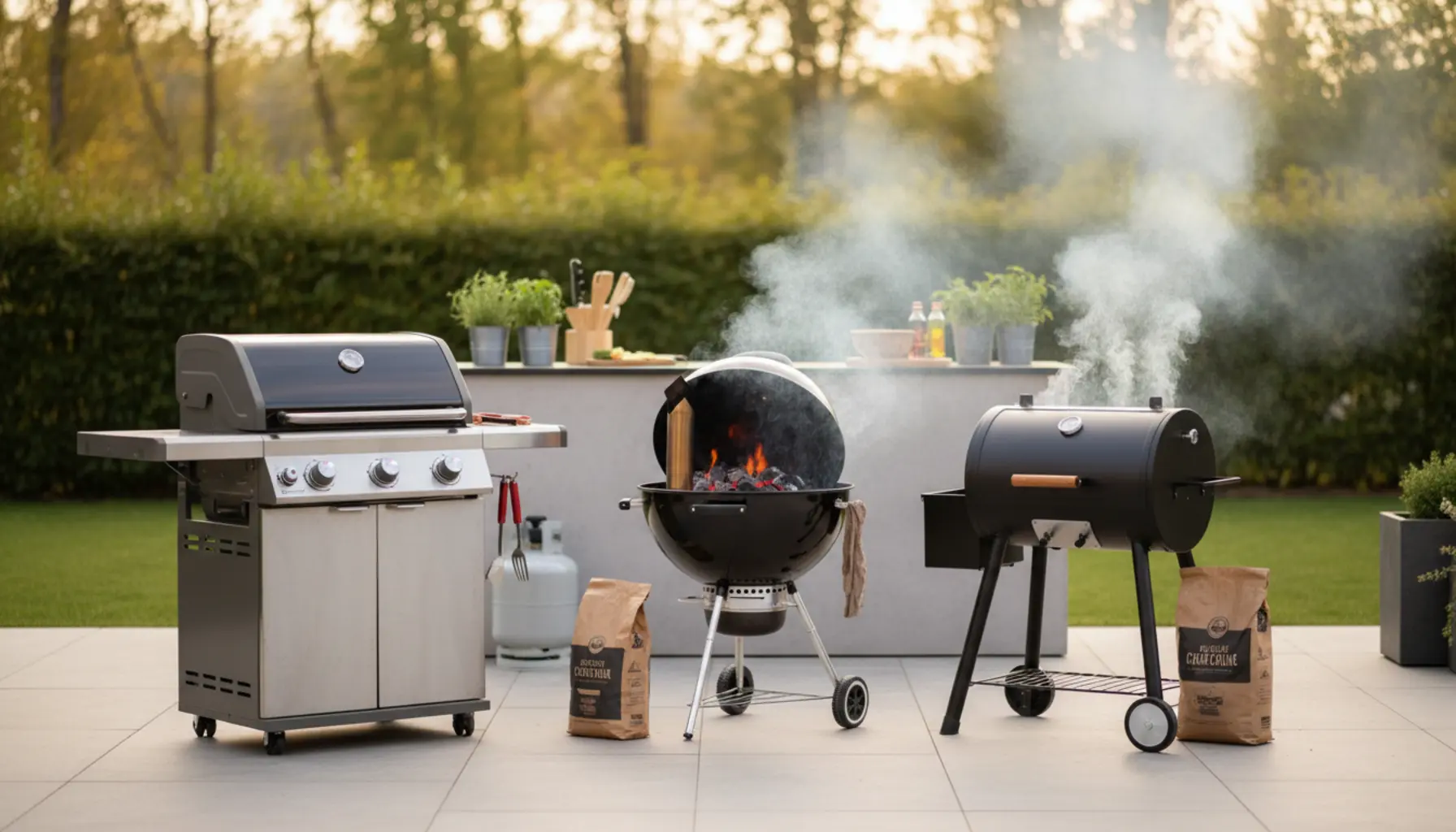
Comparing charcoal, gas, and pellet grills allows you to match the equipment to your individual needs and grilling preferences. Grilling on different devices varies not only in taste but also in convenience and culinary versatility. The choice of a suitable gas, charcoal, or pellet grill directly impacts everyday use and the results you achieve while grilling.
Table of Contents
- Gas Grills: Advantages and Disadvantages
- Charcoal Grills: Flavor and Difficulty of Use
- Pellet Grills: A Modern Alternative
- Taste Differences: What to Choose?
- Time and Convenience: What’s Best for You?
- Making the Final Decision
Gas Grills: Advantages and Disadvantages
Gas grills have been growing in popularity for years, especially among people who value convenience, speed, and consistent grilling results. The biggest advantage of gas grills is their lightning-fast ignition—rather than laboriously lighting coals, you just turn the gas cylinder, press the ignition, and within a few minutes the grate reaches the perfect temperature for searing steaks, sausages, or vegetables. It’s the ideal solution for busy people who often grill during the week after work and don’t have time for lengthy preparations. Another strong advantage is the highly precise temperature control: the dials work like a gas stove, making it easy to maintain a stable heat, create direct and indirect grilling zones, and prepare the same dishes with consistent results without risk of burning. From a convenience standpoint, cleanliness is also important—no ash or embers means less cleanup, and many models have a removable grease tray that you can quickly empty and rinse. For beginners and those who are wary of open charcoal flames, a gas grill is also seen as more ‘trouble-free’: it’s easier to control the temperature, harder to get sudden flare-ups, and the ignition process doesn’t require any special skills. Many users also appreciate the health aspect—it’s easier on a gas grill to limit the direct contact of burning fat with flame, reducing the amount of smoke and byproducts from burning. Additionally, modern designs offer extensive functions: extra side burners for sauces and pots, rotisseries for chicken, flavoring systems (e.g., Flavorizer bars or wood chip trays) that enrich the flavor and aroma of the grilled food. A huge advantage is their versatility—gas grills are great not only for quick grilling but also for baking (e.g., pizza on a stone), slow BBQ at lower temperatures, and even indirect smoking using dedicated accessories. It’s also worth mentioning the availability of different power sources: classic propane-butane cylinders, cleaner propane, and for properly installed setups, even mains gas—providing flexibility and matching solutions to balcony or garden conditions. From the perspective of neighbors and apartment dwellers, gas grills are seen as less intrusive: they generate noticeably less smoke and odor than charcoal grills, making them less likely to cause conflicts on balconies or small patios.
Despite many advantages, gas grills also have their drawbacks, which for some grilling enthusiasts may be decisive when choosing equipment. The most commonly cited downside is taste—many purists argue that gas grills simply don’t provide the rich, smoky aroma that a charcoal or pellet grill does. Although this can be partially compensated for with wood chips in dedicated smoker boxes, the difference is still noticeable, especially with long BBQs or when grilling intensely flavored meats. The next significant aspect is cost: a quality gas grill with several burners, a sturdy grate, and durable body is usually much more expensive than a basic charcoal grill. You also need to consider the cost of gas cylinders, regulators, hoses, and regular checks of the gas system—all of these add to the total cost of ownership. Furthermore, the gas grill’s construction is more complex: burners, jets, igniters, and valves—all require periodic maintenance, cleaning, and inspection. Over time, burners may corrode, jets can be clogged by fat, or the igniter can fail, which requires both servicing and extra costs. A less obvious but practical drawback is limited mobility: massive multi-burner gas grills are heavy, take up a lot of space, and are hard to transport freely to allotments, lakes, or campsites—compared to this, lightweight foldable charcoal grills definitely come out on top. Don’t forget about safety: although modern devices have safety features, storing and attaching gas cylinders requires caution, proper conditions (e.g., not storing cylinders in enclosed, heated spaces), and regular checks of hoses. For some, the ‘technical’ nature of gas grilling is a negative—the lack of lighting ritual, the smell of smoke, and crackling embers makes the atmosphere around the grill feel less like a campfire and more like outdoor cooking. Finally, gas grills are less tolerant of neglect: if you don’t regularly clean the grease tray, burner covers, or grates, you might experience sudden flare-ups, reduced burner efficiency, or even a fire from accumulated debris. For these reasons, a gas grill is best for people who grill often, value convenience, control, and consistency, are ready to invest in better equipment and look after it, and are willing to trade a less ‘campfire-like’ grilling process for comfort and speed.
Charcoal Grills: Flavor and Difficulty of Use
Charcoal grills have long been regarded as the classic form of barbecue, mainly because of the unique taste and aroma of food cooked over hot coals. Charcoal and briquettes, when burned, release aromatic compounds that penetrate meat, vegetables, or fish, giving a distinctive, slightly smoky flavor that is very hard to replicate on a gas or electric grill. Additionally, experimenting with different types of wood (e.g., beech, oak, fruitwood) in the form of chips or chunks allows you to further personalize the flavor profile—from gently sweet applewood to the stronger, drier oak. The high temperature that can be achieved on the grate enhances the Maillard reaction—meat browns quickly, forming an appetizing, crispy crust, while the inside stays juicy. For many barbecue aficionados, it’s that ‘primitive’ contact with flame, embers, and fat dripping onto coals (transforming into fragrant smoke) that is the essence of grilling and why even modern gas grills can’t fully match up. Charcoal grills come in many forms—from the simplest foldable picnic models, classic ‘kettles’, to closed kettle or ceramic kamado grills, which allow both searing at high temperatures and long slow BBQ at lower ranges. A big plus is the relatively low cost of a basic model and the easy portability—a lightweight, foldable charcoal grill can be taken to the lake, to a campsite, or a picnic in the park, where using a gas grill with a cylinder would be just impractical. For many, the ‘ritual’ aspect is also important—lighting the fire, nurturing the embers, making sure the coals are perfectly heated but not flaring is part of the experience, building atmosphere and providing the satisfaction of ‘manual’ mastery of fire. However, what some find enjoyable, others may see as a significant inconvenience—operating a charcoal grill is incomparably more demanding than gas units, and achieving consistent results requires practice, knowledge, and patience.
The greatest difficulty in using charcoal grills is controlling the temperature and the time needed to prepare them for cooking. Unlike gas grills, where you just turn the knob and press the ignition button, lighting charcoal or briquettes takes anywhere from a dozen to thirty minutes or more, depending on the method and quality of fuel. The coals must be well-lit, covered in light ash and glowing evenly—placing food over still-flaming briquettes risks burning on the outside and undercooking inside. Keeping a stable temperature requires skillful management of fuel quantity, grate height (if adjustable), and airflow by opening and closing the vents. For beginners, this is frustrating: too much air means overheating and burning; too little chokes the fire and prolongs grilling. There’s also the need to manage heat zones: a well-managed charcoal grill usually has a section with intense coals for searing (direct zone) and a part with fewer coals or none (indirect zone) where food cooks at lower heat. This requires planning and regularly moving food on the grate. The practical difficulties don’t end there—there’s also cleaning out ash, removing leftover charcoal, and the need to store fuel in a dry place. Charcoal and briquettes are messy, dusty, and take up space, which can be a real disadvantage for apartment dwellers with a small balcony. There’s also the neighbor and environmental aspect: charcoal grills emit more smoke and intense smells than gas ones, which isn’t always appreciated by neighbors, and in some cities there are restrictions on creating smoke on balconies or terraces. From a health perspective, a further problem is the formation of harmful substances (e.g., polycyclic aromatic hydrocarbons) when fat drips directly onto hot coals and burns at high temperatures—this can be partially minimized by using drip trays, indirect grilling, and preventing excessive flames, but it still requires extra care and experience. All this means that charcoal grills are primarily chosen by people who value taste and aroma above maximum convenience, are willing to accept longer preparation time, more mess, and the need to learn proper handling, in exchange for authentic grilling experiences over real fire.
Pellet Grills: A Modern Alternative
A few years ago, pellet grills were a curiosity in Poland, but today they are increasingly appearing on terraces and in gardens of people looking to combine the convenience of a gas grill with a flavor similar to charcoal. At their core is a screw auger and an electronic controller that doses compressed wood pellets into a burn chamber, then (with a fan) distributes heat and smoke throughout the cooking chamber. As a result, pellet grills work somewhat like a combination of a grill, smokehouse, and convection oven: they not only allow for high-temperature grilling but also slow roasting, braising, and even smoking at low temperatures with very consistent results. Pellets are usually made from pure hardwood (e.g., oak, beech, cherry, apple), without chemical binders, which translates to a natural, distinctive aroma and the possibility to precisely ‘season’ food with smoke—just choose a different pellet flavor for different notes in meat, fish, or veggies. The electronic controller keeps the temperature at the set point—the user sets it with a dial or digital panel (often accurate to 5–10°C), and the grill automatically adjusts the amount of pellets and fan intensity. It’s a tremendous convenience compared to classic charcoal, where you constantly need to tend the fire, add more coal, and regulate the air. Pellet grills are also relatively easy to operate: just turn on the electric igniter, wait a few to several minutes for the set temperature, and fill the hopper with pellets. For those wanting to grill ‘stress-free’ and avoid many gas-related flavor compromises, this is a particularly attractive option.
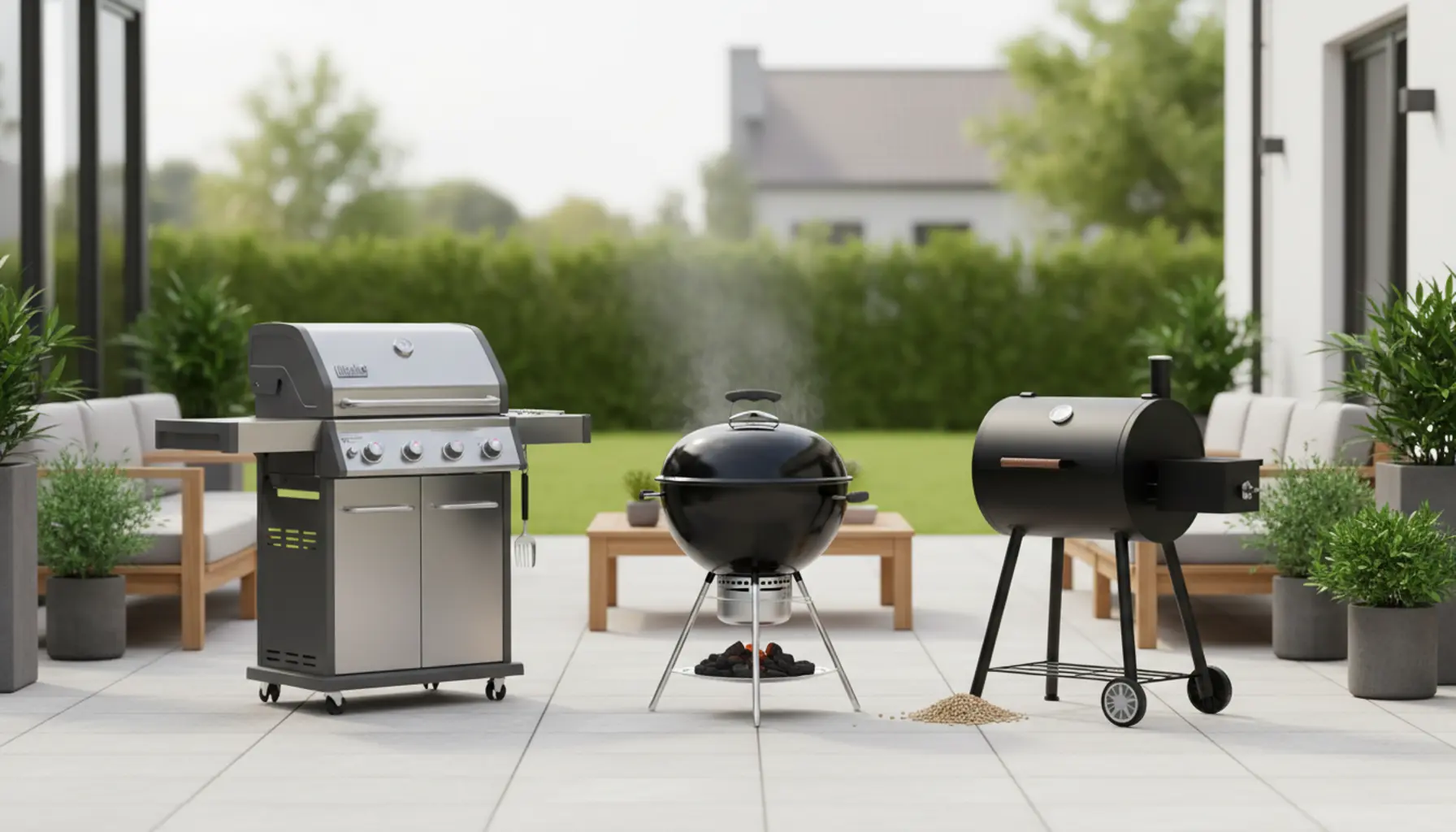
The modernity of pellet grills is also reflected in their additional features, especially in higher-end models: mobile app control, meat probes with temperature readings on your phone, preset modes for specific dishes (e.g., ribs, pulled pork, pizza), or the ability to save your own grill profiles. Thanks to this, even a beginner can relatively easily get results similar to those of experienced pitmasters on classic smokers. In terms of convenience and cleanliness, pellet grills are much better than charcoal: there’s no scattered ash, dusty briquettes, or oily, heavy smoke; there is some ash, but usually, it collects in a special ashtray that can easily be emptied. The smoke from pellets is usually ‘lighter’ and less bothersome to neighbors, which is a big plus in dense developments or neighborhoods with smoke restrictions. However, there are some important limitations. First, pellet grills require a constant power supply—without electricity, the auger, igniter, or fan won’t work, so you have to have an outlet nearby or use an extension cord or generator, which reduces picnic or wild camping mobility. Second, they are more complex than classic charcoal kettles: electronics, a feed motor, or igniter can fail, so regular servicing and cleaning the inside of ash and grease is necessary to avoid operational issues. Another factor is cost—a quality pellet grill is comparable to or more expensive than a mid-range gas grill, plus you have to buy proper (food-grade, certified) pellets, which can be more costly than ordinary charcoal. In exchange, you get a device with massive culinary versatility: in one chamber you can prepare crispy chicken wings with smoky skin, low-temperature briskets that take over a dozen hours, pizzas on a stone at over 300°C, or delicately smoked cheese or fish. Pellet grills are thus best for those who like to experiment, plan longer grilling sessions, and at the same time appreciate the convenience and repeatability of an oven. For the typical ‘weekend griller’ mainly after quick sausages or pork neck, it may be overkill, but for barbecue, slow cooking and smoking enthusiasts, pellet grills can be a golden mean between demanding charcoal and very convenient, but less aromatic, gas.
Taste Differences: What to Choose?
For many people, taste is the key factor when choosing a grill, so it’s worth understanding how the flavor profile of dishes differs when prepared on charcoal, gas, and pellet grills. A charcoal grill is regarded as the ‘king’ of flavor mainly due to the intense smoke aroma and distinctive, campfire-like notes. As charcoal and briquettes burn, they produce smoky compounds that settle on the surface of meat, vegetables, or fish, creating a deep, slightly smoky layer of taste. The longer and slower you grill, the more noticeable this effect becomes, especially if you use wood chunks or chips from oak, apple, cherry, or walnut. Hardwoods give a stronger, ‘heavier’ smoke—great for red meats—while fruitwood offers a finer, sweeter aroma going well with chicken and pork. Charcoal grilling also favors an intense, crispy crust and the Maillard effect—a browned, caramelized surface—thanks to extremely high direct heat. On the other hand, grilling incorrectly can cause dripping fat to generate excessive smoke and soot, resulting in bitterness or even charring—so a charcoal grill needs more attentive supervision to maintain the desired flavor. Gas grills provide a different experience—the flavor is cleaner, more ‘kitchen-like’, similar to oven roasting with the grill function, though with more browning from the open flame. The smoke aroma is minimal because the fuel is gas (propane-butane or natural gas), which burns almost smokelessly. What traditionalists see as a flaw, many users find an advantage: the taste of meat, fish, or veggies remains more natural, not overwhelmed by smoke, and this is a big asset for those who prefer subtle notes over intense smokiness. Additionally, thanks to even heat, a gas grill makes it easier to repeat results—medium steaks will be medium every time, without surprises like dryness or burning. To get closer to the flavor of a charcoal grill, many gas models have flavorizing systems—wood chip trays, ceramic flavor briquettes, or special ‘flavorizers’ that vaporize dripping juices and fat, creating a delicate smoke. This smoke is lighter than in a charcoal grill and tends to highlight the natural flavor of the meat rather than dominating it, making gas grills ideal for fish, seafood, veggies, cheese, and thin cuts of meat, where delicacy and precise doneness matter.
Pellet grills provide an interesting compromise between the ‘campfire’ character of charcoal and the clean, controlled flavor of gas grills. Pellets are made from compressed, pure wood with no chemical additives, resulting in a more predictable and repeatable smoke aroma than traditional charcoal or random wood. Depending on the pellet type, you can obtain different taste shades—oak and hickory provide a stronger ‘BBQ’ note, cherry and apple bring a touch of sweetness, and mesquite brings a bold, intense smoke typical of American BBQ. The advantage of pellets is that the device automatically dispenses them, keeping the temperature and amount of smoke steady, which results in a balanced flavor profile without sudden swings from light to heavy smoke. In practice, pellet-grilled flavor is often described as more ‘refined’ than that from charcoal—the smoke is an integral part of the dish but does not overpower it, so you can prepare both slow-smoked ribs and delicate salmon or vegetables. Note that most pellet grills operate best at medium temperatures, so you more often get a gently crispy crust and juicy center rather than aggressive charring from extreme heat—perfect for low & slow, pulled pork, brisket, or large poultry pieces. So, the ideal flavor depends not only on your preferences but also on the types of dishes you prepare most: if you’re after strong, rustic smokiness and live-fire searing, a charcoal grill is the natural choice. If you want a neutral, clean taste and perfect doneness, especially for delicate items, a gas grill will suit you better. If you’re most drawn to balancing smoke, experimenting with different woods, and American BBQ-style cooking, a pellet grill may be the golden middle ground, combining the pros of both in terms of flavor.
Time and Convenience: What’s Best for You?
For many, time and convenience outweigh pure flavor as the reason to choose a particular grill. Someone grilling spontaneously after work sees things differently than someone planning all-day garden feasts. Gas grills are considered the most ‘hassle-free’—in practice, it means you usually need just 5–10 minutes from turning the knob to being ready to grill. There’s no need to stack briquettes, light cubes, or wait for embers to form. Simply turn the gas on, ignite the burners and in a moment you have an evenly heated grate. This is a big plus for busy people, families with children, or city residents who don’t want lengthy preparations. Additional convenience comes from precise temperature controls—a light twist takes you from searing steaks to gently toasting vegetables. No ash or embers at the end is another benefit—when you turn off the gas and clean the grate, you can basically finish ‘grill duty’ immediately, without waiting for fire to die. On the other hand, gas requires you to periodically check for leaks, order or replace cylinders, and occasionally service the burners—technical tasks, though less frequent and more predictable than with a charcoal grill. Charcoal grills take a very different approach to time and convenience—here, the preparation is part of the ritual. Lighting charcoal or briquettes takes 20 to 30 minutes and sometimes longer under bad weather or without experience. You have to arrange the fuel, ensure proper airflow, sometimes use a chimney starter, and watch for the right moment when flames give way to stable embers. Temperature regulation requires patience—with vents instead of knobs, shifting embers, and changing grate height. Creating direct and indirect grilling zones is another stage of planning. For some, this is hassle and wasted time, for others, it’s a pleasant part of the process—like lighting a campfire. Cleanup is also less convenient: you need to wait until embers have cooled, remove the ash, often wash a greasy bowl, and store bags of charcoal in a dry place. If you grill rarely and treat it as a ‘special occasion,’ you’ll probably accept these inconveniences. If you count every minute, the lengthy prep and cleanup may mean you use a charcoal grill much less often than planned.
Pellet grills sit somewhere in between—closer to gas in convenience, but with wood-fired operation that requires some preparation. The typical scenario: fill the pellet hopper, plug in the unit, set the desired temperature on the controller, and the built-in igniter and auger start the firing process. It takes around 10–20 minutes to reach the set temperature—a bit longer than gas but much quicker and cleaner than classic charcoal. You don’t have to tend to the flame, and the controller maintains temperature over time with almost zero intervention. This is great for long sessions—like pulled pork, ribs, or large beef cuts needing hours of smoking or roasting. Instead of standing by the grill and constantly adding fuel, you can chat with your guests or handle other dishes, sometimes glancing at an app if your grill has Wi-Fi or Bluetooth. The need for electricity limits portability—you can’t easily take such equipment to an off-grid allotment or lakeside. You also need to store pellets in a dry place, as moisture lowers their quality and makes ignition difficult. As for cleanup, pellets leave less ash than charcoal but more than gas burners—periodic vacuuming of the burn chamber and cleaning of heat deflectors is needed. When considering time and convenience, ask yourself some practical questions: how often will you actually grill, how much patience do you have for lighting and cleaning, do you have space for storing cylinders, charcoal, or pellets, and do you care more about spontaneous quick weeknight dinners or long, celebratory weekend gatherings? For people living in a rush who want to minimize the time from idea to first bite, gas grills are the logical choice. For those who treat grilling as a hobby and a ritual, time spent on a charcoal grill is not a disadvantage, but part of the whole experience. Those who value automation, plan longer sessions, and are fine with the need for electricity often find pellet grills the perfect match—where electronics handle much of the work and you can focus on finessing recipes and fine-tuning smoke flavors.
Making the Final Decision
When making the final decision—charcoal, gas, or pellet grill—it’s worth moving beyond a simple pros and cons list and considering your lifestyle, cooking habits, and the conditions in which you most often grill. First, honestly answer how often you realistically plan to use the grill and in what situations. If grilling is nearly every weekend event, especially in season, then investing in convenient, quick-to-use gear (gas or pellet) is usually worth it—the convenience actually increases your grilling frequency. If, however, grilling is just a few big gatherings a year, a classic charcoal grill delivers full flavor and atmosphere for less financial outlay, especially if you enjoy the lighting ritual as part of the experience. Second, establish your budget—not just for the grill, but also fuel and maintenance. With gas and pellet grills, consider the price of cylinders or gas connection, pellets, and any needed servicing. For some users, it’s better to buy a higher-end charcoal grill (e.g., with a cast iron grate, adjustable airflow, solid body) than a basic gas or pellet model that wears out quickly or feels limited. Also, consider whether you want to invest once in top-tier gear with double heating zones, rotisserie, built-in thermometer, or app control, versus a simple design that’s easy to repair or customize. Space conditions matter too—in small yards or on balconies, compact size, mobility, and lower smoke output are important. Many homeowners associations ban excessive smoke, so in practice a classic charcoal grill is ruled out on balconies or loggias, making gas or pellet a more realistic choice. If you have a large garden, you can opt for a heavier wheeled model or even a built-in station; then, function and aesthetics both become important, as the grill may be a central feature of the backyard design.
Your flavor preferences and level of involvement in the cooking process are crucial. If you want deep, smoky aroma and enjoy tending embers, adding coals, adjusting the grate, and see grill time as a hobby, charcoal models remain the most satisfying choice. Using different woods, smoke chips, or indirect methods (like the ‘snake method’ for long roasts) opens up experimental options. On the other hand, if you value predictability, want to prepare steaks stress-free and not worry about burning, a gas or pellet grill may be best, where you set an exact temperature and rely on consistent flames or electronic control. Pellet grills are especially attractive if you enjoy American BBQ—ribs, pulled pork, long smoking—but don’t want to check fuel and temperature every few minutes. Don’t forget about convenience and cleaning. Decide how much time and energy you’re willing to spend cleaning grates, pouring out grease trays, removing ash, or servicing burners/electronics. For some users, being able to quickly tidy up after a meal with a gas or pellet grill is crucial, while cleaning out a charcoal grill after a big event can be frustrating. Also, consider future scenarios: if you dream of expanding your grilling area with a smoker, side burner, or pizza oven, check the compatibility of your grill with accessories and upgrades within the same brand or system. Make sure you’ll have access to fuels—quality briquettes, gas, certified pellets—and servicing if repairs are needed. It helps to make a priority list (e.g., ‘flavor > convenience > price’ or ‘time > cleanliness > versatility’) and assign points to each type. Such an organized process helps you cut through manufacturers’ marketing and focus on what will really matter over future barbecue seasons: how often you use it, how happy you are with the food, and what it will actually cost in the long run.
Summary
The choice of the right grill depends on individual taste preferences and user convenience. Gas grills offer speed and ease of use, but don’t deliver the intense flavor of charcoal. Pellet grills are a modern option, combining the benefits of both previous types. Consider what’s most important to you: taste, convenience, or maybe modernity, and choose the grill that will best satisfy your needs for summer barbecues.