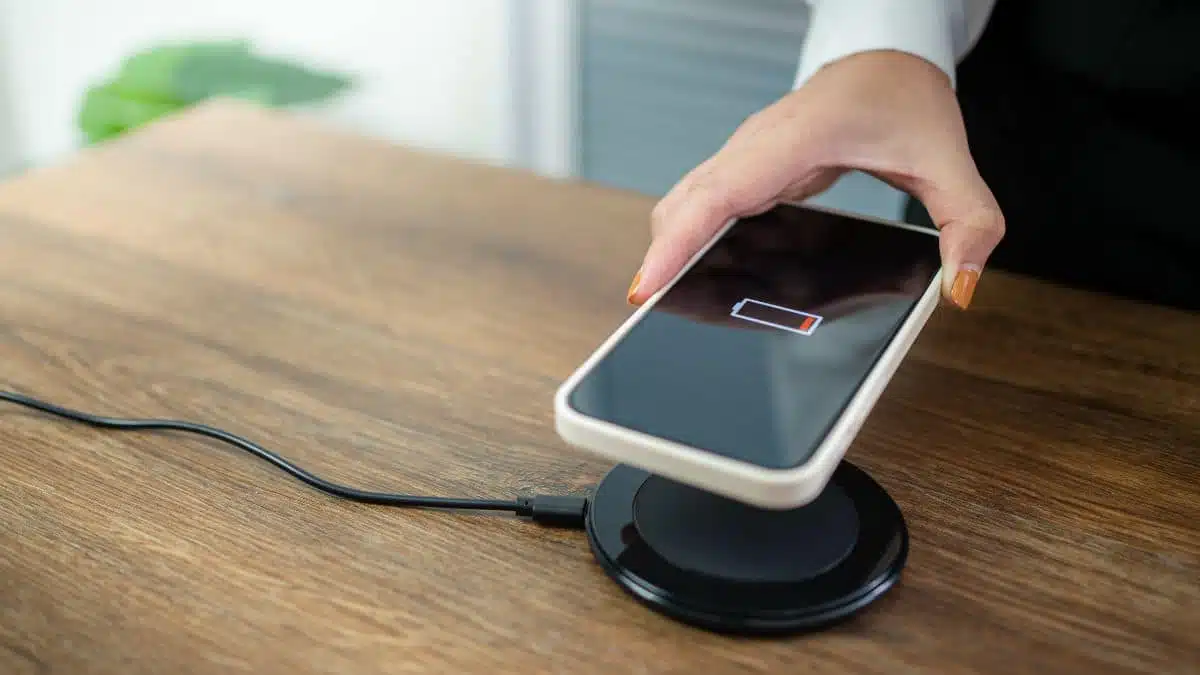
Inductive charging is gaining popularity, but is it a technology for everyone? In this article, we’ll take a closer look at the pros and cons of wireless charging to help you decide if it’s worth the investment.
How does inductive charging work?
Before we get into the pros and cons, it’s worth understanding how inductive charging works. This technology is based on the phenomenon of electromagnetic induction. An inductive charger contains a transmitting coil that generates an alternating magnetic field. When we place a device with a built-in receiving coil on it, the magnetic field induces a current in it, which charges the battery.
Advantages of inductive charging
Inductive charging offers a number of benefits that affect the user experience of smartphones and other mobile devices:
- Convenience: This is undoubtedly the biggest advantage. Just place your phone on the charger to start charging. No more cable clutter and searching for the right charger!
- Universality: Qi, the most popular inductive charging standard, is supported by many devices from different brands. This means that the same charger can be used to charge a smartphone, wireless headphones or smartwatch.
- Safety: Inductive charging is safe for devices and users. It eliminates the risk of electric shock and also protects your phone’s charging port from wear and tear.
- Aesthetics: Inductive chargers often feature a minimalist design that blends well with modern interiors. They can have a decorative and practical function at the same time.
- Longer battery life: Inductive charging, due to its constant, even supply of energy, can extend the battery life compared to traditional charging.
Disadvantages of inductive charging
Despite its many advantages, inductive charging also has some limitations:
- Lower efficiency: Inductive charging is typically slower than wired charging. The energy loss during transmission makes the charging process take longer.
- Limited mobility: When charging inductively, the phone must be on the charger. This limits the ability to use the device while charging.
- Price: Inductive chargers, especially those with more power and additional features, are typically more expensive than traditional chargers.
- Requirements: Not all devices support inductive charging. Older phone models may require a special adapter or case to use this technology.
- Positioning: For charging to run smoothly, the device must be precisely positioned on the charger. A slight offset may interrupt the charging process.
- Heating: During inductive charging, both the charger and the appliance may become hot. In some cases, this may affect charging performance or user experience.
Is it worth buying an inductive charger?
The decision to buy an inductive charger depends on your individual needs and preferences. If you value convenience and minimalism, and charging time is not a priority for you, inductive charging may be a good solution. However, if you want fast charging and mobility, it is better to stick with a traditional charger.
The future of inductive charging
Inductive charging technology is constantly evolving. Manufacturers are working to increase charging performance and speed, as well as new features such as remote charging. It can be expected that inductive charging will become even more popular and common in the future.