Modern geopolitics presents men with unique challenges, redefining the concepts of responsibility and engagement in the national community. Why men don’t want to fight becomes a question about new forms of security, loyalty, and real influence on the surrounding world. Awareness of alternatives, the role of critical thinking, and the need to protect those closest shift the boundaries of old traditions.
Table of Contents
- Why Don’t Men Want to Fight?
- Geopolitical Challenges: What Is Key for Poland
- The Role of Men in Armed Conflicts
- What Opportunities Does the Current Situation Offer Poland?
- How Does the Modern World Need Men?
- Safety Guide: Prepare for Change
Why Don’t Men Want to Fight?
For several years, politicians, commentators, and military officials across Europe have been asking the same question: Why do modern men – also in Poland – seem less and less willing to fight when a real threat of conflict appears on the horizon? It’s not just about refusing military service, but a deeper, cultural shift in attitudes towards concepts like “war,” “duty,” and “sacrifice.” Younger generations raised in relative peace, globalization, and the digital world don’t identify with the romantic image of the warrior who dies for his homeland without question. Instead, they ask a fundamental question: “For whom and for what should I risk my health, family, future?” The lack of trust in political elites, the media, and state institutions means that many war narratives are seen as a cynical game of interests, in which the ordinary man is just “cannon fodder.” Added to this is the global crisis of authority – it’s increasingly difficult to find leaders who are perceived as honest, competent, and morally worthy to demand the highest sacrifice from others. In such an atmosphere, heroic rhetoric clashes with a sober calculation of loss and benefit: a man prefers to invest in his family, career, mental health, rather than in uncertain “glory,” which history often forgets anyway.
The second, less obvious dimension of this phenomenon concerns the changing identity of men in today’s world. For centuries, masculinity was inextricably linked to legitimized violence – war, hunting, territorial defense. In the 21st century, the role of men is shifting toward economic, emotional, and social responsibility, not military. A man who refuses to fight doesn’t necessarily do so out of cowardice, but increasingly out of the belief that his true duty is to protect his family through financial security, raising children, or maintaining his own mental stability. Awareness of war trauma, PTSD, disabilities, and long-term consequences of violence is now much greater than for previous generations. Social media, veterans’ testimonies, recordings from the front – all demystify war and reveal its brutal, dehumanizing nature. A man sees that in armed conflict, everyone loses except for a handful of political and business beneficiaries, and the “geopolitical” gain is often illusory for his private life. Moreover, the global economy, job mobility, and digital skills mean that many men have real alternatives to fighting – they can leave, retrain, build a life in another country. Faced with such options, the decision to stay and fight is no longer an obvious choice, but a difficult moral dilemma. In the background, there is also growing tension between traditional social expectations of men and new cultural movements that, on one hand, criticize “toxic masculinity,” while on the other – still expect men to be ready to make the greatest sacrifices in a crisis. This dissonance leads to frustration: If masculinity is to be “softened,” more empathetic and peaceful, why is it still expected that men should be the first to go to the front? Finally, in Poland and many other countries, the very way of communicating about potential conflicts – the language of propaganda, fear, moral blackmail – provokes rebellion. Forcing heroism stops working when individuals are more aware than ever of their rights, the value of life, and alternative courses of action. That’s why the question “why don’t men want to fight” is increasingly being seen as wrongly posed – a much more accurate one is: “What have the state, society, and elites failed to do to make a man genuinely want to defend the community he is expected to represent?”
Geopolitical Challenges: What Is Key for Poland
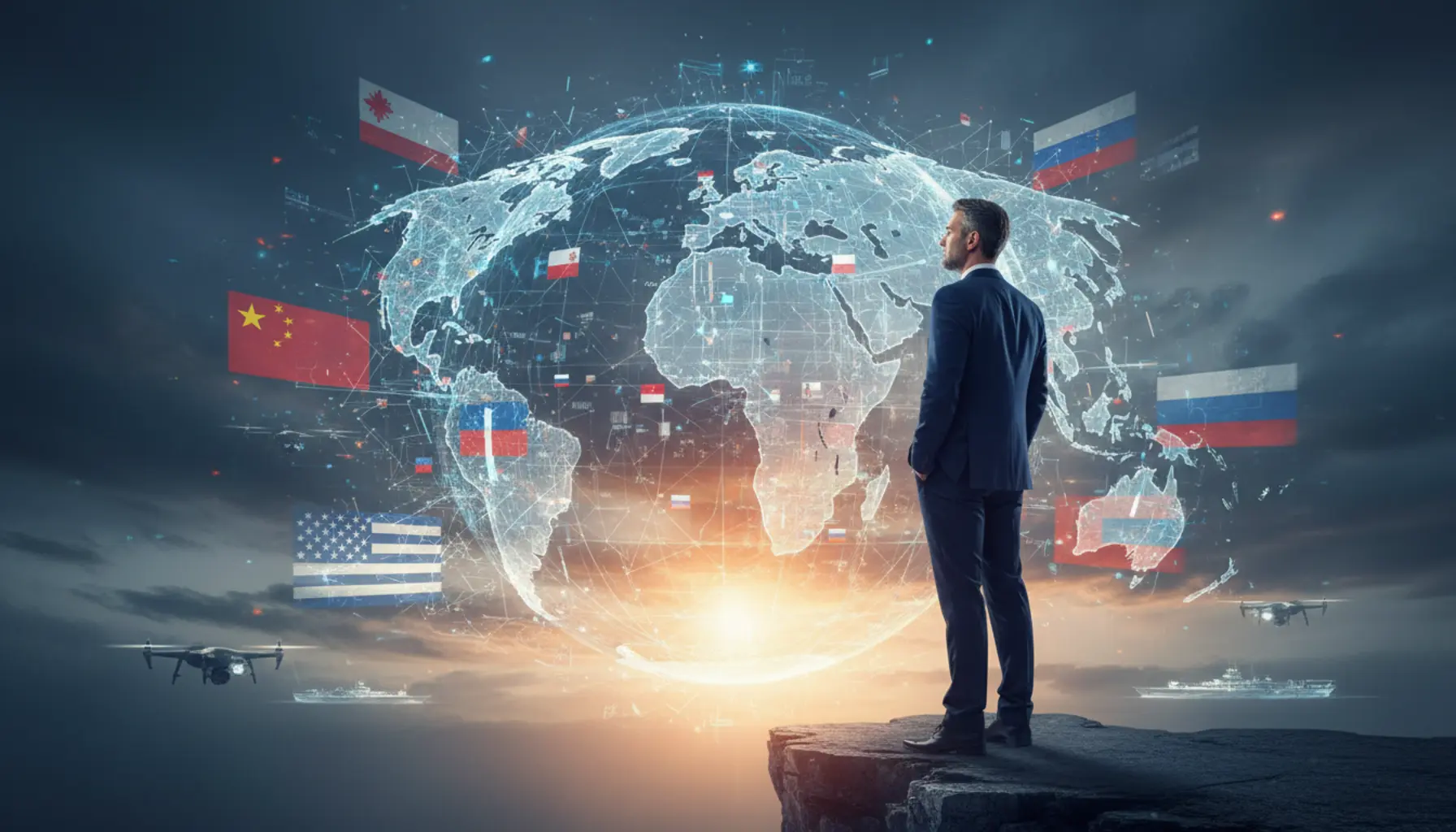
In 2024, Poland operates in one of the most demanding geopolitical environments since the end of the Cold War. Its location between Russia and Germany, EU and NATO membership, the war in Ukraine, migration pressure, and the accelerating USA–China rivalry make security less of an abstract category and more of a daily context for men, families, and entire communities. First, the fundamental challenge remains military and energy security in the face of instability in the east. Russia – despite sanctions and war losses – still has military potential and the ability to wage hybrid warfare: cyberattacks, infrastructure sabotage, disinformation campaigns, and use of migration as a tool of pressure. Poland’s border with Belarus has in practice become the boundary of the Kremlin’s sphere of influence, while at the same time, a fierce information war is being waged online, undermining trust in institutions, the importance of membership in NATO, and European solidarity. For Poland, it is therefore key not only to strengthen the military but to build broadly understood state resilience: distributed critical infrastructure, local support systems, cybersecurity, and public education in recognizing manipulation. The second pillar of challenges is energy – both its physical availability and price. Becoming independent from Russian resources provides a chance for greater agency, but requires enormous investments in LNG, nuclear power, renewables, transmission grids, and energy storage. Rising energy costs translate into food, transport, and service prices, and ultimately into social frustration. In such an atmosphere, it’s easier to radicalize and support groups that offer simple answers, promising “cheap, fast, and without sacrifice,” often at the expense of alliances and long-term security. This directly affects men as entrepreneurs, workers in energy-intensive sectors, or primary breadwinners, forcing tough decisions: invest, emigrate, retrain, or tighten belts and wait it out.
The third strategic challenge is Poland’s position in a changing European Union and the transatlantic alliance. The EU is undergoing accelerated transformation: the green and digital revolution require new skills, investments, and flexibility in the economy. At the same time, the debate grows about how much sovereignty member states want to transfer to Brussels in areas like fiscal, migration, or defense policy. Poland, as a NATO frontline state, has a real chance to help shape European security policy, but must resolve internal tensions: between centralization and local government, between expecting grants and reluctance to implement common standards, between the ambition to be a regional leader and the lack of a coherent long-term strategy. In the background appears an existential question: Is Poland’s raison d’état more “national” (maximizing autonomy), or “community-driven” (deep anchoring in Western structures even at the cost of relinquishing unilateral decisions)? The fourth area is demographic and migration pressure, which from a geopolitical point of view becomes a security issue. An aging society means fewer people of working and military age, rising costs of the pension system and healthcare. At the same time, global crises – climate, food, political – generate new migration waves from Africa, the Middle East, or Asia. Poland faces a dilemma: how to combine border protection with filling labor market shortages, how to integrate foreigners without losing cultural cohesion, and how to avoid creating “social ghettos,” which elsewhere in Europe have become sources of tension and violence. Finally, the fifth, though often neglected challenge, is the crisis of trust and internal polarization. Even the strongest alliances and armies cannot replace social cohesion. If half of society sees the other half as the enemy, and deep dividing lines run through families, workplaces, and local communities, then every external player can easily “drive a wedge,” amplifying chaos. Disinformation targets men’s emotions – their sense of being undervalued, anger, fatigue with politics, disappointment with elites. That’s why one of the key geopolitical tasks is to rebuild a culture of dialogue and responsible leadership: one that does not scare with war or promise naïve “perpetual peace,” but honestly communicates risks, shows the meaning of sacrifice, and explains what “defending the country” concretely means in the era of hybrid wars. For Polish men, now searching for a new definition of masculinity, it means thinking of themselves not just as potential soldiers, but also as information guardians, family economic stability keepers, local leaders, key industry specialists, and citizens capable of critical, independent thinking in a world where information has become another battlefield.
The Role of Men in Armed Conflicts
The role of men in armed conflicts has historically been defined almost exclusively in the terms of warrior, defender, and “cannon fodder.” From ancient hoplites, through the nobility of the Polish–Lithuanian Commonwealth, to soldiers of both world wars, participation in war was a proof of masculinity, honor, and loyalty to the community. This traditional model was reinforced by culture, religion, and the state: a man who fought was glorified; one who refused was stigmatized as a coward or traitor. However, by 2024, especially in Poland and more broadly in Europe, this one-dimensional image is falling apart before our eyes. Development in military technology, professionalization of the army, demographic changes, and a crisis of trust in elites make masculinity in war neither obvious nor default. Men are now expected not only to be ready to “put on the uniform,” but to have analytical, digital, and leadership skills that allow functioning in a modern combat environment – from cyberspace to information operations. A modern armed conflict is not just a frontline with a rifle in hand but a whole ecosystem of activities – from logistics, intelligence, psychological operations, to crisis management at the local community level. In such a world, the role of men does not end in the trench; often it doesn’t even start there, shifting to the coordinator, specialist, analyst, or community leader supporting state resilience.
In the Polish and European context, men in armed conflict increasingly function at the intersection of three spaces: military, civilian, and informational. On one hand, there is the traditional role of soldier – in Poland reinforced by the formation of the Territorial Defense Forces, personnel reserve programs, and debates about universal military training. On the other hand, the importance of men as “civil actors of security” is growing: entrepreneurs securing supply chains, IT specialists repelling attacks in cyberspace, or local government officials organizing evacuation and aid systems. The third plane is the sphere of narratives and influence, where men – as journalists, influencers, experts, online creators – shape social attitudes toward war, mobilization, international alliances. The Russian–Ukrainian conflict has shown that a man can simultaneously be a father evacuating his family, an IT specialist conducting cyber defense, a volunteer organizing aid, and – if needed – a defender with a weapon in hand. Such multi-levelness requires a new type of preparation: not only military training but also psychological skills (coping with stress, trauma, responsibility for life-or-death decisions), communication competencies (media literacy, resistance to propaganda), and ethical standards (understanding the limits of obeying orders, responsibility for civilians). At the same time, the rising importance of women in the army and security services further redefines the male role: a man stops being the “default soldier” and becomes one of many security actors, having to cooperate in mixed-gender structures and respecting a new leadership model based not on physical strength but on competence and trust. As a result, the key challenge for the modern man is no longer just whether he would be willing to fight, but: in what way, in what role, and for what values does he want to participate in the defense of his community – and whether his state and society can offer him a role that is consistent with his identity, beliefs, and sense of meaning.
What Opportunities Does the Current Situation Offer Poland?
Paradoxically, times of geopolitical tension are also a period of exceptional opportunity for Poland – at both the state level and for individual citizens, including men seeking their role in the new reality. First, the shift of security focus in Europe to NATO’s eastern flank means that Poland, from being a “peripheral” country, is becoming one of the key players in the continent’s defense architecture. This is a real opportunity to strengthen Warsaw’s political position in relations with Washington, Berlin, or Paris, as well as with regional countries – the Czech Republic, Slovakia, the Baltic and Scandinavian nations. Accelerated modernization of the army, development of the defense industry, and investments in both military and civilian infrastructure (airports, roads, rail, fuel and ammunition storage) can become a development stimulus for entire sectors of the economy. For men, this means not only potential military service, but also specific career paths: from engineering and logistics to cyber security, project management, and modern defense technologies. Second, the accelerated energy transformation and the need for independence from Russian resources create a window of opportunity for Polish energy and the innovation sector. Developing offshore wind farms in the Baltic, nuclear energy, energy storage, and hydrogen technologies can attract billions in investments and boost national expertise. Poland, if it uses this moment wisely, can stop being merely an “extension” of the Western European value chain and start playing the role of a competence center in the region. In this scenario, there is a growing demand for technicians, programmers, project managers, and regulatory experts – thus for men able to combine hard technical skills with the ability to work in an international and multicultural environment. It’s worth noting that 2024 geopolitics also means accelerated digitization of the security field – the growing role of electronic intelligence, data analysis, AI, and information warfare. This gives opportunities to men who don’t identify with the classic image of a soldier but feel confident in the world of technology, analytics, and strategy, to become “digital defenders” of the state.
Another strategic area of opportunity is Poland’s role as a regional logistics hub and the post-war reconstruction of Ukraine. Goods, resources, military and civilian equipment already flow through Polish ports, railway and road terminals, and this trend may only intensify as Ukraine is rebuilt. For the Polish economy, this means prospects for the development of companies in construction, infrastructure, transport, IT, and finance, as well as the chance to set regional standards and know-how. Men working as entrepreneurs, engineers, drivers, logistics specialists, or project managers can thus have a real impact on regional stabilization while building their own economic position. On the social and cultural level, the current situation is also a chance to redefine masculinity in Poland – from “potential cannon fodder” to responsible citizen, local leader, mentor to the younger generation. The influx of refugees from Ukraine, demographic changes, and migration pressure all require new models of integration, dialogue, and community-building. This opens space for men who, instead of retreating into cynicism or apathy, are ready to take on roles as organizers, mediators, community activists, local councillors, NGO leaders, or grassroots movement leaders. At the individual level, the current geopolitical moment also necessitates a revision of one’s own skills and habits – and this is also an opportunity. A man who understands the broader international context, can critically assess information, knows foreign languages and develops digital skills, gains an edge both in the labor market and in social life. Increasingly, the ability to cooperate across divisions, psychological resilience, and the ability to cope in crisis – qualities that are the foundation of mature, modern masculinity – are paramount. Finally, the opportunity for the renewal of political culture cannot be overlooked: growing interest in security issues, the presence of war just across the border, and the crisis of trust in elites can become a trigger for a new generation of leaders. This is a space for men who, instead of perpetuating old patterns of political cynicism and aggression, can combine courage with responsibility, strength with empathy, and national interest with respect for individual dignity. If Poland takes advantage of these opportunities, it can not only strengthen its security and position in Europe, but also become a place where men find a meaningful, value-consistent role in a rapidly changing world.
How Does the Modern World Need Men?
In 2024, the world no longer needs only “soldiers” in the classical sense, but men able to combine several dimensions of responsibility at once: defensive, social, economic, and emotional. The global order is increasingly unstable – the war in Ukraine, China–US rivalry, energy crises, financial market instability, and migration pressure create an environment of constant uncertainty. In this context emerges a demand for a new kind of masculinity: not based solely on physical strength or readiness to fight, but on strategic thinking, keeping a cool head under pressure, the ability to protect others – both in the literal sense (physical security) and the metaphorical (economic, emotional, informational security). A man who understands geopolitical processes, can read news critically, and distinguish propaganda from analysis becomes a key “filter” for his family and local community, reducing the susceptibility to disinformation – one of the main fronts of contemporary conflicts. Today’s world also needs men as community stabilizers: in times of growing polarization, online aggression, and lack of trust in institutions, a male attitude that eschews cynicism and builds bridges – in work, local government, NGOs, parishes, local communities – is invaluable. This is not about a sentimental return to the “head of the family” in a traditional, authoritarian sense, but about the mature acceptance of a role of someone who takes on responsibility, can admit to mistakes, leads dialogue, and at the same time clearly sets boundaries against violence, corruption, or manipulation. Such an attitude is especially valuable in Poland, where political and cultural tensions tear families and friendships apart – men can act as “safety valves,” learning to communicate across divides, not just repeating the messages of their own “filter bubbles.”
The modern world also needs men as specialists in key sectors of broadly understood security: from the army and uniformed services, to energy, cybersecurity, critical infrastructure, emergency medicine, and logistics. These are the areas where the fate of states is decided today – not just on the front lines, but in server rooms, crisis management centers, power plants, refineries, LNG terminals, laboratories, and technology companies. Men who choose careers in the military, police, border guard, fire services, or cyber defense become part of the real protective shield of the country, but equally important are engineers, programmers, data analysts, logisticians, supply chain managers, teachers, psychologists, and educators. From the perspective of 2024 geopolitics, anyone able to maintain the functioning of the systems powering the state – from the internet, through food, to healthcare – plays the role of a “civilian defender.” At the same time, the world faces a crisis of meaning and identity, where many men get lost among extreme expectations: on one hand, pressure to be “tough,” “indestructible,” and always “effective”; on the other, calls for the total abandonment of traditional manifestations of masculinity. Meanwhile, society needs men able to integrate these seemingly contradictory requirements: strong, but not brutal; ambitious, but not destructively competitive; sensitive, but not losing the capacity to act in crisis. In practice, these are men who take care of their physical and mental health, can ask for help when needed, and at the same time don’t shy away from responsibility in moments of real danger – war, disaster, economic breakdown. Finally, the modern world needs men as role models for younger generations in a reality where social media algorithms and pornography shape imaginations about relationships, sexuality, and success more than school or family. Boys raised in the shadow of fear of the future – climate, economic, military – need adult men to show them how to live with uncertainty, without succumbing to apathy or radicalism. Such a man need not be perfect; he should be present, engaged, and willing to work on himself. At the state and local government levels, this means investing in development programs for boys and men: sports, scouting, uniformed classes, pro-defense organizations, as well as initiatives teaching entrepreneurship, digital skills, communication, and stress management. In a world with growing risks of conflict, we need men prepared not just for possible mobilization, but, above all, for the daily, systematic building of societal resilience – in families, companies, cities, and villages, everywhere real life goes on beyond the screen.
Safety Guide: Prepare for Change
In 2024, security is not limited to having a stash of canned food and water. In a world where war is fought simultaneously on the kinetic front, in cyberspace, in the media, and in the economy, a man needs a multidimensional preparation strategy. The first level is the physical foundation – health, fitness, and resilience. Regular strength and endurance training, basics of self-defense, the ability to move with a load, and to work under stress and discomfort are today’s practical “insurance.” Add to this the medical element: every man should master the basics of first aid, including wound dressing, stopping bleeding, CPR, and how to use a modular first aid kit (individual dressings, gloves, disinfectants, basic medicines). Such a set, complemented by document copies and basic hygiene supplies, should be kept ready at home, work, and in the car, so as not to waste time organizing in a crisis. The second pillar is information security. In practice, this means consciously managing sources of information, filtering fake news, recognizing propaganda, and understanding how information warfare works. It’s worth choosing a few reliable analysis portals, expert channels, and international institution reports, learning to use content verification tools (checking date, source, authorship, searching photos in image search engines), and limiting exposure to emotional messages intended to incite panic or hate. A man prepared for change knows his role is not to stoke fear among family or friends, but to suppress chaos: translating complex information into understandable language, calming others, highlighting practical actions that can be taken here and now. The third area is logistical preparation, focused on three time horizons: 72 hours, 30 days, and 6–12 months. The 72-hour readiness is for sudden situations – power outages, a local conflict: supply of water, simple meals not requiring much cooking, a light source other than a phone, power banks, small-denomination cash, a paper map of the area, a list of important contacts and evacuation points (family, friends outside the city). The 30-day horizon means a plan for functioning in a more serious crisis: a basic supply of long-term food, a simple product rotation system, alternative heating sources (e.g., a small stove, thermal blanket, layered clothing), a care plan for children, elderly, pets, and predetermined family roles and priorities. The longest horizon, 6–12 months, is working on economic and professional resilience: diversifying income sources, a financial buffer, developing skills useful in a crisis (languages, technical skills, crafts, operating tools), and understanding local supply chains – where energy, food, and fuel in your area come from and how they can be disrupted.
The next dimension of the safety guide in a changing world is social relations and responsibility to the community. Individual preparation has limited value if it is not rooted in a network of trust: family, neighbors, local communities, and organizations. The 21st-century man, thinking geopolitically, creates around himself a small “resilience cell” – people with whom he can cooperate in a crisis. This means building relationships with neighbors (mutual help, exchanging information, dividing tasks), joining local initiatives (volunteer fire brigades, rescue teams, scouting, parishes, NGOs), and learning how to function in semi-formal structures, which in times of destabilization often operate faster than official authorities. In the context of the male role, combining assertiveness with empathy is key: in danger, he will often be the one to say “no” – e.g., when the family panics or the group pushes for irrational actions – and take responsibility for unpopular decisions. At the same time, modern masculinity requires the ability to be emotionally present: talking with a partner about crisis scenarios, jointly establishing action plans, giving psychological support to children who absorb tension from the media and school. Finally, digital security cannot be ignored, as it has become one of the key fields of geopolitical struggle. Every man, regardless of profession, is a potential target for phishing attacks, data leaks, or algorithmic manipulation. Practical “digital hygiene” is strong, unique passwords and a password manager, two-factor authentication, software updates, backups of key files, caution regarding links and attachments, and awareness of what data you disclose on social media. Combined with analytical skills – the ability to distinguish opinion from fact, narrative from vested interest, emotion from rationale – this creates a shield protecting not only you, but your entire social network from manipulation. Such an approach to security means that a man becomes not a “prepper” isolated from the world, but a responsible community participant able to combine a geopolitical perspective with very concrete, daily actions for the stability of his family, neighborhood, and country.
Summary
We live in times of dynamic geopolitical changes that present society and individuals with new challenges. Men play a key role, both in terms of self-defense and international diplomacy. The challenges of defending the country, as well as the opportunities presented by the current situation, require thoughtful actions and adaptation to new realities. Poland, in the face of global changes, has the chance to achieve a stronger position on the international stage, which requires active citizen engagement. The modern world needs brave men who are ready to make decisions and take action, which is essential for maintaining global security.