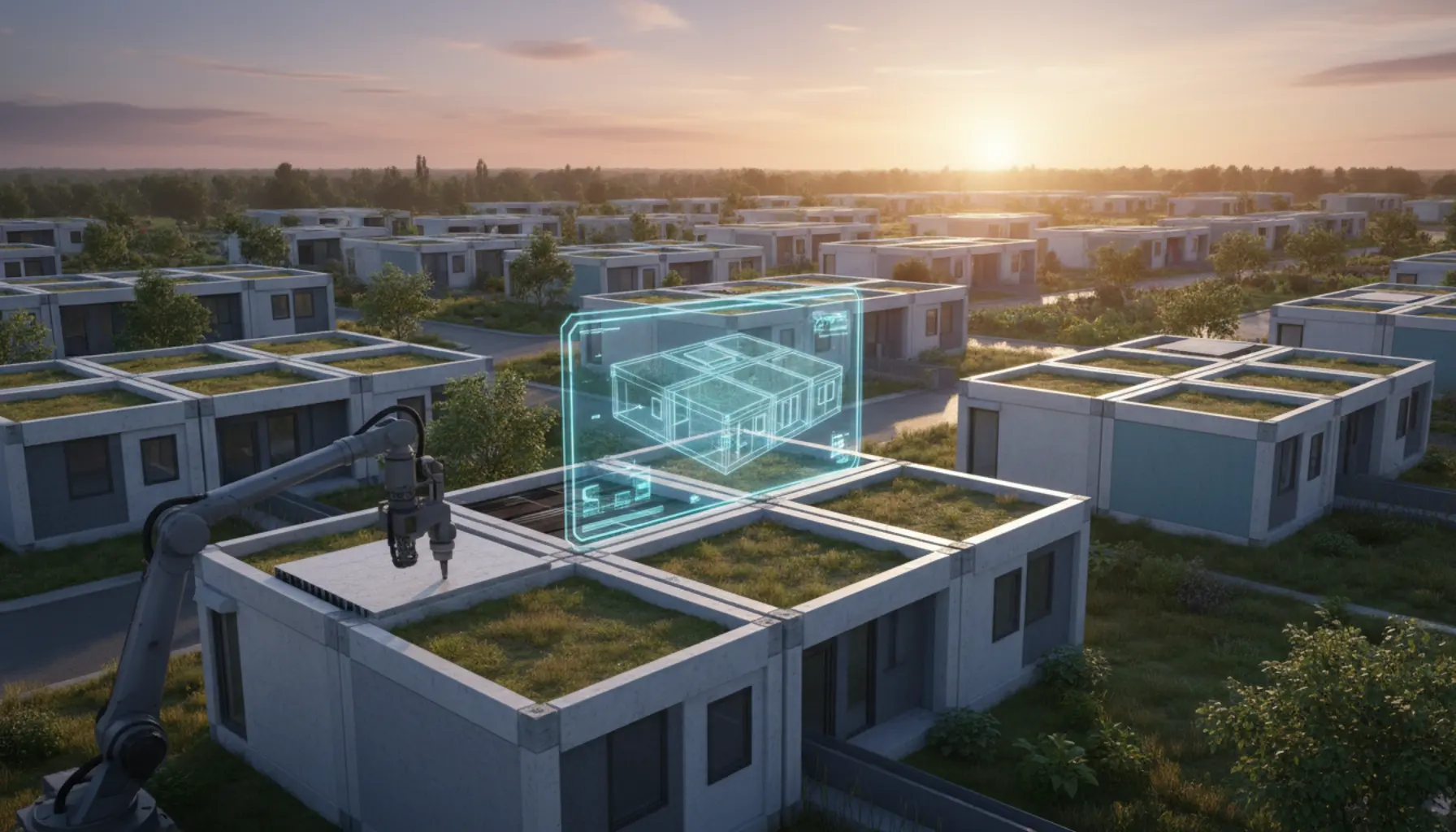
Modular houses are an innovative solution in construction that combines fast completion, high quality, and sustainable investment. Discover the key advantages, modern technologies, and ecological aspects of prefabricated homes.
Table of Contents
- Advantages and Disadvantages of Modular Homes
- Technologies Supporting Modular Construction
- Ecological Aspects of Prefabricated Homes
- Integration of RES Systems in Modular Homes
- Modern Trends in Construction
- Are Modular Homes the Future?
Advantages and Disadvantages of Modular Homes
Modular homes are gaining immense popularity mainly due to a range of advantages that directly address the challenges of modern construction: rising material and labor costs, time pressure, ecological requirements, and expectations regarding user comfort. One of the most often emphasized benefits is the rapid project completion—the ready-made modules are produced in parallel with earth and foundation works, radically shortening the time from contract signing to moving in, often to just a few to several weeks. This model minimizes the risk of delays due to weather or lack of construction crews, and the process is repeatable and predictable, which will be appreciated by both private investors and developers. An important advantage is also the controlled quality of production: modules are created in factory conditions, using precise technologies, constant supervision, and repeatable procedures, which significantly reduces typical “construction botch jobs” and errors resulting from on-site work. Factory conditions also allow for optimal storage and seasoning of materials, protection of the structure from moisture and damage, and better control of energy, acoustic, and durability parameters. For many, a key advantage of modular homes is lower overall costs compared to traditional construction at a similar standard: savings result from less waste, optimized material usage, shorter crew work time, and the potential for serial manufacturing of elements. During operation, investors often benefit from reduced bills for heating and cooling thanks to high insulation, hermetically sealed partitions, and the possibility of easy integration with renewable energy sources such as heat pumps or photovoltaics. Modular houses are inherently more environmentally sustainable: the prefabrication process generates less construction waste, supports recycling and responsible raw material management, and the building itself—with its energy-saving technologies—has a smaller carbon footprint throughout its life cycle. Another strong point is design flexibility: although they are based on repeatable modules, contemporary systems allow for highly diversified forms, combining segments horizontally and vertically, expanding the home in line with changing family needs, and easier interior reconfiguration without complex structural work. For investors, the reduced inconvenience of construction is also important: shorter crew presence on the plot, less noise, reduced heavy machinery traffic, and a shorter period for organizing the construction site translate into better relations with neighbors and less stress. Not insignificant is the possibility of precise budget planning—manufacturers of modular houses usually offer clear finishing packages and a turnkey system with a high degree of cost predictability, which limits the risk of unexpected surcharges for “minor changes” during construction.
Despite all the listed advantages, modular homes also have their limitations and potential disadvantages, which each investor should consciously analyze before making a decision. One common challenge is how such buildings are perceived by the public—despite the rapid development of technology, the myth of the “container house” or “temporary barrack” persists, which can raise concerns about prestige, durability, and resale value. In practice, modern modular homes meet strict durability and safety standards, but breaking stereotypes takes time, education, and reliable information from producers. Another issue can be limited personalization compared to building entirely “from scratch”—the modular system imposes a certain construction rhythm, column grid, and spans, as well as a catalog of available solutions, which can be a barrier or significantly increase implementation costs for very unusual, individual concepts. It’s important to realize that some plots, subject to specific development or conservation conditions, may require adjustment of the building’s shape, height, or façade materials, which can be more difficult or require finding a specialized company within the modular system. Another significant limitation is accessibility—transporting large modules to the construction site requires appropriate road infrastructure, crane access, and often obtaining permits for oversized transport, which can be logistically complex and costly on narrow, mountainous, or urban sites. From a financing perspective, a modular home may still be seen by some banks as a less standard investment, though the situation is improving; it is necessary to verify how a given institution assesses the collateral value and whether it accepts the selected manufacturer as the contractor. It’s also worth bearing in mind that the highly prefabricated construction process shifts more risk onto one entity—choosing the right contractor is key, and any company problems (e.g., bankruptcy) can have more serious consequences for the investor than in the traditional model, where many jobs are handled by independent teams. Some manufacturers also offer limited flexibility for changes “during” the process—once the design stage is closed and module production begins, any changes to room functions, installations, or window layouts can be very costly or even impossible, so greater decisiveness is required from the start. Finally, although modular homes are generally durable, they require—just like traditional buildings—proper use and maintenance, and in the case of system solutions, servicing or replacement of elements may depend on the availability of components from a specific producer, which makes choosing a stable, reputable brand an even more important part of the entire investment puzzle.
Technologies Supporting Modular Construction
The development of modular houses would not be possible without parallel technological progress in several key areas—from digital design through production automation to modern installation systems and advanced materials. One of the foundations here is BIM technology (Building Information Modeling), which is digital modeling of building information. With BIM, every module is first created in a virtual 3D environment, where designers, constructors, and installers can precisely plan installations, structural connections, or window and door placement. This minimizes the risk of clashes during production and allows for early material usage optimization, directly reducing costs and waste. BIM is complemented by advanced CAD/CAM programs that, based on digital models, automatically generate files that control factory production machines. As a result, wooden, steel, or composite elements are cut with millimeter precision, and openings for installations or structural connectors are made directly on the production line, eliminating the need for time-consuming work on site. Modern prefabrication lines increasingly use industrial robots and automated assembly arms responsible for repeatable, precise actions: applying insulation layers, gluing sealing tapes, screwing connectors, or automated painting. Combined with vision systems controlling the quality of joints, connections, and finishing elements, modular house factories are becoming highly advanced industrial plants, not “traditional” sawmills or workshops. At the same time, technologies related to logistics and assembly are developing—specialized load sensors in crane arms are used, modular transport mounting systems, and smart tracking systems (IoT) that monitor the location and transport conditions of each module, reducing the risk of damage during delivery to the investor’s site.
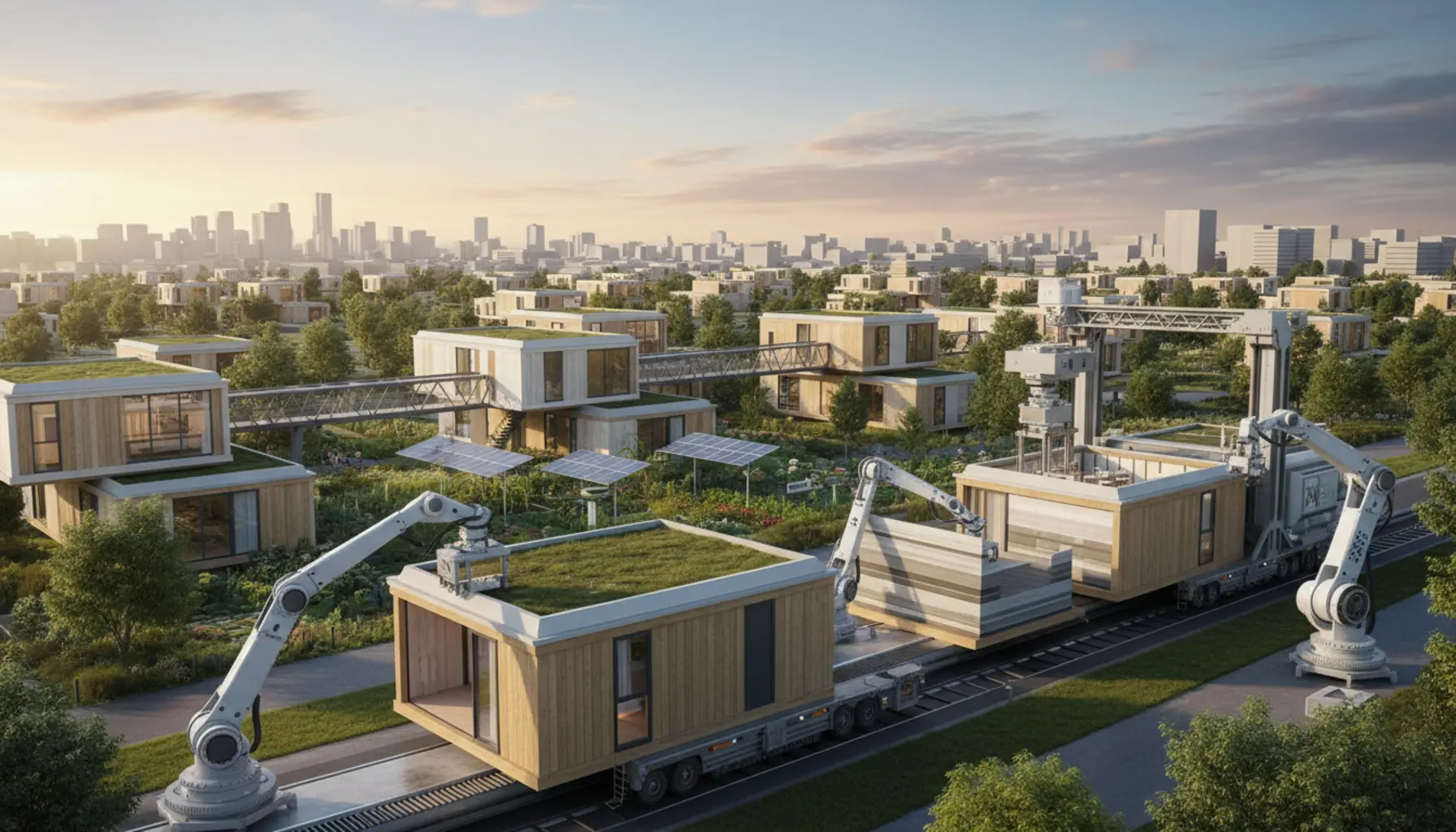
Material innovations and solutions related to energy efficiency and building automation also have a huge impact on the quality and durability of modular homes. Hybrid systems combining structural timber (KVH/CLT), thin-walled steel, and composite materials are most commonly used in structures, enabling high strength with a relatively low module weight. Advanced insulation materials with a low thermal conductivity coefficient, such as PIR boards, glass and mineral wool with increased elasticity, and increasingly popular insulation from wood fibers or cellulose, which combine good thermal performance with a favorable carbon footprint, are leading in insulation. Many prefabrication plants use factory-installed window sets with enhanced tightness, warm spacers, and triple glazing, integrated immediately with vapor and wind insulation layers. During production, HVAC installation elements are also implemented in the modules: ventilation ducts for mechanical ventilation with heat recovery (recuperation), designated places for air–water or air–air heat pumps, as well as manifolds for surface heating. More and more often, the factory design includes the integration of photovoltaic installations with the roof, including BIPV (Building Integrated Photovoltaics) systems that serve as both roofing and energy generators. Modular homes are also a natural environment for intelligent building management systems (smart home). Cabling for temperature, humidity, air quality sensors, or window opening detectors are installed in the modules already at the factory, simplifying later configuration of control applications. As a result, the user receives a building ready for predictive energy management—the system can automatically react to weather forecasts, energy prices, or household habits, optimizing the operation of the heat pump, ventilation, and energy storage. Supplementary solutions cover the Internet of Things, such as smart meters, remotely controlled valves and sockets, as well as remote service modules for devices. For manufacturers, the ability to collect operational data from many projects is key, enabling continuous improvement of module designs, identification of weak points, and introducing structural changes without the need for lengthy laboratory tests. In this way, technology closes the cycle: from digital design, through automated production and intelligent operation, to data analytics driving further innovations in modular construction.
Ecological Aspects of Prefabricated Homes
Ecology in construction is no longer just a catchphrase; it is becoming a hard requirement set by law, market forces, and conscious users. Prefabricated houses—including modular homes—naturally fit into the idea of sustainable development because their creation process is much more controlled than in traditional construction. Producing elements in a factory allows for precise planning of raw material usage, resulting in waste minimization and the elimination of so-called “material downtime” on construction sites, where in classical investments damage is frequently caused by weather, logistic errors, or theft. In prefabrication, every element has its place in the technological process, and production waste is easier to separate and reuse, for example, as a raw material for wood-based boards, underlays, or auxiliary elements. Reducing the number of deliveries to the construction site directly translates into lower transport emissions—most material “travels” once, as finished modules or panels, instead of multiple deliveries of sand, cement, bricks, or steel from various sources. The environmental impact is also lower in terms of organizing the construction site itself: shorter completion times mean fewer machines operating at high intensity, fewer heavy equipment exhaust emissions, and less noise nuisance for the surroundings, which is especially important in densely built-up or environmentally valuable locations. Prefabrication also supports the use of materials with a better environmental profile—in modular homes, wooden frame structures are especially popular, where the wood acts as a carbon dioxide store throughout the building’s lifecycle and can later be recycled or recovered for energy generation.
One of the key ecological advantages of prefabricated houses is their high energy efficiency, resulting from the accuracy of partition construction and the repeatability of the production process. Prefabricated walls, ceilings, and roofs can be equipped with factory-installed thermal insulation of optimized thickness, installed without thermal bridges, which in traditional construction often occur at the interface of different jobs and teams. This makes it easier to achieve or even exceed the requirements for low-energy or passive buildings, directly resulting in lower energy use for heating and cooling, and thus reducing CO₂ emissions throughout the building’s life cycle. Prefabrication also promotes the integration of modern installation systems—recuperation, heat pumps, photovoltaics, energy storage—already at the design stage, enabling the creation of coherent, intelligent energy management systems. From an environmental perspective, the possibility of dismantling and reusing modules or their components is also significant: well-designed modular homes can in the future be modernized, expanded, or partially relocated, and their components can be more easily recycled due to standardized construction solutions and fewer “wet” permanent joints. It should be emphasized that responsible manufacturers use materials in prefabrication with EPD environmental declarations and certificates of raw material origin, making it possible to more accurately assess the investment’s carbon footprint. Additionally, the use of advanced media consumption monitoring systems and building automation enables residents to optimize daily operation—from temperature and ventilation control to smart management of lighting or charging electric vehicles—which in the long term further reduces the use of natural resources and emissions to the atmosphere.
Integration of RES Systems in Modular Homes
Modular homes are practically made for integration with renewable energy sources because installation placement, cable routing, and service space can be precisely planned already at the design stage. Unlike buildings built traditionally, where RES installations are often added retroactively, in prefabrication it is possible to fully synchronize the structure, electrical installations, heating systems, and home automation with future photovoltaics, heat pumps, or recuperation. The modular nature of the building allows for repeatable installation schemes, reducing design and construction costs as well as the risk of assembly errors. At the same time, factory production conditions promote high airtightness and accuracy in technological transitions, which is crucial for maintaining the overall energy efficiency of the RES system. Designers of modular homes increasingly use computer simulations to optimize roof angles for photovoltaic panels, glazing exposure relative to cardinal directions, and partition layer layouts to minimize thermal bridges. This makes it possible to design the building as a cohesive “energy ecosystem,” not just a collection of randomly selected devices. In practice, this translates into nearly zero-energy homes, in which PV panels, a heat pump, energy storage, and a recuperation system cooperate with intelligent control, guaranteeing residents high comfort with low bills. A distinguishing feature of modular homes is also the possibility of prefabricating roofs with integrated photovoltaic panels or pre-prepared mountings, shortening assembly time on site and reducing the risk of mechanical damage. The use of photovoltaic tiles or BIPV (Building Integrated Photovoltaics) façades is also possible, making PV modules an integral part of the building envelope and eliminating the need for traditional roofing or cladding for parts of the façade.
The key RES technologies in modular homes include primarily photovoltaics, heat pumps, mechanical ventilation with heat recovery, electricity and thermal energy storage, and smart building management systems. Photovoltaic panels are the most commonly chosen solution because their installation does not require significant interference in the module structure—what is important is just appropriate roof reinforcement, cable routing, and inverter and protection device placement in one of the technical modules. Factory prefabrication enables precise cable route installation and the preparation of space for DC/AC switchboards, so panel installation on site is limited to quickly connecting pre-installed components. Heat pumps—both air and ground—work perfectly with the high insulation of modular homes; thanks to minimal heat loss, devices of lower power can be used, reducing purchase and operation costs. The technical module is designed to integrate the indoor unit of the heat pump, domestic hot water tank, and underfloor heating manifolds, minimizing installation length and simplifying servicing. High partition tightness supports the use of mechanical ventilation with heat recovery, which is often standard in modular homes—ventilation ducts can run in the floor or wall layers of modules, with precisely made transitions that reduce leaks and pressure losses. Home energy storage systems cooperating with the PV installation, often also powering the heat pump and electric vehicle charging system, are becoming more popular. The modular design allows for dedicated technical spaces for batteries and devices, meeting fire safety and ventilation requirements. The system is complemented by BMS/Smart Home solutions that collect data from energy meters, temperature, sunlight, and air quality sensors to automatically optimize all installations’ operations. In practice, this means, e.g., smart charging of the energy storage when PV production is highest, reducing consumption during peak tariff periods, dynamically controlling underfloor heating based on weather forecast, or even automatic cooperation scenarios with the power grid in a prosumer model. The modular home thus becomes not only an energy-efficient building but an active participant in the local energy ecosystem, ready for future integration with microgrids, energy clusters, or flexibility services for distribution system operators.
Modern Trends in Construction
Modern construction is undergoing a deep transformation, with modular houses becoming both major beneficiaries and drivers of change. The most powerful trend is moving towards full industrialization of the construction process—shifting away from “handcraft on the building site” to precise production in controlled factory conditions. What has been standard in automotive and electronics for decades is only now becoming widespread in construction: repeatability, component standardization, real-time quality control, and digital tracking of the entire product life cycle. Residential modules are treated as advanced “building products” with precisely defined technical, energy, and environmental parameters, allowing quick comparisons and selection for specific investment conditions. Simultaneously, data-driven design is gaining in importance—architects and engineers use not only BIM models but also material databases, simulations of thermal, acoustic, or daylight comfort, all directly translating to higher modular home quality and potential. Parametric design is a strong trend, where the building’s shape and configuration result from algorithms optimizing many variables at once: costs, energy consumption, daylight access, or even carbon footprint. The modular home ceases to be a rigid “block” and becomes the result of a complex calculation process, able to generate dozens of variants and find the best compromise between aesthetics, functionality, and efficiency. Urban trends are also relevant, with densification and revitalization of post-industrial areas—light, modular structures fit perfectly into the “15-minute city” concept, allowing new housing to be built rapidly with minimal local disruption. Additions to existing buildings, temporary urban structures, modular dormitories, or co-living buildings able to relocate in response to changing residents’ needs or municipal policies are increasingly popular. The approach to living space itself is changing too: flexible room layouts are gaining importance, allowing future combining, division, or even swapping entire functional modules (e.g., kitchen, bathroom, work zone modules). Such adaptability, difficult to achieve with traditional technology, is now a key feature of modern modular construction, responding to changing lifestyles, remote work, or multigenerational family needs.
Alongside industrialization and digitization, there is a strong current of sustainable construction, where modular homes naturally perform well. The trend of circular design assumes that already in the concept stage, dismantling, recovery, and reuse of materials and whole building components are planned. Modular construction systems, thanks to standardization and repeatability, make this approach easier—walls, ceilings, or entire residential segments can be relatively easily moved, upgraded, and incorporated into new projects, limiting construction waste and demand for primary raw materials. Reducing carbon footprint—both operational (use phase) and embodied (materials and production processes)—is increasingly important. Glued timber, LVL, and steel-timber hybrid structures, as well as low-emission materials with high recycling potential, are becoming more popular. Environmental certificates and building assessment systems that reward prefabrication, raw material control, and integration with renewables are also gaining ground. Another clear trend is the development of smart buildings and PropTech solutions, where modular homes act as “ready-made technology platforms.” Integrated energy, comfort, and security management systems, ready for cooperation with energy storage, EV chargers, or local microgrids, are becoming standard. Modules are designed to include cabling routes, sensor locations, controllers, and future system expansion capability at the factory stage, greatly simplifying future upgrades. The Building-as-a-Service concept is emerging, where the investor/user receives not only a physical home but a complete digital services package: media consumption monitoring, cost forecasting, predictive maintenance, and remote software updates. All this forms part of a wider trend towards simplifying customer experience—the modular home is increasingly sold as “all-in-one,” integrated with RES, smart home systems, ready IoT infrastructure, and standardized service packages. As a result, modern construction shifts focus from the act of building itself to the entire life cycle of the facility, and the modular home becomes a flexible, scalable, and highly automated environment for living, working, and relaxation, closely linked to the digital ecosystem of urban and energy services.
Are Modular Homes the Future?
The answer to whether modular homes are the future of construction is not clear-cut, but many market and technology indicators suggest they will become one of the dominant standards in the residential sector. On one hand, there is demographic pressure, rising labor and material costs, and a lack of qualified construction workers; on the other, increasingly strict energy and climate requirements, which force a change in design and investment implementation. The modular home fits perfectly in this landscape: it is an industrial product whose quality can be scaled, controlled, and constantly optimized based on data. In markets such as Scandinavia, Germany, or the UK, the share of prefabrication and modules in new residential developments is systematically increasing, and in the single-family segment, specialized brands are emerging, building recognition similarly to car manufacturers. In Poland, the trend is still young, but the pace of inquiries, the number of new factories, and investor fund interest indicate that this segment is moving from a niche phase to early mass adoption. The increasing share of younger generations of investors is also significant; for them, not only the size and location matter, but also the carbon footprint, energy efficiency, potential for integration with renewables, and digital services. For them, the home is a “device” embedded in an ecosystem of apps, dynamic pricing, energy storage, and smart home systems—the logic of modular, factory-based manufacturing responds far better to such expectations than traditional construction, where each installation is essentially a prototype built on-site. In the context of regulations, modular construction has another advantage: it is easier to serially meet increasingly stringent technical requirements (such as Poland’s WT or European EPBD directives) thanks to repeatable solutions and detail standardization than to “fight” for parameters with each unique project. In practice, this means future regulation updates won’t require revolution, but rather evolutionary improvement of production lines and standard designs. From a business perspective, module producers are increasingly acting not only as construction companies but as technology players, offering complete platforms—with digital house configurators, catalogs of proven variants, ready integration of PV, heat pump, energy storage, EV charger, and BMS systems accessible by app. This model is scalable, easy to replicate in new markets, and attractive for capital, accelerating sector growth. At the same time, modular homes match the global trend of buildings as “services,” where users pay not only for square meters, but for access to a certain comfort, energy, and maintenance standard, and some operational risks are transferred to the system operator.
This does not mean traditional construction will disappear—rather, there will be a division of roles and market segments where modular homes have a natural edge. In standard single-family houses, row buildings, small suburban developments, and the rental (PRS) market, modules foster scalability, repetition, and high cost predictability, which is critical for developers, investors, and financial institutions. For highly individual, luxury residences or buildings with very non-standard architecture, classic technologies may long retain their leading position. A powerful driver for uptake will be city development towards dense, polycentric structure—the “15-minute city” concept, where quickly accessible, flexible housing stock is required. Modules enable rapid changes of function in a development, expansion of existing estates, additional floors, or the creation of temporary but full-featured homes in growth locations, e.g., near new transport hubs. The growing significance of the circular economy and the need to reduce material footprints favor modular solutions—they are more reusable, transportable, and upgradable than masonry buildings. Social perception will also evolve: as finish quality, acoustics, energy efficiency, and smart solutions improve, associations with “temporariness” will be replaced by an image of a fully-fledged, comfortable home that mainly differs from traditional ones in the method of production. Consumer decisions will be influenced by rising energy and water costs and the increasingly felt effects of climate change—heatwaves, extreme weather, the need for building cooling, and adaptation to local conditions. Modular systems, from the outset designed for tight building envelopes, moisture control, and indoor air quality, are easier to adapt for 30–50 years ahead in climatic scenarios. At the same time, digital twins and operational monitoring allow manufacturers to collect real-world building performance data and introduce improvements with each generation of modules, creating a “learning product” effect—a completely new quality compared to traditional construction craftsmanship. Obstacles to rapid mainstreaming of modules will remain cultural factors, institutional conservatism, and credit or regulatory hurdles, but Western market experience shows that with strong brands, positive references, and attractive financing models, social acceptance grows rapidly. As a result, it is more likely that modular homes will become one of the key, mass standards of single-family and small-scale construction, coexisting with other technologies but gradually shifting the market towards an industrial, digital, and sustainable approach to creating living spaces.
Summary
Modular construction, particularly prefabricated houses, is gaining popularity due to build speed, lower costs, and the possibility of integrating with renewable energy systems. Supported by new technologies such as automation and smart systems, they not only offer ecological benefits but also respond to changing socio-economic demands. In light of current construction trends, modular homes are emerging as a promising option for the future.